
Fas, also known as APO-1, CD95, and TNFRSF6, was originally identified as a cell-surface protein which binds to monoclonal antibodies that were cytolytic for various human cell lines. In the new TNF Receptor superfamily nomenclature, Fas is referred to as TNFRSF6. Human Fas cDNA encodes a 325 amino acid (aa) residue type 1 membrane protein that belongs to the TNF and NGF receptor family. Alternatively spliced cDNAs encoding multiple Fas isoforms, including a soluble form of Fas lacking the transmembrane domain, have also been identified. Fas is highly expressed in epithelial cells, hepatocytes, activated mature lymphocytes, virus-transformed lymphocytes and other tumor cells. Fas expression has also been detected in mouse thymus, liver, heart, lung, kidney and ovary. The ligand for Fas (FasL) has been identified and shown to be a member of the TNF family of type 2 membrane proteins. FasL is predominantly expressed by activated
T‑lymphocytes, NK cells, and in tissues with immune-privileged sites. Soluble FasL can be produced by proteolysis of membrane-associated Fas. Ligation of Fas by FasL or anti-Fas antibody has been shown to induce apoptotic cell death in Fas-bearing cells. Fas plays a role in the down-regulation of the immune reaction and has been shown to be a key mediator of activation-induced death of activated T lymphocytes. Fas-mediated cell death has also been shown to be important for the deletion of activated or autoreactive B lymphocytes. Besides the perforin/granzyme-based mechanism, the Fas system has been identified as the alternate pathway for CTL‑mediated cytotoxicity. FasL has also been shown to function in immunological privileged sites by killing infiltrating Fas-bearing lymphocytes and inflammatory cells.

Scientific images may be resized, cropped, or adjusted for brightness or contrast for presentation purposes. These updates are limited to presentation and do not affect the underlying scientific interpretation of the data. Where available, additional source data may be provided upon request.
Key Product Details
Species Reactivity
Validated:
Cited:
Applications
Validated:
Cited:
Label
Antibody Source
Product Specifications
Immunogen
Specificity
Clonality
Host
Isotype
Scientific Data Images for Human Fas/TNFRSF6/CD95 Antibody
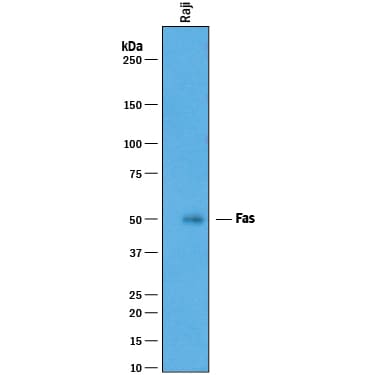
Detection of Human Fas/TNFRSF6/CD95 by Western Blot.
Western blot shows lysates of Raji human Burkitt's lymphoma cell line. PVDF membrane was probed with 1 µg/mL of Goat Anti-Human Fas/TNFRSF6/CD95 Antigen Affinity-purified Polyclonal Antibody (Catalog # AF326) followed by HRP-conjugated Anti-Goat IgG Secondary Antibody (Catalog # HAF019). A specific band was detected for Fas/TNFRSF6/CD95 at approximately 50 kDa (as indicated). This experiment was conducted under reducing conditions and using Immunoblot Buffer Group 1.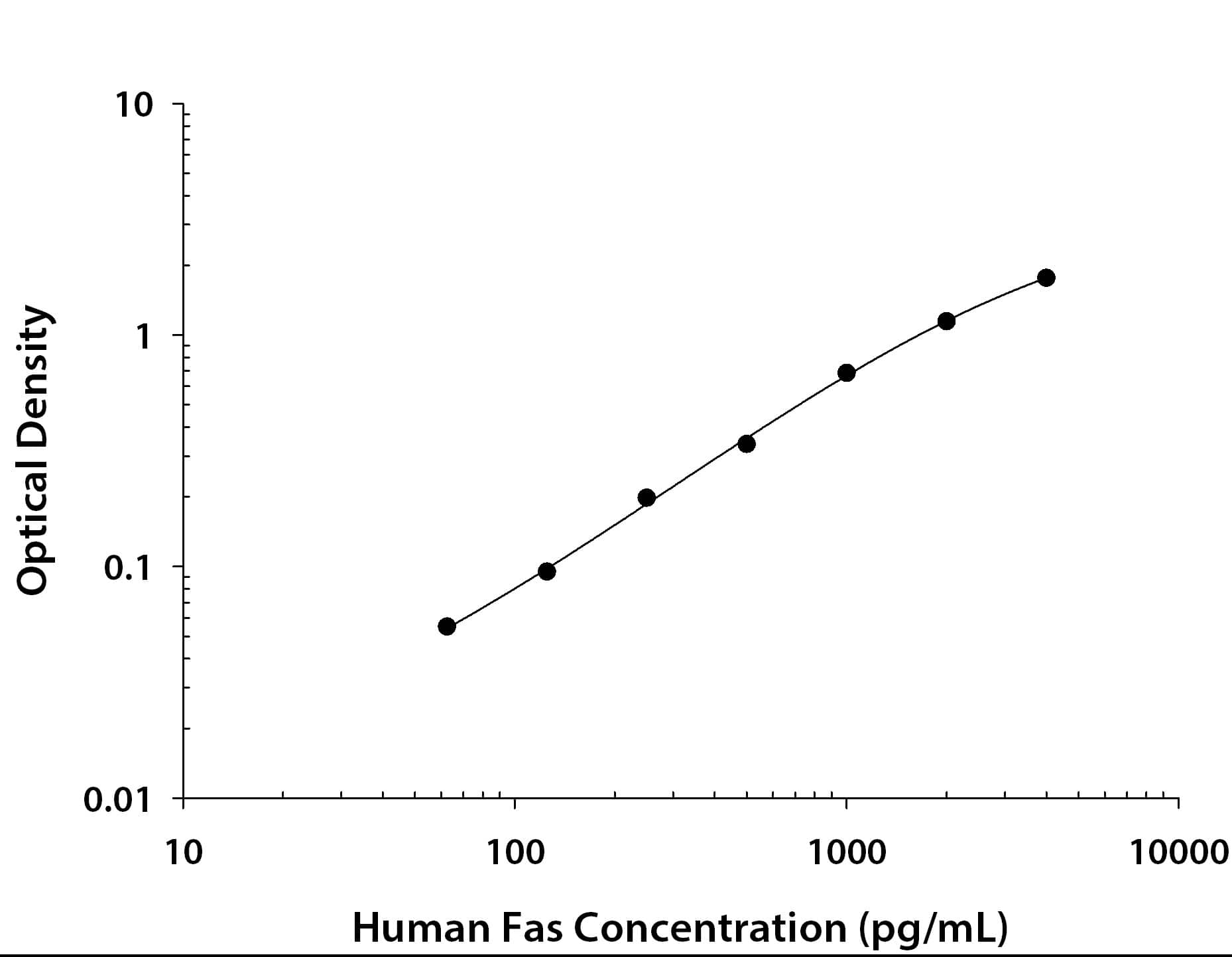
Human Fas / TNFRSF6 / CD95 ELISA Standard Curve
Recombinant Human Fas/TNFRSF6/CD95 Fc Chimera (Catalog # 326-FS) was serially diluted and captured by Mouse Anti-Human Fas/TNFRSF6/CD95 Monoclonal Antibody (Catalog # MAB144) coated on a Clear Polystyrene Microplate (Catalog # DY990). Goat Anti-Human Fas/TNFRSF6/CD95 Antigen Affinity-purified Polyclonal Antibody (Catalog # AF326) was biotinylated and incubated with the protein captured on the plate. Detection of the standard curve was achieved by incubating Streptavidin-HRP (Catalog # DY998)Applications for Human Fas/TNFRSF6/CD95 Antibody
Western Blot
Sample: Raji human Burkitt's lymphoma cell line
Reviewed Applications
Read 1 review rated 5 using AF326 in the following applications:
Formulation, Preparation, and Storage
Purification
Reconstitution
Reconstitute at 0.2 mg/mL in sterile PBS. For liquid material, refer to CoA for concentration.
Formulation
Shipping
Stability & Storage
- 12 months from date of receipt, -20 to -70 °C as supplied.
- 1 month, 2 to 8 °C under sterile conditions after reconstitution.
- 6 months, -20 to -70 °C under sterile conditions after reconstitution.
Calculators
Background: Fas/TNFRSF6/CD95
References
- Nagata, S. and P. Golstein (1995) Science 267:1449.
- Nagata, S. (1997) Cell 88:355.
- Parijs, L. and A.K. Abbas (1996) Current Opinion in Immunol. 8:355.
- Green, D.R. and C.F. Ware (1997) Proc. Natl. Acad. Sci. USA 94:5986.
Long Name
Alternate Names
Entrez Gene IDs
Gene Symbol
Additional Fas/TNFRSF6/CD95 Products
Product Documents for Human Fas/TNFRSF6/CD95 Antibody
Certificate of Analysis
To download a Certificate of Analysis, please enter a lot or batch number in the search box below.
Note: Certificate of Analysis not available for kit components.
Product Specific Notices for Human Fas/TNFRSF6/CD95 Antibody
For research use only
Citations for Human Fas/TNFRSF6/CD95 Antibody
 Powered by Bioz
Customer Reviews for Human Fas/TNFRSF6/CD95 Antibody (1)
Have you used Human Fas/TNFRSF6/CD95 Antibody?
Submit a review and receive an Amazon gift card!
$25/€18/£15/$25CAN/¥2500 for a review with an image
$10/€7/£6/$10CAN/¥1110 for a review without an image
Submit a review
Customer Images
-
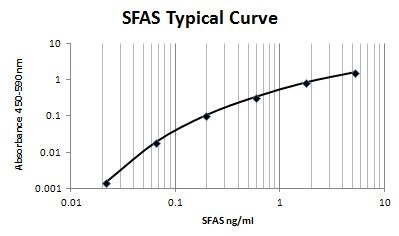
Application: ELISASample Tested: Serum and PlasmaSpecies: HumanVerified Customer | Posted 11/16/2017A sandwich assay was developed using the polyclonal antibody AF326 as both capture and detection.

There are no reviews that match your criteria.
Protocols
Find general support by application which include: protocols, troubleshooting, illustrated assays, videos and webinars.
- Cellular Response to Hypoxia Protocols
- R&D Systems Quality Control Western Blot Protocol
- Troubleshooting Guide: Western Blot Figures
- Western Blot Conditions
- Western Blot Protocol
- Western Blot Protocol for Cell Lysates
- Western Blot Troubleshooting
- Western Blot Troubleshooting Guide
- View all Protocols, Troubleshooting, Illustrated assays and Webinars
Associated Pathways


