
Hydoxysteroid (11-beta) Dehydrogenase, type I 11-beta-hydroxysteroid dehydrogenase 1(11 beta -HSD1, HSD11B1 or HSD1) is a microsomal glycoprotein enzyme, with an apparent mass of 36 kDa, that catalyzes the conversion of the stress hormone cortisol to the inactive metabolite cortisone. 11 beta -HSD1 can also catalyze the reverse reaction, the conversion of cortisone to cortisol. 11 beta -HSD1 has been detected in a wide range of rat and human tissues, including lung and testis, but highest amounts are expressed in the liver. Human 11 beta -HSD1 shares 79 and 77% sequence identity with mouse and rat 11 beta -HSD1, respectively. There are at least 2 isoforms of 11 beta -HSD. The other isoform, type II, is expressed predominantly in the kidney and placenta and catalyzes only the 11-beta-dehydrogenation reaction. High levels of cortisol can lead to visceral obesity and particular defects in the expression or function of 11 beta -HSD1 have also been associated with insulin resistance and cognitive function.
11 beta-HSD1 Antibody
R&D Systems | Catalog # AF3397

Key Product Details
Species Reactivity
Validated:
Human, Mouse, Rat
Cited:
Human, Mouse, Rat, Rabbit
Applications
Validated:
Western Blot, Simple Western
Cited:
Western Blot, Immunoprecipitation
Label
Unconjugated
Antibody Source
Polyclonal Goat IgG
Loading...
Product Specifications
Immunogen
E. coli-derived recombinant human 11 beta -HSD1
Asn24-Lys292
Accession # P28845
Asn24-Lys292
Accession # P28845
Specificity
Detects endogenous human, mouse and rat 11 beta -HSD1 in Western blots.
Clonality
Polyclonal
Host
Goat
Isotype
IgG
Scientific Data Images for 11 beta-HSD1 Antibody
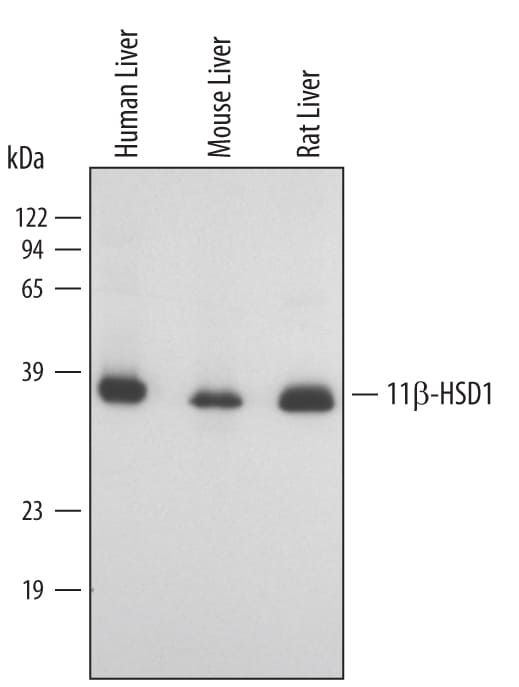
Detection of Human/Mouse/Rat 11 beta -HSD1 by Western Blot.
Western blot shows lysates of human, mouse and rat liver tissue. PVDF membrane was probed with 0.5 µg/mL of Human/Mouse/Rat 11 beta -HSD1 Antigen Affinity-purified Polyclonal Antibody (Catalog # AF3397) followed by HRP-conjugated Anti-Goat IgG Secondary Antibody (Catalog # HAF109). A specific band was detected for 11 beta -HSD1 at approximately 36 kDa (as indicated). This experiment was conducted using Immunoblot Buffer Group 2.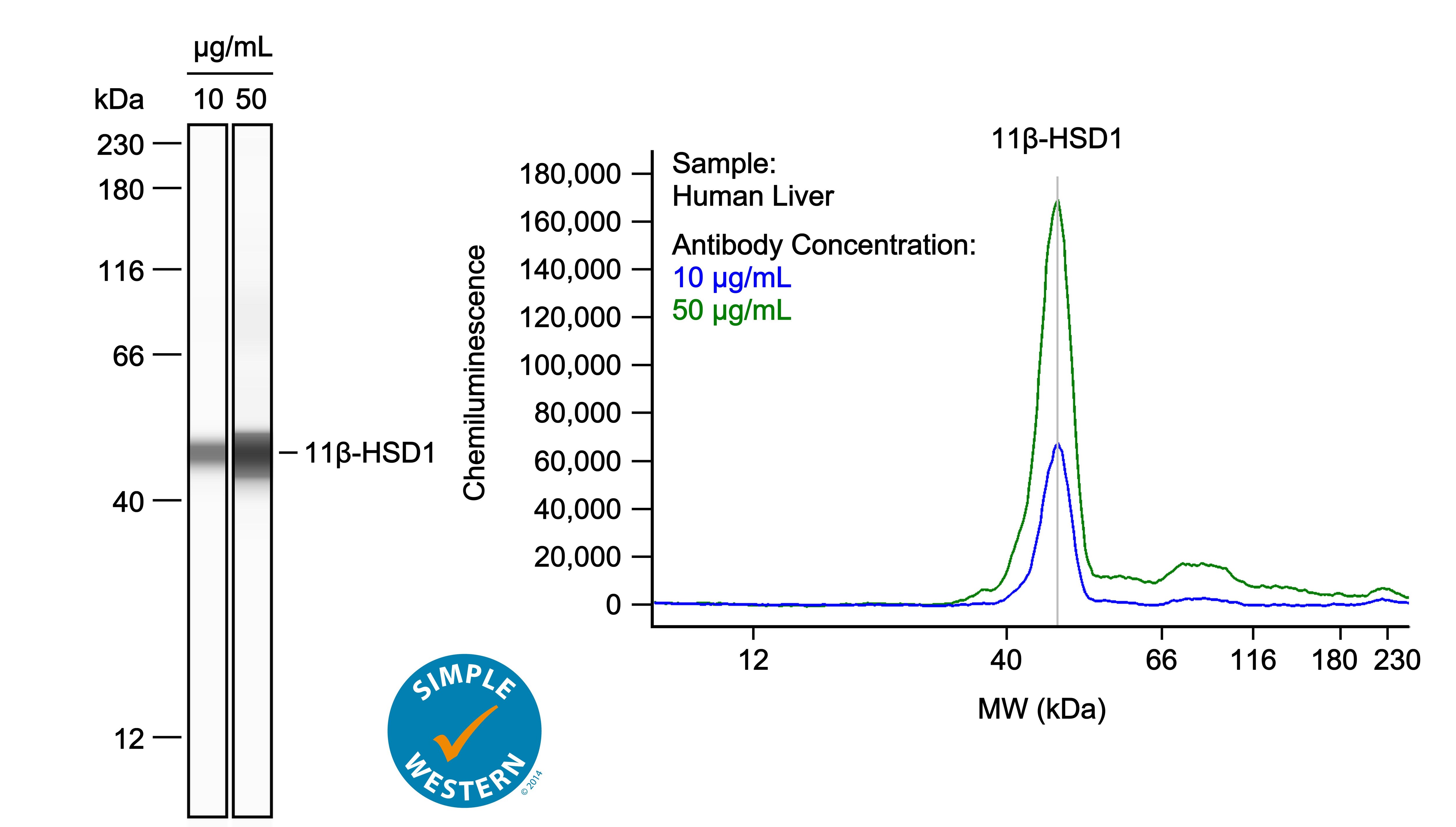
Detection of Human 11 beta -HSD1 by Simple WesternTM.
Left: Simple Western lane view shows lysates of human liver, loaded at 1 mg/ml. A specific band was detected for 11 beta -HSD1 at approximately 48 kDa (as indicated) using both 10 µg/ml and 50 µg/ml of Goat Anti-Human/Mouse/Rat 11 beta -HSD1 Antigen Affinity-purified Polyclonal Antibody (Catalog # AF3397) followed by HRP-conjugated Donkey Anti-Goat Secondary Antibody (Catalog # 043-522-2). This experiment was conducted under reducing conditions and using the 12-230kDa separation system. Right: Simple Western electropherogram showing the same Goat Anti-Human/Mouse/Rat 11 beta -HSD1 Antigen Affinity-purified Polyclonal Antibody (Catalog # AF3397) tested at 10 µg/ml (blue line) and 50 µg/ml (green line) in the human liver.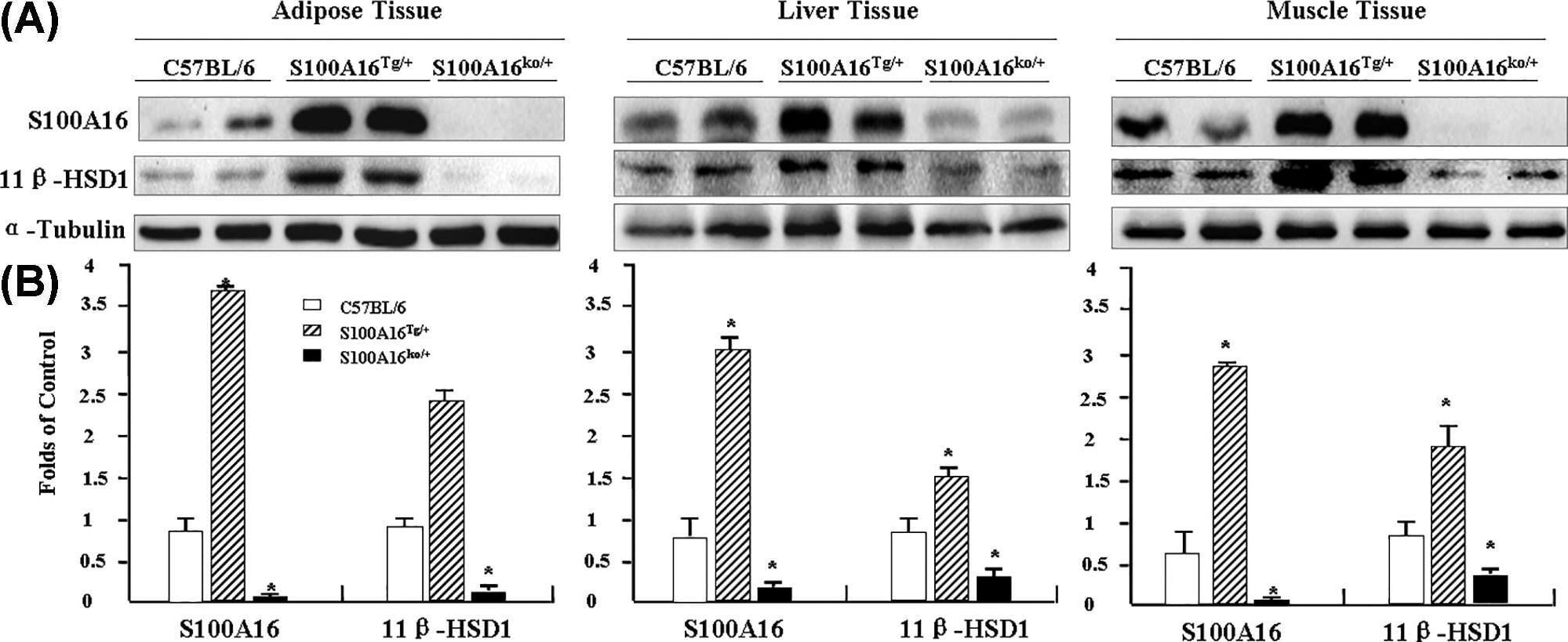
Detection of 11 beta-HSD1 by Western Blot
Effect of S100A16 on 11 beta -HSD1 expression Adipose, liver, and muscle tissues were removed from C57BL/6, S100A16Tg/Tg, and S100A16KO/+ mice, and proteins were extracted. (A) Analysis of S100A16 and 11 beta -HSD1 protein levels by Western blotting. (B) Relative expression of S100A16 and 11 beta -HSD1 based on grayscale analysis with alpha -tubulin as a control. Image collected and cropped by CiteAb from the following open publication (https://pubmed.ncbi.nlm.nih.gov/31399502), licensed under a CC-BY license. Not internally tested by R&D Systems.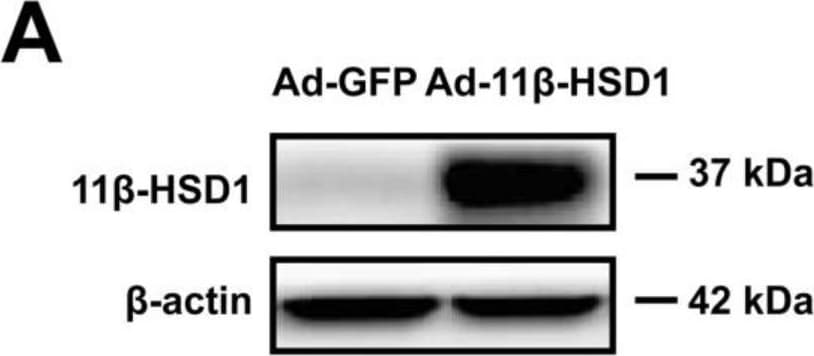
Detection of 11 beta-HSD1 by Western Blot
Lipid and triglyceride content increased in Hep1-6 cells that overexpressed 11 beta -HSD1. (A) Western blot showing the expression of 11 beta -HSD1 and (B) relative protein levels (n = 5). (C) Oil red O staining of Hep1-6 cells with 5% BSA or 300 μM OA/PA treatment. Box indicates magnified field of view. (D) Measurement of triglyceride content in Hep1-6 cells with the same treatment as (C) (n = 3). **P<0.01, ***P<0.001. Image collected and cropped by CiteAb from the following open publication (https://pubmed.ncbi.nlm.nih.gov/35637957), licensed under a CC-BY license. Not internally tested by R&D Systems.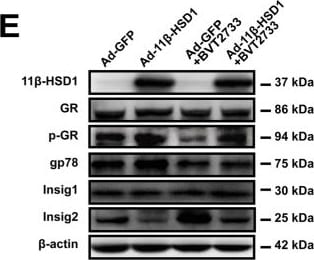
Detection of 11 beta-HSD1 by Western Blot
Lipogenesis pathway is activated by overexpression of 11 beta -HSD1. (A) Western blot detection of proteins related to the lipid biosynthesis, oxidation, secretion, uptake, and hydrolysis pathways in 11 beta -HSD1 overexpressed or GFP overexpressed Hep1-6 cells exposed or not to 0.25 μM BVT2733 and (B) relative protein levels (n = 3). (C) Oil red O staining of Hep1-6 cells and treatments from (A). (D) Measurement of triglyceride levels in Hep1-6 cells and treatments from (A) (n = 3). (E) Western blot showing the expression levels of lipogenesis pathway regulatory proteins in Hep1-6 cells and treatments from (A), and (F) relative protein levels (n = 3). *P<0.05, **P<0.01, ***P<0.001. Image collected and cropped by CiteAb from the following open publication (https://pubmed.ncbi.nlm.nih.gov/35637957), licensed under a CC-BY license. Not internally tested by R&D Systems.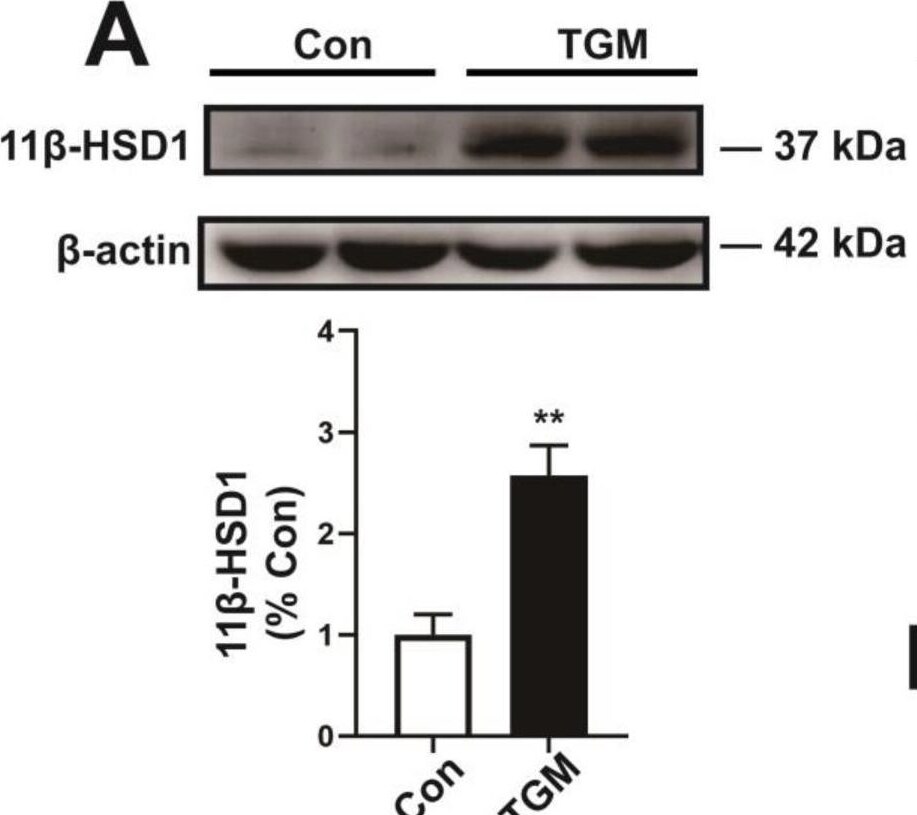
Detection of 11 beta-HSD1 by Western Blot
The phenotype of hepatocyte-specific 11 beta -HSD1 transgenic mice (TGM). (A) Western blot showing the expression of 11 beta -HSD1 in liver of Con vs TGM (n = 3). (B) Body weights (n = 10). (C) Liver weights (n = 10). (D) The statistical analysis of liver weight/body weight ratios (n = 10). (E) Oil red O staining of liver tissues. (F) Measurement of triglyceride levels in livers of Con vs TGM (n = 8). (G) Western blot detection of proteins related to lipogenesis and (H) relative protein levels (n = 3). (I) Western blot showing the expression levels of the GR and p-GR proteins in the nucleus and cytoplasm. *P<0.05, **P<0.01, ***P<0.001. Image collected and cropped by CiteAb from the following open publication (https://pubmed.ncbi.nlm.nih.gov/35637957), licensed under a CC-BY license. Not internally tested by R&D Systems.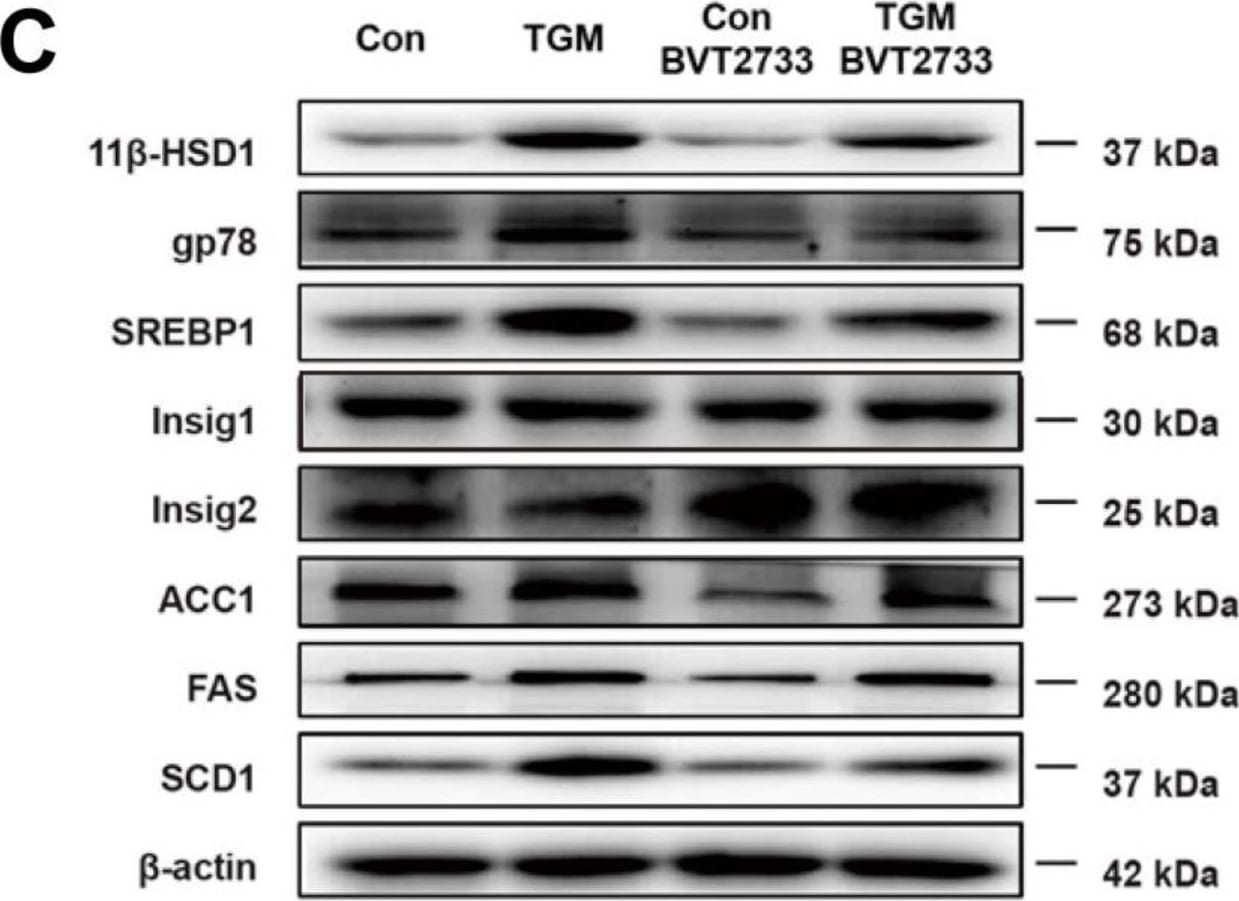
Detection of 11 beta-HSD1 by Western Blot
Lipogenesis pathway is activated in primary hepatocytes derived from TGM. (A) Oil red O staining of primary hepatocytes of Con vs TGM. Scale bars: 50 μm. (B) Measurement of triglyceride content in primary hepatocytes from Con vs TGM (n = 3). (C) Western blot showing the expression levels of lipogenesis pathway regulatory proteins in primary hepatocytes of Con vs TGM, treated or not with 0.25 μM BVT2733 and (D) relative protein levels (n = 3). *P<0.05, **P<0.01, ***P<0.001. Image collected and cropped by CiteAb from the following open publication (https://pubmed.ncbi.nlm.nih.gov/35637957), licensed under a CC-BY license. Not internally tested by R&D Systems.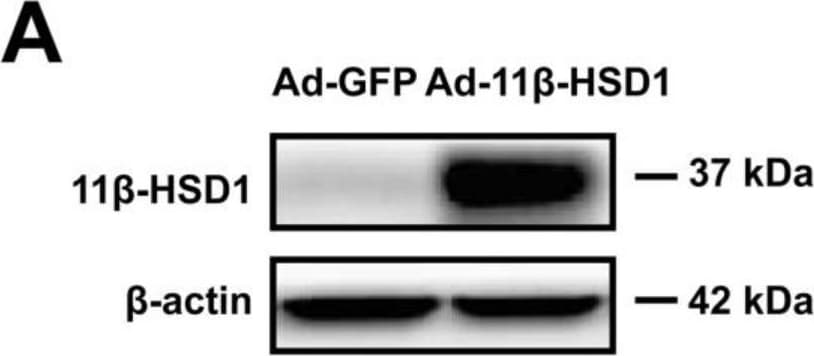
Detection of 11 beta-HSD1 by Western Blot
Lipid and triglyceride content increased in Hep1-6 cells that overexpressed 11 beta -HSD1. (A) Western blot showing the expression of 11 beta -HSD1 and (B) relative protein levels (n = 5). (C) Oil red O staining of Hep1-6 cells with 5% BSA or 300 μM OA/PA treatment. Box indicates magnified field of view. (D) Measurement of triglyceride content in Hep1-6 cells with the same treatment as (C) (n = 3). **P<0.01, ***P<0.001. Image collected and cropped by CiteAb from the following open publication (https://pubmed.ncbi.nlm.nih.gov/35637957), licensed under a CC-BY license. Not internally tested by R&D Systems.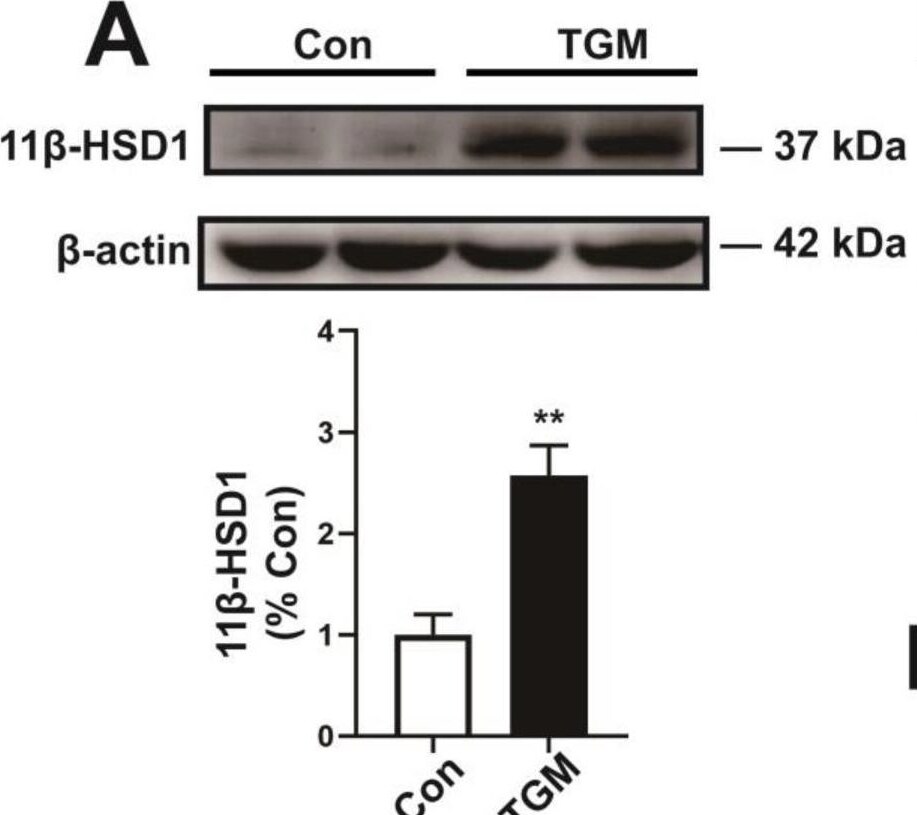
Detection of 11 beta-HSD1 by Western Blot
The phenotype of hepatocyte-specific 11 beta -HSD1 transgenic mice (TGM). (A) Western blot showing the expression of 11 beta -HSD1 in liver of Con vs TGM (n = 3). (B) Body weights (n = 10). (C) Liver weights (n = 10). (D) The statistical analysis of liver weight/body weight ratios (n = 10). (E) Oil red O staining of liver tissues. (F) Measurement of triglyceride levels in livers of Con vs TGM (n = 8). (G) Western blot detection of proteins related to lipogenesis and (H) relative protein levels (n = 3). (I) Western blot showing the expression levels of the GR and p-GR proteins in the nucleus and cytoplasm. *P<0.05, **P<0.01, ***P<0.001. Image collected and cropped by CiteAb from the following open publication (https://pubmed.ncbi.nlm.nih.gov/35637957), licensed under a CC-BY license. Not internally tested by R&D Systems.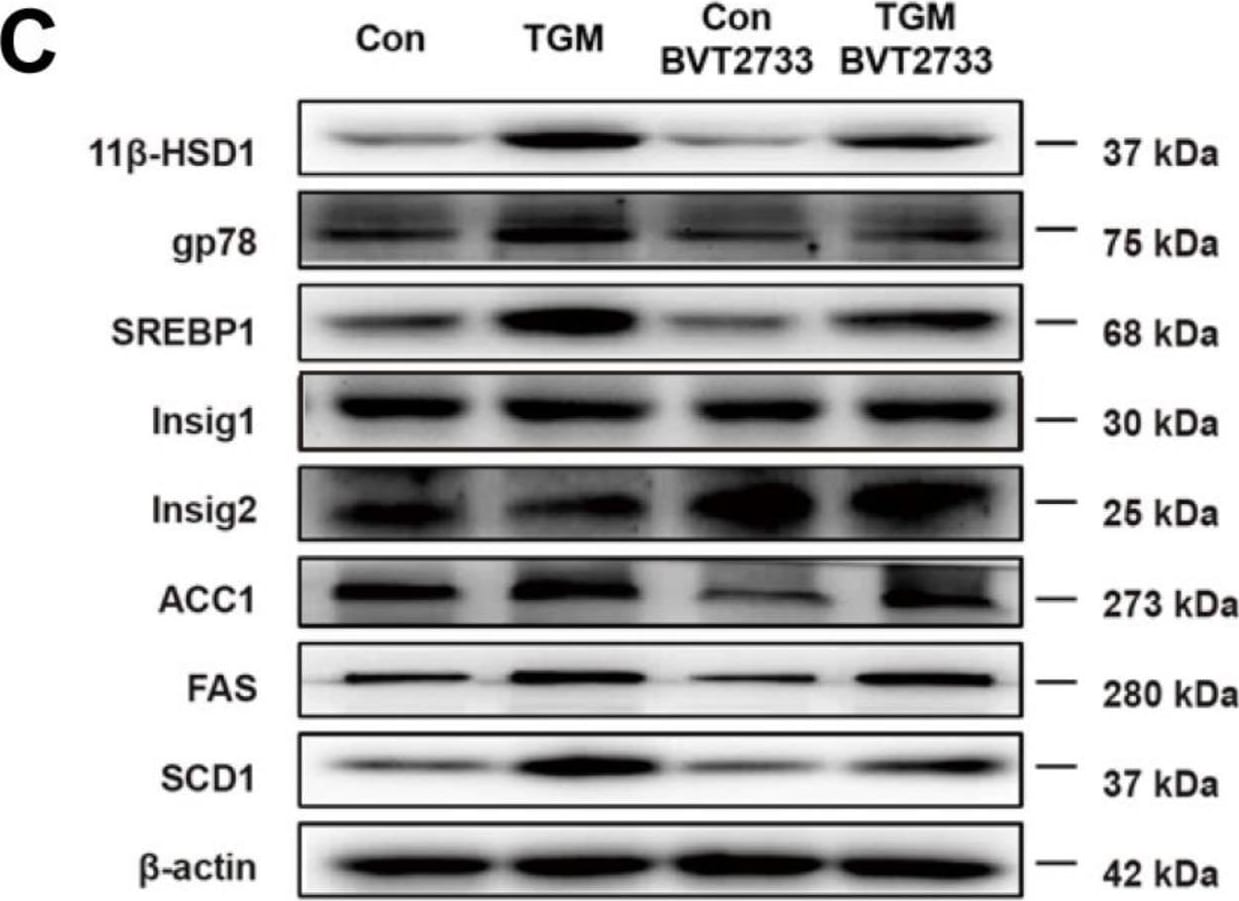
Detection of 11 beta-HSD1 by Western Blot
Lipogenesis pathway is activated in primary hepatocytes derived from TGM. (A) Oil red O staining of primary hepatocytes of Con vs TGM. Scale bars: 50 μm. (B) Measurement of triglyceride content in primary hepatocytes from Con vs TGM (n = 3). (C) Western blot showing the expression levels of lipogenesis pathway regulatory proteins in primary hepatocytes of Con vs TGM, treated or not with 0.25 μM BVT2733 and (D) relative protein levels (n = 3). *P<0.05, **P<0.01, ***P<0.001. Image collected and cropped by CiteAb from the following open publication (https://pubmed.ncbi.nlm.nih.gov/35637957), licensed under a CC-BY license. Not internally tested by R&D Systems.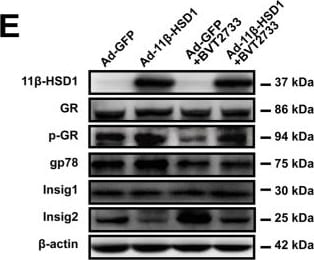
Detection of 11 beta-HSD1 by Western Blot
Lipogenesis pathway is activated by overexpression of 11 beta -HSD1. (A) Western blot detection of proteins related to the lipid biosynthesis, oxidation, secretion, uptake, and hydrolysis pathways in 11 beta -HSD1 overexpressed or GFP overexpressed Hep1-6 cells exposed or not to 0.25 μM BVT2733 and (B) relative protein levels (n = 3). (C) Oil red O staining of Hep1-6 cells and treatments from (A). (D) Measurement of triglyceride levels in Hep1-6 cells and treatments from (A) (n = 3). (E) Western blot showing the expression levels of lipogenesis pathway regulatory proteins in Hep1-6 cells and treatments from (A), and (F) relative protein levels (n = 3). *P<0.05, **P<0.01, ***P<0.001. Image collected and cropped by CiteAb from the following open publication (https://pubmed.ncbi.nlm.nih.gov/35637957), licensed under a CC-BY license. Not internally tested by R&D Systems.Applications for 11 beta-HSD1 Antibody
Application
Recommended Usage
Simple Western
10-50 µg/mL
Sample: Human liver tissue
Sample: Human liver tissue
Western Blot
0.5 µg/mL
Sample: Human, mouse and rat liver tissue
Sample: Human, mouse and rat liver tissue
Formulation, Preparation, and Storage
Purification
Antigen Affinity-purified
Reconstitution
Reconstitute at 0.2 mg/mL in sterile PBS. For liquid material, refer to CoA for concentration.
Loading...
Formulation
Lyophilized from a 0.2 μm filtered solution in PBS with Trehalose. See Certificate of Analysis for details.<br/>*Small pack size (-SP) is supplied either lyophilized or as a 0.2 µm filtered solution in PBS.
Shipping
Lyophilized product is shipped at ambient temperature. Liquid small pack size (-SP) is shipped with polar packs. Upon receipt, store immediately at the temperature recommended below.
Stability & Storage
Use a manual defrost freezer and avoid repeated freeze-thaw cycles.
- 12 months from date of receipt, -20 to -70 °C as supplied.
- 1 month, 2 to 8 °C under sterile conditions after reconstitution.
- 6 months, -20 to -70 °C under sterile conditions after reconstitution.
Calculators
Background: 11 beta-HSD1
Long Name
11 beta Hydroxysteroid Dehydrogenase 1
Alternate Names
11 betaHSD1, HSD11B1
Gene Symbol
HSD11B1
UniProt
Additional 11 beta-HSD1 Products
Product Documents for 11 beta-HSD1 Antibody
Certificate of Analysis
To download a Certificate of Analysis, please enter a lot or batch number in the search box below.
Note: Certificate of Analysis not available for kit components.
Product Specific Notices for 11 beta-HSD1 Antibody
For research use only
Related Research Areas
Citations for 11 beta-HSD1 Antibody
 Powered by Bioz
Customer Reviews for 11 beta-HSD1 Antibody
There are currently no reviews for this product. Be the first to review 11 beta-HSD1 Antibody and earn rewards!
Have you used 11 beta-HSD1 Antibody?
Submit a review and receive an Amazon gift card!
$25/€18/£15/$25CAN/¥2500 for a review with an image
$10/€7/£6/$10CAN/¥1110 for a review without an image
Submit a review
Protocols
Find general support by application which include: protocols, troubleshooting, illustrated assays, videos and webinars.
- Cellular Response to Hypoxia Protocols
- R&D Systems Quality Control Western Blot Protocol
- Troubleshooting Guide: Western Blot Figures
- Western Blot Conditions
- Western Blot Protocol
- Western Blot Protocol for Cell Lysates
- Western Blot Troubleshooting
- Western Blot Troubleshooting Guide
- View all Protocols, Troubleshooting, Illustrated assays and Webinars
Loading...