
Mouse Ly-6G/Ly-6C (Gr-1) Antibody (RB6-8C5)
R&D Systems | Catalog # MAB1037

Key Product Details
Species Reactivity
Validated:
Mouse
Cited:
Human, Mouse, Bovine, Transgenic Mouse, Xenograft
Applications
Validated:
Immunohistochemistry, Flow Cytometry, Immunocytochemistry, Immunoprecipitation, COMET, CyTOF-ready
Cited:
Immunohistochemistry, Immunohistochemistry-Paraffin, Immunohistochemistry-Frozen, Western Blot, Neutralization, Flow Cytometry, Immunocytochemistry, Immunodepletion
Label
Unconjugated
Antibody Source
Monoclonal Rat IgG2B Clone # RB6-8C5
Loading...
Product Specifications
Immunogen
The immunogen for this antibody is Ly-6G (Gr-1, Gr1).
Specificity
Detects Ly-6G/Ly-6C (Gr-1). Weak cross-reactivity with Ly-6C is observed.
Clonality
Monoclonal
Host
Rat
Isotype
IgG2B
Scientific Data Images for Mouse Ly-6G/Ly-6C (Gr-1) Antibody (RB6-8C5)
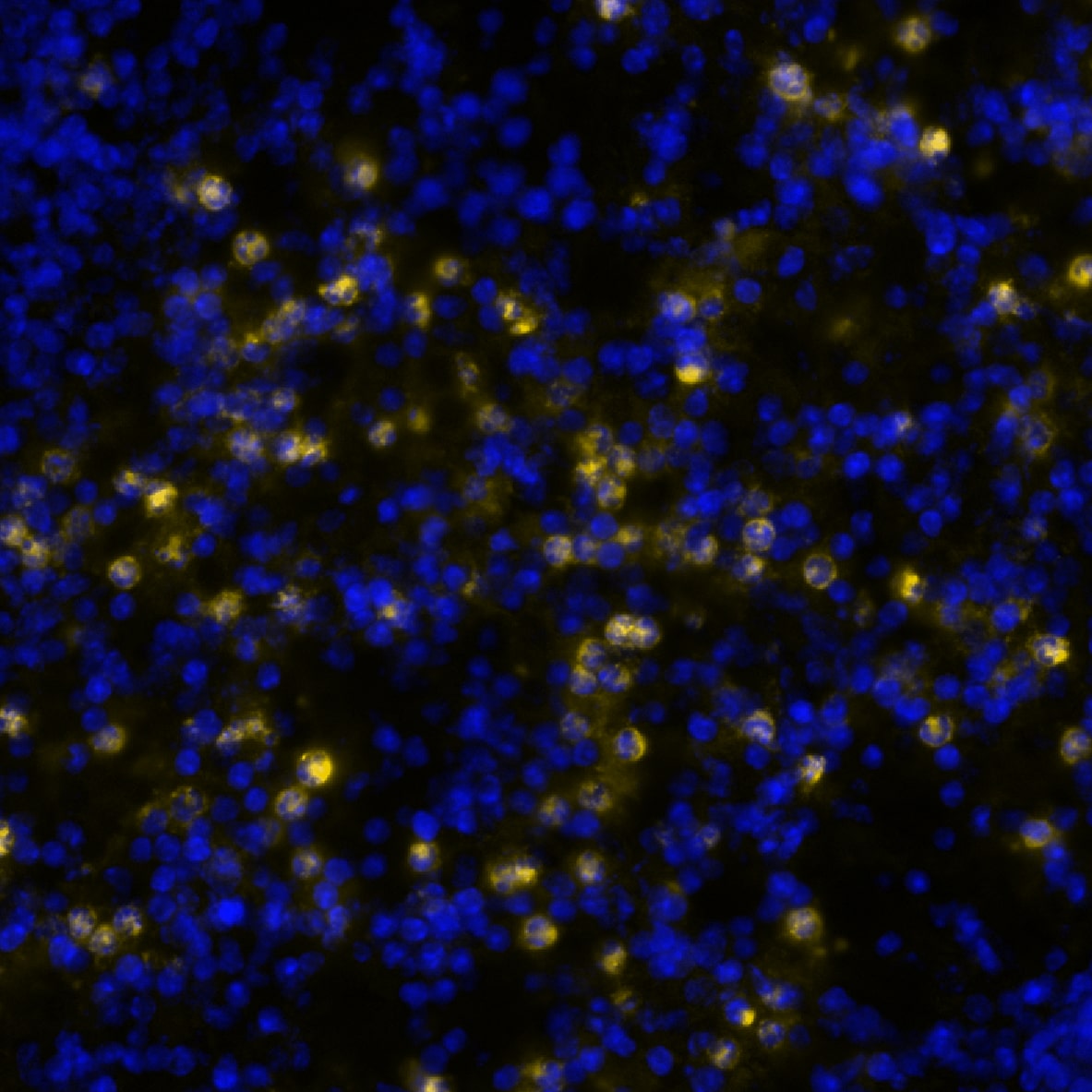
Detection of Ly-6G/Ly-6C in Frozen Mouse Spleen viaseqIF™ staining on COMET™
Ly-6G/Ly-6C was detected in frozen sections of mouse spleen using Rat Anti-Mouse Ly-6G/Ly-6C Monoclonal Antibody (Catalog # MAB1037) at 7ug/mL at 37 ° Celsius for 4 minutes. Before incubation with the primary antibody, tissue underwent preprocessing by incubating tissue with Multi Staining Buffer (Lunaphore Catalog # BU06) for 5 minutes at room temperature followed by a 20 minute incubation in Tris-Buffered Saline + 0.2% Triton at room temperature. Tissue was stained using the Alexa Fluor™ 555 Goat anti-Rat IgG Secondary Antibody at 1:100 at 37 ° Celsius for 2 minutes. (Yellow; Lunaphore Catalog # DR555RT) and counterstained with DAPI (blue; Lunaphore Catalog # DR100). Specific staining was localized to the cell membrane. Protocol available in COMET™ Panel Builder.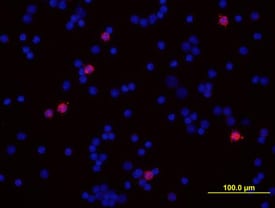
Ly-6G/Ly-6C (Gr-1) in Mouse Spleno-cytes.
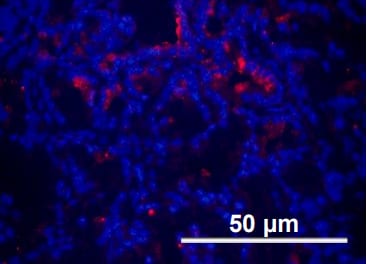
Ly-6G/Ly-6C (Gr-1) was detected in immersion fixed mouse splenocytes using Mouse Ly-6G/Ly-6C (Gr-1) Monoclonal Anti-body (Catalog # MAB1037) at 10 µg/mL for 3 hours at room temperature. Cells were stained using the NorthernLights™ 557-conjugated Anti-Rat IgG Secondary Antibody (red; Catalog # NL013) and counter-stained with DAPI (blue). View our protocol for Fluorescent ICC Staining of Non-adherent Cells.
Ly-6G/Ly-6C (Gr-1) in Mouse Spleen.
Ly-6G/Ly-6C (Gr-1) was detected in perfusion fixed frozen sections of mouse spleen using Rat Anti-Mouse Ly-6G/Ly-6C (Gr-1)Monoclonal Antibody (Catalog # MAB1037) at 3 µg/mL overnight at 4 °C. Tissue was stained using the Anti-Rat HRP-DAB Cell & Tissue Staining Kit (brown; Catalog # CTS017) and counterstained with hematoxylin (blue). Specific staining was localized to cytoplasm in splenocytes. View our protocol for Chromogenic IHC Staining of Frozen Tissue Sections.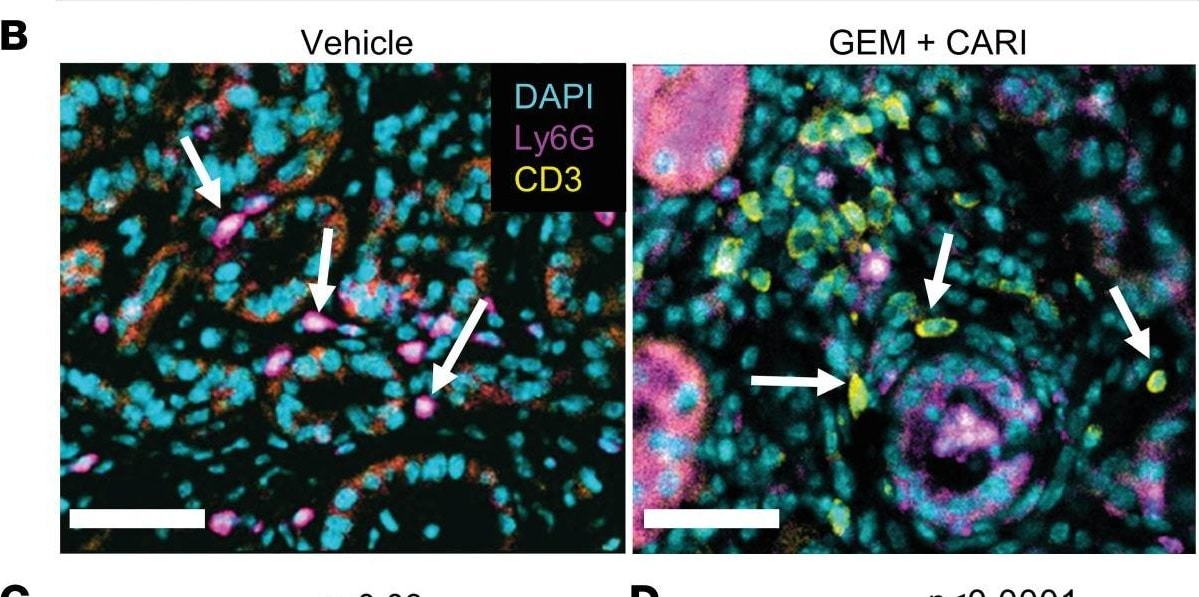
Detection of Mouse Mouse Ly-6G/Ly-6C (Gr-1) Antibody by Immunohistochemistry
Lymphocyte/neutrophil ratio increases upon NHE1 inhibition in tumor sections of KPfC mice.(A) H&E (left) and PAS-stained KPfC mouse tissue sections after vehicle and gemcitabine + cariporide (GEM+CARI) therapy. Cells of innate immunity, such as neutrophils (arrows), utilize glycogen and are thus PAS+ (purple), in contrast to, for example, lymphocytes. Scale bar: 50 μm. (B) Representative IHC images stained for Ly6G+ neutrophils (magenta, arrows on left image), CD3+ lymphocytes (yellow, arrows on the right image), and nuclei with DAPI (cyan). Scale bar: 50 μm. (C) CD3/Ly6G ratio was assessed by dividing the number of CD3+ cells by the number of Ly6G+ cells in every tumor node. Data points depict the mean CD3/Ly6G ratio derived from each tumor node in individual mice; NVehicle = 10, NGEM = 9, NCARI = 10, NGEM+CARI = 11 mice. (D) To obtain the CD3/Ly6G ratio per tumor node, the number of CD3+ cells was divided by the respective number of Ly6G+ cells in each tumor node. Data points depict individual tumor nodes; nVehicle = 386, nGEM = 276, nCARI = 301, nGEM+CARI = 398. Data and statistical comparison in D and E are represented as median ± 95% CI using Kruskal-Wallis statistical test with Dunn’s post hoc test. Image collected and cropped by CiteAb from the following publication (https://pubmed.ncbi.nlm.nih.gov/37643024), licensed under a CC-BY license. Not internally tested by R&D Systems.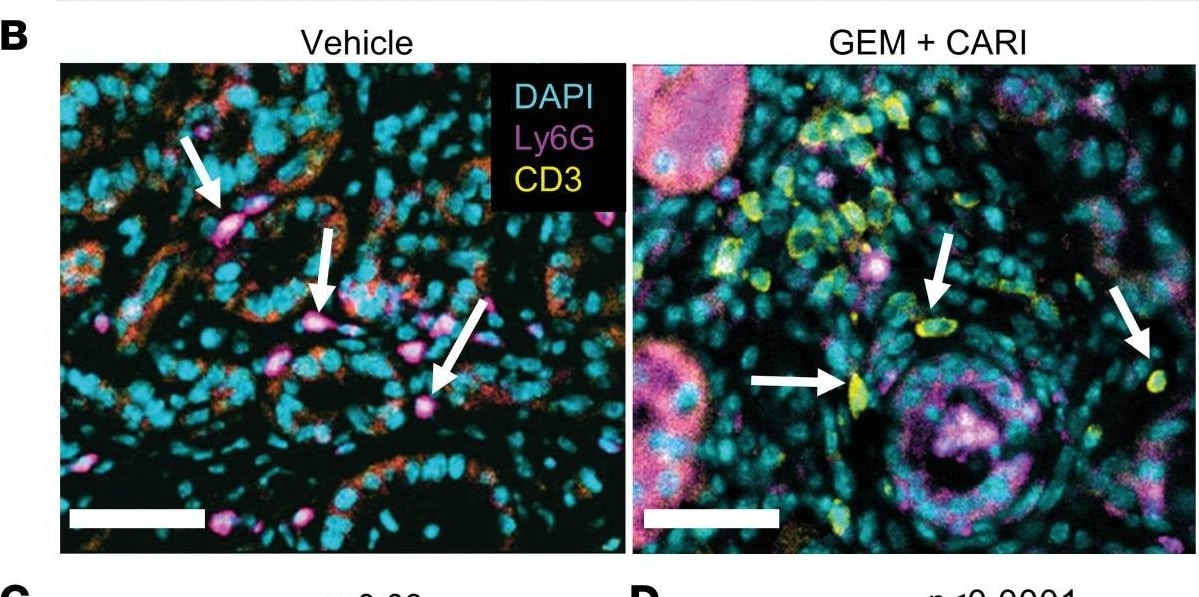
Detection of Mouse Gr-1/Ly-6G by Immunohistochemistry
Lymphocyte/neutrophil ratio increases upon NHE1 inhibition in tumor sections of KPfC mice.(A) H&E (left) and PAS-stained KPfC mouse tissue sections after vehicle and gemcitabine + cariporide (GEM+CARI) therapy. Cells of innate immunity, such as neutrophils (arrows), utilize glycogen and are thus PAS+ (purple), in contrast to, for example, lymphocytes. Scale bar: 50 μm. (B) Representative IHC images stained for Ly6G+ neutrophils (magenta, arrows on left image), CD3+ lymphocytes (yellow, arrows on the right image), and nuclei with DAPI (cyan). Scale bar: 50 μm. (C) CD3/Ly6G ratio was assessed by dividing the number of CD3+ cells by the number of Ly6G+ cells in every tumor node. Data points depict the mean CD3/Ly6G ratio derived from each tumor node in individual mice; NVehicle = 10, NGEM = 9, NCARI = 10, NGEM+CARI = 11 mice. (D) To obtain the CD3/Ly6G ratio per tumor node, the number of CD3+ cells was divided by the respective number of Ly6G+ cells in each tumor node. Data points depict individual tumor nodes; nVehicle = 386, nGEM = 276, nCARI = 301, nGEM+CARI = 398. Data and statistical comparison in D and E are represented as median ± 95% CI using Kruskal-Wallis statistical test with Dunn’s post hoc test. Image collected and cropped by CiteAb from the following open publication (https://pubmed.ncbi.nlm.nih.gov/37643024), licensed under a CC-BY license. Not internally tested by R&D Systems.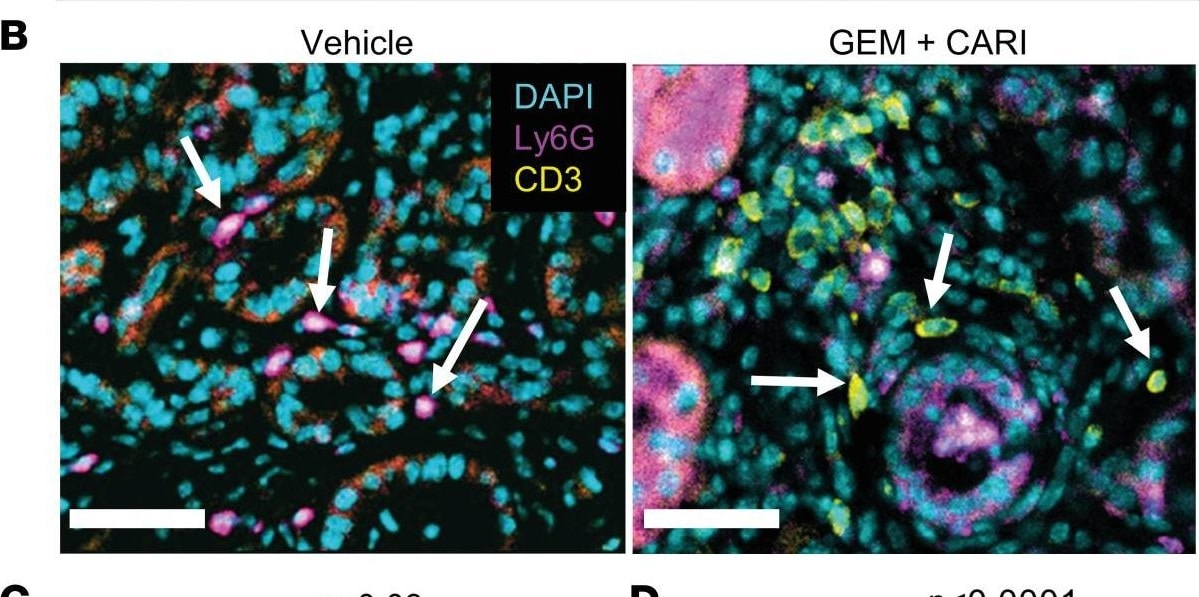
Detection of Mouse Ly-6G/Ly-6C (Gr-1) by Immunohistochemistry
Lymphocyte/neutrophil ratio increases upon NHE1 inhibition in tumor sections of KPfC mice.(A) H&E (left) and PAS-stained KPfC mouse tissue sections after vehicle and gemcitabine + cariporide (GEM+CARI) therapy. Cells of innate immunity, such as neutrophils (arrows), utilize glycogen and are thus PAS+ (purple), in contrast to, for example, lymphocytes. Scale bar: 50 μm. (B) Representative IHC images stained for Ly6G+ neutrophils (magenta, arrows on left image), CD3+ lymphocytes (yellow, arrows on the right image), and nuclei with DAPI (cyan). Scale bar: 50 μm. (C) CD3/Ly6G ratio was assessed by dividing the number of CD3+ cells by the number of Ly6G+ cells in every tumor node. Data points depict the mean CD3/Ly6G ratio derived from each tumor node in individual mice; NVehicle = 10, NGEM = 9, NCARI = 10, NGEM+CARI = 11 mice. (D) To obtain the CD3/Ly6G ratio per tumor node, the number of CD3+ cells was divided by the respective number of Ly6G+ cells in each tumor node. Data points depict individual tumor nodes; nVehicle = 386, nGEM = 276, nCARI = 301, nGEM+CARI = 398. Data and statistical comparison in D and E are represented as median ± 95% CI using Kruskal-Wallis statistical test with Dunn’s post hoc test. Image collected and cropped by CiteAb from the following open publication (https://pubmed.ncbi.nlm.nih.gov/37643024), licensed under a CC-BY license. Not internally tested by R&D Systems.Applications for Mouse Ly-6G/Ly-6C (Gr-1) Antibody (RB6-8C5)
Application
Recommended Usage
COMET
7 µg/mL
Sample: Perfusion fixed frozen sections of mouse spleen
Sample: Perfusion fixed frozen sections of mouse spleen
CyTOF-ready
Ready to be labeled using established conjugation methods. No BSA or other carrier proteins that could interfere with conjugation.
Flow Cytometry
0.25 µg/106 cells
Sample: Mouse splenocytes or peripheral blood cells
Sample: Mouse splenocytes or peripheral blood cells
Immunocytochemistry
8-25 µg/mL
Sample: Immersion fixed mouse splenocytes
Sample: Immersion fixed mouse splenocytes
Immunohistochemistry
3-25 µg/mL
Sample: Perfusion fixed frozen sections of mouse spleen
Sample: Perfusion fixed frozen sections of mouse spleen
Immunoprecipitation
Conlan, J.W. and R.J. North (1994) J. Exp. Med. 179:259.
Reviewed Applications
Read 8 reviews rated 4.6 using MAB1037 in the following applications:
Flow Cytometry Panel Builder
Bio-Techne Knows Flow Cytometry
Save time and reduce costly mistakes by quickly finding compatible reagents using the Panel Builder Tool.
Advanced Features
- Spectra Viewer - Custom analysis of spectra from multiple fluorochromes
- Spillover Popups - Visualize the spectra of individual fluorochromes
- Antigen Density Selector - Match fluorochrome brightness with antigen density

Formulation, Preparation, and Storage
Purification
Protein A or G purified from hybridoma culture supernatant
Reconstitution
Reconstitute at 0.5 mg/mL in sterile PBS. For liquid material, refer to CoA for concentration.
Loading...
Formulation
Lyophilized from a 0.2 μm filtered solution in PBS with Trehalose. See Certificate of Analysis for details.
*Small pack size (-SP) is supplied either lyophilized or as a 0.2 µm filtered solution in PBS.
*Small pack size (-SP) is supplied either lyophilized or as a 0.2 µm filtered solution in PBS.
Shipping
Lyophilized product is shipped at ambient temperature. Liquid small pack size (-SP) is shipped with polar packs. Upon receipt, store immediately at the temperature recommended below.
Stability & Storage
Use a manual defrost freezer and avoid repeated freeze-thaw cycles.
- 12 months from date of receipt, -20 to -70 °C as supplied.
- 1 month, 2 to 8 °C under sterile conditions after reconstitution.
- 6 months, -20 to -70 °C under sterile conditions after reconstitution.
Calculators
Background: Ly-6G/Ly-6C (Gr-1)
References
- Spangrude, G.J. et al. (1988) Science 241:58.
- Fleming, T.J. et al. (1993) J. Immunol. 151:2399.
- Lewinsohn, D.M. et al.(1987) J. Immunol. 147:22.
- Lagasse, E. and I.L. Weissman (1996) J. Immunol. Methods 197:139.
Long Name
A Myeloid Differentiation Antigen
Alternate Names
Ly-6C, Ly-6G, Ly6G
Entrez Gene IDs
546644 (Mouse)
Gene Symbol
LY6G
Additional Ly-6G/Ly-6C (Gr-1) Products
Product Documents for Mouse Ly-6G/Ly-6C (Gr-1) Antibody (RB6-8C5)
Certificate of Analysis
To download a Certificate of Analysis, please enter a lot or batch number in the search box below.
Note: Certificate of Analysis not available for kit components.
Product Specific Notices for Mouse Ly-6G/Ly-6C (Gr-1) Antibody (RB6-8C5)
For research use only
Citations for Mouse Ly-6G/Ly-6C (Gr-1) Antibody (RB6-8C5)
 Powered by Bioz
Customer Reviews for Mouse Ly-6G/Ly-6C (Gr-1) Antibody (RB6-8C5) (8)
4.6 out of 5
8 Customer Ratings
Have you used Mouse Ly-6G/Ly-6C (Gr-1) Antibody (RB6-8C5)?
Submit a review and receive an Amazon gift card!
$25/€18/£15/$25CAN/¥2500 Yen for a review with an image
$10/€7/£6/$10CAN/¥1110 Yen for a review without an image
Submit a review
Customer Images
Showing
1
-
5 of
8 reviews
Showing All
Filter By:
-
Application: ImmunohistochemistrySample Tested: Colon tissueSpecies: MouseVerified Customer | Posted 08/17/2021

-
Application: Immunocytochemistry/ImmunofluorescenceSample Tested: GranulocytesSpecies: MouseVerified Customer | Posted 06/02/2021
-
Application: Flow CytometrySample Tested: Pancreas tissueSpecies: MouseVerified Customer | Posted 01/15/2021
-
Application: Immunocytochemistry/ImmunofluorescenceSample Tested: Lung cancer tissueSpecies: MouseVerified Customer | Posted 04/18/2018
-
Application: Flow CytometrySample Tested: Pancreatic cancer cellsSpecies: pancreatic cancer cell line and MouseVerified Customer | Posted 04/11/2018
-
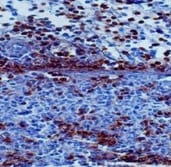
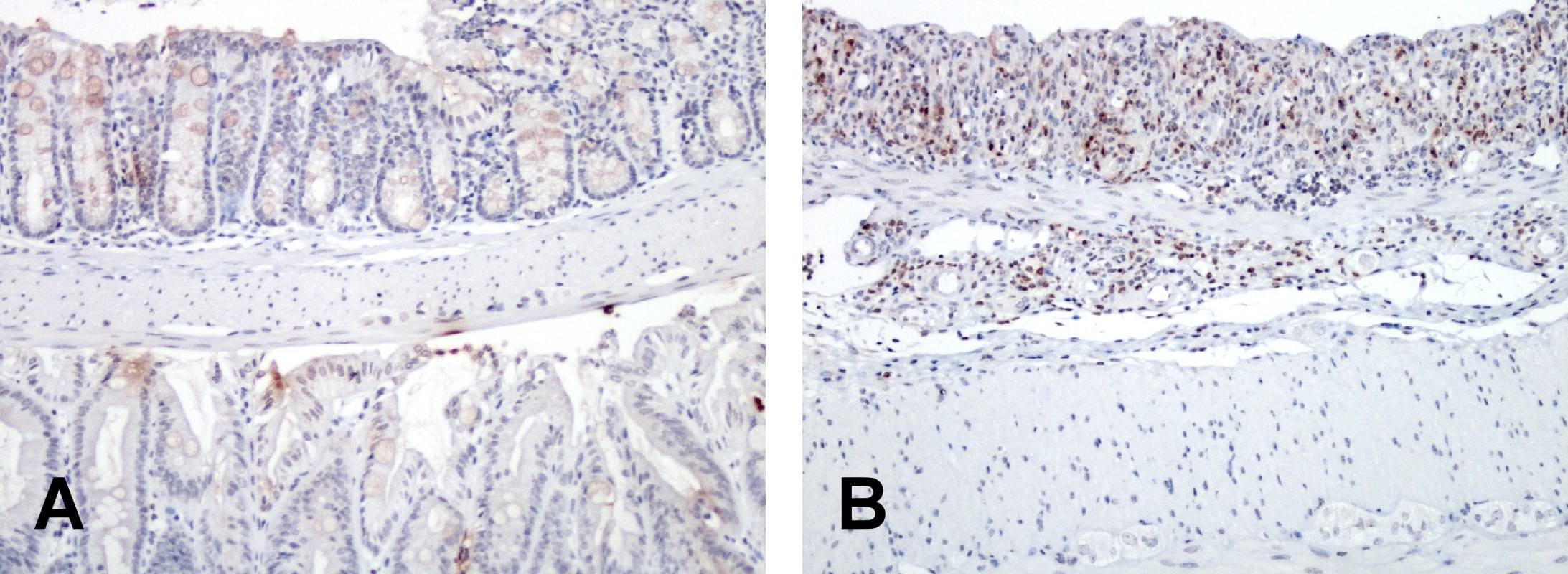
Application: ImmunohistochemistrySample Tested: colonSpecies: MouseVerified Customer | Posted 12/01/2017A. Normal mouse colon; B. DSS induced mouse colitis colon. The staining only work at 1:20 dilution instead of the recommended ~1:50 dilution. We tried 4 difference sources and this is the best one.
-
Application: Flow CytometrySample Tested: GranulocytesSpecies: MouseVerified Customer | Posted 07/17/2017
-
Application: Flow CytometrySample Tested: NeutrophilsSpecies: MouseVerified Customer | Posted 05/30/2017
There are no reviews that match your criteria.
Protocols
Find general support by application which include: protocols, troubleshooting, illustrated assays, videos and webinars.
- 7-Amino Actinomycin D (7-AAD) Cell Viability Flow Cytometry Protocol
- Antigen Retrieval Protocol (PIER)
- Antigen Retrieval for Frozen Sections Protocol
- Appropriate Fixation of IHC/ICC Samples
- Cellular Response to Hypoxia Protocols
- Chromogenic IHC Staining of Formalin-Fixed Paraffin-Embedded (FFPE) Tissue Protocol
- Chromogenic Immunohistochemistry Staining of Frozen Tissue
- ClariTSA™ Fluorophore Kits
- Detection & Visualization of Antibody Binding
- Extracellular Membrane Flow Cytometry Protocol
- Flow Cytometry Protocol for Cell Surface Markers
- Flow Cytometry Protocol for Staining Membrane Associated Proteins
- Flow Cytometry Staining Protocols
- Flow Cytometry Troubleshooting Guide
- Fluorescent IHC Staining of Frozen Tissue Protocol
- Graphic Protocol for Heat-induced Epitope Retrieval
- Graphic Protocol for the Preparation and Fluorescent IHC Staining of Frozen Tissue Sections
- Graphic Protocol for the Preparation and Fluorescent IHC Staining of Paraffin-embedded Tissue Sections
- Graphic Protocol for the Preparation of Gelatin-coated Slides for Histological Tissue Sections
- ICC Cell Smear Protocol for Suspension Cells
- ICC Immunocytochemistry Protocol Videos
- ICC for Adherent Cells
- IHC Sample Preparation (Frozen sections vs Paraffin)
- Immunocytochemistry (ICC) Protocol
- Immunocytochemistry Troubleshooting
- Immunofluorescence of Organoids Embedded in Cultrex Basement Membrane Extract
- Immunofluorescent IHC Staining of Formalin-Fixed Paraffin-Embedded (FFPE) Tissue Protocol
- Immunohistochemistry (IHC) and Immunocytochemistry (ICC) Protocols
- Immunohistochemistry Frozen Troubleshooting
- Immunohistochemistry Paraffin Troubleshooting
- Immunoprecipitation Protocol
- Intracellular Flow Cytometry Protocol Using Alcohol (Methanol)
- Intracellular Flow Cytometry Protocol Using Detergents
- Intracellular Nuclear Staining Flow Cytometry Protocol Using Detergents
- Intracellular Staining Flow Cytometry Protocol Using Alcohol Permeabilization
- Intracellular Staining Flow Cytometry Protocol Using Detergents to Permeabilize Cells
- Preparing Samples for IHC/ICC Experiments
- Preventing Non-Specific Staining (Non-Specific Binding)
- Primary Antibody Selection & Optimization
- Propidium Iodide Cell Viability Flow Cytometry Protocol
- Protocol for Heat-Induced Epitope Retrieval (HIER)
- Protocol for Liperfluo
- Protocol for Making a 4% Formaldehyde Solution in PBS
- Protocol for VisUCyte™ HRP Polymer Detection Reagent
- Protocol for the Characterization of Human Th22 Cells
- Protocol for the Characterization of Human Th9 Cells
- Protocol for the Fluorescent ICC Staining of Cell Smears - Graphic
- Protocol for the Fluorescent ICC Staining of Cultured Cells on Coverslips - Graphic
- Protocol for the Preparation & Fixation of Cells on Coverslips
- Protocol for the Preparation and Chromogenic IHC Staining of Frozen Tissue Sections
- Protocol for the Preparation and Chromogenic IHC Staining of Frozen Tissue Sections - Graphic
- Protocol for the Preparation and Chromogenic IHC Staining of Paraffin-embedded Tissue Sections
- Protocol for the Preparation and Chromogenic IHC Staining of Paraffin-embedded Tissue Sections - Graphic
- Protocol for the Preparation and Fluorescent ICC Staining of Cells on Coverslips
- Protocol for the Preparation and Fluorescent ICC Staining of Non-adherent Cells
- Protocol for the Preparation and Fluorescent ICC Staining of Stem Cells on Coverslips
- Protocol for the Preparation and Fluorescent IHC Staining of Frozen Tissue Sections
- Protocol for the Preparation and Fluorescent IHC Staining of Paraffin-embedded Tissue Sections
- Protocol for the Preparation of Gelatin-coated Slides for Histological Tissue Sections
- Protocol for the Preparation of a Cell Smear for Non-adherent Cell ICC - Graphic
- Protocol: Annexin V and PI Staining by Flow Cytometry
- Protocol: Annexin V and PI Staining for Apoptosis by Flow Cytometry
- TUNEL and Active Caspase-3 Detection by IHC/ICC Protocol
- The Importance of IHC/ICC Controls
- Troubleshooting Guide: Fluorokine Flow Cytometry Kits
- Troubleshooting Guide: Immunohistochemistry
- View all Protocols, Troubleshooting, Illustrated assays and Webinars
Loading...