Mouse Proprotein Convertase 9 DuoSet ELISA

R&D Systems | Catalog # DY3985

R&D Systems
Loading...

Key Product Details

Assay Type

Solid Phase Sandwich ELISA

Assay Range

31.2-2000 pg/mL

Sample Type

Cell culture supernates, serum, and plasma
Note: Diluents for complex matrices, such as serum and plasma, should be evaluated prior to use in this DuoSet

Reactivity

Mouse

Mouse Proprotein Convertase 9 DuoSet ELISA Features

  • Optimized capture and detection antibody pairings with recommended concentrations save lengthy development time
  • Development protocols are provided to guide further assay optimization
  • Assay can be customized to your specific needs
  • Economical alternative to complete kits
Loading...

Product Summary for Mouse Proprotein Convertase 9 DuoSet ELISA

This DuoSet ELISA Development kit contains the basic components required for the development of sandwich ELISAs to measure natural and recombinant mouse Proprotein Convertase 9 / PCSK9. The suggested diluent is suitable for the analysis of most cell culture supernate samples. Diluents for complex matrices, such as serum and plasma, should be evaluated prior to use in this DuoSet ELISA.

Product Specifications

Assay Format

96-well strip plate (sold separately)

Sample Volume Required

100 µL

Detection Method

Colorimetric ELISA - 450nm (TMB)

Conjugate

Biotin

Label

HRP

Scientific Data Images for Mouse Proprotein Convertase 9 DuoSet ELISA

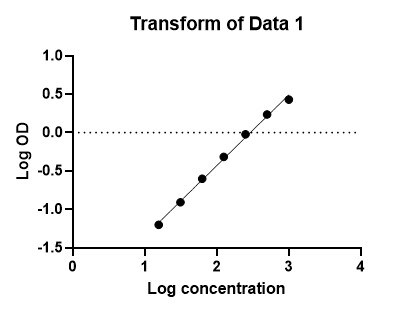
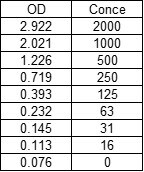
Mouse Proprotein Convertase 9 / PCSK9 ELISA Standard Curve

Mouse Proprotein Convertase 9 / PCSK9 ELISA Standard Curve

Kit Contents for Mouse Proprotein Convertase 9 DuoSet ELISA

  • Capture Antibody
  • Detection Antibody
  • Recombinant Standard
  • Streptavidin conjugated to horseradish-peroxidase (Streptavidin-HRP)

Other Reagents Required

DuoSet Ancillary Reagent Kit 2 (5 plates): (Catalog # DY008C) containing 96 well microplates, plate sealers, substrate solution, stop solution, plate coating buffer (PBS), wash buffer, and Reagent Diluent Concentrate 2.

PBS: (Catalog # DY006), or 137 mM NaCl, 2.7 mM KCl, 8.1 mM Na2HPO4, 1.5 mM KH2PO4, pH 7.2 - 7.4, 0.2 µm filtered

Wash Buffer: (Catalog # WA126), or equivalent

Reagent Diluent*

Blocking Buffer*

Substrate Solution: ELISA TMB Substrate (Catalog # DY999B or DY999B-250)

Stop Solution: Methanesulfonic acid (Catalog # DY994B or DY994B-250)

Microplates: (Catalog # DY990), or equivalent

Plate Sealers: (Catalog # DY992), or equivalent

*For the recommended Reagent Diluent and Blocking Buffer for a specific DuoSet ELISA Development Kit, refer to the product datasheet.

Preparation and Storage

Shipping

The product is shipped at ambient temperature. Upon receipt, store it immediately at the temperature recommended below.

Stability & Storage

Store the unopened product at 2 - 8 °C. Do not use past expiration date.

Background: Proprotein Convertase 9/PCSK9

PCSK9 (proprotein convertase subtilisin kexin 9), also called proprotein convertase 9 or NARC-1 (neural apoptosis-regulated convertase 1), is a member of the proteinase K subfamily of subtilisinrelated serine endoproteases. Mouse PCSK9 cDNA encodes 694 amino acids, including a signal peptide, a prodomain, and a catalytic domain. PCSK9 is highly expressed in the liver, intestine, and kidney. It is initially synthesized as a soluble 74 kDa precursor protein. In the endoplasmic reticulum, it undergoes autocatalytic intramolecular cleavage to generate a 14 kDa prodomain and a 60 kDa catalytic domain. While within the secretion pathway, the prodomain remains associated and functions as a chaperone for the catalytic domain (1-4). During secretion, a portion of active PCSK9 may undergo additional N-terminal proteolysis by furin or proprotein convertase 5/6A, creating an inactive 53 kDa form (5). This cleavage site is conserved between mouse and human or rat PCSK9, which share 78% or 93% amino acid sequence identity, respectively. While the 60 kDa protein is the major form, its ratio with the 53 kDa forms is variable in humans (5, 6). 
The primary physiologic function of PCSK9 is to mediate the degradation of low density lipoprotein receptor (LDLR). Early observations indicated that gain-of-function missense mutations in the human PCSK9 gene can cause an autosomal dominant form of hypercholesterolemia (7, 8). The expression of PCSK9 is also upregulated by the sterol regulatory element binding proteins (SREBPs), a family of transcription factors that are responsible for the upregulation of genes involved in cholesterol and fatty acid metabolism, such as the LDLR gene (9, 10). Further experimental evidence revealed that when the mouse PCSK9 gene is deleted, LDLR expression in hepatocytes is increased. Conversely, PCSK9 over-expression decreases liver LDLR protein expression (11, 12). In humans, genetic analyses have shown that individuals who have nonsense or loss-of-function mutations in the PCSK9 gene have significantly lower plasma LDL cholesterol levels, while in mouse, administration of a PCSK9 neutralizing antibody or antisense oligonucleotides lowers serum cholesterol (1, 13-15). These investigations clearly indicate that PCSK9 plays a key role in reducing the hepatic LDLR levels. Paradoxically, administration of cholesterol-lowering drugs such as statins appear to enhance production of PCSK9 (6). 
The underlying mechanism of cholesterol regulation by PCSK9 is as follows: under normal physiologic conditions, the LDLR is internalized at the cell surface and directed to the endosomes in order to be recycled back to the cell surface. PCSK9 binds to the EGF domain of the LDLR and prevents LDLR from being sorted to the endosomes. Instead, the PCSK9/LDLR complex is redistributed to the lysosomes for degradation (16-18). As such, PCSK9 regulates the amount of LDLR in the circulation and hence, modulates cholesterol levels. Serum PCSK9 concentrations have been found to be directly associated with cholesterol levels (19, 20). Since PCSK9 loss-of-function mutations strikingly reduce risk of coronary heart diseases, PCSK9 has become an attractive drug target (1, 21, 22). One approach is to generate small molecules that are able to interfere with PCSK9 autoactivation and its interaction with LDLR. Other approaches aiming to reduce the amount of PCSK9 in the circulation, such as small interfering RNAs (siRNAs), have also shown promise (23, 24).

Alternate Names

FH3, FHCL3, HCHOLA3, LDLCQ1, NARC-1, NARC1, PC9, PCSK9

Entrez Gene IDs

255738 (Human); 100102 (Mouse); 298296 (Rat); 102142788 (Cynomolgus Monkey)

Gene Symbol

PCSK9

Additional Proprotein Convertase 9/PCSK9 Products

Product Documents for Mouse Proprotein Convertase 9 DuoSet ELISA

Certificate of Analysis

To download a Certificate of Analysis, please enter a lot or batch number in the search box below.

Note: Certificate of Analysis not available for kit components.

Product Specific Notices for Mouse Proprotein Convertase 9 DuoSet ELISA

For research use only

Related Research Areas

Citations for Mouse Proprotein Convertase 9 DuoSet ELISA

Customer Reviews for Mouse Proprotein Convertase 9 DuoSet ELISA (2)

5 out of 5
2 Customer Ratings
5 Stars
100%
4 Stars
0%
3 Stars
0%
2 Stars
0%
1 Stars
0%

Have you used Mouse Proprotein Convertase 9 DuoSet ELISA?

Submit a review and receive an Amazon gift card!

$25/€18/£15/$25CAN/¥2500 Yen for a review with an image

$10/€7/£6/$10CAN/¥1110 Yen for a review without an image

Submit a review
Amazon Gift Card

Customer Images


Showing  1 - 2 of 2 reviews Showing All
Filter By:
  • Mouse Proprotein Convertase 9 DuoSet ELISA
    Name: Anonymous
    Sample Tested: Serum
    Verified Customer | Posted 05/22/2023
    Mouse Proprotein Convertase 9 DuoSet ELISA DY3985
  • Mouse Proprotein Convertase 9 DuoSet ELISA
    Name: Anonymous
    Sample Tested: Serum
    Verified Customer | Posted 05/05/2023
    Mouse Proprotein Convertase 9 DuoSet ELISA DY3985

There are no reviews that match your criteria.

Showing  1 - 2 of 2 reviews Showing All

FAQs

No product specific FAQs exist for this product.

View all FAQs for ELISA Kits
Loading...