
HGF, also known as scatter factor and hepatopoietin A, is a pleiotropic protein in the plasminogen subfamily of S1 peptidases. It is a multidomain molecule that includes an N-terminal PAN/APPLE‑like domain, four Kringle domains, and a serine proteinase-like domain that has no detectable protease activity (1‑5). Human HGF is secreted as an inactive 728 amino acid (aa) single chain propeptide. It is cleaved after the fourth Kringle domain by a serine protease to form bioactive
disulfide‑linked HGF with a 60 kDa alpha and 30 kDa beta chain. Alternate splicing generates human HGF isoforms that lack the proteinase‑like domain and different numbers of the Kringle domains. Human HGF shares 91%‑94% aa sequence identity with bovine, canine, feline, mouse, and rat HGF. HGF binds heparan-sulfate proteoglycans and the widely expressed receptor tyrosine kinase, HGF R/c-MET (6, 7). HGF-dependent c-MET activation is implicated in the development of many human cancers (8). HGF regulates epithelial morphogenesis by inducing cell scattering and branching tubulogenesis (9, 10). HGF induces the up‑regulation of integrin alpha 2 beta 1 in epithelial cells by a selective increase in alpha 2 gene transcription (11). This integrin serves as a collagen I receptor, and its blockade disrupts epithelial cell branching tubulogenesis (11, 12). HGF can also alter epithelium morphology by the induction of nectin‑1 alpha ectodomain shedding, an adhesion protein component of adherens junctions (13). In the thyroid, HGF induces the proliferation, motility, and loss of differentiation markers of thyrocytes and inhibits TSH‑stimulated iodine uptake (14). HGF promotes the motility of cardiac stem cells in damaged myocardium (15).
Recombinant Human HGF Protein
R&D Systems | Catalog # 294-HG

Key Product Details
- R&D Systems Sf 21 (baculovirus)-derived Recombinant Human HGF Protein (294-HG)
- Quality control testing to verify active proteins with lot specific assays by in-house scientists
- All R&D Systems proteins are covered with a 100% guarantee
Source
Accession Number
Structure / Form
Applications
Product Specifications
Source
Gln32-Ser728 (Asp384Asn, Asp416Asn, Leu622Ser, His645Arg, Val678Ile)
Purity
Endotoxin Level
N-terminal Sequence Analysis
beta chain: Val495
Predicted Molecular Mass
SDS-PAGE
60 kDa, and 33-34 kDa, reducing conditions
Activity
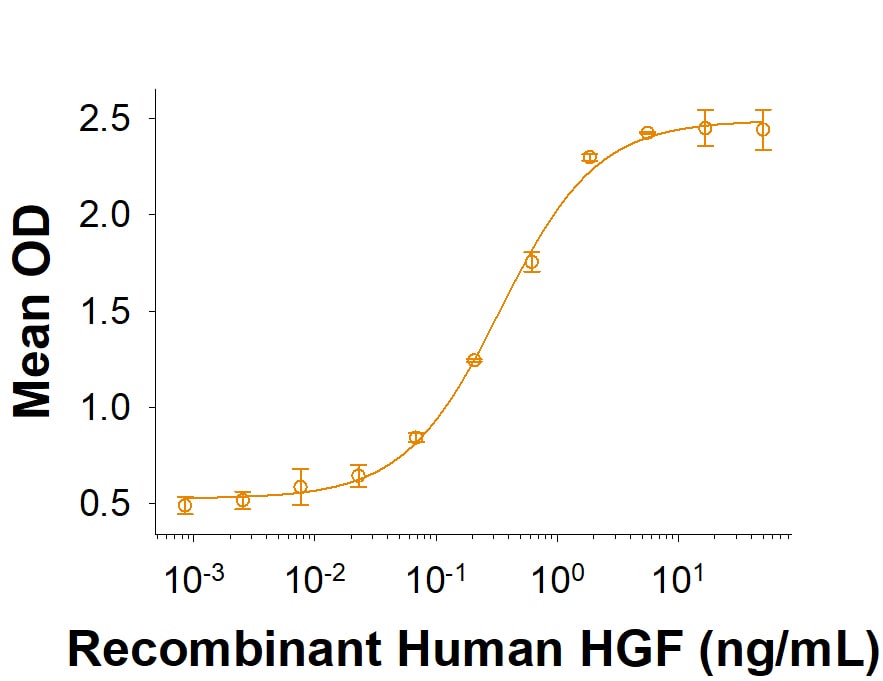
The ED50 for this effect is equal to or less than 4.00 ng/mL.
Reviewed Applications
Read 6 reviews rated 4.8 using 294-HG in the following applications:
Scientific Data Images for Recombinant Human HGF Protein
Recombinant Human HGF Protein Bioactivity
Recombinant Human HGF (294-HG) induces IL-11 secretion in Saos-2 human osteosarcoma cells. The ED50 for this effect is equal to less than 4.00 ng/mL.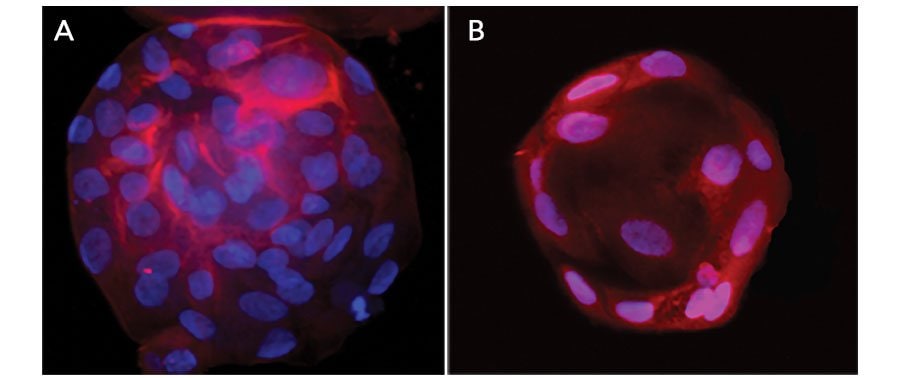
Adult Stem Cell-derived Liver Organoids Cultured using Recombinant Human HGF Protein.
Adult stem cell-derived liver organoids were cultured using Cultrex UltiMatrix RGF Basement Membrane Extract (BME001-05) and liver organoid initiation medium, which includes Recombinant Human HGF (Catalog # 294-HG), Recombinant Human BMP-7 (354-BP), Recombinant Human EGF (236-EG), Recombinant Human FGF-10 (345-FG), Recombinant Human Noggin (6057-NG), Recombinant Human R-Spondin 1 (4645-RS), and Recombinant Human Wnt-3a (5036-WN), along with the other reagents listed in the liver organoid initiation medium recipe in the human liver organoid culture protocol. After 3 days, liver organoid expansion medium was added for 7-10 days, followed by liver organoid differentiation medium, which includes Recombinant Human HGF (Catalog # 294-HG), Recombinant Human BMP-7 (354-BP), Recombinant Human EGF (236-EG), and Recombinant Human FGF-19 (969-FG), along with the other reagents listed in the liver organoid differentiation medium recipe in the human liver organoid culture protocol. Differentiated human liver organoids were stained using a (A) Mouse Anti-Human Serum Albumin Monoclonal Antibody (MAB1455; red) and a (B) Goat Anti-Human HNF-3beta Antigen Affinity-purified Polyclonal Antibody (AF2400; red) and counterstained with DAPI (5748; blue).Formulation, Preparation, and Storage
Carrier Free
What does CF mean?CF stands for Carrier Free (CF). We typically add Bovine Serum Albumin (BSA) as a carrier protein to our recombinant proteins. Adding a carrier protein enhances protein stability, increases shelf-life, and allows the recombinant protein to be stored at a more dilute concentration. The carrier free version does not contain BSA.
What formulation is right for me?In general, we advise purchasing the recombinant protein with BSA for use in cell or tissue culture, or as an ELISA standard. In contrast, the carrier free protein is recommended for applications, in which the presence of BSA could interfere.
Carrier: 294-HG
| Formulation | Lyophilized from a 0.2 μm filtered solution in NaH2PO4 and NaCl with BSA as a carrier protein. |
| Reconstitution | Reconstitute at 100 μg/mL in sterile PBS containing at least 0.1% human or bovine serum albumin. |
| Shipping | The product is shipped at ambient temperature. Upon receipt, store it immediately at the temperature recommended below. |
| Stability & Storage | Use a manual defrost freezer and avoid repeated freeze-thaw cycles.
|
Carrier Free: 294-HG/CF
| Formulation | Lyophilized from a 0.2 μm filtered solution in NaH2PO4 and NaCl. |
| Reconstitution | Reconstitute at 100 µg/mL in sterile PBS. |
| Shipping | The product is shipped at ambient temperature. Upon receipt, store it immediately at the temperature recommended below. |
| Stability & Storage | Use a manual defrost freezer and avoid repeated freeze-thaw cycles.
|
Calculators
Background: HGF
References
- Karihaloo, A. et al. (2005) Nephron Exp. Nephrol. 100:e40.
- Hammond, D.E. et al. (2004) Curr. Top. Microbiol. Immunol. 286:21.
- Rosario, M. and W. Birchmeier (2004) Dev. Cell 7:3.
- Lesk, A.M. and W.D. Fordham (1996) J. Mol. Biol. 258:501.
- Nakamura, T. et al. (1989) Nature 342:440.
- Mizuno, K., et al. (1994) J. Biol. Chem. 269:1131.
- Gheradi, E. et al. (2003) Proc. Natl. Acad. Sci. 100:12039.
- Corso, S. et al. (2005) Trends Mol. Med. 11:284.
- Maeshima, A. et al. (2000) Kid. Int. 58:1511.
- Montesano, R. et al. (1991) Cell 67:901.
- Chiu, S-J. et al. (2002) J. Biomed. Sci. 9:261.
- Saelman, E.U.M. et al. (1995) J. Cell Sci. 108:3531.
- Tanaka, Y. et al. (2002) Biochem. Biophys. Res. Commun. 299:472.
- Mineo, R. et al. (1994) Endocrinology 145:4355.
- Urbanek, K. et al. (2005) Circ. Res. 97:663.
Long Name
Alternate Names
Entrez Gene IDs
Gene Symbol
UniProt
Additional HGF Products
Product Documents for Recombinant Human HGF Protein
Certificate of Analysis
To download a Certificate of Analysis, please enter a lot or batch number in the search box below.
Note: Certificate of Analysis not available for kit components.
Product Specific Notices for Recombinant Human HGF Protein
For research use only
Related Research Areas
Citations for Recombinant Human HGF Protein
 Powered by Bioz
Customer Reviews for Recombinant Human HGF Protein (6)
Have you used Recombinant Human HGF Protein?
Submit a review and receive an Amazon gift card!
$25/€18/£15/$25CAN/¥2500 for a review with an image
$10/€7/£6/$10CAN/¥1110 for a review without an image
Submit a review
Customer Images
-
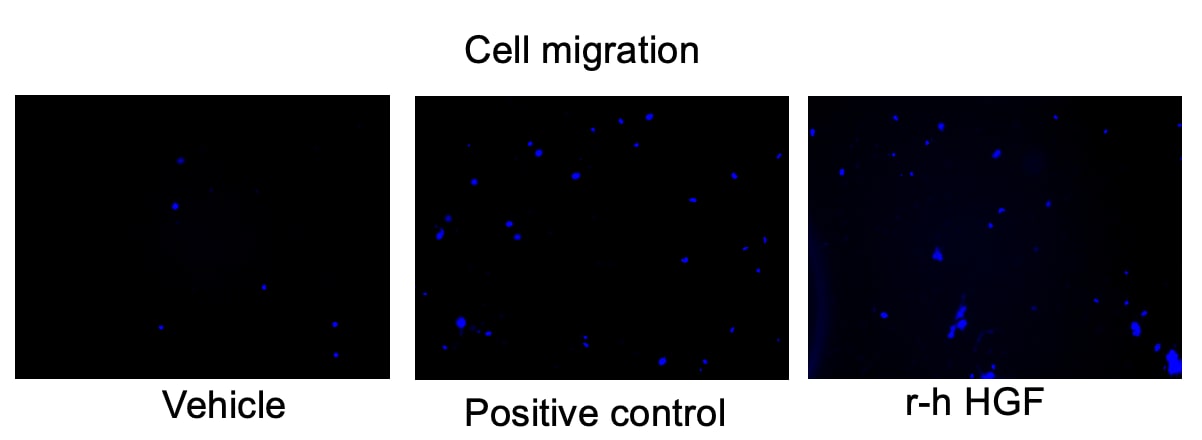
Application: Cell migration/motilityVerified Customer | Posted 07/25/2023

-
Application: Immunoassay StandardVerified Customer | Posted 08/20/2021
-
Application: In vitro bioactivity in cell cultureVerified Customer | Posted 12/21/2017
-
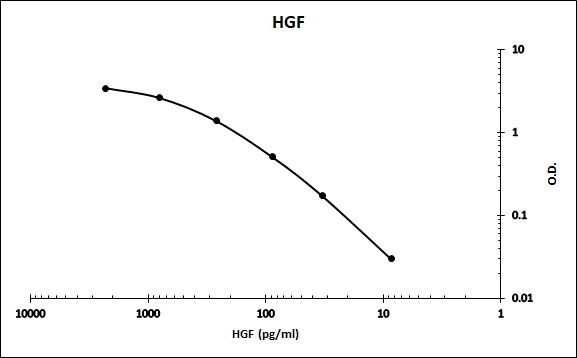
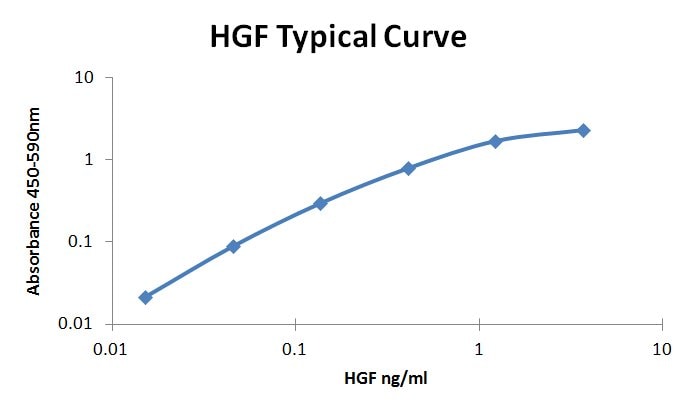
Application: Immunoassay StandardVerified Customer | Posted 11/16/2017A sandwich ELISA was made with MAB694 as the capture and BAF294 as the detection using 294-HG as the immunoassay calibrator.
-
Application: stimulate met activity in cancer cellsVerified Customer | Posted 09/08/2017Used HGF to stimulate met activity in cancer cells and reversed this effect with a small molecule inhibitor
-
Application: Cell ProliferationVerified Customer | Posted 01/13/2016
There are no reviews that match your criteria.
FAQs for Recombinant Human HGF Protein
-
Q: Does Recombinant Human HGF Protein (Catalog # 294-HG or 294-HG/CF) contain any tags?
A: Recombinant Human HGF Protein (Catalog # 294-HG or 294-HG/CF) does not contain any tags. Please refer to the Source section on the product-specific page for sequence information.
Associated Pathways
