
TNF-alpha (Tumor necrosis factor alpha) plays a central role in inflammation, immune system development, apoptosis, and lipid metabolism. TNF-alpha was first identified as a cytotoxic factor produced by macrophages capable of killing mouse tumor cells. It is the prototypic ligand and along with Lymphotoxin-alpha, were identified as the first members of the TNF superfamily. Active TNF-alpha and other members of the TNF superfamily exist as a homotrimer with high structural homology. Receptor binding occurs at the interface of two TNF-alpha monomers. And receptor activation occurs when all three monomer interfaces are engaged with a receptor. For TNF-alpha, receptor binding and activation occurs through TNF R1 or TNF RII, and subsequently leads to activation of NF-kB or MAPK signaling pathways. Another pathway that TNF-alpha can activate utilizes the death domain of TNF RI to induce apoptosis. TNF-alpha promotes the inflammatory response largely through NF-kB signaling, and inhibition of TNF-alpha has proven successful in treating many autoimmune disorders. TNF-alpha is also present on the cell surface as membrane-bound TNF-alpha can induce the lysis of neighboring tumor cells and virus infected cells. TNF-alpha protein is translated as a type II transmembrane protein containing an N-terminal transmembrane domain. The soluble cytokine is released from its cell-anchoring TM domain by proteolytic processing by metalloproteases.
Human TNF-alpha Quantikine HS ELISA
R&D Systems | Catalog # HSTA00D

Key Product Details
Assay Length
Sample Type & Volume Required Per Well
Sensitivity
Assay Range
Product Summary for Human TNF-alpha Quantikine HS ELISA
Product Specifications
Measurement
Detection Method
Conjugate
Species
Specificity
Cross-reactivity
Interference
Precision
Intra-Assay Precision (Precision within an assay) Three samples of known concentration were tested on one plate to assess intra-assay precision.
Inter-Assay Precision (Precision between assays) Three samples of known concentration were tested in separate assays to assess inter-assay precision. Assays were performed by at least three technicians using two lots of components.
Citrate Plasma, EDTA Plasma, Heparin Plasma, Serum
| Intra-Assay Precision | Inter-Assay Precision | |||||
|---|---|---|---|---|---|---|
| Sample | 1 | 2 | 3 | 1 | 2 | 3 |
| n | 20 | 20 | 20 | 41 | 41 | 41 |
| Mean (pg/mL) | 1.96 | 11.5 | 22.1 | 1.83 | 10.5 | 20.3 |
| Standard Deviation | 0.17 | 0.49 | 0.68 | 0.19 | 0.76 | 1.50 |
| CV% | 8.7 | 4.3 | 3.1 | 10.4 | 7.2 | 7.4 |
Recovery for Human TNF-alpha Quantikine HS ELISA
The recovery of TNF-alpha was determined by spiking to three different levels throughout the range of the assay in various matrices.
| Sample Type | Average % Recovery | Range % |
|---|---|---|
| Citrate Plasma (n=4) | 95 | 88-105 |
| EDTA Plasma (n=4) | 99 | 92-111 |
| Heparin Plasma (n=4) | 93 | 87-103 |
| Serum (n=4) | 93 | 85-98 |
Linearity
To assess the linearity of the assay, samples were spiked with high concentrations of TNF-alpha and diluted with calibrator diluent to produce samples with values within the dynamic range of the assay.


Scientific Data Images for Human TNF-alpha Quantikine HS ELISA

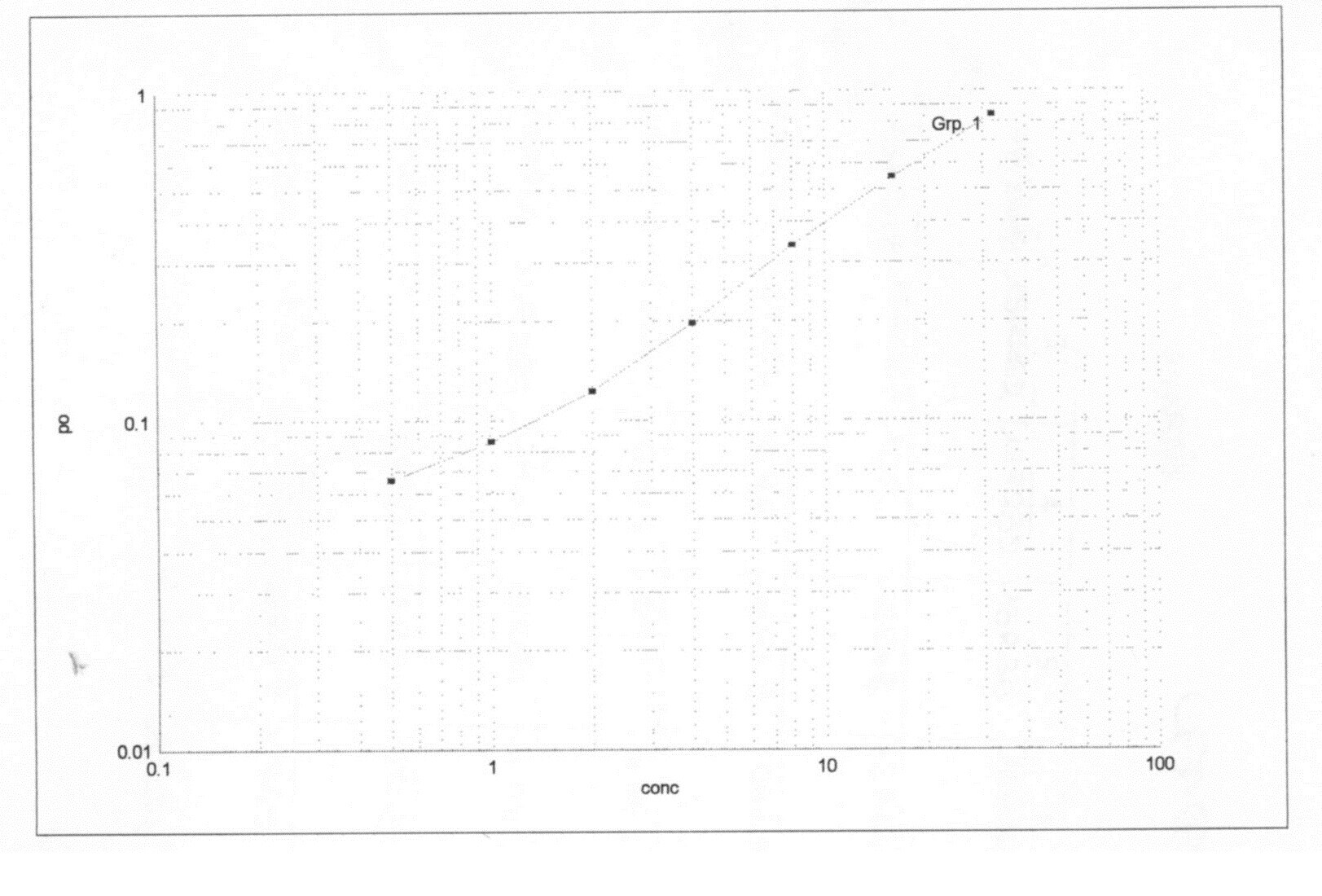
Human TNF-alpha High Sensitivity Standard Curve

Human TNF-alpha Standard Curve

Human TNF-alpha Quantikine HS ELISA Kit Sensitivity Competitor Comparison

Human TNF-alpha Quantikine HS ELISA Kit Recovery Competitor Comparison

Human TNF-alpha ELISA Standard Curve
Preparation and Storage
Shipping
Stability & Storage
Background: TNF-alpha
Long Name
Alternate Names
Entrez Gene IDs
Gene Symbol
Additional TNF-alpha Products
Product Documents for Human TNF-alpha Quantikine HS ELISA
Certificate of Analysis
To download a Certificate of Analysis, please enter a lot or batch number in the search box below.
Note: Certificate of Analysis not available for kit components.
Product Specific Notices for Human TNF-alpha Quantikine HS ELISA
For research use only
Related Research Areas
Citations for Human TNF-alpha Quantikine HS ELISA
 Powered by Bioz
Customer Reviews for Human TNF-alpha Quantikine HS ELISA (3)
Have you used Human TNF-alpha Quantikine HS ELISA?
Submit a review and receive an Amazon gift card!
$25/€18/£15/$25CAN/¥2500 Yen for a review with an image
$10/€7/£6/$10CAN/¥1110 Yen for a review without an image
Submit a review
Customer Images
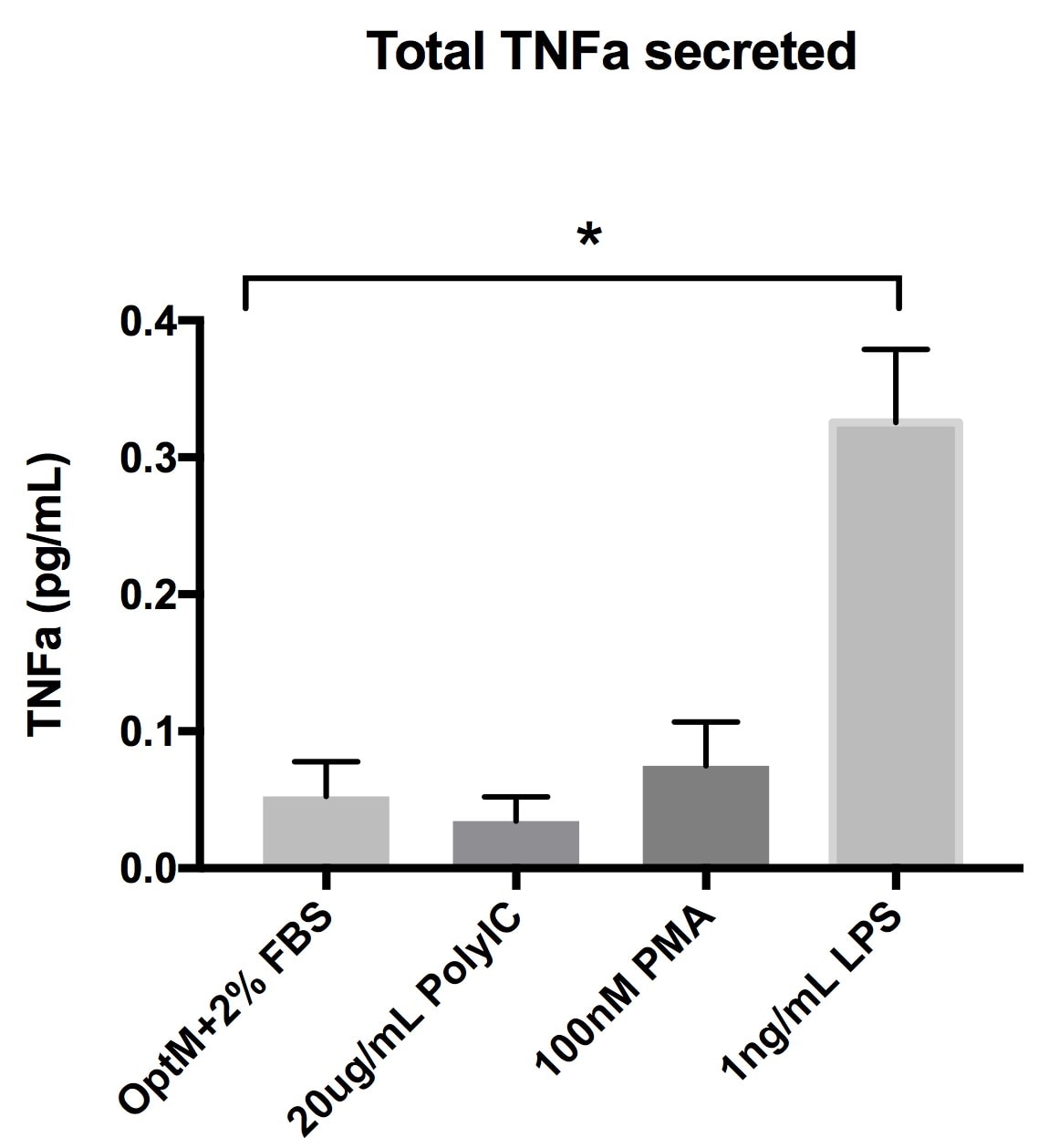
-
Sample Tested: EDTA PlasmaVerified Customer | Posted 01/18/2018
-
Sample Tested: Peripheral blood neutrophilsVerified Customer | Posted 08/04/2017Due to the short experimental time, the standard TNFa duoSET ELISA did not work, however HS kit did.

-
Sample Tested: Human serumVerified Customer | Posted 05/25/2016
There are no reviews that match your criteria.
Protocols
View specific protocols for Human TNF-alpha Quantikine HS ELISA (HSTA00D):
- Prepare all reagents, standard dilutions, and samples as directed in the product insert.
- Remove excess microplate strips from the plate frame, return them to the foil pouch containing the desiccant pack, and reseal.
- Add 50 µL of Assay Diluent to each well.
- Add 200 µL of Standard, Control, or sample to each well. Cover with a plate sealer, and incubate at room temperature for 3 hours.
- Aspirate each well and wash, repeating the process 5 times for a total of 6 washes.
- Add 200 µL of Conjugate to each well. Cover with a new plate sealer, and incubate at room temperature for 2 hours.
- Aspirate and wash 6 times.
- Add 50 µL Substrate Solution to each well. Cover with a new plate sealer, and incubate at room temperature for 1 hour. Do not wash the plate.
- Add 50 µL Amplifier Solution to each well. Cover with a new plate sealer, and incubate at room temperature for 30 minutes.
- Add 50 µL of Stop Solution to each well. Read at 490 nm within 30 minutes. Set wavelength correction to 650 nm or 690 nm.
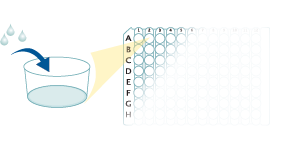
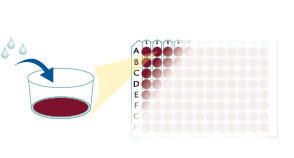
Find general support by application which include: protocols, troubleshooting, illustrated assays, videos and webinars.
- ELISA Sample Preparation & Collection Guide
- ELISA Troubleshooting Guide
- How to Run an R&D Systems DuoSet ELISA
- How to Run an R&D Systems Quantikine ELISA
- How to Run an R&D Systems Quantikine™ QuicKit™ ELISA
- Quantikine HS ELISA Kit Assay Principle, Alkaline Phosphatase
- Quantikine HS ELISA Kit Principle, Streptavidin-HRP Polymer
- Sandwich ELISA (Colorimetric) – Biotin/Streptavidin Detection Protocol
- Sandwich ELISA (Colorimetric) – Direct Detection Protocol
- Troubleshooting Guide: ELISA
- View all Protocols, Troubleshooting, Illustrated assays and Webinars
Associated Pathways
 Apoptosis Signaling Pathway
 Dendritic Cell Lineage Development Pathways
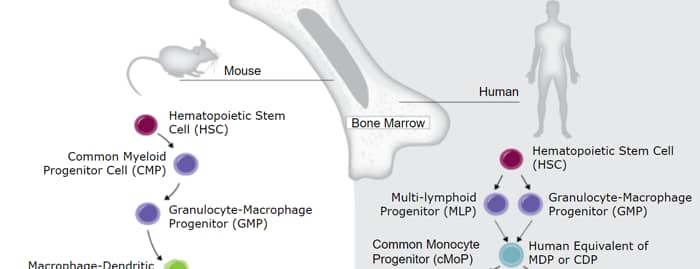 Hematopoietic Stem Cell Differentiation Pathways & Lineage-specific Markers
 IL-2 Signaling Pathways and their Primary Biological Effects in Different Immune Cell Types

 Innate Lymphoid Cell Differentiation Pathways
 mTOR Signaling Pathway
 NOD-like Receptor Signaling Pathways
 Th1 Differentiation Pathway
 TNF Superfamily Pathway: Human Ligand-Receptor Interactions & their Associated Functions
 Toll-Like Receptor Signaling Pathways
