
Tumor Necrosis Factor (TNF) Receptor-Associated Factors (TRAFs) are a family of adaptor proteins that interact with a wide range of cell surface receptors and participate in the regulation of cell survival, proliferation, differentiation, and stress response. TRAFs were identified by their ability to form complexes with TNF receptor superfamily members but more recently are reported to also bind to Toll/IL‑1 receptor family members and mediate cellular signaling. Six members of the TRAF family have been identified. All TRAF proteins have a homologous C‑terminal TRAF domain that can bind the cytoplasmic domain of receptors as well as other TRAFs. TRAFs 2‑6 have N‑terminal RING and zinc finger domains that are involved in signaling downstream events. Two isoforms of TRAF-3 have been identified, a 368 amino acid, 64 kDa protein (isoform 1, also known as CD40BP and CRAF1) and a 543 amino acid, 61 kDa protein (isoform 2, also known as CAP1 and LAP1). TRAF‑3 has been shown bind specifically to the PEQET sequence motif on the cytoplasmic domain of CD40. TRAF3 and TRAF6 have also been identified as being involved in TLR signaling events.


Scientific images may be resized, cropped, or adjusted for brightness or contrast for presentation purposes. These updates are limited to presentation and do not affect the underlying scientific interpretation of the data. Where available, additional source data may be provided upon request.
Key Product Details
Species Reactivity
Applications
Label
Antibody Source
Product Specifications
Immunogen
Met1-Pro543
Accession # EAW81797
Specificity
Clonality
Host
Isotype
Scientific Data Images for Human TRAF-3 Isoform 2 Antibody
Detection of Human TRAF‑3 Isoform 2 by Western Blot.
Western blot shows lysates of Jurkat human acute T cell leukemia cell line and Raji human Burkitt's lymphoma cell line. PVDF membrane was probed with 1 µg/mL Goat Anti-Human TRAF-3 Isoform 2 Antigen Affinity-purified Polyclonal Antibody (Catalog # AF3278) followed by HRP-conjugated Anti-Goat IgG Secondary Antibody (HAF109). For additional reference, recombinant human TRAF-1, TRAF-2, TRAF-3, TRAF-4, TRAF-5, and TRAF-6 (2 ng/lane) were included. A specific band for TRAF-3 was detected at approximately 65 kDa (as indicated). This experiment was conducted under reducing conditions and using Immunoblot Buffer Group 2.Applications for Human TRAF-3 Isoform 2 Antibody
Western Blot
Sample: Jurkat human acute T cell leukemia cell line and Raji human Burkitt's lymphoma cell line
Reviewed Applications
Read 1 review rated 4 using AF3278 in the following applications:
Formulation, Preparation, and Storage
Purification
Reconstitution
Reconstitute at 0.2 mg/mL in sterile PBS. For liquid material, refer to CoA for concentration.
Formulation
Shipping
Stability & Storage
- 12 months from date of receipt, -20 to -70 °C as supplied.
- 1 month, 2 to 8 °C under sterile conditions after reconstitution.
- 6 months, -20 to -70 °C under sterile conditions after reconstitution.
Calculators
Background: TRAF-3
Long Name
Alternate Names
Gene Symbol
UniProt
Additional TRAF-3 Products
Product Documents for Human TRAF-3 Isoform 2 Antibody
Certificate of Analysis
To download a Certificate of Analysis, please enter a lot or batch number in the search box below.
Note: Certificate of Analysis not available for kit components.
Product Specific Notices for Human TRAF-3 Isoform 2 Antibody
For research use only
Customer Reviews for Human TRAF-3 Isoform 2 Antibody (1)
Have you used Human TRAF-3 Isoform 2 Antibody?
Submit a review and receive an Amazon gift card!
$25/€18/£15/$25CAN/¥2500 for a review with an image
$10/€7/£6/$10CAN/¥1110 for a review without an image
Submit a review
Customer Images
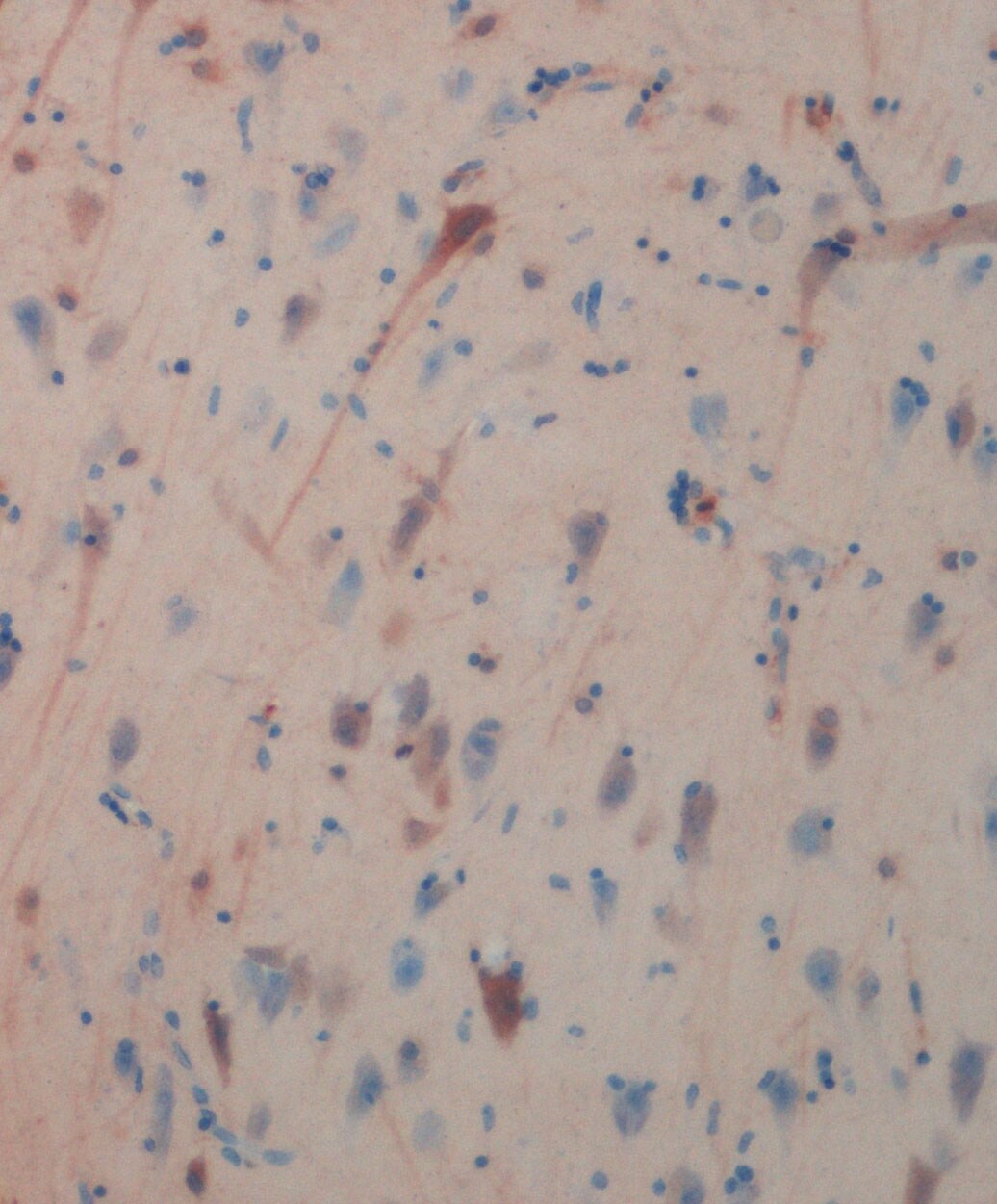
-
Application: ImmunohistochemistrySample Tested: Brain tissueSpecies: HumanVerified Customer | Posted 06/07/2018

There are no reviews that match your criteria.
Protocols
Find general support by application which include: protocols, troubleshooting, illustrated assays, videos and webinars.
- Cellular Response to Hypoxia Protocols
- R&D Systems Quality Control Western Blot Protocol
- Troubleshooting Guide: Western Blot Figures
- Western Blot Conditions
- Western Blot Protocol
- Western Blot Protocol for Cell Lysates
- Western Blot Troubleshooting
- Western Blot Troubleshooting Guide
- View all Protocols, Troubleshooting, Illustrated assays and Webinars
Associated Pathways

