
TIM-4 (T cell; immunoglobulin; mucin-4), also known as SMUCKLER, is a 60 kDa member of the TIM family of immune regulating proteins. TIMs are type I transmembrane proteins with one Ig-like V domain and one Ser/Thr-rich mucin domain (1 - 3). The mouse TIM-4 cDNA encodes a 343 amino acid (aa) precursor that includes a 22 aa signal sequence, a 257 aa extracellular domain (ECD), a 21 aa transmembrane segment, and a 43 aa cytoplasmic tail (4). Structurally, TIM-4 is distinguished from other TIMs by the presence of an RGD motif in its Ig domain and the lack of a site for tyrosine phosphorylation in its cytoplasmic tail. The mucin domain in TIM-4 is larger than in TIM-1, -2, or -3. Within the ECD, mouse TIM-4 shares 27 - 33% aa sequence identity with mouse TIM-1, -2, and -3. The ECD of mouse TIM-4 shares 45% aa sequence identity with that of human and rat TIM-4. TIM-4 is expressed by macrophages and mature dendritic cells but not by lymphocytes (4, 5). TIM-4 binds specifically to TIM-1 which is also the cellular receptor for hepatitis A virus and has been implicated in the development of asthma (5 ‑ 7). Among hematopoietic cells, TIM-1 is expressed on activated B and T cells, preferentially in the Th2 subset of CD4+ T cells (5, 8). The interaction of TIM-4 with TIM-1 induces co-stimulatory and hyperproliferative signals in T cells (5).

Scientific images may be resized, cropped, or adjusted for brightness or contrast for presentation purposes. These updates are limited to presentation and do not affect the underlying scientific interpretation of the data. Where available, additional source data may be provided upon request.
Key Product Details
Species Reactivity
Validated:
Cited:
Applications
Validated:
Cited:
Label
Antibody Source
Product Specifications
Immunogen
Ala22-Thr279
Accession # Q6U7R4
Specificity
Clonality
Host
Isotype
Scientific Data Images for Mouse TIM-4 Antibody
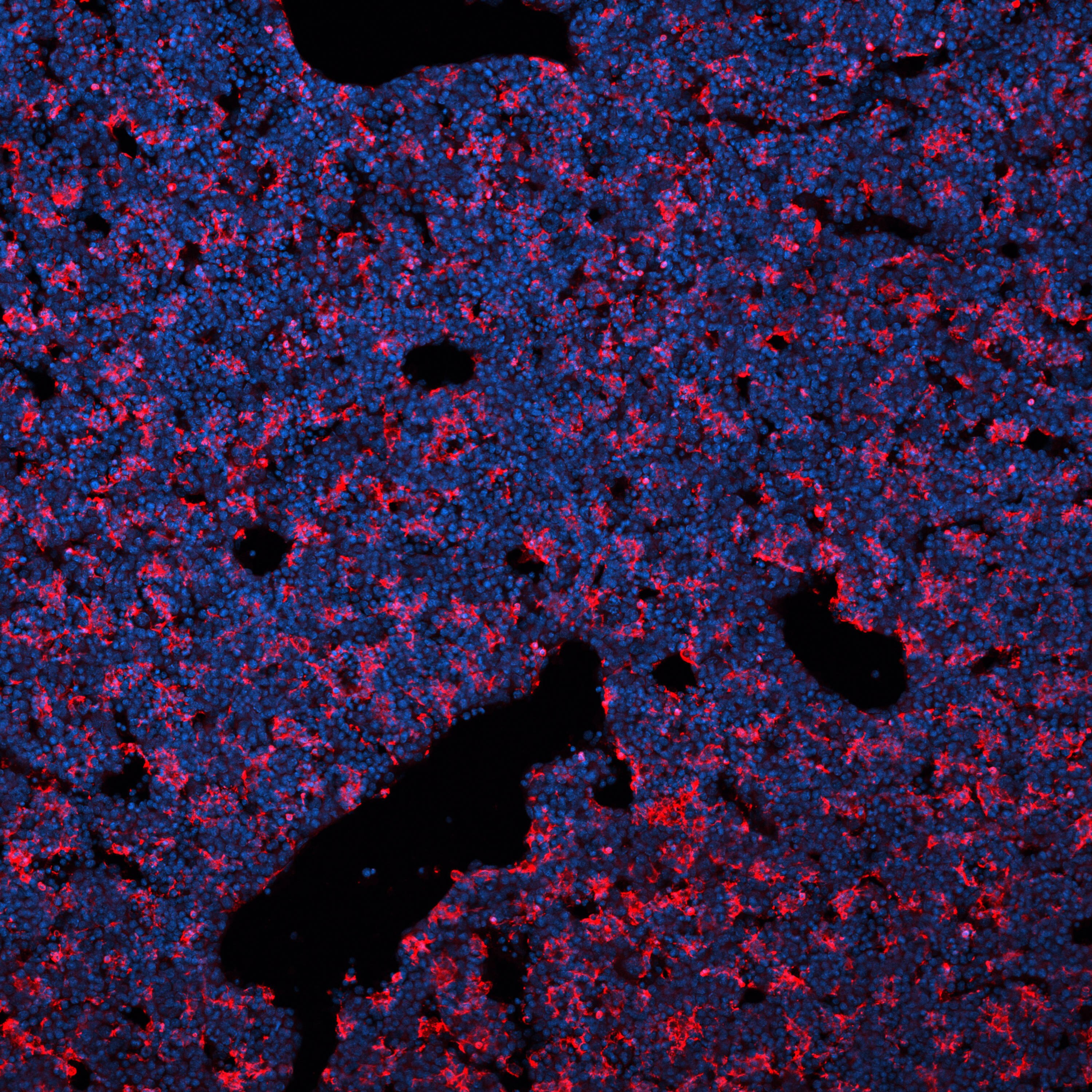
Detection of TIM-4 in Mouse Embryonic Liver Cryosections.
Stained embryonic liver cryosections for Tim4 (red) and Hoechst (blue). Image from a verified customer review.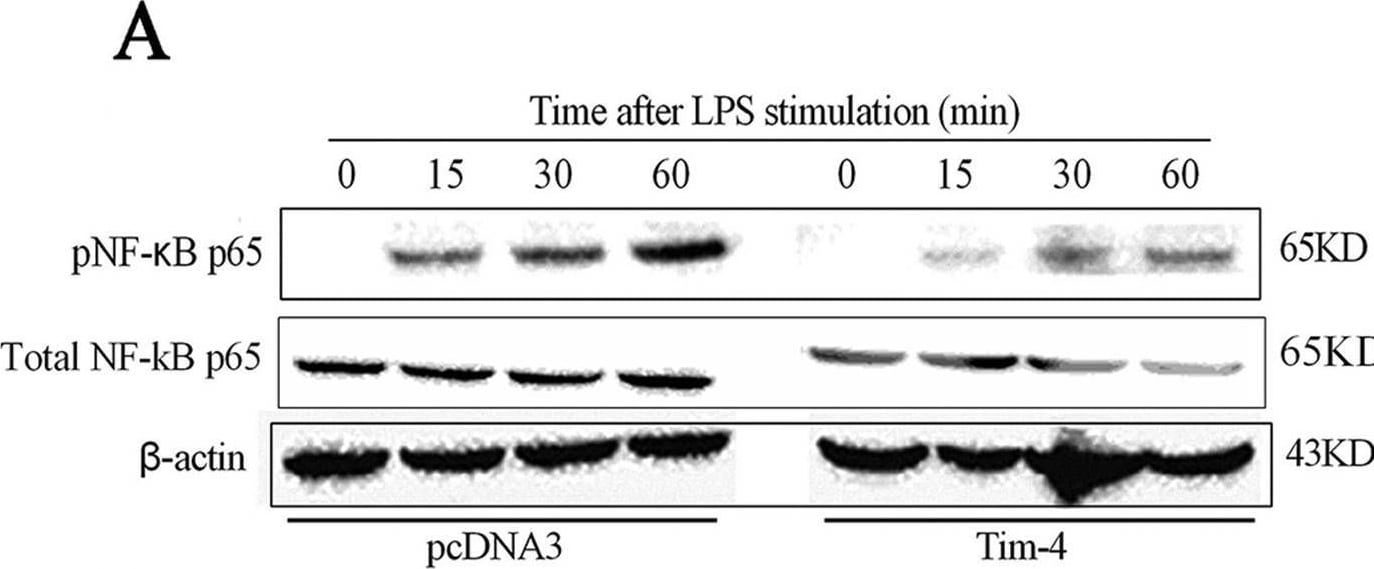
Detection of TIM-4 by Western Blot
Tim-4 inhibited NO production by NF-kappa B signaling pathway.RAW-pcDNA3-Tim-4 and RAW-pcDNA3 cells were stimulated with LPS for the times indicated and western blot was used to detect phosphorylation of NF-kappa B p65 (A). Production of NO in LPS-activated RAW264.7 was detected before or after treatment with NF-kappa B inhibitory ligand (B). Peritoneal macrophages were pre-treated with goat anti-mouse Tim-4 antibody or control IgG at 5 μg/ml for 1 h, and then stimulated with 100 ng/ml LPS for 30 min. Cells were harvested for western blot (C). Production of NO in LPS-stimulated peritoneal macrophages with or without anti-Tim-4 pretreatment was detected before or after application of NF-kappa B inhibitory ligand (D). These experiments were repeated at least 3 times. Error bars represent the standard deviation from 4 independent cultures from 4 mice. A p value (student’s t-test) relative to the control cells of less than 0.01 is indicated by **. ns represents a p value greater than 0.05. Image collected and cropped by CiteAb from the following open publication (https://pubmed.ncbi.nlm.nih.gov/25905790), licensed under a CC-BY license. Not internally tested by R&D Systems.Applications for Mouse TIM-4 Antibody
Western Blot
Sample: Recombinant Mouse TIM‑4 (Catalog # 2826-TI)
Reviewed Applications
Read 1 review rated 5 using AF2826 in the following applications:
Formulation, Preparation, and Storage
Purification
Reconstitution
Reconstitute at 0.2 mg/mL in sterile PBS. For liquid material, refer to CoA for concentration.
Formulation
Shipping
Stability & Storage
- 12 months from date of receipt, -20 to -70 °C as supplied.
- 1 month, 2 to 8 °C under sterile conditions after reconstitution.
- 6 months, -20 to -70 °C under sterile conditions after reconstitution.
Calculators
Background: TIM-4
References
- Kuchroo, V.K. et al. (2003) Nat. Rev. Immunol. 3:454.
- Mariat, C. et al. (2005) Phil. Trans. R. Soc. B 360:1681.
- Meyers, J.H. et al. (2005) Trends Mol. Med. 11:362.
- Shakhov, A.N. et al. (2004) Eur. J. Immunol. 34:494.
- Meyers, J.H. et al. (2005) Nat. Immunol. 6:455.
- Feigelstock, D. et al. (1998) J. Virol. 72:6621.
- McIntire, J.J. et al. (2001) Nat. Immunol. 2:1109.
- Khademi, M. et al. (2004) J. Immunol. 172:7169.
Long Name
Alternate Names
Gene Symbol
UniProt
Additional TIM-4 Products
Product Documents for Mouse TIM-4 Antibody
Certificate of Analysis
To download a Certificate of Analysis, please enter a lot or batch number in the search box below.
Note: Certificate of Analysis not available for kit components.
Product Specific Notices for Mouse TIM-4 Antibody
For research use only
Citations for Mouse TIM-4 Antibody
 Powered by Bioz
Customer Reviews for Mouse TIM-4 Antibody (1)
Have you used Mouse TIM-4 Antibody?
Submit a review and receive an Amazon gift card!
$25/€18/£15/$25CAN/¥2500 for a review with an image
$10/€7/£6/$10CAN/¥1110 for a review without an image
Submit a review
Customer Images
-
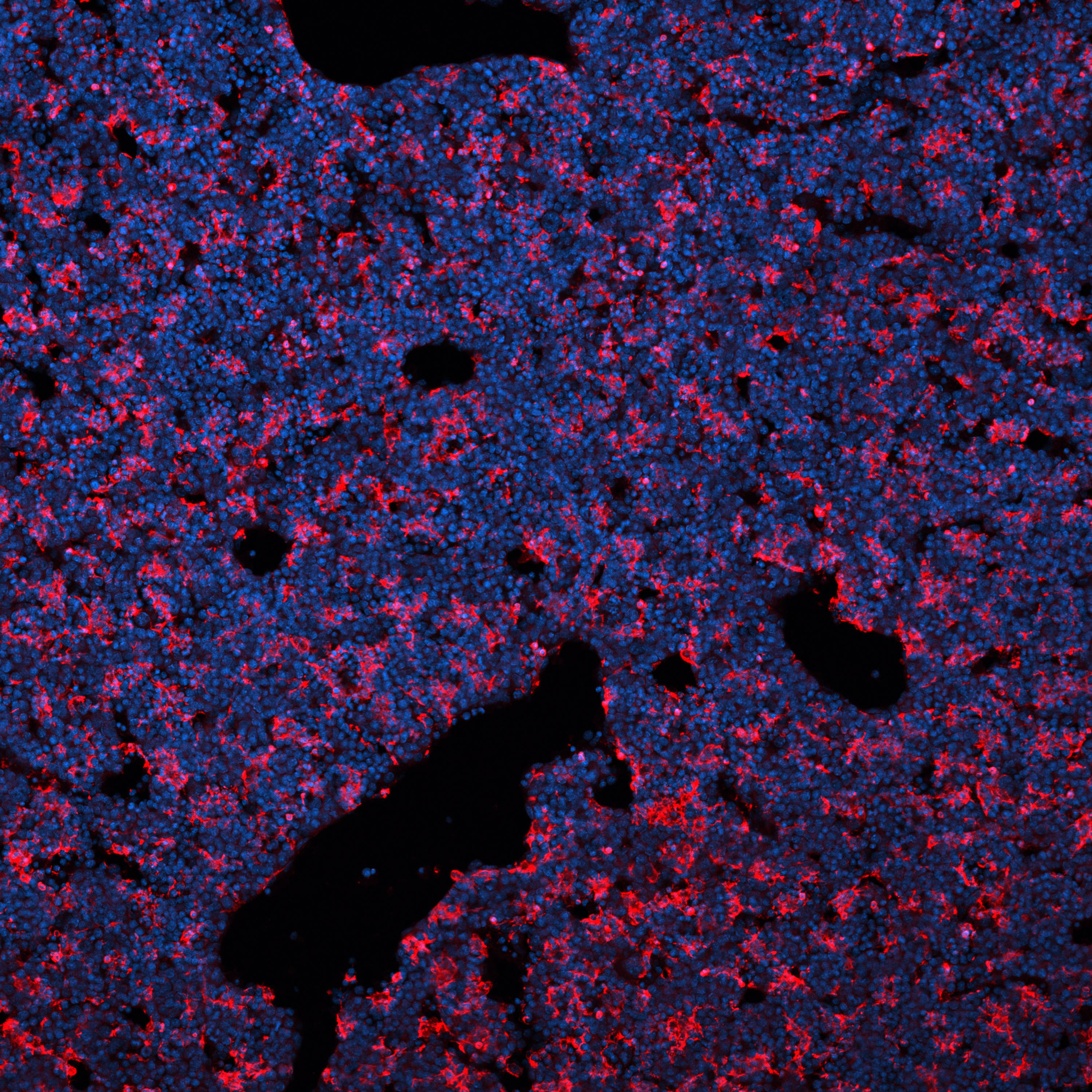
Application: Immunohistochemistry-FrozenSample Tested: Embryonic liverSpecies: MouseVerified Customer | Posted 09/25/2025Stained embryonic liver cryosections for Tim4 (red) and Hoechst (blue). Tim4 works great every time.
 Bio-Techne ResponseThis review reflects a new species or application tested on a primary antibody.
There are no reviews that match your criteria.
Protocols
Find general support by application which include: protocols, troubleshooting, illustrated assays, videos and webinars.
- Cellular Response to Hypoxia Protocols
- R&D Systems Quality Control Western Blot Protocol
- Troubleshooting Guide: Western Blot Figures
- Western Blot Conditions
- Western Blot Protocol
- Western Blot Protocol for Cell Lysates
- Western Blot Troubleshooting
- Western Blot Troubleshooting Guide
- View all Protocols, Troubleshooting, Illustrated assays and Webinars