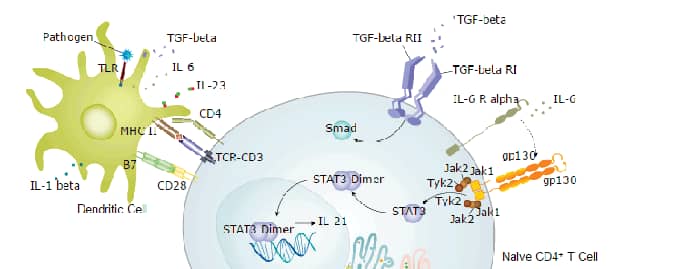
For optimal T cell expansion and activation, a signal induced by the engagement of the T cell receptor and a “co-stimulatory” signal(s) through distinct T cell surface molecules are required. Members of the B7 superfamily of counter-receptors were identified by their ability to interact with co-stimulatory molecules found on the surface of T cells. Members of the B7 superfamily are type I membrane proteins and include B7-1 (CD80), B7-2 (CD86), B7-H1 (PD-L1), B7-H2 (B7RP-1), B7-H3, and PD-L2 (1). B7-2 is expressed constitutively at low levels on most Antigen Presenting Cells (APC) and is rapidly upregulated upon cell activation (2). T cells express two different receptors (CD28 and CTLA-4) capable of binding both B7-1 and B7-2 (2). B7-2 binds to CD28 with the low affinity but binds to CTLA-4 with intermediate affinity. In contrast, B7-1 binds CD28 with intermediate affinity and CTLA-4 with high affinity. Additionally, these molecules have different kinetics for binding CD28 and CTLA-4 with B7-2 having a higher-binding dissociation kinetics (1). Engagement of CD28 by B7-2 increases T cell proliferation and IL-2, IL-4, and IFN-gamma production, thereby enhancing the immune response (3). In contrast, engagement of CTLA-4 is involved in the down-regulation of the immune response (4). Rat B7-2 cDNA encodes a 313 amino acid (aa) precursor protein containing a an extracellular domain, a transmembrane domain, and a cytoplasmic domain. Rat and human B7-1 share 54% aa identity.


Scientific images may be resized, cropped, or adjusted for brightness or contrast for presentation purposes. These updates are limited to presentation and do not affect the underlying scientific interpretation of the data. Where available, additional source data may be provided upon request.
Key Product Details
Species Reactivity
Applications
Label
Antibody Source
Product Specifications
Immunogen
Met1-Ile250
Accession # NP_064466
Specificity
Clonality
Host
Isotype
Endotoxin Level
Scientific Data Images for Rat B7-2/CD86 Antibody (199622)
IL‑2 Secretion Induced by B7‑2/CD86 and Neutralization by Rat B7‑2/CD86 Antibody.
Recombinant Rat B7-2/CD86 Fc Chimera (Catalog # 1340-B2) co-stimulates IL-2 secretion in the Jurkat human acute T cell leukemia cell line in the presence of PHA in a dose-dependent manner (orange line), as measured by the Human IL-2 Quantikine ELISA Kit (Catalog # D2050). IL-2 secretion elicited by Recombinant Rat B7-2/CD86 Fc Chimera (1 µg/mL) and PHA (10 µg/mL) is neutralized (green line) by increasing concentrations of Mouse Anti-Rat B7-2/CD86 Monoclonal Antibody (Catalog # MAB13401). The ND50 is typically 0.3-1.0 µg/mL.Applications for Rat B7-2/CD86 Antibody (199622)
Neutralization
Formulation, Preparation, and Storage
Purification
Reconstitution
Reconstitute at 0.5 mg/mL in sterile PBS. For liquid material, refer to CoA for concentration.
Formulation
Shipping
Stability & Storage
- 12 months from date of receipt, -20 to -70 °C as supplied.
- 1 month, 2 to 8 °C under sterile conditions after reconstitution.
- 6 months, -20 to -70 °C under sterile conditions after reconstitution.
Calculators
Background: B7-2/CD86
References
- Coyle, A.J. and J-C. Gutierrez-Ramos (2001) Nature Immunol. 2:203.
- Sharpe, A.H. and G.J. Freeman (2002) Nature Reviews 2:116.
- Freeman, G.J. et al. (1995) Immunity 5:523.
- Walunas, T.L. et al. (1994) Immunity 1:405.
Alternate Names
Gene Symbol
UniProt
Additional B7-2/CD86 Products
Product Documents for Rat B7-2/CD86 Antibody (199622)
Certificate of Analysis
To download a Certificate of Analysis, please enter a lot or batch number in the search box below.
Note: Certificate of Analysis not available for kit components.
Product Specific Notices for Rat B7-2/CD86 Antibody (199622)
For research use only
Customer Reviews for Rat B7-2/CD86 Antibody (199622)
There are currently no reviews for this product. Be the first to review Rat B7-2/CD86 Antibody (199622) and earn rewards!
Have you used Rat B7-2/CD86 Antibody (199622)?
Submit a review and receive an Amazon gift card!
$25/€18/£15/$25CAN/¥2500 for a review with an image
$10/€7/£6/$10CAN/¥1110 for a review without an image
Submit a review