
CCL5, also known as RANTES (Regulated upon Activation, Normal T cell Expressed and presumably Secreted), is an 8 kDa beta ‑chemokine that plays a primary role in the inflammatory immune response by means of its ability to attract and activate leukocytes (1‑3). Human and mouse RANTES exhibit cross-species activity on human and mouse cells (4). Mature human CCL5 shares 75%‑84% aa seqeuence identity with canine, cotton rat, feline, mouse, and rat CCL5 (5). CCL5 is secreted by many cell types at inflammatory sites, and it exerts a wide range of activities through the receptors CCR1, CCR3, CCR4, and CCR5 (6, 7). Inflammatory responses can be impaired by the sequestration of CCL5 by the cytomegalovirus protein US28 (8). In humans, CCR5 binding to CCL5 inhibits the infectivity of R5 (M-tropic) but not X4 (T-tropic) strains of HIV-1 (9). The two N-terminal residues of CCL5 can be removed by CD26/DPPIV, generating a protein that functions as a chemotaxis inhibitor and more effectively blocks M-tropic HIV-1 infection of monocytes (10). Oligomerization of CCL5 on glycosaminoglycans is required for CCR1‑mediated leukocyte adhesion and activation as well as CCL5’s interaction with the chemokine CXCL4/PF4 (11‑13). The deposition of CCL5 on activated vascular endothelial cells is crucial for monocyte adhesion to damaged vasculature, but CCL5 oligomerization is not required for the extravasation of adherent leukocytes (14‑16). CCL5 is upregulated in breast cancer and promotes tumor progression through the attraction of proinflammatory macrophages in addition to its actions on tumor cells, stromal cells, and the vasculature (17).


Scientific images may be resized, cropped, or adjusted for brightness or contrast for presentation purposes. These updates are limited to presentation and do not affect the underlying scientific interpretation of the data. Where available, additional source data may be provided upon request.
Key Product Details
Species Reactivity
Validated:
Cited:
Applications
Validated:
Cited:
Label
Antibody Source
Product Specifications
Immunogen
Ser24-Ser91
Accession # P13501
Specificity
Clonality
Host
Isotype
Endotoxin Level
Scientific Data Images for Human CCL5/RANTES Antibody
Chemotaxis Induced by CCL5/RANTES and Neutralization by Human CCL5/RANTES Antibody.
Recombinant Human CCL5/ RANTES (Catalog # 278-RN) chemoattracts human monocytes in a dose-dependent manner (orange line). The amount of cells that migrated through to the membrane was measured by LeukoStat™ staining (Fisher Scientific). Chemotaxis elicited by Recombinant Human CCL5/ RANTES (0.2 µg/mL) is neutralized (green line) by increasing concentrations of Goat Anti-Human CCL5/RANTES Polyclonal Antibody (Catalog # AB-278-NA). The ND50 is typically 10-30 µg/mL.Applications for Human CCL5/RANTES Antibody
Western Blot
Sample: Recombinant Human CCL5/RANTES (Catalog # 278-RN)
Neutralization
Reviewed Applications
Read 1 review rated 5 using AB-278-NA in the following applications:
Formulation, Preparation, and Storage
Purification
Reconstitution
Reconstitute at 1 mg/mL in sterile PBS.
Formulation
Shipping
Stability & Storage
- 12 months from date of receipt, -20 to -70 °C as supplied.
- 1 month, 2 to 8 °C under sterile conditions after reconstitution.
- 6 months, -20 to -70 °C under sterile conditions after reconstitution.
Calculators
Background: CCL5/RANTES
References
- Schall, T.J. et al. (1990) Nature 347:669.
- Bacon, K.B. et al. (1995) Science 269:1727.
- Fischer, F.R. et al. (2001) J. Immunol. 167:1637.
- Schall, T.J. et al. (1992) Eur. J. Immunol. 22:1477.
- Schall, T.J. et al. (1988) J. Immunol. 141:1018.
- Appay, V. and S.L. Rowland-Jones (2001) Trends Immunol. 22:83.
- Levy, J.A. (2009) J. Immunol. 182:3945.
- Randolph-Habecker, J.R. et al. (2002) Cytokine 19:37.
- DeVico, A.L. and Gallo, R.C. (2004) Nat. Rev. Microbiol. 2:401.
- Proost, P. et al. (1998) J. Biol. Chem. 273:7222.
- Appay, V. et al. (1999) J. Biol. Chem. 274:27505.
- Proudfoot, A.E.I. et al. (2003) Proc. Natl. Acad. Sci. 100:1885.
- von Hundelshausen, P. et al. (2005) Blood 105:924.
- von Hundelshausen, P. et al. (2001) Circulation 103:1772.
- Zernecke, A. et al. (2008) Arterioscler. Thromb. Vasc. Biol. 28:1897.
- Baltus, T. et al. (2003) Blood 102:1985.
- Soria, G. and A. Ben-Baruch (2008) Cancer Lett. 267:271.
Alternate Names
Gene Symbol
UniProt
Additional CCL5/RANTES Products
Product Documents for Human CCL5/RANTES Antibody
Certificate of Analysis
To download a Certificate of Analysis, please enter a lot or batch number in the search box below.
Note: Certificate of Analysis not available for kit components.
Product Specific Notices for Human CCL5/RANTES Antibody
For research use only
Citations for Human CCL5/RANTES Antibody
 Powered by Bioz
Customer Reviews for Human CCL5/RANTES Antibody (1)
Have you used Human CCL5/RANTES Antibody?
Submit a review and receive an Amazon gift card!
$25/€18/£15/$25CAN/¥2500 for a review with an image
$10/€7/£6/$10CAN/¥1110 for a review without an image
Submit a review
Customer Images
-
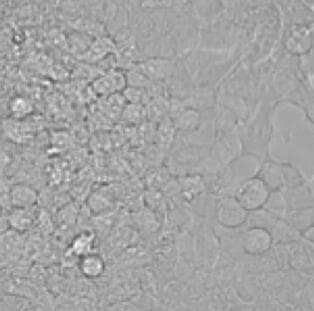
Application: Block/NeutralizeSample Tested: 293T human embryonic kidney cell lineSpecies: HumanVerified Customer | Posted 09/02/2022

There are no reviews that match your criteria.
Protocols
Find general support by application which include: protocols, troubleshooting, illustrated assays, videos and webinars.
- Cellular Response to Hypoxia Protocols
- R&D Systems Quality Control Western Blot Protocol
- Troubleshooting Guide: Western Blot Figures
- Western Blot Conditions
- Western Blot Protocol
- Western Blot Protocol for Cell Lysates
- Western Blot Troubleshooting
- Western Blot Troubleshooting Guide
- View all Protocols, Troubleshooting, Illustrated assays and Webinars
Associated Pathways
