
Galectin-3 binding protein (Galectin-3BP), also known as MAC-2 binding protein (MAC-2BP or M2BP), and the 90 kDa tumor associated antigen (TAA90K or 90K), is a secreted glycoprotein of the scavenger receptor cysteine-rich (SRCR) superfamily (1, 2). Galectin-3BP binds Galectin-3 (formerly MAC-2) with high affinity, but also binds Galectins -1 and -7, several collagen types, fibronectin, beta 1 integrins and nidogen (3, 6, 7). It is widely expressed in all extracellular fluids and in pericellular areas of cell-rich tissues (1-3). The 585 amino acid (aa) human Galectin-3BP contains an 18 aa signal sequence and four definitive domains (4-6). Domain 1 is a group A scavenger receptor domain (4), domain 2 is a BTB/POZ domain that strongly mediates dimerization (5), and domain 3 is an IVR domain, that is also found following the POZ domain in Drosophila kelch protein. Although little is known about domain 4, recombinant domains 3 and 4 reproduce the solid-phase adhesion profile of full-length Galectin-3BP (5, 6). Glycosylation at seven N-linked sites, generates a molecular size of 85-97 kDa (1, 2, 6). Galectin-3BP dimers form linear and ring-shaped oligomers, most commonly decamers and dodecamers (3, 5). In vitro, Galectin-3BP has been shown to stimulate natural killer cells and lymphokine-activated killer cell activity (2). High Galectin-3BP expression has been correlated with tumor aggressiveness in several, but not all, study systems (7). Mature human Galectin-3BP shares 69% aa identity with mouse cyclophilin C-associated protein (CyCAP), which does not appear to bind Galectin-3 (8). Human Galectin-3BP also shares 73%, 67% and 68% aa identity with relatively uncharacterized orthologs in dog, rat and cow, respectively. A human N-terminally truncated sequence that begins within the BTB/POZ domain (aa 196) has been reported.
Human Galectin-3BP/MAC-2BP Antibody
R&D Systems | Catalog # AF2226


Scientific images may be resized, cropped, or adjusted for brightness or contrast for presentation purposes. These updates are limited to presentation and do not affect the underlying scientific interpretation of the data. Where available, additional source data may be provided upon request.
Key Product Details
Species Reactivity
Validated:
Cited:
Applications
Validated:
Cited:
Label
Antibody Source
Product Specifications
Immunogen
Val19-Asp585
Accession # Q08380
Specificity
Clonality
Host
Isotype
Scientific Data Images for Human Galectin-3BP/MAC-2BP Antibody
Detection of Human Galectin‑3BP/MAC‑2BP by Western Blot.
Western blot shows lysates of HeLa human cervical epithelial carcinoma cell line and HepG2 human hepatocellular carcinoma cell line. PVDF membrane was probed with 1.0 µg/mL of Goat Anti-Human Galectin-3BP/MAC-2BP Antigen Affinity-purified Polyclonal Antibody (Catalog # AF2226) followed by HRP-conjugated Anti-Goat IgG Secondary Antibody (HAF019). A specific band was detected for Galectin-3BP/MAC-2BP at approximately 75 kDa (as indicated). This experiment was conducted under reducing conditions and using Immunoblot Buffer Group 1.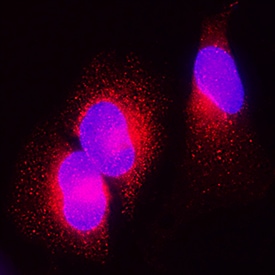
Galectin‑3BP/MAC‑2BP in HeLa Human Cell Line.
Galectin-3BP/MAC-2BP was detected in immersion fixed HeLa human cervical epithelial carcinoma cell line using Goat Anti-Human Galectin-3BP/MAC-2BP Antigen Affinity-purified Polyclonal Antibody (Catalog # AF2226) at 1.7 µg/mL for 3 hours at room temperature. Cells were stained using the NorthernLights™ 557-conjugated Anti-Goat IgG Secondary Antibody (red;NL001) and counterstained with DAPI (blue). Specific staining was localized to cytoplasm. View our protocol for Fluorescent ICC Staining of Cells on Coverslips.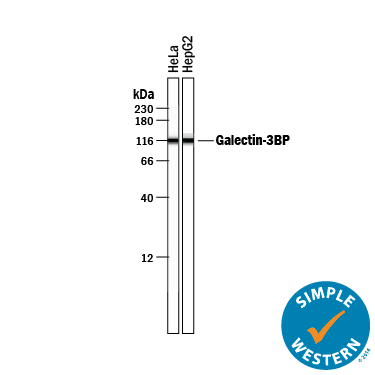
Detection of Human Galectin‑3BP/MAC‑2BP by Simple WesternTM.
Simple Western lane view shows lysates of HeLa human cervical epithelial carcinoma cell line and HepG2 human hepatocellular carcinoma cell line, loaded at 0.2 mg/mL. A specific band was detected for Galectin-3BP/MAC-2BP at approximately 115 kDa (as indicated) using 10 µg/mL of Goat Anti-Human Galectin-3BP/MAC-2BP Antigen Affinity-purified Polyclonal Antibody (Catalog # AF2226) followed by 1:50 dilution of HRP-conjugated Anti-Goat IgG Secondary Antibody (HAF109). This experiment was conducted under reducing conditions and using the 12-230 kDa separation system.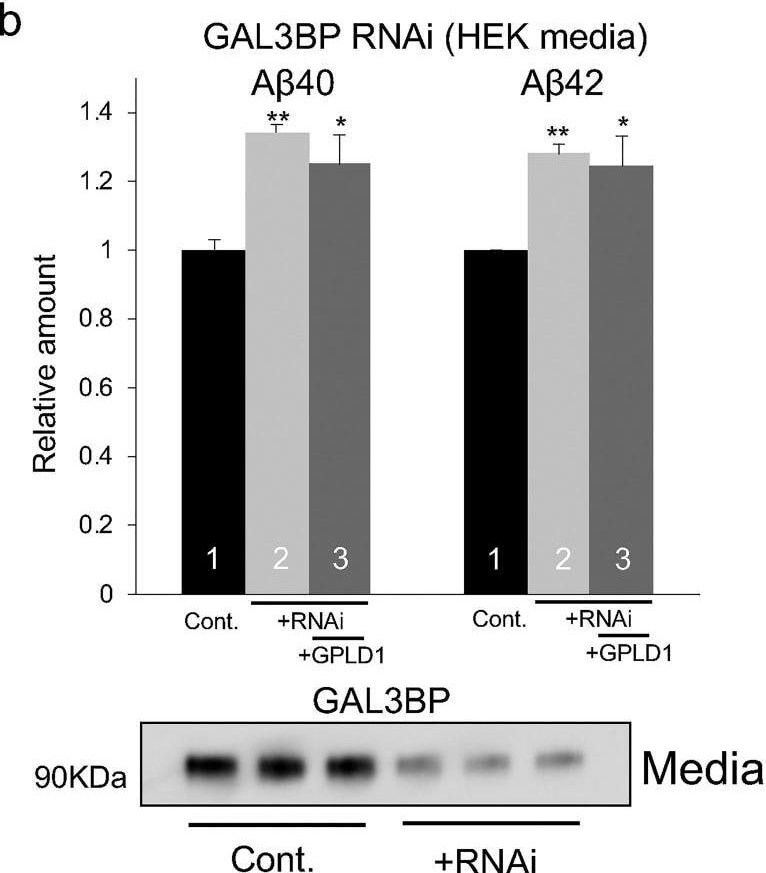
Detection of Galectin-3BP/MAC-2BP by Western Blot
GAL3BP-induced inhibition of A beta production.a, the amounts of A beta 40 and A beta 42 in the conditioned media from H4-APPsw cells (Cont.) and H4-APPsw cells overexpressing GAL3BP (+GAL3BP) were measured using ELISAs. b, conditioned media were prepared from control HEK293 cells (Cont., lane 1), HEK293 cells with GAL3BP knockdown via RNAi (+RNAi, lane 2), and HEK293 cells with GAL3BP knockdown and GPLD1 overexpression (+RNAi, +GPLD1, lane 3) and subsequently added to H4-APPsw cells to test for their suppressive activity on A beta production. Western blot analysis confirmed the efficiency of RNAi for the amount of GAL3BP expression in the culture media (bottom). c, recombinant GAL3BP (5 μg/ml) prepared from HEK293 cells was added to H4-APPsw cell cultures, and the amounts of A beta 40 and A beta 42 in the media were determined. d, commercially available recombinant GAL3BP was added to H4-APPsw cell culture, and the amounts of A beta 40 and A beta 42 in the media were measured. a–d, the values in this graph are presented relative to the corresponding controls (n = 3, mean ± S.D. (error bars)). If error bars representing S.D. values are not visible, they are too small to be displayed. *, p < 0.05; **, p < 0.01; ***, p < 0.001 versus control by one-way ANOVA with Tukey's post-hoc test. Image collected and cropped by CiteAb from the following open publication (https://pubmed.ncbi.nlm.nih.gov/31996371), licensed under a CC-BY license. Not internally tested by R&D Systems.Applications for Human Galectin-3BP/MAC-2BP Antibody
Immunocytochemistry
Sample: Immersion fixed HeLa human cervical epithelial carcinoma cell line
Simple Western
Sample: HeLa human cervical epithelial carcinoma cell line and HepG2 human hepatocellular carcinoma cell line
Western Blot
Sample: HeLa human cervical epithelial carcinoma cell line and HepG2 human hepatocellular carcinoma cell line
Reviewed Applications
Read 6 reviews rated 4 using AF2226 in the following applications:
Formulation, Preparation, and Storage
Purification
Reconstitution
Reconstitute at 0.2 mg/mL in sterile PBS. For liquid material, refer to CoA for concentration.
Formulation
Shipping
Stability & Storage
- 12 months from date of receipt, -20 to -70 °C as supplied.
- 1 month, 2 to 8 °C under sterile conditions after reconstitution.
- 6 months, -20 to -70 °C under sterile conditions after reconstitution.
Calculators
Background: Galectin-3BP/MAC-2BP
References
- Koths, K. et al. (1993) J. Biol. Chem. 268:14245.
- Ullrich, A. et al. (1994) J. Biol. Chem. 269:18401.
- Sasaki, T. et al. (1998) EMBO J. 17:1606.
- Hohenester, E. et al. (1999) Nat. Struct. Biol. 6:228.
- Muller, S. A. et al. (1999) J. Mol. Biol. 291:801.
- Hellstern, S. et al. (2002) J. Biol. Chem. 277:15690.
- Grassadonia, A. et al. (2004) Glycoconj. J. 19:551.
- Jalkanen, K. et al. (2001) Eur. J. Immunol. 31:3075.
Long Name
Alternate Names
Entrez Gene IDs
Gene Symbol
UniProt
Additional Galectin-3BP/MAC-2BP Products
Product Documents for Human Galectin-3BP/MAC-2BP Antibody
Certificate of Analysis
To download a Certificate of Analysis, please enter a lot or batch number in the search box below.
Note: Certificate of Analysis not available for kit components.
Product Specific Notices for Human Galectin-3BP/MAC-2BP Antibody
For research use only
Related Research Areas
Citations for Human Galectin-3BP/MAC-2BP Antibody
 Powered by Bioz
Customer Reviews for Human Galectin-3BP/MAC-2BP Antibody (6)
Have you used Human Galectin-3BP/MAC-2BP Antibody?
Submit a review and receive an Amazon gift card!
$25/€18/£15/$25CAN/¥2500 for a review with an image
$10/€7/£6/$10CAN/¥1110 for a review without an image
Submit a review
Customer Images
-
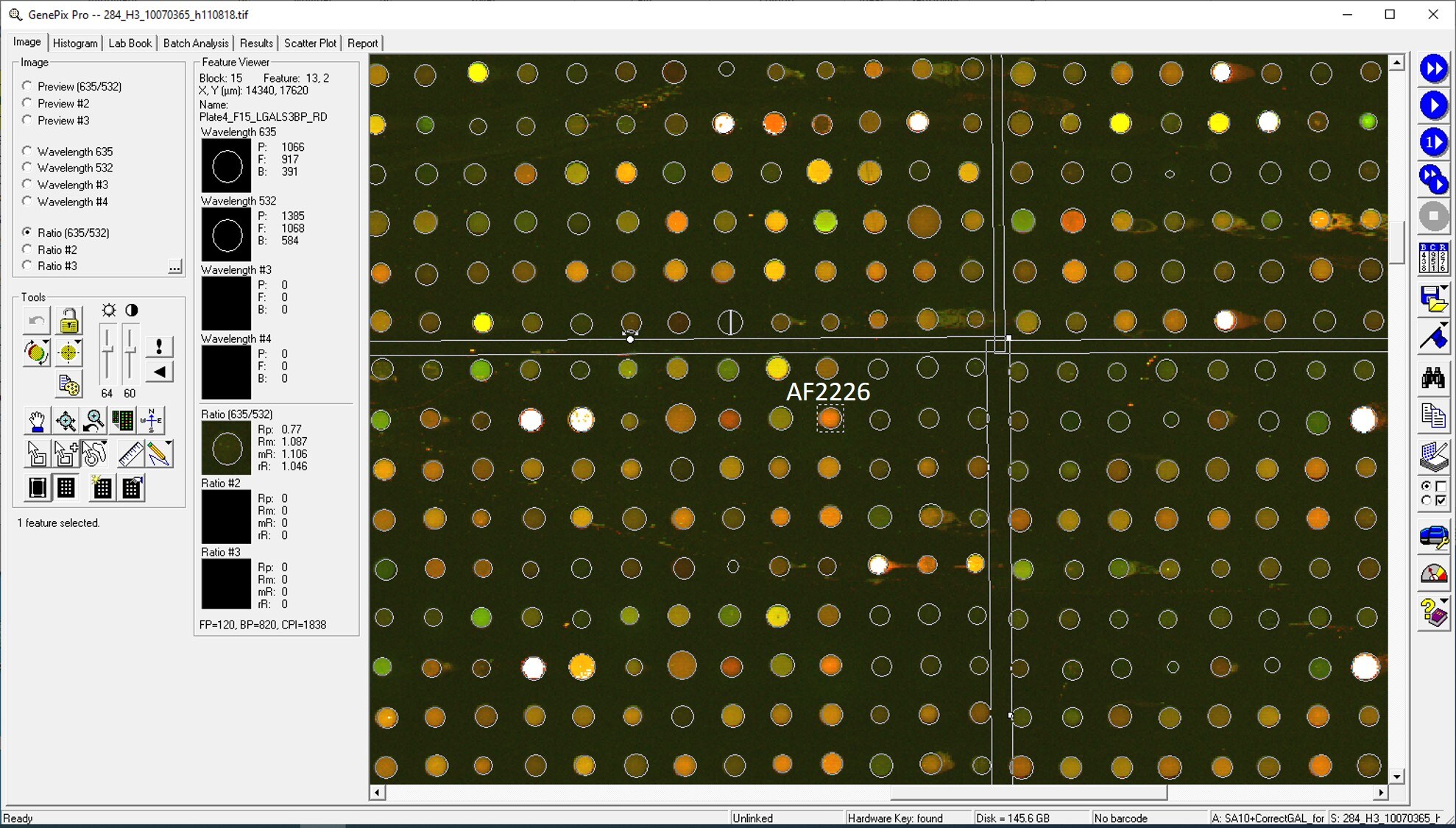
Application: MicroarraysSample Tested: EDTA PlasmaSpecies: HumanVerified Customer | Posted 01/14/2021

-
Application: ELISASample Tested: PlasmaSpecies: HumanVerified Customer | Posted 11/10/2018
-
Application: MicroarraysSample Tested: EDTA PlasmaSpecies: HumanVerified Customer | Posted 11/07/2018
-
Application: MicroarraySample Tested: EDTA PlasmaSpecies: HumanVerified Customer | Posted 10/31/2018
-
Application: Western BlotSample Tested: See PMID 22496229Species: HumanVerified Customer | Posted 01/06/2015
-
Application: Western BlotSample Tested: See PMID 21182835Species: HumanVerified Customer | Posted 01/06/2015
There are no reviews that match your criteria.
Protocols
Find general support by application which include: protocols, troubleshooting, illustrated assays, videos and webinars.
- Appropriate Fixation of IHC/ICC Samples
- Cellular Response to Hypoxia Protocols
- ClariTSA™ Fluorophore Kits
- Detection & Visualization of Antibody Binding
- ICC Cell Smear Protocol for Suspension Cells
- ICC Immunocytochemistry Protocol Videos
- ICC for Adherent Cells
- Immunocytochemistry (ICC) Protocol
- Immunocytochemistry Troubleshooting
- Immunofluorescence of Organoids Embedded in Cultrex Basement Membrane Extract
- Immunohistochemistry (IHC) and Immunocytochemistry (ICC) Protocols
- Preparing Samples for IHC/ICC Experiments
- Preventing Non-Specific Staining (Non-Specific Binding)
- Primary Antibody Selection & Optimization
- Protocol for VisUCyte™ HRP Polymer Detection Reagent
- Protocol for the Fluorescent ICC Staining of Cell Smears - Graphic
- Protocol for the Fluorescent ICC Staining of Cultured Cells on Coverslips - Graphic
- Protocol for the Preparation and Fluorescent ICC Staining of Cells on Coverslips
- Protocol for the Preparation and Fluorescent ICC Staining of Non-adherent Cells
- Protocol for the Preparation and Fluorescent ICC Staining of Stem Cells on Coverslips
- Protocol for the Preparation of a Cell Smear for Non-adherent Cell ICC - Graphic
- R&D Systems Quality Control Western Blot Protocol
- TUNEL and Active Caspase-3 Detection by IHC/ICC Protocol
- The Importance of IHC/ICC Controls
- Troubleshooting Guide: Western Blot Figures
- Western Blot Conditions
- Western Blot Protocol
- Western Blot Protocol for Cell Lysates
- Western Blot Troubleshooting
- Western Blot Troubleshooting Guide
- View all Protocols, Troubleshooting, Illustrated assays and Webinars