
Two type1 membrane proteins belonging to the hemopoietin receptor family have been cloned and shown to bind IL-13 with differing affinities. The lower affinity IL-13 binding protein, previously designated IL-13 R alpha, IL-13 R alpha l or NR4, is now referred to as IL-13 R alpha 1. The high affinity IL-13 binding protein, previously also designated IL-13 R or IL-13 R alpha l, is now referred to as IL-13 R alpha 2. Human IL-13 R alpha 2 was originally cloned from the Caki-1 human renal carcinoma cell line. The IL-13 R alpha 2 cDNA encodes a 380 amino acid (aa) residue precursor protein with a putative 26 aa residue signal peptide, a 317 residue extracellular domain, a 20 aa residue transmembrane region and a 17 aa residue cytoplasmic tail. Human and mouse IL‑13 R alpha 2 share 59% aa sequence identity. The extracellular domain of IL-13 R alpha 2 is also closely related to that of IL-13 R alpha 1. However, the 17 aa residue cytoplasmic domain of IL-13 R alpha 2 is much shorter than that of IL-13 R alpha 1, suggesting that the two receptors are functionally distinct. IL-13 R alpha 1 has been shown to combine with the IL-4 R to form a high-affinity receptor complex capable of transducing an IL‑13‑dependent proliferative signal. The role of IL-13 R alpha 2 in IL-13 signaling remains to be elucidated. The amino-terminal 27 aa residues of the human and mouse IL‑13 R alpha 2 are nearly identical to that of a soluble mouse IL-13 binding protein purified from mouse serum and urine.
Human IL-13 R alpha 2 Antibody
R&D Systems | Catalog # AF146

Scientific images may be resized, cropped, or adjusted for brightness or contrast for presentation purposes. These updates are limited to presentation and do not affect the underlying scientific interpretation of the data. Where available, additional source data may be provided upon request.
Key Product Details
Validated by
Species Reactivity
Validated:
Cited:
Applications
Validated:
Cited:
Label
Antibody Source
Product Specifications
Immunogen
Cys22-Leu342
Accession # Q14627
Specificity
Clonality
Host
Isotype
Endotoxin Level
Scientific Data Images for Human IL-13 R alpha 2 Antibody
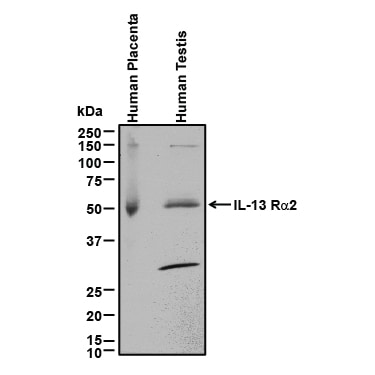
Detection of Human IL‑13 R alpha 2 by Western Blot.
Western blot shows lysates of human placenta tissue and human testis tissue. PVDF membrane was probed with 0.2 µg/mL of Goat Anti-Human IL-13 Ra2 Antigen Affinity-purified Polyclonal Antibody (Catalog # AF146) followed by HRP-conjugated Anti-Goat IgG Secondary Antibody HAF017). A specific band was detected for IL-13 Ra2 at approximately 50-55 kDa (as indicated). This experiment was conducted under reducing conditions and using Immunoblot Buffer Group 1.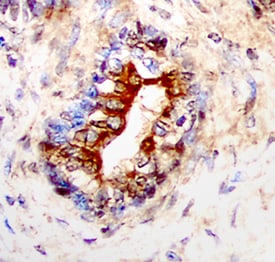
IL-13 R alpha 2 in Human Prostate Cancer Tissue.
IL-13 Ra2 was detected in immersion fixed paraffin-embedded sections of human prostate cancer tissue using Goat Anti-Human IL-13 Ra2 Antigen Affinity-purified Polyclonal Antibody (Catalog # AF146) at 5 µg/mL overnight at 4 °C. Tissue was stained using the Anti-Goat HRP-DAB Cell & Tissue Staining Kit (brown CTS008) and counterstained with hematoxylin (blue). Specific staining was localized to glandular epithelial cells. View our protocol for Chromogenic IHC Staining of Paraffin-embedded Tissue Sections.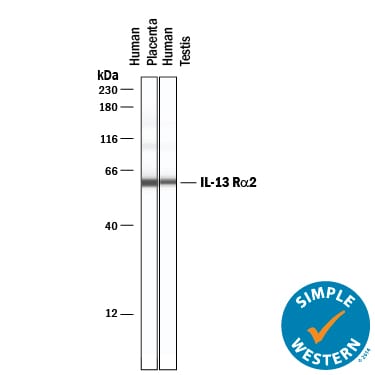
Detection of Human IL‑13 R alpha 2 by Simple WesternTM.
Simple Western lane view shows lysates of human placenta tissue and human testis tissue, loaded at 0.2 mg/mL. A specific band was detected for IL-13 Ra2 at approximately 59 kDa (as indicated) using 10 µg/mL of Goat Anti-Human IL-13 Ra2 Antigen Affinity-purified Polyclonal Antibody (Catalog # AF146) followed by 1:50 dilution of HRP-conjugated Anti-Goat IgG Secondary Antibody (Catalog # HAF109). This experiment was conducted under reducing conditions and using the 12-230 kDa separation system.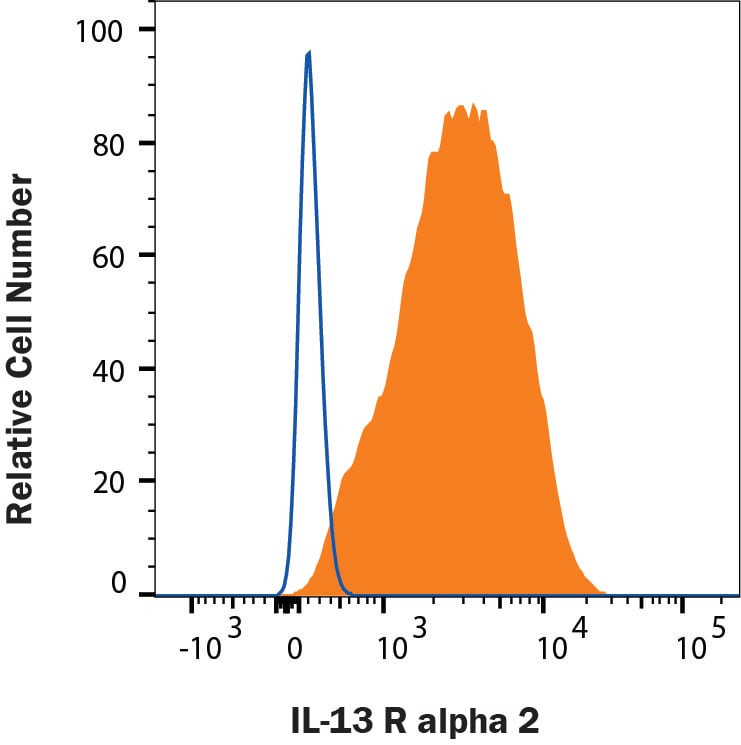
Detection of IL‑13 R alpha 2 in A375 Human Cell Line by Flow Cytometry.
A375 human melanoma cell line was stained with Goat Anti-Human IL-13 Ra2 Antigen Affinity-purified Polyclonal Antibody (Catalog # AF146, filled histogram) or isotype control antibody (Catalog # AB-108-C, open histogram). View our protocol for Staining Membrane-associated Proteins.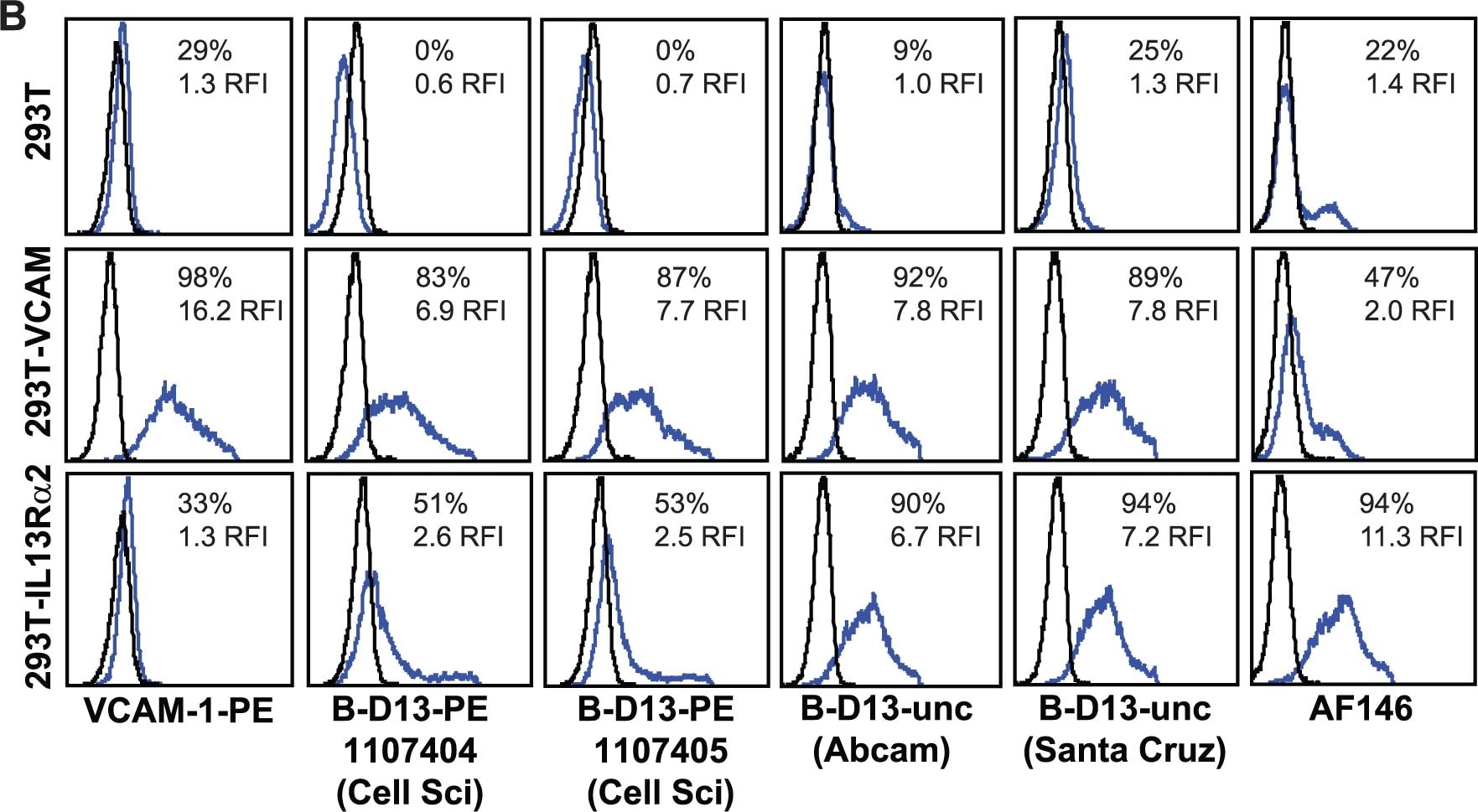
Detection of Human IL-13R alpha 2 by Flow Cytometry
Evaluation of additional commercially available B-D13 antibodies.(A) PBT008 cells that had been cultured overnight in media alone (black histogram) versus cytokine (TNF; red histogram) conditions, (B) Parental 293T cells or 293T cells engineered to express either VCAM-1 or IL13R alpha 2, and (C) U251T cells were stained with VCAM-1-PE, AF146 or various B-D13 reagents – two lots of PE-conjugated B-D13 antibody (B-D13-PE; Cell Sciences) and two to three unconjugated B-D13 antibodies (B-D13-unc) purchased from either Cell Sciences (Cell Sci), Abcam or Santa Cruz as indicated. (B, C) Black histograms represent staining with istoype control antibody or SA-PE alone. Image collected and cropped by CiteAb from the following open publication (https://dx.plos.org/10.1371/journal.pone.0095123), licensed under a CC-BY license. Not internally tested by R&D Systems.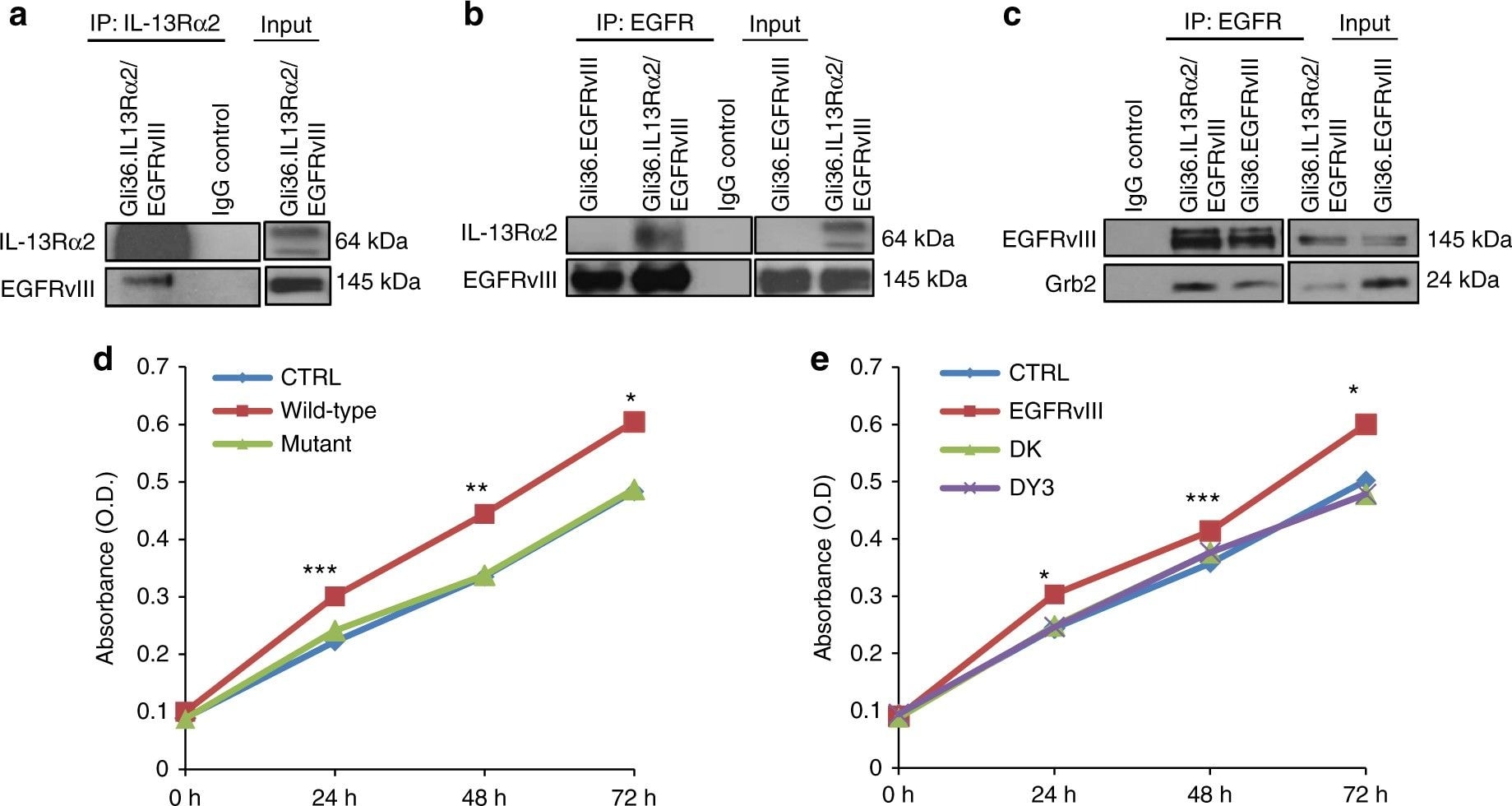
Detection of Human IL-13R alpha 2 by Western Blot
Deletion of the cytoplasmic domain of IL-13R alpha 2 resulted in a loss of physical interaction with EGFRvIII and enhanced proliferation is abolished. a Whole-cell lysates prepared from stable cell line Gli36.IL-13R alpha 2/EGFRvIII cells were used for immunoprecipitation with anti-IL-13R alpha 2 antibody, then immunoprobed with an anti-EGFR antibody. IgG served as control while unprecipitated extracts serve as input. b Similar cell lysates were reverse immunoprecipitated with anti-EGFR antibody, then immunoprobed with an anti-IL13R alpha 2antibody. Lysates from Gli36.EGFRvIII served as additional control c Gli36.IL-13R alpha 2/EGFRvIII cell lysates were immunoprecipitated with anti-EGFR antibody, then immunoprobed with anti-Grb antibody. To further examine the domains of interaction, IL-13R alpha 2 and EGFR mutants were used. Gli36.EGFRvIII cells were first transfected with pIRESneo2 (Vector), IL-13R alpha 2 full length (Wild-type) and IL-13R alpha 2 Cyt tail deleted constructs (Mutant) and then analyzed by d cell proliferation assay at the indicated time points, f co-immunoprecipitation, and h PLA assays. Findings were validated using Gli36.IL-13R alpha 2 cells transiently transfected with vector (CTRL), full length/wild-type EGFRvIII, DK, and DY3 mutants. e proliferation outputs, g co-immunoprecipitation, i and PLA assay were performed. j represent the corresponding positive and negative controls. Image collected and cropped by CiteAb from the following open publication (https://pubmed.ncbi.nlm.nih.gov/29203859), licensed under a CC-BY license. Not internally tested by R&D Systems.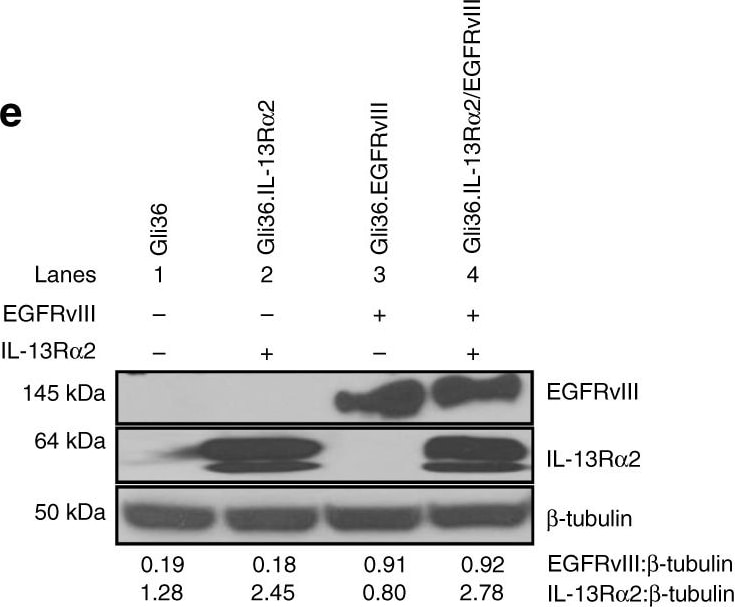
Detection of Human IL-13R alpha 2 by Western Blot
GBM patients co-expressing EGFR and IL-13R alpha 2 correlate to poor survival where the overexpression of IL-13R alpha 2 alone leads to enhance cell migration but not proliferation. Kaplan−Meier survival analysis of a all gliomas patients; b GBM patients from REMBRANDT database from National Cancer Institute (USA). Patients overexpressing EGFR mRNA by 2-fold (blue) with high (red), intermediate (yellow) and low (green) levels of IL-13R alpha 2 expression were shown. The log-rank p-values were indicated. c Kaplan−Meier survival plots for patients expressing high YKL-40 mRNA levels TCGA. High IL-13R alpha 2 expression group (red) and low IL-13R alpha 2 expression group (blue) were determined by aggregating all patients whose z-score normalized expression was above or below 0, respectively (Log-rank test p-value = 0.0374). Immunoblotting analysis showed the expression of EGFR and IL-13R alpha 2 protein levels were determined from d a panel of 10 patient-derived GBM e and the isogenic cell lines generated from Gli36 glioma cells. Pan-actin or beta tubulin served as internal loading controls. f Cell proliferation and g Cell cycle analysis were performed with Gli36 and Gli36.IL-13R alpha 2 cells h Soft agar colony formation assay was performed, Gli36.EGFRvIII was used as a positive control. i In vitro migration and j invasion assays were determined in Gli36 and Gli36.IL-13R alpha 2 cells. All data are represented as mean ± SEM, unpaired t-test **p < 0.01; ***p < 0.001; NS not significant. Image collected and cropped by CiteAb from the following open publication (https://pubmed.ncbi.nlm.nih.gov/29203859), licensed under a CC-BY license. Not internally tested by R&D Systems.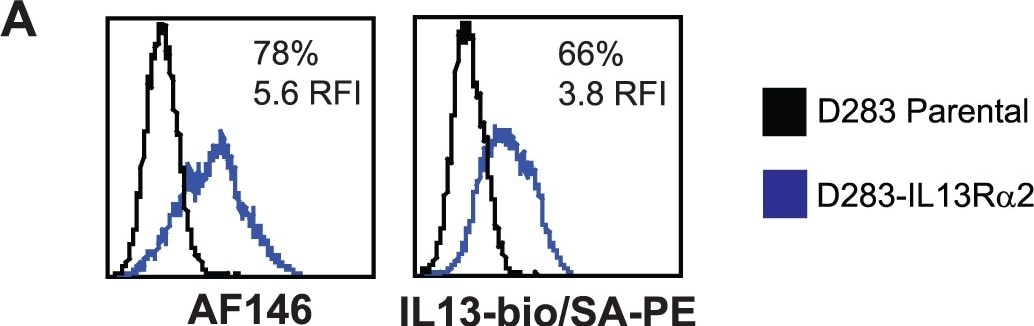
Detection of Human IL-13R alpha 2 by Flow Cytometry
The cytokine-induced cell surface antigen recognized by B-D13-PE does not bind IL-13.(A) D283 cells engineered to express IL13R alpha 2 (D283- IL13R alpha 2) (blue histograms) and D283 parental (black histograms) cells were evaluated by flow cytometry for expression of constitutive IL13R alpha 2 using the IL13R alpha 2-specific antibody AF146, and biotinylated recombinant human IL-13 (IL13-bio) followed by PE-conjugated strepavidin (SA-PE). Data are representative of 2 separate experiments. (B) U251T (grown in the absence of cytokines) were evaluated by flow cytometry for constitutive IL13R alpha 2 expression using AF146, and for binding to IL13-bio/SA-PE in the presence and absence of 10-fold molar excess of recombinant human IL-4 or IL-13. Black histograms represent staining with istoype control antibody or SA-PE alone. Data are representative of 2 separate experiments. (C) THP-1 and PBT008 grown in media alone (black histograms) or induced overnight with TNF and IL-4 (red histograms) were analyzed by flow cytometry for expression of constitutive IL13R alpha 2 (AF146), for expression of the induced antigen (B-D13-PE), and for binding to IL13-bio/SA-PE. Data are representative of 3 separate experiments. (D) IL13-zetakine+ CD8+ CTL recognize and kill U251T glioma targets expressing constitutive IL13R alpha 2 (AF146-positive), but not cytokine-induced PBT003 cells (B-D13-positive). Percentage specific lysis (mean ± S.D.) of triplicate wells is depicted. *, p≤0.0002 using an unpaired Student's t-test to compare U251T vs. PBT003-4 targets. #, p>0.05 using an unpaired Student's t-test to compare PBT003-4 targets with and without overnight cytokine stimulation. Data are representative of at least 2 separate experiments. Image collected and cropped by CiteAb from the following open publication (https://dx.plos.org/10.1371/journal.pone.0095123), licensed under a CC-BY license. Not internally tested by R&D Systems.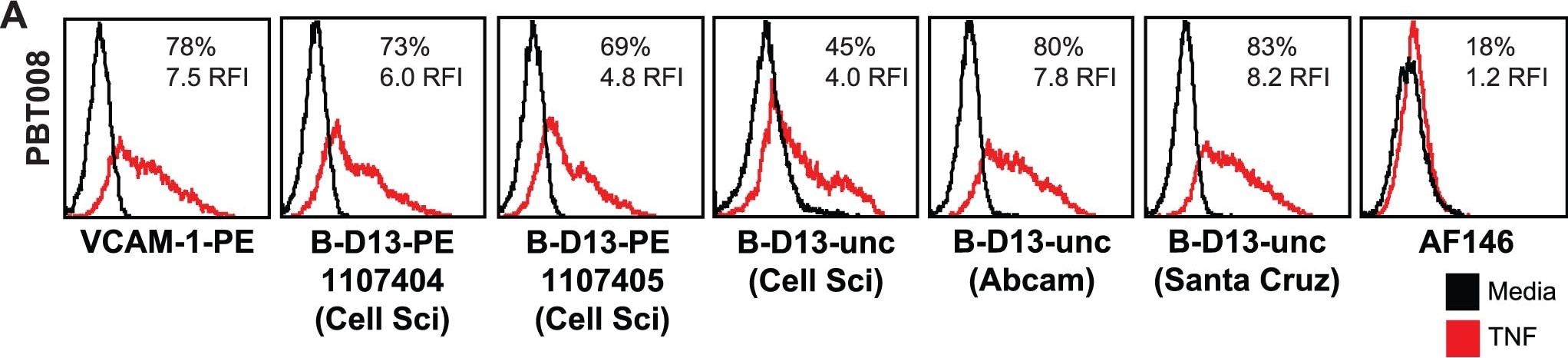
Detection of Human IL-13R alpha 2 by Flow Cytometry
Evaluation of additional commercially available B-D13 antibodies.(A) PBT008 cells that had been cultured overnight in media alone (black histogram) versus cytokine (TNF; red histogram) conditions, (B) Parental 293T cells or 293T cells engineered to express either VCAM-1 or IL13R alpha 2, and (C) U251T cells were stained with VCAM-1-PE, AF146 or various B-D13 reagents – two lots of PE-conjugated B-D13 antibody (B-D13-PE; Cell Sciences) and two to three unconjugated B-D13 antibodies (B-D13-unc) purchased from either Cell Sciences (Cell Sci), Abcam or Santa Cruz as indicated. (B, C) Black histograms represent staining with istoype control antibody or SA-PE alone. Image collected and cropped by CiteAb from the following open publication (https://dx.plos.org/10.1371/journal.pone.0095123), licensed under a CC-BY license. Not internally tested by R&D Systems.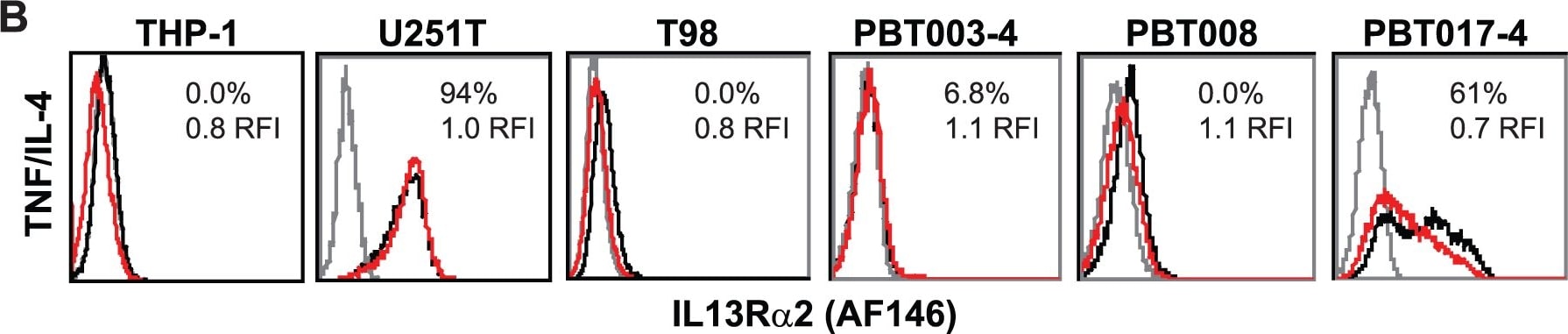
Detection of Mouse IL-13R alpha 2 by Flow Cytometry
Differential recognition of constitutively-expressed versus cytokine-induced IL13R alpha 2 by commercially available anti-IL13R alpha 2 antibodies.Flow cytometric analysis of monocytic line THP-1 and various glioma lines with (A) B-D13-PE (Cell Sciences) or (B) AF146 (R&D Systems) reagents for media alone (black histogram) and cytokine (TNF/IL-4 or TNF/IL-13 overnight; red histogram) conditions. Isotype (iso-PE) and mouse anti-goat-FITC controls are shown as grey histograms. Percent positive and relative fluorescent index (RFI) of MFI cytokine/MFI media is reported for each histogram. (C) Flow cytometric detection of IL13R alpha 2 for D283 cells engineered to express IL13R alpha 2 (D283-IL13R alpha 2; blue histogram) and D283 parental (black histogram) stained with AF146 or B-D13-PE antibodies. All data are representative of more than three experiments each. Image collected and cropped by CiteAb from the following open publication (https://dx.plos.org/10.1371/journal.pone.0095123), licensed under a CC-BY license. Not internally tested by R&D Systems.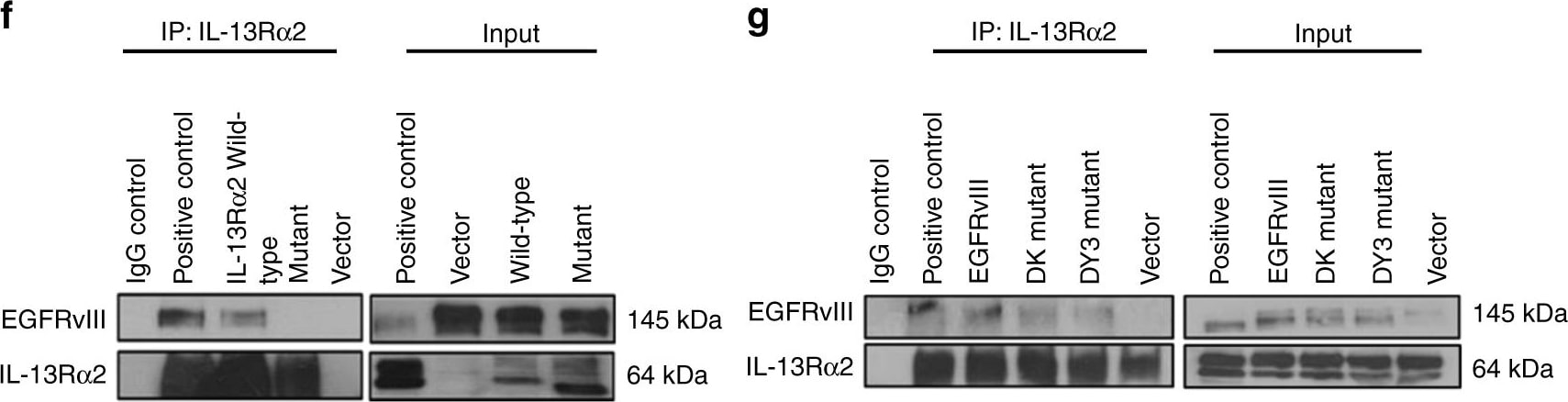
Detection of Human IL-13R alpha 2 by Western Blot
Deletion of the cytoplasmic domain of IL-13R alpha 2 resulted in a loss of physical interaction with EGFRvIII and enhanced proliferation is abolished. a Whole-cell lysates prepared from stable cell line Gli36.IL-13R alpha 2/EGFRvIII cells were used for immunoprecipitation with anti-IL-13R alpha 2 antibody, then immunoprobed with an anti-EGFR antibody. IgG served as control while unprecipitated extracts serve as input. b Similar cell lysates were reverse immunoprecipitated with anti-EGFR antibody, then immunoprobed with an anti-IL13R alpha 2antibody. Lysates from Gli36.EGFRvIII served as additional control c Gli36.IL-13R alpha 2/EGFRvIII cell lysates were immunoprecipitated with anti-EGFR antibody, then immunoprobed with anti-Grb antibody. To further examine the domains of interaction, IL-13R alpha 2 and EGFR mutants were used. Gli36.EGFRvIII cells were first transfected with pIRESneo2 (Vector), IL-13R alpha 2 full length (Wild-type) and IL-13R alpha 2 Cyt tail deleted constructs (Mutant) and then analyzed by d cell proliferation assay at the indicated time points, f co-immunoprecipitation, and h PLA assays. Findings were validated using Gli36.IL-13R alpha 2 cells transiently transfected with vector (CTRL), full length/wild-type EGFRvIII, DK, and DY3 mutants. e proliferation outputs, g co-immunoprecipitation, i and PLA assay were performed. j represent the corresponding positive and negative controls. Image collected and cropped by CiteAb from the following open publication (https://pubmed.ncbi.nlm.nih.gov/29203859), licensed under a CC-BY license. Not internally tested by R&D Systems.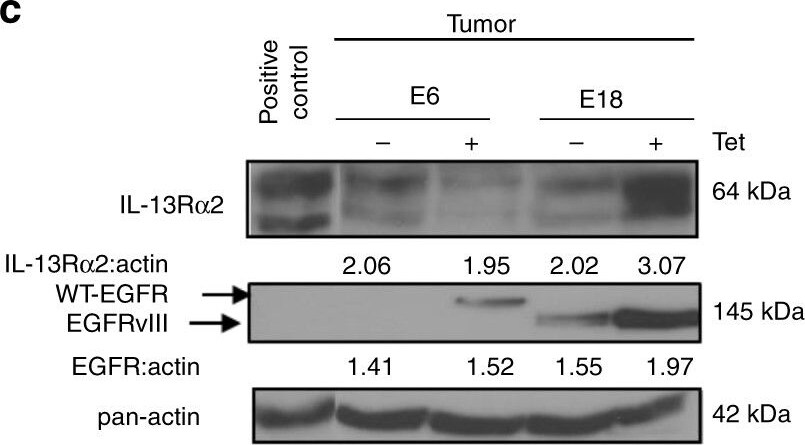
Detection of Human IL-13R alpha 2 by Western Blot
IL-13R alpha 2 mediate greater tumorigenic potential with EGFRvIII, and not WT EGFR. a Tumor volume b and tumor weight of tetracycline regulatable U251 gliomas (U251-E6 and U251-E18 was examined in vivo. Bars depict the mean values and error bars represent 95% confidence intervals. P-values were calculated using ANOVA with Tukey’s multiple comparison test *p < 0.05; **p < 0.01; ***p < 0.001. Photomicrographs of represented collected tumors are shown. c Immunoblot analysis of proteins from U251-E6 and -E18 tumor lysates in the presence or absence of tetracycline with the indicated antibodies. One representative tumor under each of the uninduced and induced conditions was shown. U251MG whole-cell lysate served as positive control for IL-13R alpha 2. d Kaplan−Meier survival curves of mice bearing U251-E6 and U251-18 tumors **p < 0.0039. Kaplan−Meier survival plots for patients expressing e high EGFR mRNA levels (excluding EGFRvIII) or f high EGFRvIII mRNA levels from TCGA database. High IL-13R alpha 2 expression (red) and low IL-13R alpha 2 expression (blue) were determined by aggregating all patients whose z-score normalized expression was above or below 0, respectively. g Schematic model showing signal transduction pathway co-induced by IL-13R alpha 2 and EGFRvIII. Overexpression of IL-13R alpha 2 in human gliomas increases cell migration and invasion through the activation of MMP-2, vimentin. Amplification of EGFRvIII promotes the co-interaction of both receptors mediating an increase in tyrosine kinase activities and a preferential activation of RAS-MEK-ERK and STAT3 pathways leading to aberrant cellular proliferation. Image collected and cropped by CiteAb from the following open publication (https://pubmed.ncbi.nlm.nih.gov/29203859), licensed under a CC-BY license. Not internally tested by R&D Systems.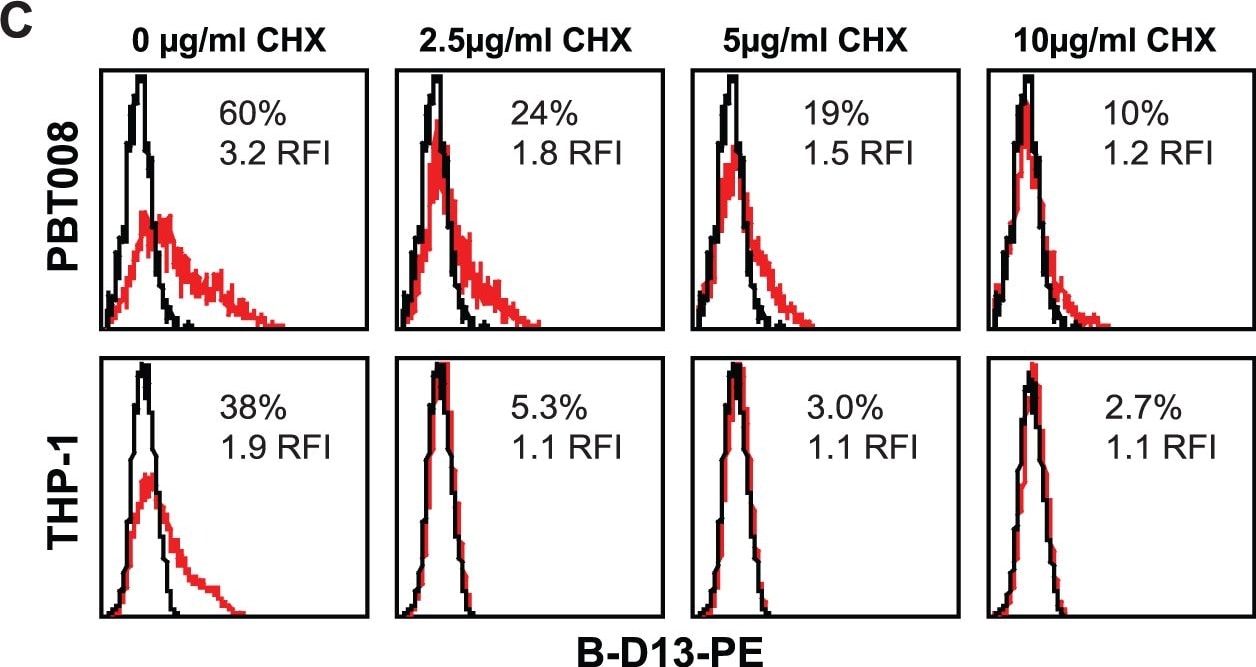
Detection of Mouse IL-13R alpha 2 by Flow Cytometry
Cytokine induction of B-D13 antigen is dependent on mRNA transcription and translation.(A) IL13R alpha 2 mRNA levels quantified by qPCR for U251T, PBT003-4, PBT008, and THP-1 cells after overnight culture in media, TNF/IL-4, or TNF/IL-13. mRNA levels were normalized to housekeeping genes (ACTB, UBC, GAPDH and RPLP0). (B, C) B-D13-PE immunoreactivity of PBT008 and THP-1 cells treated with increasing concentrations of (B) transcription blocker Actinomycin D (ActD) (0, 0.06, 0.1, 0.3 µg/ml) or (C) translation blocker Cycloheximide (CHX) (0, 2.5, 5, 10 µg/ml), then either cultured in media alone (black histograms) or stimulated with TNF/IL-4 (red histograms) for 5 hours. All data are representative of 2 separate experiments. Image collected and cropped by CiteAb from the following open publication (https://dx.plos.org/10.1371/journal.pone.0095123), licensed under a CC-BY license. Not internally tested by R&D Systems.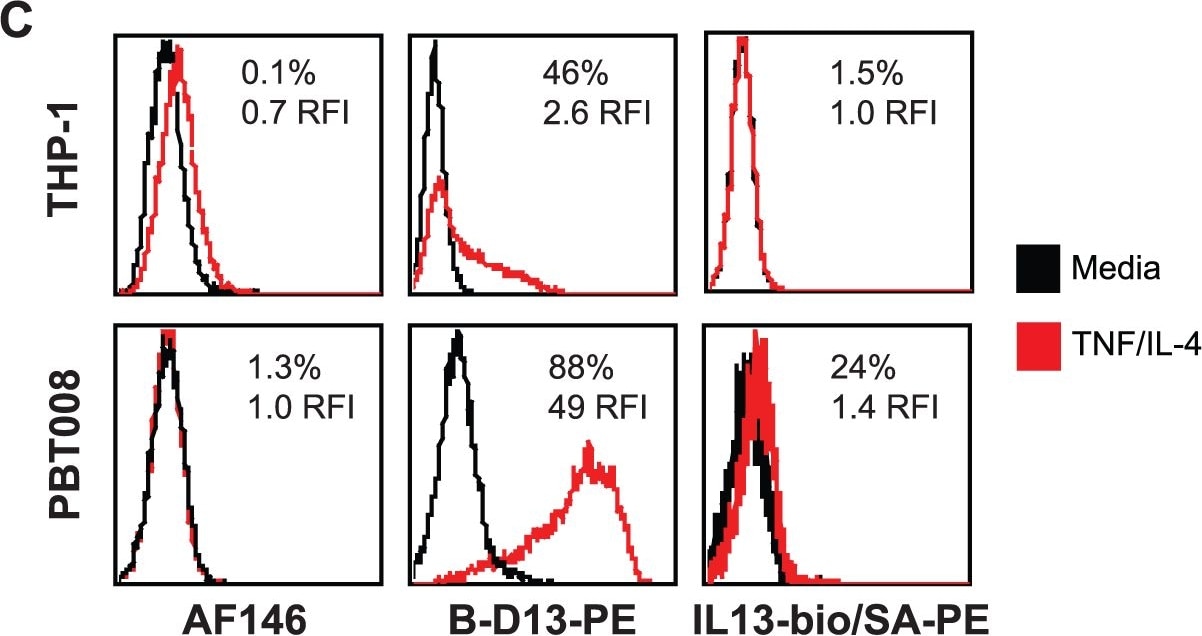
Detection of Human IL-13R alpha 2 by Flow Cytometry
The cytokine-induced cell surface antigen recognized by B-D13-PE does not bind IL-13.(A) D283 cells engineered to express IL13R alpha 2 (D283- IL13R alpha 2) (blue histograms) and D283 parental (black histograms) cells were evaluated by flow cytometry for expression of constitutive IL13R alpha 2 using the IL13R alpha 2-specific antibody AF146, and biotinylated recombinant human IL-13 (IL13-bio) followed by PE-conjugated strepavidin (SA-PE). Data are representative of 2 separate experiments. (B) U251T (grown in the absence of cytokines) were evaluated by flow cytometry for constitutive IL13R alpha 2 expression using AF146, and for binding to IL13-bio/SA-PE in the presence and absence of 10-fold molar excess of recombinant human IL-4 or IL-13. Black histograms represent staining with istoype control antibody or SA-PE alone. Data are representative of 2 separate experiments. (C) THP-1 and PBT008 grown in media alone (black histograms) or induced overnight with TNF and IL-4 (red histograms) were analyzed by flow cytometry for expression of constitutive IL13R alpha 2 (AF146), for expression of the induced antigen (B-D13-PE), and for binding to IL13-bio/SA-PE. Data are representative of 3 separate experiments. (D) IL13-zetakine+ CD8+ CTL recognize and kill U251T glioma targets expressing constitutive IL13R alpha 2 (AF146-positive), but not cytokine-induced PBT003 cells (B-D13-positive). Percentage specific lysis (mean ± S.D.) of triplicate wells is depicted. *, p≤0.0002 using an unpaired Student's t-test to compare U251T vs. PBT003-4 targets. #, p>0.05 using an unpaired Student's t-test to compare PBT003-4 targets with and without overnight cytokine stimulation. Data are representative of at least 2 separate experiments. Image collected and cropped by CiteAb from the following open publication (https://dx.plos.org/10.1371/journal.pone.0095123), licensed under a CC-BY license. Not internally tested by R&D Systems.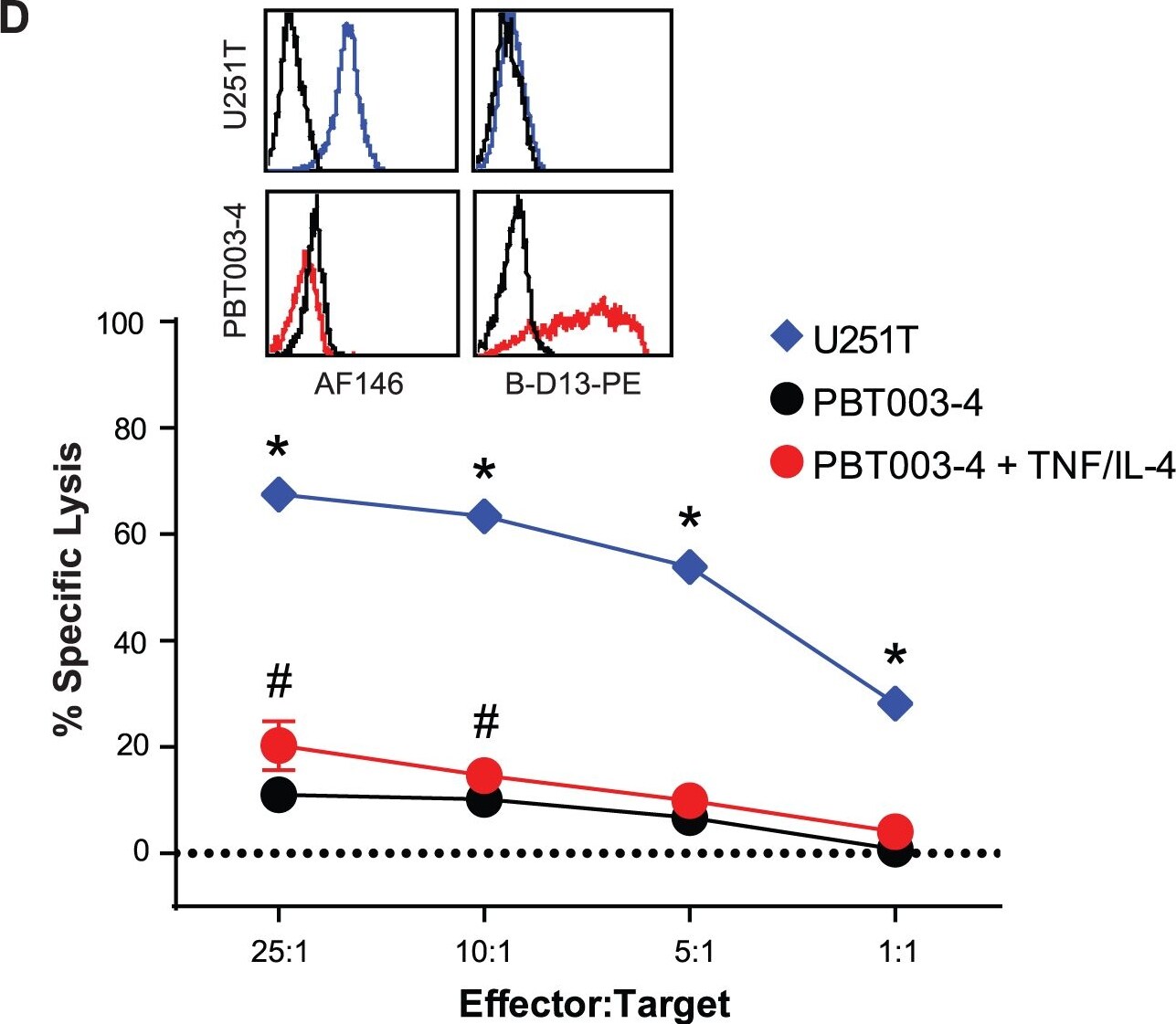
Detection of Human IL-13R alpha 2 by Flow Cytometry
The cytokine-induced cell surface antigen recognized by B-D13-PE does not bind IL-13.(A) D283 cells engineered to express IL13R alpha 2 (D283- IL13R alpha 2) (blue histograms) and D283 parental (black histograms) cells were evaluated by flow cytometry for expression of constitutive IL13R alpha 2 using the IL13R alpha 2-specific antibody AF146, and biotinylated recombinant human IL-13 (IL13-bio) followed by PE-conjugated strepavidin (SA-PE). Data are representative of 2 separate experiments. (B) U251T (grown in the absence of cytokines) were evaluated by flow cytometry for constitutive IL13R alpha 2 expression using AF146, and for binding to IL13-bio/SA-PE in the presence and absence of 10-fold molar excess of recombinant human IL-4 or IL-13. Black histograms represent staining with istoype control antibody or SA-PE alone. Data are representative of 2 separate experiments. (C) THP-1 and PBT008 grown in media alone (black histograms) or induced overnight with TNF and IL-4 (red histograms) were analyzed by flow cytometry for expression of constitutive IL13R alpha 2 (AF146), for expression of the induced antigen (B-D13-PE), and for binding to IL13-bio/SA-PE. Data are representative of 3 separate experiments. (D) IL13-zetakine+ CD8+ CTL recognize and kill U251T glioma targets expressing constitutive IL13R alpha 2 (AF146-positive), but not cytokine-induced PBT003 cells (B-D13-positive). Percentage specific lysis (mean ± S.D.) of triplicate wells is depicted. *, p≤0.0002 using an unpaired Student's t-test to compare U251T vs. PBT003-4 targets. #, p>0.05 using an unpaired Student's t-test to compare PBT003-4 targets with and without overnight cytokine stimulation. Data are representative of at least 2 separate experiments. Image collected and cropped by CiteAb from the following open publication (https://dx.plos.org/10.1371/journal.pone.0095123), licensed under a CC-BY license. Not internally tested by R&D Systems.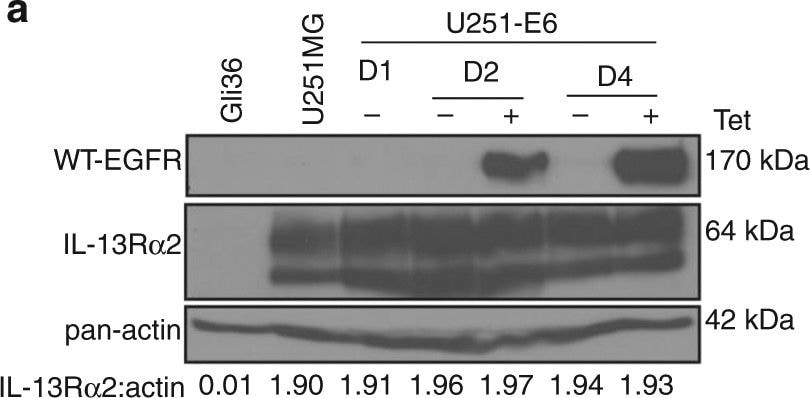
Detection of Human IL-13R alpha 2 by Western Blot
Enhanced cellular proliferation mediated by IL-13R alpha 2 is specific to EGFRvIII, and not WT EGFR. a U251-E6 or c U251-E18 cells were treated with or without tetracycline (Tet). At indicated time points, immunoblot analysis was carried out. Gli36, Gli36.EGFRvIII cell lysates were included as negative or positive controls for EGFRvIII, respectively. Growth kinetics of b U251-E6 and d U251-E18 was determined by CCK-8 assay. Percent cell viability was normalized to day 1 (without induction). All data are represented as mean ± SEM. Unpaired t-test ***p < 0.001, NS. not significant. e Co-immunoprecipitation was performed in stable cell lines Gli36.IL-13R alpha 2/wtEGFR as well as U251MG-E6 (i.e. wtEGFR) cells at 48 h post tetracycline induction with the indicated antibodies. Gli36.IL-13R alpha 2/EGFRvIII served as positive controls. f The interaction between endogenous wtEGFR and IL-13R alpha 2 was shown in primary wtEGFR-positive GBM patient tumor derived from Mayo clinic, and IgG served as positive and negative controls respectively. Knockdown of IL-13R alpha 2 in cell line or patient-derived GBM samples expressing g wtEGFR or h EGFRvIII. Image collected and cropped by CiteAb from the following open publication (https://pubmed.ncbi.nlm.nih.gov/29203859), licensed under a CC-BY license. Not internally tested by R&D Systems.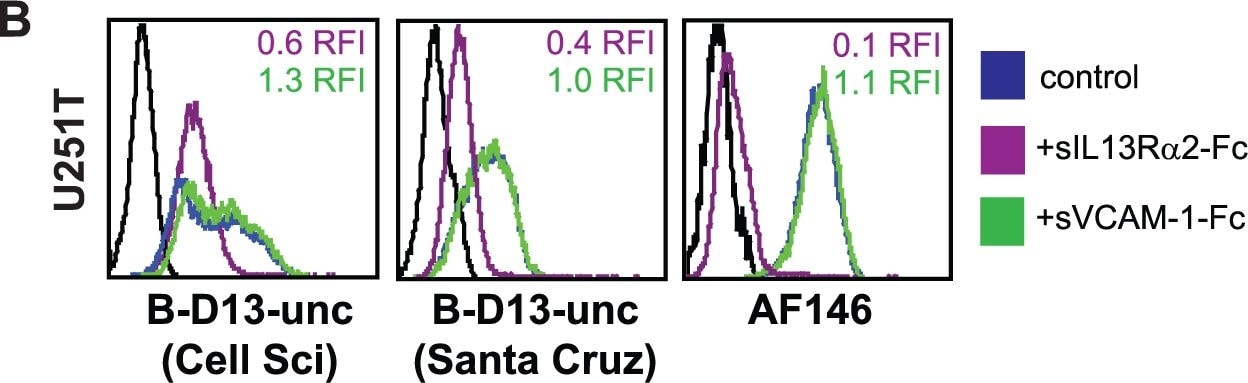
Detection of Human IL-13R alpha 2 by Flow Cytometry
B-D13 reagent appears to contain two distinct monoclonal antibodies.Soluble receptor competition study evaluating the specificity of IL13R alpha 2 and VCAM-1 recognition by the B-D13-unc antibodies (Cell Sciences and Santa Cruz) using (A) PBT008 cells cultured overnight in media alone (black histogram) versus cytokine (TNF; blue histogram); or (B) IL13R alpha 2-expressing U251T cells (blue histogram). Cells were stained with the indicated antibody that was pre-incubated with soluble recombinant human IL13R alpha -Fc (purple histograms) or VCAM-1-Fc (green histograms). Relative fluorescence index (RFI) compared to staining without the soluble competitors (i.e., the control/blue histograms) are indicated in each histogram. (C) Unconjugated B-D13 antibodies from Cell Sciences (top) and Abcam (bottom) were reduced and analyzed by LC/MS. Shown is the spectra of the deconvoluted protein masses depicting two distinct mass species for both the heavy and light chains. (D) Extracted ion chromatograms (EIC) for the two light chain species, of the Cell Sciences B-D13-unc reagent from (C). Image collected and cropped by CiteAb from the following open publication (https://dx.plos.org/10.1371/journal.pone.0095123), licensed under a CC-BY license. Not internally tested by R&D Systems.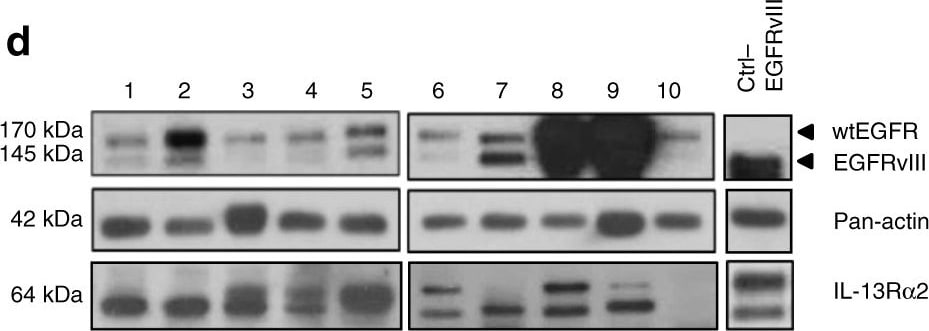
Detection of Human IL-13R alpha 2 by Western Blot
GBM patients co-expressing EGFR and IL-13R alpha 2 correlate to poor survival where the overexpression of IL-13R alpha 2 alone leads to enhance cell migration but not proliferation. Kaplan−Meier survival analysis of a all gliomas patients; b GBM patients from REMBRANDT database from National Cancer Institute (USA). Patients overexpressing EGFR mRNA by 2-fold (blue) with high (red), intermediate (yellow) and low (green) levels of IL-13R alpha 2 expression were shown. The log-rank p-values were indicated. c Kaplan−Meier survival plots for patients expressing high YKL-40 mRNA levels TCGA. High IL-13R alpha 2 expression group (red) and low IL-13R alpha 2 expression group (blue) were determined by aggregating all patients whose z-score normalized expression was above or below 0, respectively (Log-rank test p-value = 0.0374). Immunoblotting analysis showed the expression of EGFR and IL-13R alpha 2 protein levels were determined from d a panel of 10 patient-derived GBM e and the isogenic cell lines generated from Gli36 glioma cells. Pan-actin or beta tubulin served as internal loading controls. f Cell proliferation and g Cell cycle analysis were performed with Gli36 and Gli36.IL-13R alpha 2 cells h Soft agar colony formation assay was performed, Gli36.EGFRvIII was used as a positive control. i In vitro migration and j invasion assays were determined in Gli36 and Gli36.IL-13R alpha 2 cells. All data are represented as mean ± SEM, unpaired t-test **p < 0.01; ***p < 0.001; NS not significant. Image collected and cropped by CiteAb from the following open publication (https://pubmed.ncbi.nlm.nih.gov/29203859), licensed under a CC-BY license. Not internally tested by R&D Systems.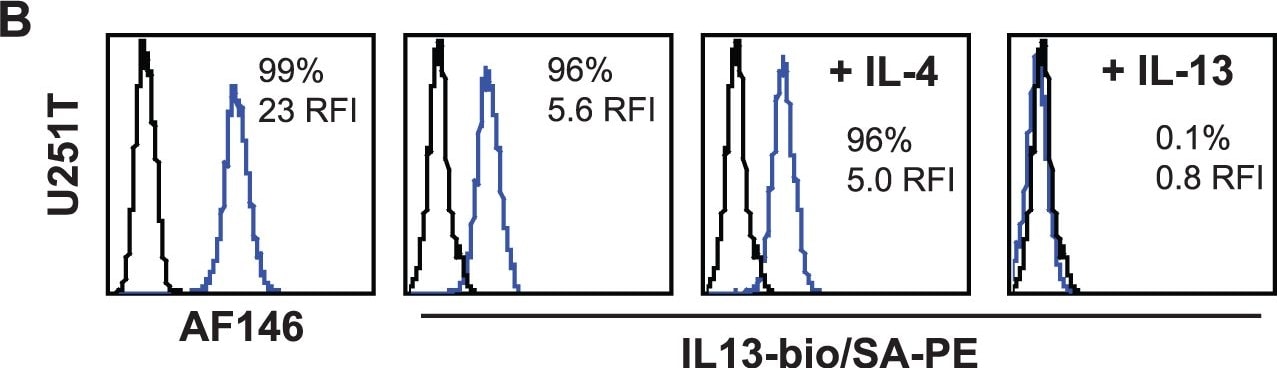
Detection of Human IL-13R alpha 2 by Flow Cytometry
The cytokine-induced cell surface antigen recognized by B-D13-PE does not bind IL-13.(A) D283 cells engineered to express IL13R alpha 2 (D283- IL13R alpha 2) (blue histograms) and D283 parental (black histograms) cells were evaluated by flow cytometry for expression of constitutive IL13R alpha 2 using the IL13R alpha 2-specific antibody AF146, and biotinylated recombinant human IL-13 (IL13-bio) followed by PE-conjugated strepavidin (SA-PE). Data are representative of 2 separate experiments. (B) U251T (grown in the absence of cytokines) were evaluated by flow cytometry for constitutive IL13R alpha 2 expression using AF146, and for binding to IL13-bio/SA-PE in the presence and absence of 10-fold molar excess of recombinant human IL-4 or IL-13. Black histograms represent staining with istoype control antibody or SA-PE alone. Data are representative of 2 separate experiments. (C) THP-1 and PBT008 grown in media alone (black histograms) or induced overnight with TNF and IL-4 (red histograms) were analyzed by flow cytometry for expression of constitutive IL13R alpha 2 (AF146), for expression of the induced antigen (B-D13-PE), and for binding to IL13-bio/SA-PE. Data are representative of 3 separate experiments. (D) IL13-zetakine+ CD8+ CTL recognize and kill U251T glioma targets expressing constitutive IL13R alpha 2 (AF146-positive), but not cytokine-induced PBT003 cells (B-D13-positive). Percentage specific lysis (mean ± S.D.) of triplicate wells is depicted. *, p≤0.0002 using an unpaired Student's t-test to compare U251T vs. PBT003-4 targets. #, p>0.05 using an unpaired Student's t-test to compare PBT003-4 targets with and without overnight cytokine stimulation. Data are representative of at least 2 separate experiments. Image collected and cropped by CiteAb from the following open publication (https://dx.plos.org/10.1371/journal.pone.0095123), licensed under a CC-BY license. Not internally tested by R&D Systems.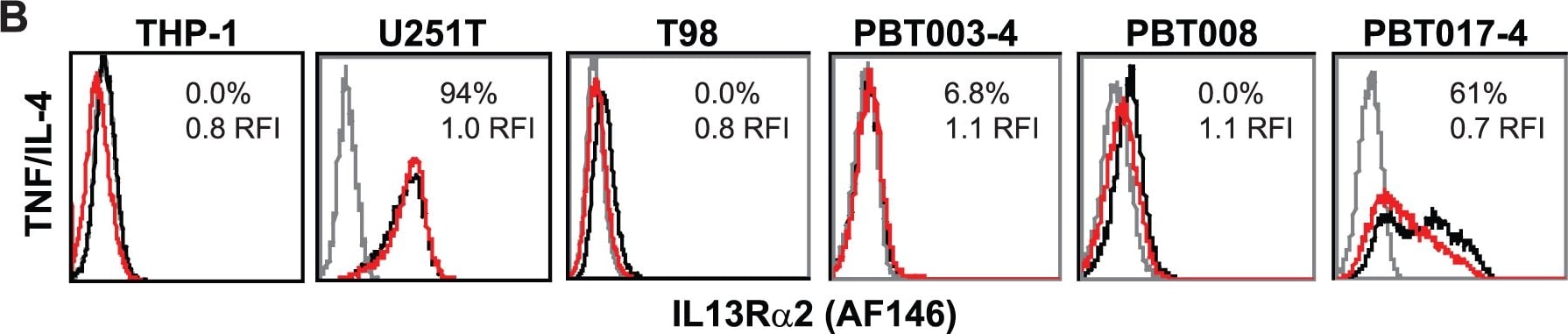
Detection of Mouse IL-13R alpha 2 by Flow Cytometry
Differential recognition of constitutively-expressed versus cytokine-induced IL13R alpha 2 by commercially available anti-IL13R alpha 2 antibodies.Flow cytometric analysis of monocytic line THP-1 and various glioma lines with (A) B-D13-PE (Cell Sciences) or (B) AF146 (R&D Systems) reagents for media alone (black histogram) and cytokine (TNF/IL-4 or TNF/IL-13 overnight; red histogram) conditions. Isotype (iso-PE) and mouse anti-goat-FITC controls are shown as grey histograms. Percent positive and relative fluorescent index (RFI) of MFI cytokine/MFI media is reported for each histogram. (C) Flow cytometric detection of IL13R alpha 2 for D283 cells engineered to express IL13R alpha 2 (D283-IL13R alpha 2; blue histogram) and D283 parental (black histogram) stained with AF146 or B-D13-PE antibodies. All data are representative of more than three experiments each. Image collected and cropped by CiteAb from the following open publication (https://dx.plos.org/10.1371/journal.pone.0095123), licensed under a CC-BY license. Not internally tested by R&D Systems.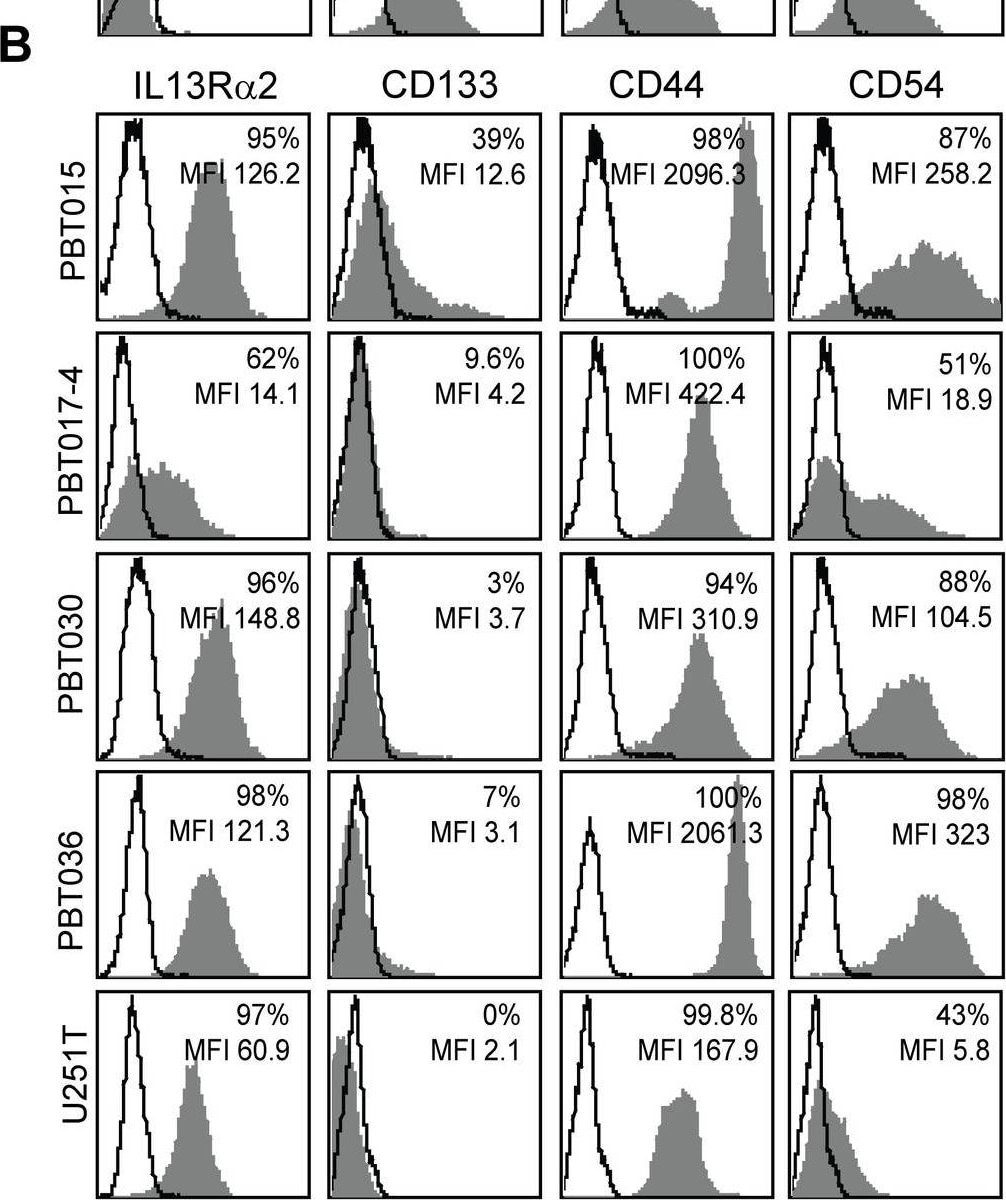
Detection of IL-13R alpha 2 by Flow Cytometry
IL13R alpha 2 expression is associated with mesenchymal gene expression in low-passage primary glioma cell lines.Flow cytometry analyses of (A) IL13R alpha 2-negative glioma cell lines (PBT003-4, PBT008, PBT009, PBT022), and (B) IL13R alpha 2-positive glioma cell lines (PBT015, PBT017-4, PBT030, PBT036, and U251T) for expression of the proneural marker CD133 and mesenchymal markers CD44 and CD54/ICAM-1 (grey histograms). Solid lines show isotype and secondary control antibodies. (C) Comparison of mean fluorescence intensity (MFI) of IL13R alpha 2-negative and IL13R alpha 2-positive glioma cell lines shown in panels A and B. (D-E) Distribution plots of Affymetrix gene array expression analyses of (D) IL13R alpha 2-negative and (E) IL13R alpha 2-positive glioma cell lines for mesenchymal, classical, neural and proneural signature gene expression. (F) Correlation of mesenchymal (MES) versus proneural (PN) average gene expression with RMA normalized IL13R alpha 2 expression in glioma cell lines. Image collected and cropped by CiteAb from the following open publication (https://pubmed.ncbi.nlm.nih.gov/24204956), licensed under a CC-BY license. Not internally tested by R&D Systems.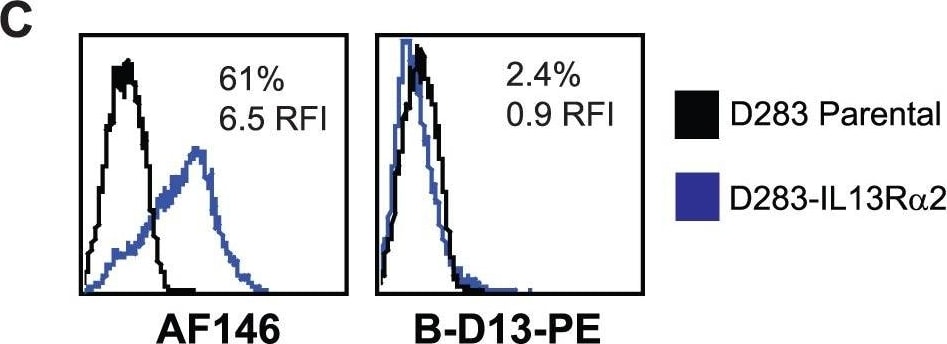
Detection of Human IL-13R alpha 2 by Flow Cytometry
Differential recognition of constitutively-expressed versus cytokine-induced IL13R alpha 2 by commercially available anti-IL13R alpha 2 antibodies.Flow cytometric analysis of monocytic line THP-1 and various glioma lines with (A) B-D13-PE (Cell Sciences) or (B) AF146 (R&D Systems) reagents for media alone (black histogram) and cytokine (TNF/IL-4 or TNF/IL-13 overnight; red histogram) conditions. Isotype (iso-PE) and mouse anti-goat-FITC controls are shown as grey histograms. Percent positive and relative fluorescent index (RFI) of MFI cytokine/MFI media is reported for each histogram. (C) Flow cytometric detection of IL13R alpha 2 for D283 cells engineered to express IL13R alpha 2 (D283-IL13R alpha 2; blue histogram) and D283 parental (black histogram) stained with AF146 or B-D13-PE antibodies. All data are representative of more than three experiments each. Image collected and cropped by CiteAb from the following open publication (https://pubmed.ncbi.nlm.nih.gov/24787244), licensed under a CC-BY license. Not internally tested by R&D Systems.
Human IL-13 R alpha 2 ELISA Standard Curve
Human APRIL/TNFSF13 was serially diluted and captured by Mouse Anti-Human IL‑13 R alpha 2 Monoclonal Antibody (Catalog # MAB6141) coated on a Clear Polystyrene Microplate (Catalog # DY990). Goat Anti-Human IL‑13 R alpha 2 Antigen Affinity-purified Polyclonal Antibody (Catalog # AF146) was biotinylated and incubated with the protein captured on the plate. Detection of the standard curve was achieved by incubating Streptavidin-HRP (Catalog # DY998)Applications for Human IL-13 R alpha 2 Antibody
Blockade of Receptor-ligand Interaction
CyTOF-ready
Flow Cytometry
Sample: A375 human melanoma cell line
Immunohistochemistry
Sample: Immersion fixed paraffin-embedded sections of human normal skin and prostate cancer tissue
Simple Western
Sample: Human placenta tissue and human testis tissue
Western Blot
Sample: Human placenta tissue and human testis tissue
Flow Cytometry Panel Builder
Bio-Techne Knows Flow Cytometry
Save time and reduce costly mistakes by quickly finding compatible reagents using the Panel Builder Tool.
Advanced Features
- Spectra Viewer - Custom analysis of spectra from multiple fluorochromes
- Spillover Popups - Visualize the spectra of individual fluorochromes
- Antigen Density Selector - Match fluorochrome brightness with antigen density

Formulation, Preparation, and Storage
Purification
Reconstitution
Reconstitute at 0.2 mg/mL in sterile PBS. For liquid material, refer to CoA for concentration.
Formulation
Shipping
Stability & Storage
- 12 months from date of receipt, -20 to -70 °C as supplied.
- 1 month, 2 to 8 °C under sterile conditions after reconstitution.
- 6 months, -20 to -70 °C under sterile conditions after reconstitution.
Calculators
Background: IL-13 R alpha 2
References
- Caput, D. et al. (1996) J. Biol. Chem. 271:16921.
- Donaldson, D.D. et al. (1998) J. Immunol. 161:2317.
- Aman, M.J. et al. (1996) J. Biol. Chem. 271:29265.
- Hilton, D.J. et al. (1996) Proc. Natl. Acad. Sci. USA 93:497.
- Zhang, J.G. et al. (1997) J. Biol. Chem. 272:9474.
Long Name
Alternate Names
Gene Symbol
UniProt
Additional IL-13 R alpha 2 Products
Product Documents for Human IL-13 R alpha 2 Antibody
Certificate of Analysis
To download a Certificate of Analysis, please enter a lot or batch number in the search box below.
Note: Certificate of Analysis not available for kit components.
Product Specific Notices for Human IL-13 R alpha 2 Antibody
For research use only
Citations for Human IL-13 R alpha 2 Antibody
 Powered by Bioz
Customer Reviews for Human IL-13 R alpha 2 Antibody
There are currently no reviews for this product. Be the first to review Human IL-13 R alpha 2 Antibody and earn rewards!
Have you used Human IL-13 R alpha 2 Antibody?
Submit a review and receive an Amazon gift card!
$25/€18/£15/$25CAN/¥2500 for a review with an image
$10/€7/£6/$10CAN/¥1110 for a review without an image
Submit a review
Protocols
Find general support by application which include: protocols, troubleshooting, illustrated assays, videos and webinars.
- 7-Amino Actinomycin D (7-AAD) Cell Viability Flow Cytometry Protocol
- Antigen Retrieval Protocol (PIER)
- Antigen Retrieval for Frozen Sections Protocol
- Appropriate Fixation of IHC/ICC Samples
- Cellular Response to Hypoxia Protocols
- Chromogenic IHC Staining of Formalin-Fixed Paraffin-Embedded (FFPE) Tissue Protocol
- Chromogenic Immunohistochemistry Staining of Frozen Tissue
- ClariTSA™ Fluorophore Kits
- Detection & Visualization of Antibody Binding
- Extracellular Membrane Flow Cytometry Protocol
- Flow Cytometry Protocol for Cell Surface Markers
- Flow Cytometry Protocol for Staining Membrane Associated Proteins
- Flow Cytometry Staining Protocols
- Flow Cytometry Troubleshooting Guide
- Fluorescent IHC Staining of Frozen Tissue Protocol
- Graphic Protocol for Heat-induced Epitope Retrieval
- Graphic Protocol for the Preparation and Fluorescent IHC Staining of Frozen Tissue Sections
- Graphic Protocol for the Preparation and Fluorescent IHC Staining of Paraffin-embedded Tissue Sections
- Graphic Protocol for the Preparation of Gelatin-coated Slides for Histological Tissue Sections
- IHC Sample Preparation (Frozen sections vs Paraffin)
- Immunofluorescent IHC Staining of Formalin-Fixed Paraffin-Embedded (FFPE) Tissue Protocol
- Immunohistochemistry (IHC) and Immunocytochemistry (ICC) Protocols
- Immunohistochemistry Frozen Troubleshooting
- Immunohistochemistry Paraffin Troubleshooting
- Intracellular Flow Cytometry Protocol Using Alcohol (Methanol)
- Intracellular Flow Cytometry Protocol Using Detergents
- Intracellular Nuclear Staining Flow Cytometry Protocol Using Detergents
- Intracellular Staining Flow Cytometry Protocol Using Alcohol Permeabilization
- Intracellular Staining Flow Cytometry Protocol Using Detergents to Permeabilize Cells
- Preparing Samples for IHC/ICC Experiments
- Preventing Non-Specific Staining (Non-Specific Binding)
- Primary Antibody Selection & Optimization
- Propidium Iodide Cell Viability Flow Cytometry Protocol
- Protocol for Heat-Induced Epitope Retrieval (HIER)
- Protocol for Liperfluo
- Protocol for Making a 4% Formaldehyde Solution in PBS
- Protocol for VisUCyte™ HRP Polymer Detection Reagent
- Protocol for the Characterization of Human Th22 Cells
- Protocol for the Characterization of Human Th9 Cells
- Protocol for the Preparation & Fixation of Cells on Coverslips
- Protocol for the Preparation and Chromogenic IHC Staining of Frozen Tissue Sections
- Protocol for the Preparation and Chromogenic IHC Staining of Frozen Tissue Sections - Graphic
- Protocol for the Preparation and Chromogenic IHC Staining of Paraffin-embedded Tissue Sections
- Protocol for the Preparation and Chromogenic IHC Staining of Paraffin-embedded Tissue Sections - Graphic
- Protocol for the Preparation and Fluorescent IHC Staining of Frozen Tissue Sections
- Protocol for the Preparation and Fluorescent IHC Staining of Paraffin-embedded Tissue Sections
- Protocol for the Preparation of Gelatin-coated Slides for Histological Tissue Sections
- Protocol: Annexin V and PI Staining by Flow Cytometry
- Protocol: Annexin V and PI Staining for Apoptosis by Flow Cytometry
- R&D Systems Quality Control Western Blot Protocol
- TUNEL and Active Caspase-3 Detection by IHC/ICC Protocol
- The Importance of IHC/ICC Controls
- Troubleshooting Guide: Fluorokine Flow Cytometry Kits
- Troubleshooting Guide: Immunohistochemistry
- Troubleshooting Guide: Western Blot Figures
- Western Blot Conditions
- Western Blot Protocol
- Western Blot Protocol for Cell Lysates
- Western Blot Troubleshooting
- Western Blot Troubleshooting Guide
- View all Protocols, Troubleshooting, Illustrated assays and Webinars