

CD4+ T Cell Culture and Analysis

banner image showing a multiple T cells with the one closest in the foreground secreting cytokines

CD4+ T Cells and the Adaptive Immune Response

CD4+ T cells play a central role in regulating adaptive immune responses against invading microbial pathogens. Naive CD4+ T cells are activated following recognition of an antigen-MHC complex expressed on the surface of an antigen-presenting cell (APC), coupled with co-stimulatory signals mediated by interactions between co-signaling molecules expressed on the APC and their T cell-expressed receptors.

Following activation, CD4+ T cells differentiate into one of several lineages of CD4+ T helper cell (Th) subsets depending primarily on the antigen, the strength of the TCR signal, and cytokines present in the extracellular environment. The different subsets secrete distinct combinations of cytokines, allowing the immune system to tailor its response to specific pathogens and direct the activation of other immune cell types.

This page outlines the tools we offer for studying CD4+ T cells, including cytokines and antibodies for CD4+ T cell culture, activation, and differentiation, antibodies for T helper cell characterization, and single and multianalyte immunoassays for T cell analysis.

T Cell Culture

CD4+ T cells account for approximately 30-45% of the CD3+ T cell population. They are commonly isolated from peripheral blood mononuclear cells (PBMCs) by density gradient centrifugation, fluorescence-activated cell sorting (FACS), or by immunomagnetic bead-based selection. Following isolation, T cells can be expanded in cell culture media containing cytokines such as IL-2, or IL-7 and IL-15. Additional cytokine combinations are used to drive the differentiation of specific CD4+ T helper cell subsets in vitro.

Cytokines for T Cell Expansion and Maintenance

As cytokines are some of the most important components of T cell culture media, they need to display high levels of activity, purity, and lot-to-lot consistency. Our stringent production and purification standards, coupled with our rigorous in-house testing ensure our proteins will provide robust T cell expansion and differentiation with minimal variability from one experiment to the next. Our catalog includes research-grade, Animal-free Preclinical, and GMP-grade proteins to meet the needs of all scientists from basic research to clinical manufacturing.

* Animal-free Preclinical and GMP-grade proteins are available for these molecules.

† Liquid formulations of the GMP and Animal-free Preclinical grades of these proteins are available.

ExCellerate™ Media for T Cell Expansion

ExCellerate Human T Cell Expansion Media is designed to promote robust T cell expansion under serum-free and xeno-free conditions. Unlike traditional serum-containing media, this media provides an optimized, consistent environment for T cell culture. It supports T cell expansion from either PBMCs or CD3+ T cells when combined with IL-2 or IL-7 and IL-15, and it is compatible with a variety of T cell activation methods.

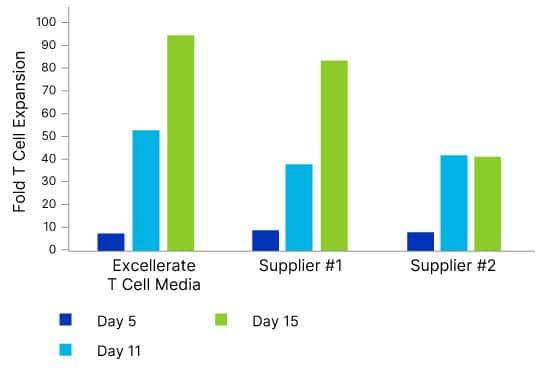
Bar graph showing fold expansion of human T cells cultured in ExCellerate media or two other commercially available media for 5, 11, and 15 days

ExCellerate Human T Cell Expansion Media Promotes Superior T Cell Expansion Compared to Other Commercially Available Media. Primary human peripheral blood mononuclear cells (PBMCs) were cultured for 15 days in ExCellerate Human T Cell Expansion Media (Catalog # CCM030) or other commercially available media (Supplier #1 and Supplier # 2), in combination with plate-bound Mouse Anti-Human CD3ε Monoclonal Antibody (Catalog # MAB100) and Goat Anti-Human CD28 Antigen Affinity-purified Polyclonal Antibody (Catalog # AF-342-PB) and Recombinant Human IL-2 (Catalog # 202-IL). Cell counts were performed on days 5, 11, and 15 to determine fold expansion compared to the Day 0 seeding density. The data demonstrates that the ExCellerate Human T Cell Expansion Media promoted superior expansion rates compared to the other commercially available media.

T Cell Activation

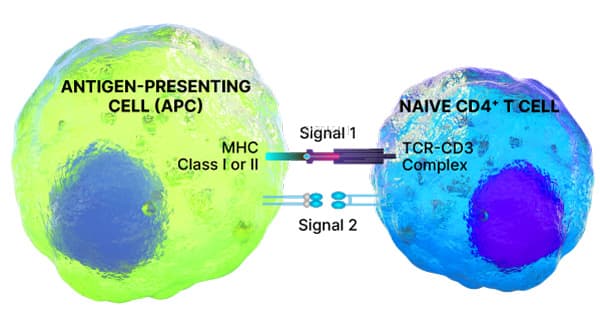
Bar graph showing fold expansion of human T cells cultured in ExCellerate media or two other commercially available media for 5, 11, and 15 days

Naïve CD4+ T cells are activated in a two-step process that requires:

  • Recognition of an antigen/major histocompatibility complex (MHC) on an antigen-presenting cell (APC) by the T cell receptor (TCR)
  • T cell co-stimulation mediated by co-stimulatory molecules on the APC interacting with specific T cell-expressed receptors

Antibodies for T Cell Activation

Anti-CD3 and anti-CD28 antibodies are frequently used in culture to mimic the two signals required for T cell activation. We offer both research use only and GMP anti-CD3 and anti-CD28 antibodies for T cell activation in vitro.

* GMP antibodies are available for these molecules.

T Cell Co-Signaling

T cell activation is regulated by antigen-independent co-stimulatory and co-inhibitory signals delivered through co-signaling proteins on the APC interacting with receptors on the T cell surface. This second signal is necessary for determining the strength and duration of the T cell response including the enhancement or suppression of T cell proliferation, differentiation, and cytokine secretion. Engagement of the TCR in the absence of this second co-stimulatory signal typically results in T cell anergy or apoptosis.

As tumor cells frequently exploit inhibitory T cell co-signaling pathways to evade anti-tumor immune responses, blockade of inhibitory co-signaling pathways, as well as enhancement of stimulatory co-signaling pathways are being widely investigated as therapeutic approaches for cancer immunotherapy.

To support these studies, we offer a wide selection of blocking/neutralizing antibodies and agonist antibodies for key ligand-receptor pairs that regulate T cell activity. These antibodies are validated using the same bioassays we use to test the bioactivity of our proteins, ensuring that they block/neutralize or promote the appropriate cellular function.

Blocking/Neutralizing Antibodies for T Cell Co-Signaling Molecules

Agonist Antibodies for T Cell Co-Signaling Molecules

                                 
4-1BB/TNFRSF9 CD30 OX40 TIM-3

Line graph showing dose dependent CTLA-4-mediated inhibition of B7-1/CD80-induced IL-2 secretion and neutralization with an anti-mouse CTLA-4 antibody.

CTLA-4 Inhibition of B7-1/CD80-induced IL-2 Secretion and Neutralization using an Anti-Mouse CTLA-4 Antibody. IL-2 secretion induced by treating the Jurkat human acute T cell leukemia cell line with Recombinant Human B7-1/CD80 (Catalog # 10133-B1; 3 µg/mL) was inhibited by Recombinant Mouse CTLA-4 (Catalog # 434-CT) in a dose-dependent manner (orange line), as measured using the Human IL-2 Quantikine™ ELISA Kit (Catalog # D2050). Inhibition of Recombinant Human B7-1/CD80 activity by Recombinant Mouse CTLA-4 (1 µg/mL) was neutralized (blue line) by treating the cells with increasing concentrations of a Rat Anti-Mouse CTLA-4 Monoclonal Antibody (Catalog # MAB434). The ND50 is typically 2.5-10 µg/mL in the presence of PHA (10 µg/mL).

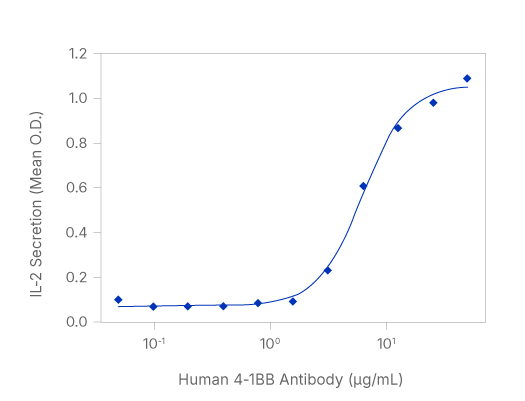
Line graph showing the ability of increasing concentrations of R&D Systems Anti-Human 4-1BB Antibody to stimulate IL-2 secretion in Anti-CD3-treated human T cells.

Anti-Human 4-1BB Antibody Stimulates IL-2 Secretion in Human T Cells. Human T cells were treated with increasing concentrations of a Rabbit Anti-Human 4-1BB/TNFRSF9 Monoclonal Antibody (Catalog # MAB8382) in the presence of an anti-CD3 antibody, and IL-2 secretion was measured using the Human IL-2 Quantikine ELISA Kit (Catalog # D2050). The ED50 for this effect is typically 1-10 µg/mL.

T Cell Differentiation

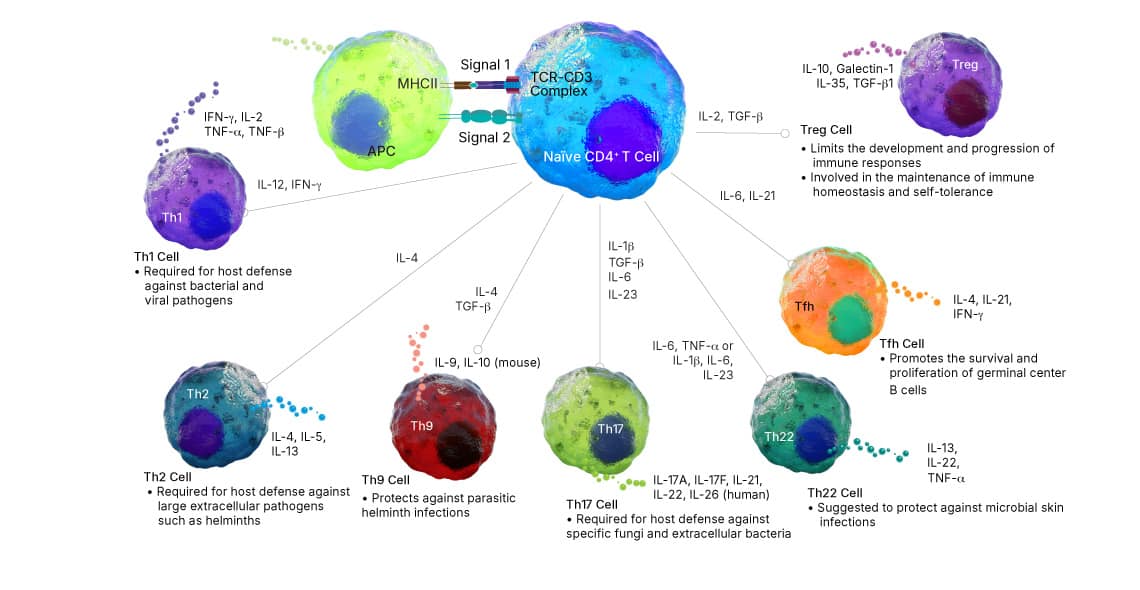
Multiple different CD4+ T helper cell subsets have been identified, including T helper 1 (Th1), Th2, Th9, Th17, and Th22 cells, follicular helper T (Tfh) cells, and regulatory T (Treg) cells. As shown below, specific combinations of cytokines are used to promote the differentiation of naïve CD4+ T cells into these distinct subsets. Differentiation of each T cell subset is associated with the expression of specific transcription factors, cell surface receptors, and secreted cytokines, which allow each subset to carry out specialized functions and to activate downstream immune responses that are targeted toward specific pathogens.

Image showing the cytokines required for differentiation of a naïve CD4+ T cell into the T helper cell subsets, cytokines secreted by each subset, and the pathogens that they protect against.

Cytokines for CD4+ T Cell Subset Differentiation

* Animal-free Preclinical and GMP-grade proteins are available for these molecules.
† Liquid formulations of the GMP and Animal-free Preclinical grades of these proteins are available.

Antibodies for T Helper Cell Differentiation

In addition to our cytokines, we also offer antibodies that can be used for T cell differentiation protocols. Our antibodies undergo extensive in-house validation and are backed by expert product support to ensure performance in the applications and species designated on our datasheets. We also provide data images, citations, reviews, and a 100% guarantee for each of our antibody products, so customers can have confidence in their purchase decision.

T Cell Markers

The different CD4+ T cell subsets can be identified based on their expression or lack of expression of specific cell surface receptors, transcription factors, and secreted cytokines.

Our selection of primary antibodies conjugated to one of over 30 fluorescent labels allows direct detection of cell surface and intracellular targets with the highest level of flexibility for multiplex experiments. Our antibodies are validated for specificity and reproducibility in multiple applications, including flow cytometry, immunocytochemistry/immunofluorescence (ICC/IF), immunohistochemistry (IHC), and Western blot.

When an R&D Systems antibody is not available for a specific target molecule, we recommend using an antibody from our sister brand, Novus Biologicals. Links provided in the tables below will take you to the Novus selection of products when appropriate.

Th1 Cells

Th1 Cells

Th1 cells are a subset of CD4+ T cells that is required for host defense against intracellular bacterial and viral pathogens. They differentiate from activated, naïve CD4+ T cells in the presence of IL-12 and IFN-γ. Th1 cells secrete high levels of the pro-inflammatory cytokines, TNF-α and IFN-γ, along with IL-2 and TNF-β, and they promote the activation and functions of M1 macrophages, natural killer cells, and CD8+ T cells. When not properly regulated, Th1 cells can contribute to the pathogenesis of chronic inflammatory and autoimmune diseases.

Cell Surface Markers Expression Intracellular Markers Expression
CCR1 Positive STAT1 Positive
CCR5 Positive STAT4 Positive
CD3 Positive T-bet Positive
CD4 Positive    
CD8 Negative Secreted Factors Expression
CD14 Negative IFN-gamma Positive
CD19  Negative IL-2 Positive
CXCR3  Positive TNF-alpha Positive
IFN-gamma R1/CD119 Positive TNF-beta Positive
IFN-gamma R2 Positive    
IL-12 R beta 2 Positive    
IL-18 R alpha Positive    
IL-27 R alpha Positive    

Th2 Cells

Th2 Cells

Th2 cells are a subset of CD4+ T cells that is required for host defense against large extracellular pathogens such as intestinal helminths and extracellular bacteria. Additionally, Th2 cells support B cell-dependent humoral immunity by secreting cytokines such as IL-4, IL-5, and IL-13, which promote B cell proliferation, differentiation of antibody-secreting plasma cells, and the production of IgE antibodies. Unregulated Th2 responses are associated with allergic inflammation and asthma.

                    
Cell Surface Markers Expression Intracellular Markers Expression
CCR3 Positive GATA-3 Positive
CCR4 Positive IRF-4 Positive
CCR8 Positive STAT5 Positive
CD3 Positive STAT6 Positive
CD4 Positive    
CD8 Negative Secreted Factors Expression
CD14 Negative IL-4 Positive
CD19 Negative IL-5 Positive
CXCR4 Positive IL-13 Positive
IL-4 R alpha Positive    
IL-17 RB Positive    
ST2/IL-33 R Positive    
TSLP R Positive    

Th9 Cells

Th2 Cells

Th9 cells are a subset of CD4+ T cells that is closely related to the Th2 cell subset. They primarily produce IL-9 and are involved in host defense against parasitic helminth infections. Th9 cells have been implicated in the pathogenesis of allergic asthma, inflammatory gut reactions, and various autoimmune diseases.

                    
Cell Surface Markers Expression Intracellular Markers Expression
CD3 Positive IRF-4 Positive
CD4 Positive PU.1 Positive
CD8 Negative    
CD14 Negative Secreted Factors Expression
CD19 Negative CCL17 Positive
IL-4 R alpha Positive CCL22 Positive
IL-17 RB Positive IL-9 Positive
TGF-beta RII Positive IL-10 (mouse) Positive

Th17 Cells

Th2 Cells

Th17 cells are a subset of CD4+ T cells that is required for host defense against specific fungal and bacterial infections. Th17 cells secrete cytokines such as IL-17A, IL-17F, IL-21, IL-22, and IL-26 (in humans) that can have both beneficial and pathogenic effects. While these cytokines stimulate the expression of secondary pro-inflammatory molecules and anti-microbial peptides, unregulated or prolonged secretion of Th17-related cytokines may contribute to chronic inflammation and tissue destruction commonly associated with autoimmune diseases.

                    
Cell Surface Markers Expression Intracellular Markers Expression
CCR4 Positive Batf Positive
CCR6 Positive IRF-4 Positive
CD3 Positive ROR alpha Positive
CD4 Positive ROR gamma t/RORC2 Positive
CD8 Negative STAT3 Positive
CD14 Negative    
CD19 Negative Secreted Factors Expression
IL-1 RI Positive CCL20 Positive
IL-6 R alpha Positive IL-17A Positive
IL-21 R Positive IL-17F Positive
IL-23 R  Positive IL-21 Positive
TGF-beta RII Positive IL-22 Positive
    IL-26 (human) Positive

Th22 Cells

Th22 Cells

Th22 cells are a subset of CD4+ T cells that is involved in maintaining the integrity of mucosal barriers. Th22 cells primarily produce IL-22, which defends against microbial pathogens and is also involved in promoting tissue repair and remodeling. High levels of IL-22 are associated with a variety of inflammatory and autoimmune diseases including psoriasis, atopic dermatitis, rheumatoid arthritis, and multiple sclerosis.

Cell Surface Markers Expression Intracellular Markers Expression
CCR4 Positive AHR Positive
CCR6 Positive Batf Positive
CCR10 Positive STAT3 Positive
CD3 Positive    
CD4 Positive Secreted Factors Expression
CD8 Negative CCL7/MCP-3 Positive
CD14 Negative CCL15/MIP-1 delta Positive
CD19 Negative IL-13 Positive
CD161/NK1.1 Negative IL-22 Positive
IL-6 R alpha Positive TNF-alpha Positive
TGF-beta RII Positive    
TNF RI  Positive    

Follicular Helper T Cells

Follicular Helper T Cells

Follicular helper T (Tfh) cells are a subset of CD4+ T cells that is localized to the B cell follicles and germinal centers of secondary lymphoid organs, where they specialize in supporting B cell survival and differentiation. Tfh cells are required for the formation of antibody-secreting plasma cells and long-lived memory B cells, as well as affinity maturation and immunoglobulin class switching, two processes that promote the production of high-affinity antibodies against specific antigens.

                    
Cell Surface Markers Expression Intracellular Markers Expression
CD3 Positive Bcl-6 Positive
CD4 Positive c-Maf Positive
CD8 Negative STAT3 Positive
CD14 Negative    
CD19 Negative Secreted Factors Expression
CD40 Ligand Positive CXCL13 Positive
CD57/B3GAT1 Positive IFN-gamma Positive
CD84/SLAMF5 Positive IL-4 Positive
CXCR4 Positive IL-21 Positive
CXCR5 Positive    
ICOS Positive    
IL-6 R alpha Positive    
IL-21 R Positive    
Neprilysin/CD10 Positive    
OX40 Positive    
PD-1 Positive    

Regulatory T Cells

Regulatory T Cells

Regulatory T cells (Tregs) are a subset of CD4+ T cells with immunosuppressive properties that are involved in dampening inflammation and restoring immune homeostasis. These cells produce cytokines such as IL-10, IL-35, and TGF-β, which inhibit the differentiation, proliferation, and activation of effector T cells.

                    
Cell Surface Markers Expression Intracellular Markers Expression
5' Nucleotidase/CD73 Positive FoxP3 Positive
CD3 Positive Helios Positive (subset specific)
CD4 Positive STAT5 Positive
CD5 Positive    
CD14 Negative Secreted Factors Expression
CD19 Negative Galectin-1 Positive
CD25/IL-2 R alpha Positive IL-10 Positive
CD39/ENTPD1 Positive IL-35 Positive
CD103/Integrin alpha E Positive (subset specific) TGF-beta 1 Positive
CTLA-4 Positive    
Folate Receptor 4 Positive    
GITR Positive    
IL-7 R alpha/CD127 Low    
LAG-3 Positive    
LAP Positive    
LRRC32/GARP Positive    
Neuropilin-1/BDCA-4 Positive    
OX40 Positive    
L-Selectin/CD62L Positive    

A: forward scatter, side scatter gating of human peripheral blood mononuclear cells by flow cytometry B: Gating of CD45+CD3- lymphocytes by flow cytometry following staining with R&D Systems antibodies C: Detection of CD19+ B cells by flow cytometry following staining of CD45+CD3- lymphocytes with R&D Systems PE-conjugated Anti-Human CD19 Antibody.

Detection of Regulatory T Cells Using Multicolor Flow Cytometry. Human regulatory T cells were expanded from peripheral blood mononuclear cells (PBMCs) using a Mouse Anti-Human CD3 Monoclonal Antibody (Catalog # MAB100; 10 µg/mL) and a Goat Anti-Human CD28 Antigen Affinity-purified Polyclonal Antibody (Catalog # AF-342-PB; 5 µg/mL), plus Recombinant Human IL-2 (Catalog # 202-IL; 20 ng/mL) and Recombinant Human TGF-β (Catalog # 7754-BH; 10 ng/mL) for 2 days. The cells were stained with antibodies in the Regulatory T Cell (Treg) Flow Cytometry Panel (Catalog # FMC-P-004), which includes an Alexa Fluor® 405-conjugated Mouse Anti-Human CD3 Monoclonal Antibody, a PerCP-conjugated Mouse Anti-Human CD4 Monoclonal Antibody, a PE-conjugated Mouse Anti-Human CD25/IL-2 R Monoclonal Antibody, an Alexa Fluor® 700-conjugated Mouse Anti-Human CD127/IL-7 R Monoclonal Antibody, a FITC-conjugated Mouse Anti-Human GITR/TNFRSF18 Monoclonal Antibody, and an Alexa Fluor® 647-conjugated Mouse Anti-Human FoxP3 Monoclonal Antibody. 

Alexa Fluor® is a registered trademark of Molecular Probes, Inc., Eugene, OR.

T Cell Cytokine Profiling

In addition to their cell surface and intracellular markers, different CD4+ T helper cell subsets can also be characterized based on their unique cytokine expression profiles.

For analyzing and quantifying soluble proteins, we offer a broad range of immunoassays. This includes R&D Systems complete, ready-to-use Quantikine™ ELISA Kits, our 90-minute QuicKit™ ELISAs, and the more versatile DuoSet™ ELISA Development Systems that provide all the components necessary for a customer to develop their own working assay.

Quantikine ELISA Kits

  • Extensively tested for long-term consistency and reproducibility
  • Fully validated sample types
  • Optimized reagents and diluents for accurate and sensitive sample values

Quantikine QuicKit ELISA Kits

  • Data generated in 90 minutes
  • Quantikine quality with lot-to-lot consistency and reproducibility
  • Simplified protocol – only one wash step

DuoSet ELISA Development Systems

  • Carefully selected with validated matched antibody pairs for optimal performance
  • Large menu – over 1,000 targets with novel targets across multiple species
  • Adaptable for use across multiple platforms and 384 well

Single Analyte ELISAs for T Cell Characterization – Products by Molecule

Learn more about different ELISA Kit formats.

ELISpot Kits and ELISpot Development Modules

ELISpot Kits are highly sensitive, microplate-based assays for the detection of cytokine-secreting cells. Complete ELISpot Kits are ready-to-run and require no assay development or refinement. As an alternative to our complete kits, we also offer ELISpot Development Modules, which provide a flexible, do-it-yourself format for ELISpot development.

  • High sensitivity – ELISpot Assays can measure responses with frequencies below 1 in 100,000 cells
  • No in vitro expansion of cells required
  • High-throughput – ELISpot Assays use only a small number of primary cells
                    
IFN-gamma IL-2 IL-4 IL-5 IL-10 IL-13
IL-17 TNF-alpha        

Learn more about ELISpot Assays.

Multiplex Assays for Cytokine Secretion Analysis

R&D Systems Proteome Profiler Antibody Array assay principle showing the membrane spotted with capture antibodies and detection using chemiluminescence.

Proteome Profiler Antibody Arrays

Proteome Profiler Antibody Arrays are membrane-based arrays designed to simultaneous measure up to 119 proteins in a single sample. They provide a simple, economical, semi-quantitative multiplex assay for early stage discovery research. The arrays utilize chemiluminescence for detection, so membranes can be assessed for protein levels in the same manner as traditional Western blots.

                    
Proteome Profiler Antibody Arrays No. of Analytes Analytes
Human Chemokine Antibody Array 31-plex CCL1 · CCL2 · CCL3/CCL4 · CCL5 · CCL7 · CCL14 · CCL15 · CCL17 · CCL18 · CCL19 · CCL20 · CCL21 · CCL22 · CCL26 · CCL28 · Chemerin · CX3CL1 · CXCL1 · CXCL4 · CXCL5 · CXCL7 · CXCL8 · CXCL9 · CXCL10 · CXCL11 · CXCL12 · CXCL16 · CXCL17 · IL-16 · Midkine · XCL1
Human Cytokine Antibody Array  36-plex C5a · CCL1 · CCL2 · CCL5 · CXCL1 · CXCL10 · CXCL11 · CXCL12 · CD40 Ligand · G-CSF · GM-CSF · ICAM-1 · IFN-γ · IL-1α · IL-1β · IL-1ra · IL-2 · IL-4 · IL-5 · IL-6 · IL-8 · IL-10 · IL-12 p70 · IL-13 · IL-16 ·
IL-17 · IL-17E · IL-18 · IL-21 · IL-27 · IL-32α · MIF · MIP-1α/MIP-1β · Serpin E1 · TNF-α · TREM-1
Human XL Cytokine Antbody Array 105-plex Adiponectin · Angiogenin · Angiopoietin-1 · Angiopoietin-2 · Apolipoprotien A1 · BAFF · BDNF · C5a · CCL2 · CCL3/CCL4/MIP-1α/β · CCL5 · CCL7 · CCL17 · CCL19 · CCL20 · CD14 · CD30 · CD31 ·
CD40 Ligand · Chitinase 3-like · Complement Factor D · C-Reactive Protein · Cripto-1 · CXCL1 · CXCL4 · CXCL5 · CXCL9 · CXCL10 · CXCL11 · CXCL12 · Cystatin C · Dkk-1 · DPPIV · EGF · Endoglin · EMMPRIN ·  Fas Ligand · FGF-basic · FGF-7/KGF · FGF-19 · Flt-3 Ligand · G-CSF · GDF-15 · GM-CSF · Growth Hormone · HGF · ICAM-1 · IFN-γ · IGFBP-2 · IGFBP-3 · IL-1α · IL-1β · IL-1ra · IL-2 · IL-3 · IL-4 · IL-5 · IL-6 · IL-8 · IL-10 · IL-11· IL-12 p70 · IL-13 · IL-15 · IL-16 · IL-17A · IL-18 BPa · IL-19 · IL-22 ·
IL-23 · IL-24 · IL-27 · IL-31 · IL-32α/β/γ · IL-33 · IL-34 · Kallikrein 3 · Leptin · LIF · Lipocalin-2 · M-CSF · MIF · MMP-9 · Myeloperoxidase · Osteopontin · PDGF-AA ·PDGF-AB/BB · Pentraxin 3 · RAGE · RBP4 · Relaxin-2 · Resistin · Serpin E1 · SHBG · ST2 · TFF3 ·TfR · TGF-α · Thrombospondin-1 · TIM-1 · TNF-α · uPAR · VCAM-1 · VEGF · Vitamin D BP
Mouse Chemokine Antibody Array 25-plex C5a · CCL2 · CCL3/CCL4 · CCL5 · CCL6/C10 · CCL8 · CCL9/10/MIP-1γ · CCL11 · CCL12 · CCL21 · CCL22 · CCL27 · CCL28 · Chemerin · CX3CL1 · CXCL1 · CXCL2  · CXCL9 · CXCL10 · CXCL11 · CXCL12 · CXCL13 · CXCL16 · IL-16 · LIX
Mouse Cytokine Antibody Array 40-plex C5a · CCL1 · CCL2 · CCL3 · CCL4 · CCL5 · CCL11 · CCL12 · CCL17 · CXCL1 · CXCL2 · CXCL9 · CXCL10 · CXCL11 · CXCL12 · CXCL13 · G-CSF · GM-CSF · ICAM-1 · IFN-γ · IL-1α · IL-1β · IL-1ra ·
IL-2 · IL-3 · IL-4 · IL-5 · IL-6 · IL-7 · IL-10 · IL-12 p70 · IL-13 · IL-16 · IL-17 · IL-23 · IL-27 · M-CSF · TIMP-1 · TNF-α · TREM-1
Mouse XL Cytokine Antibody Array 111-plex Adiponectin · Amphiregulin · Angiopoietin-1 · Angiopoietin-2 · Angiopoietin-like 3 · BAFF · C1q R1/CD93 · C5a · CCL2 · CCL3/CCL4/MIP-1α/β · CCL5 · CCL6/C10 · CCL11 · CCL12 · CCL17 · CCL19 · CCL20 · CCL21 · CCL22 · CD14 · CD40 · CD160 · Chemerin · Chitinase 3-like · Coagulation Factor III/TF ·  Complement Factor D · C-Reactive Protein · CX3CL1 · CXCL1 · CXCL2 · CXCL9 · CXCL10 · CXCL11 · CXCL13 · CXCL16 · Cystatin C · Dkk-1 · DPPIV · EGF · Endoglin · Endostatin · Fetuin A · FGF acidic · FGF-21 · Flt-3 Ligand · Gas6 · G-CSF · GDF-15 · GM-CSF · HGF · ICAM-1 · IFN-γ · IGFBP-1 · IGFBP-2 · IGFBP-3 · IGFBP-5 · IGFBP-6 · IL-1α · IL-1β · IL-1ra · IL-2 · IL-3 · IL-4 · IL-5 · IL-6 · IL-7 · IL-10 · IL-11· IL-12 p40 · IL-13 · IL-15 · IL-17A · IL-22 · IL-23 · IL-27 · IL-28 · IL-33 · LDL R · Leptin · LIF · Lipocalin-2 · LIX · M-CSF · MMP-2 · MMP-3 · MMP-9 · Myeloperoxidase · Osteopontin · Osteoprotegerin · PD-ECGF · PDGF-BB · Pentraxin 2 · Pentraxin 3 · Periostin · Pref-1 · Proliferin · Proprotein Convertase 9 · RAGE · RBP4 · Reg3G · Resistin · E-Selectin/CD62E · P-Selectin/CD62P · Serpin E1 · Serpin F1 · Thrombopoietin · TIM-1 · TNF-α · VCAM-1 · VEGF · WISP-1

Learn more about Proteome Profiler Antibody Arrays.

Luminex® Panels

Luminex® assay principle showing capture of the target analyte by color-coded beads and two laser detection of the bead/analyte and the magnitude of the PE signal

Luminex panels are bead-based multiplex assays that enable you to multiplex up to 50 analytes, conserving on sample, time, and cost. Select from more than 490 targets spanning human, mouse, rat, porcine, and non-human primate species. Luminex Assays will deliver data that is reliable and reproducible because every panel is QC tested.

Luminex Assays are available in 3 flexible formats:

  • Discovery Assays: Mix and match analyte customization
  • Fixed High Performance Panels: Fully stocked and ready to ship
  • Configurable High Performance Panels: Choose from a selection of the analytes or the entire panel
                    
Luminex High Performance Panels - Fixed Analytes
Human Chemokine Panel 8-plex Eotaxin · GROα · IL-8 · IP-10 · MCP-1 · MIP-1α · MIP-1β · RANTES
Human Cytokine Panel 15-plex IFN-α2 · IFN-γ · IL-1α · IL-1β · IL-1ra · IL-2 · IL-3 · IL-4 · IL-6 · IL-7 · IL-9 · IL-10 · IL-15 · IL-33 · VEGF
Human Immunotherapy Panel 25-plex CD40 Ligand · GM-CSF · Granzyme B · IFN-α2 · IFN-γ · IL-1α · IL-1β · IL-1ra · IL-2 · IL-4 · IL-6 · IL-8 ·
IL-9 · IL-10 · IL-12 p70 · IL-13 · IL-15 · IL-17A · IL-33 · IP-10 · MCP-1 · MIP-1α · MIP-1β · PD-L1 · TNF-α
Human XL Cytokine Panel 46-plex CD40 Ligand · EGF · Eotaxin · FGF basic · Flt-3 Ligand · G-CSF · GM-CSF · Granzyme B · GRO α ·
GRO β · IFN-α2 · IFN-β · IL-1α · IL-1β · IL-1ra · IL-2 · IL-3 · IL-4 · IL-5 · IL-6 · IL-7 · IL-8 · IL-9 · IL-10 ·
IL-12 p70 · IL-13 · IL-15 · IL-17A · IL-17E · IL-33 · IP-10 · MCP-1 · MIP-1α · MIP-1β · MIP-3α · MIP-3β ·
PDGF-AA · PDGF-AB/BB · PD-L1 · RANTES · TGF-α · TNF-α · TNF-β · TRAIL · VEGF
Human Th1/Th2 Panel 13-plex GM-CSF ·  IFN-γ · IL-1β · IL-2 · IL-4 · IL-5 · IL-6 · IL-9 · IL-10 · IL-12 p70 · IL-13 · TNF-α · TNF-β
Human Th9/Th17/Th22 Panel 18-plex CD40 Ligand · GM-CSF · IFN-γ · Il-1β · IL-2 · IL-4 · IL-5 · IL-6 · IL-9 · IL-10 · IL-12 p70 · IL-13 · IL-15 ·
IL-17A · IL-17E · IL-33 · MIP-3α· TNF-α
Mouse XL Cytokine Panel 45-plex BAFF · CCL2 · CCL3 · CCL4 · CCL5 · CCL11 · CCL19 · Chitinase 3-like 1 · CXCL1 · CXCL10 · EGF · FGF basic · Flt-3 Ligand · G-CSF · GDF-15 · GM-CSF · ICAM-1 · IFN-γ · IL-1α · IL-1β · IL-2 · IL-3 · IL-4 · IL-5 · IL-6 · IL-7 · IL-9 · IL-10 · IL-11 · IL-12 p70 · IL-13 · IL-16 · IL-17A · IL-18 · IL-21 · IL-27 · IL-31 ·
LDL R · LIF · LIX · M-CSF · TIMP-1 · TNF-α · VEGF
Luminex High Performance Panels - Configurable Analytes
Human Cytokine
Panel A
CCL2 · CCL3 · CCL4 · CCL5 · CXCL5 · FGF basic · G-CSF · GM-CSF · IFN-γ · IL-1α · IL-1β · IL-1ra ·
IL-2 · IL-4 · IL-5 · IL-6 · IL-8 · IL-10 · IL-17A · Thrombopoietin · TNF-α · VEGF
Human High Sensitivity Cytokine Panel A GM-CSF · IFN-γ · IL-1β · IL-2 · IL-4 · IL-5 · IL-6 · IL-8 · IL-10 · IL-12 · TNF-α · VEGF
Human High Sensitivity Cytokine Panel B GM-CSF · IFN-γ · IL-1β · IL-2  · IL-5 · IL-6 · IL-7 · IL-13 · IL-15 · IL-17A · IL-17F · IL-22 · IL-23 ·IL-31 ·
IL-33 · IL-36β · TNF-α
Human XL Cytokine Panel CCL2 · CCL3 · CCL4 · CCL5 · CCL11 · CCL19 · CCL20 · CD40 Ligand · CXCL1 · CXCL2 · CXCL10 · EGF ·FGF basic · Flt-3 Ligand · G-CSF · GM-CSF · Granzyme B · IFN-α2 · IFN-β · IFN-γ · IL-1α · IL-1β · IL-1ra · IL-2 · IL-3 · IL-4 · IL-5 · IL-6 · IL-7 · IL-8 · IL-9 · IL-10 · IL-12 p70 · IL-13 · IL-15 · IL-17A · IL-17E · IL-33 · PD-L1 · PDGF-AA · PDGF-AB/BB · TGF-α · TNF-α · TNF-β · TRAIL · VEGF
Mouse XL Cytokine Panel BAFF · CCL2 · CCL3 · CCL4 · CCL5 · CCL11 · CCL19 · Chitinase 3-like 1 · CXCL1 · CXCL10 · EGF · FGF basic · Flt-3 Ligand · G-CSF · GDF-15 · GM-CSF · ICAM-1 · IFN-γ · IL-1α · IL-1β · IL-1ra · IL-2 · IL-3 · IL-4 · IL-5 · IL-6 · IL-7 · IL-9 · IL-10 · IL-11 · IL-12 p70 · IL-13 · IL-16 · IL-17A · IL-18 · IL-21 · IL-27 · IL-31 · LDL R · LIF · LIX · M-CSF · TIMP-1 · TNF-α · VEGF

Learn more about Luminex Assays.

Luminex® is a registered trademark of Luminex Corporation.

Additional Products for T Cell Culture and Analysis

Isolation Kits

Positive and negative cell selection kits to isolate immune cells for cell culture.

Animal-free Recombinant Proteins

Provide a seamless transition from preclinical research into clinical manufacturing, ensure defined culture conditions, and eliminate regulatory or ethical concerns associated with animal-derived reagents. Our Animal-free proteins are produced using identical expression systems and manufacturing methods as our Animal-free GMP-grade proteins.

GMP Proteins

Manufactured under guidelines that allow for their use as ancillary materials in cell therapy manufacturing processes. These proteins undergo extensive quality control testing and come with comprehensive documentation and full transparency and traceability of source and manufacturing system. Liquid, process-sized, and closed process options are also available for GMP cytokines. Learn more.

Cell Proliferation and Viability Assays

Reagents for studying cell proliferation, viability, and cytotoxicity including fluorescent reporter dyes and MTT assays.

Custom Services

If you can’t find the reagents you need on our website, contact us. Our custom services team will work with you to create the custom protein, antibody, ELISA, or Luminex assay that fits your research needs.