
Delta-like protein 1 (DLL1) is a 90-100 kDa type I transmembrane protein that belongs to the Delta/Serrate/Lag-2 (DSL) family of Notch ligands. Mature human DLL1 consists of a 528 amino acid (aa) extracellular domain (ECD) with one DSL domain and eight EGF-like repeats, a 23 aa transmembrane segment, and a 155 aa cytoplasmic domain (1). Within the ECD, human DLL1 shares 91% aa sequence identity with mouse and rat DLL1. It shares 26%, 37%, and 54% aa sequence identity with DLL2, 3, and 4, respectively. A 60 kDa ECD fragment released by ADAM9, 12, or 17 mediated proteolysis, promotes the proliferation of hematopoietic progenitor cells (2, 3). The residual membrane-bound portion of DLL1 can be cleaved by presenilin-dependent gamma -secretase, enabling the cytoplasmic domain to migrate to the nucleus (4). DLL1 localizes to adherens junctions on neuronal processes through its association with the scaffolding protein MAGI1 (5). DLL1 is widely expressed, and it plays an important role in embryonic somite formation, cochlear hair cell differentiation, plus B and T lymphocyte differentiation (6-11). The upregulation of DLL1 in arterial endothelial cells following injury or angiogenic stimulation is central to postnatal arteriogenesis (12). DLL1 is also overexpressed in cervical carcinoma and glioma and contributes to tumor progression (1, 13).


Loading...
Key Product Details
Species Reactivity
Validated:
Human
Cited:
Human
Applications
Validated:
Western Blot, ELISA Capture (Matched Antibody Pair)
Cited:
Western Blot, Flow Cytometry
Label
Unconjugated
Antibody Source
Monoclonal Mouse IgG2B Clone # 251127
Loading...
Product Specifications
Immunogen
Mouse myeloma cell line NS0-derived recombinant human DLL1
Ser22-Gly540
Accession # AAG09716
Ser22-Gly540
Accession # AAG09716
Specificity
Detects recombinant human DLL1 in direct ELISAs and Western blots. In direct ELISAs and Western blots, no cross-reactivity with recombinant mouse DLL4 is observed.
Clonality
Monoclonal
Host
Mouse
Isotype
IgG2B
Applications for Human DLL1 Antibody (251127)
Application
Recommended Usage
Western Blot
1 µg/mL
Sample: Recombinant Human DLL1 (Catalog # 1818-DL) under non-reducing conditions only
Sample: Recombinant Human DLL1 (Catalog # 1818-DL) under non-reducing conditions only
Human DLL1 Sandwich Immunoassay
Please Note: Optimal dilutions of this antibody should be experimentally determined.
Reviewed Applications
Read 4 reviews rated 4.5 using MAB1818 in the following applications:
Formulation, Preparation, and Storage
Purification
Protein A or G purified from hybridoma culture supernatant
Reconstitution
Reconstitute at 0.5 mg/mL in sterile PBS. For liquid material, refer to CoA for concentration.
Loading...
Formulation
Lyophilized from a 0.2 μm filtered solution in PBS with Trehalose. See Certificate of Analysis for details.<br/>*Small pack size (-SP) is supplied either lyophilized or as a 0.2 µm filtered solution in PBS.
Shipping
Lyophilized product is shipped at ambient temperature. Liquid small pack size (-SP) is shipped with polar packs. Upon receipt, store immediately at the temperature recommended below.
Stability & Storage
Use a manual defrost freezer and avoid repeated freeze-thaw cycles.
- 12 months from date of receipt, -20 to -70 °C as supplied.
- 1 month, 2 to 8 °C under sterile conditions after reconstitution.
- 6 months, -20 to -70 °C under sterile conditions after reconstitution.
Calculators
Background: DLL1
References
- Gray, G.E. et al. (1999) Am. J. Pathol. 154:785.
- Dyczynska, E. et al. (2007) J. Biol. Chem. 282:436.
- Karanu, F.N. et al. (2001) Blood 97:1960.
- Ikeuchi, T. and S.S. Sisodia (2003) J. Biol. Chem. 278:7751.
- Mizuhara, E. et al. (2005) J. Biol. Chem. 280:26499.
- Takahashi, Y. et al. (2003) Development 130:4259.
- Teppner, I. et al. (2007) BMC Dev. Biol. 7:68.
- Kiernan, A.E. et al. (2005) Development 132:4353.
- Schmitt, T.M. and J.C. Zuniga-Pflucker (2002) Immunity 17:749.
- Hozumi, K. et al. (2004) Nat. Immunol. 5:638.
- Santos, M.A. et al. (2007) Proc. Natl. Acad. Sci. 104:15454.
- Limbourg, A. et al. (2007) Circ. Res. 100:363.
- Purow, B.W. et al. (2005) Cancer Res. 65:2353.
Long Name
Delta-like 1
Alternate Names
Delta 1
Gene Symbol
DLL1
UniProt
Additional DLL1 Products
Product Documents for Human DLL1 Antibody (251127)
Certificate of Analysis
To download a Certificate of Analysis, please enter a lot or batch number in the search box below.
Note: Certificate of Analysis not available for kit components.
Product Specific Notices for Human DLL1 Antibody (251127)
For research use only
Related Research Areas
Citations for Human DLL1 Antibody (251127)
 Powered by Bioz
Customer Reviews for Human DLL1 Antibody (251127) (4)
4.5 out of 5
4 Customer Ratings
Have you used Human DLL1 Antibody (251127)?
Submit a review and receive an Amazon gift card!
$25/€18/£15/$25CAN/¥2500 for a review with an image
$10/€7/£6/$10CAN/¥1110 for a review without an image
Submit a review
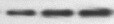
Customer Images
Showing
1
-
4 of
4 reviews
Showing All
Filter By:
-
Application: Western BlotSample Tested: THP-1 human acute monocytic leukemia cell lineSpecies: HumanVerified Customer | Posted 12/15/2021

-
Application: Western BlotSample Tested: HeLa cells and Blood mononuclear cells (PBMCs)Species: HumanVerified Customer | Posted 09/10/2018
-
Application: Immunocytochemistry/ImmunofluorescenceSample Tested: THP-1 human acute monocytic leukemia cell lineSpecies: HumanVerified Customer | Posted 09/10/2018
-
Application: Western BlotSample Tested: THP-1 human acute monocytic leukemia cell lineSpecies: HumanVerified Customer | Posted 08/21/2018
There are no reviews that match your criteria.
Protocols
Find general support by application which include: protocols, troubleshooting, illustrated assays, videos and webinars.
- Cellular Response to Hypoxia Protocols
- R&D Systems Quality Control Western Blot Protocol
- Troubleshooting Guide: Western Blot Figures
- Western Blot Conditions
- Western Blot Protocol
- Western Blot Protocol for Cell Lysates
- Western Blot Troubleshooting
- Western Blot Troubleshooting Guide
- View all Protocols, Troubleshooting, Illustrated assays and Webinars
Loading...
Associated Pathways
