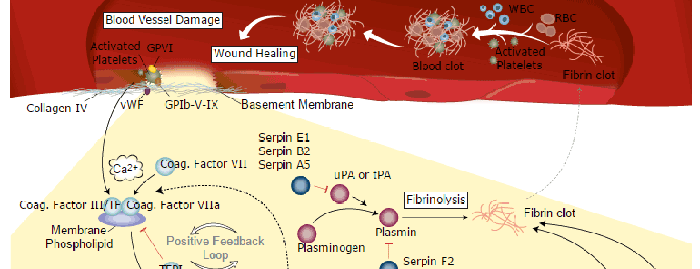
GPV (platelet glycoprotein V; designated CD42d) is an 83 kDa type I transmembrane (TM) glycoprotein of the leucine‑rich repeat (LRR) family (1, 2). It is expressed exclusively within the platelet / megakaryocyte lineage, where it noncovalently interacts with other platelet TM LRR proteins, GPIb alpha / beta and GPIX, at a ratio of one GPV to two of each other subunit (2). The GPI‑V‑IX complex tethers platelets to von Willebrand factor on the surface of injured endothelial cells. Absence of the complex results in Bernard‑Soulier syndrome, a rare bleeding disorder (1‑3). The human GPV cDNA encodes a 560 amino acid (aa) protein with a 16 aa signal sequence, a 507 aa extracellular domain (ECD) containing 15 LRR, a 21 aa TM sequence, and a short (16 aa) cytoplasmic tail that binds calmodulin in resting, but not activated platelets. The human GPV ECD shares 70%, 71% and 81% aa identity with mouse, rat and equine GPV, respectively. GPV can form soluble fragments of 80 kDa by ADAM10 or ADAM17 cleavage after P507, or 69 kDa by thrombin cleavage after R476 (1, 4, 5). High circulating soluble GPV may be an indicator of platelet activation, but may also be caused by high doses of aspirin (6‑8). The function of GPV is not entirely clear. Deletion of GPV in mice does not produce any obvious change to surface expression or function of GPIb and GPIX, but surface expression of GPV requires GPIb (9, 10). Deletion studies also indicate that GPV may play a minor role in collagen adhesion, and may modify platelet aggregation in response to thrombin (3, 11‑15).

Scientific images may be resized, cropped, or adjusted for brightness or contrast for presentation purposes. These updates are limited to presentation and do not affect the underlying scientific interpretation of the data. Where available, additional source data may be provided upon request.
Key Product Details
Species Reactivity
Applications
Label
Antibody Source
Product Specifications
Immunogen
Gln17-Gly523 (predicted)
Accession # P40197
Specificity
Clonality
Host
Isotype
Scientific Data Images for Human Glycoprotein V/CD42d Antibody (508219)
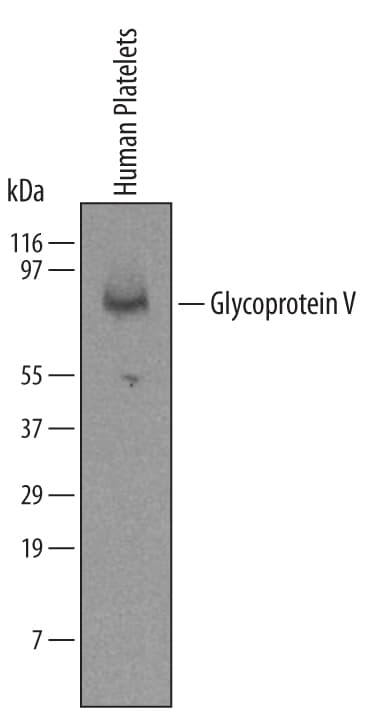
Detection of Human Glycoprotein V/CD42d by Western Blot.
Western blot shows lysates of human platelets. PVDF membrane was probed with 2 µg/mL of Mouse Anti-Human Glycoprotein V/ CD42d Monoclonal Antibody (Catalog # MAB42491) followed by HRP-conjugated Anti-Mouse IgG Secondary Antibody (Catalog # HAF007). A specific band was detected for Glycoprotein V/CD42d at approximately 83 kDa (as indicated). This experiment was conducted under reducing conditions and using Immunoblot Buffer Group 1.Applications for Human Glycoprotein V/CD42d Antibody (508219)
Western Blot
Sample: Human platelet
Reviewed Applications
Read 2 reviews rated 3.5 using MAB42491 in the following applications:
Formulation, Preparation, and Storage
Purification
Reconstitution
Reconstitute at 0.5 mg/mL in sterile PBS. For liquid material, refer to CoA for concentration.
Formulation
Shipping
Stability & Storage
- 12 months from date of receipt, -20 to -70 °C as supplied.
- 1 month, 2 to 8 °C under sterile conditions after reconstitution.
- 6 months, -20 to -70 °C under sterile conditions after reconstitution.
Calculators
Background: Glycoprotein V/CD42d
References
- Lanza, F. et al. (1993) J. Biol. Chem. 268:20801.
- Hickey, M.J. et al. (1993) Proc. Natl. Acad. Sci. USA 90:8327.
- Ozaki, Y. et al. (2005) J. Thromb. Haemost. 3:1745.
- Rabie, T. et al. (2005) J. Biol. Chem. 280:14462.
- Gardiner, E.E. et al. (2007) J. Thromb. Haemost. 5:1530.
- Wolff, V. et al. (2005) Stroke 36:e17.
- Javela, K. et al. (2005) Transfusion 45:1504.
- Aktas, B. et al. (2005) J. Biol. Chem. 280:39716.
- Kahn, M.L. (1999) Blood 94:4112.
- Strassel, C. et al. (2004) Eur. J. Biochem. 271:3671.
- Nonne, C. et al. (2008) J. Thromb. Haemost. 6:210.
- Moog, S. et al. (2001) Blood 98:1038.
- Ramakrishnan, V. et al. (1999) Proc. Natl. Acad. Sci. USA 96:13336.
- Ni, H. et al. (2001) Blood 98:368.
- Andrews, R.K. et al. (2001) Blood 98:681.
Alternate Names
Gene Symbol
UniProt
Additional Glycoprotein V/CD42d Products
Product Documents for Human Glycoprotein V/CD42d Antibody (508219)
Certificate of Analysis
To download a Certificate of Analysis, please enter a lot or batch number in the search box below.
Note: Certificate of Analysis not available for kit components.
Product Specific Notices for Human Glycoprotein V/CD42d Antibody (508219)
For research use only
Related Research Areas
Customer Reviews for Human Glycoprotein V/CD42d Antibody (508219) (2)
Have you used Human Glycoprotein V/CD42d Antibody (508219)?
Submit a review and receive an Amazon gift card!
$25/€18/£15/$25CAN/¥2500 for a review with an image
$10/€7/£6/$10CAN/¥1110 for a review without an image
Submit a review
Customer Images
-
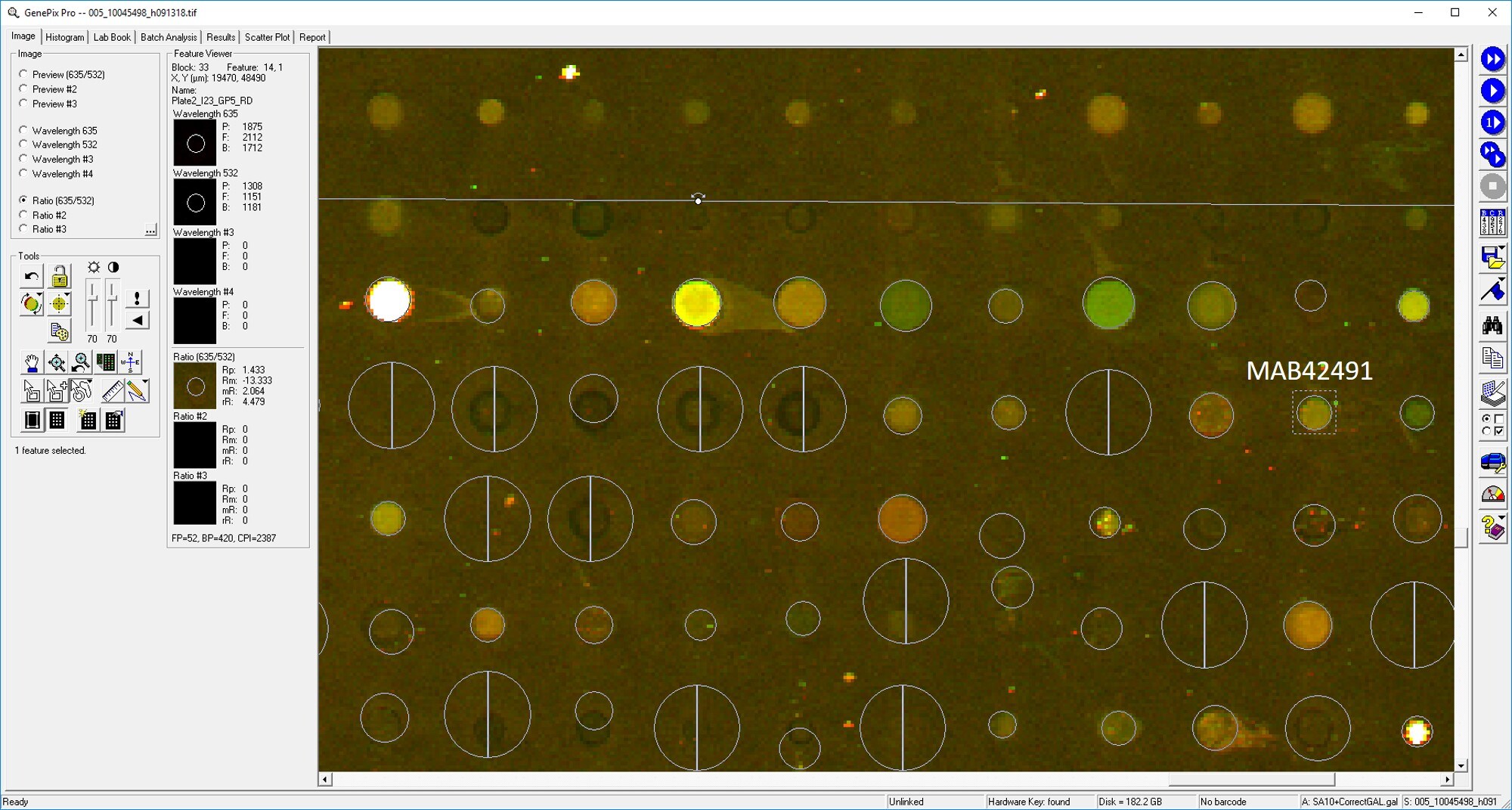
Application: MicroarraysSample Tested: EDTA PlasmaSpecies: HumanVerified Customer | Posted 01/03/2020

-
Application: MicroarraySample Tested: EDTA PlasmaSpecies: HumanVerified Customer | Posted 11/09/2018
There are no reviews that match your criteria.
Protocols
Find general support by application which include: protocols, troubleshooting, illustrated assays, videos and webinars.
- Cellular Response to Hypoxia Protocols
- R&D Systems Quality Control Western Blot Protocol
- Troubleshooting Guide: Western Blot Figures
- Western Blot Conditions
- Western Blot Protocol
- Western Blot Protocol for Cell Lysates
- Western Blot Troubleshooting
- Western Blot Troubleshooting Guide
- View all Protocols, Troubleshooting, Illustrated assays and Webinars
Associated Pathways