
Targeted Protein Degradation
Targeted Protein Degradation (TPD) refers to the use of heterobifunctional small molecule "Degraders", such as PROTAC® Degraders, to achieve knockdown of target proteins within cells. These Degraders harness the ubiquitin-proteasome system to knockdown a protein of interest.
Transformative Tools for Induced Proximity and Targeted Protein Degradation

What is Induced Proximity?
Induced Proximity is an approach that employs two ligands covalently joined by a linker, to bring two proteins, a target protein of interest (POI) and an effector, into close proximity. The induced proximity of POI and effector leads to an alteration to the POI, triggering a biological response. The POI can undergo a variety of changes including post-translational modification, degradation, autophagy, stabilization, dimerization, and cellular shuttling.
Targeted protein degradation (TPD) utilizes heterobifunctional small molecule Degraders (e.g. PROTAC® molecules, SNIPERs etc) to bind the POI and recruit an E3 ligase to form a ternary complex. This initiates the ubiquitination of the POI and its subsequent destruction by the proteasome. There are a number of significant benefits to using this technology. Efficient and highly selective protein knock-down can be achieved both in vitro and in vivo. Degraders act catalytically by repeatedly engaging and directing the ubiquitination of the POI and can therefore be used at very low doses to achieve sustained knock-down.
R&D Systems small molecules offers a full range of products and services for Targeted Protein Degradation research and development. Our tools will help you explore and validate your target of interest, develop new protein Degrader molecules and investigate their activity, as well as build your own assays for degradation. Our range includes: small molecule Protein Degraders such as Proteolysis Targeting Chimeras (PROTAC® Degraders), molecular glues, aTAG, dTAG and BromoTag® Degraders plus Degrader Building Blocks, Ubiquitin-Proteasome System Proteins and Assays, Assays for Protein Degradation and Custom Degrader Services.
Products and Services for Targeted Protein Degradation

Target Validation and Exploration
Target Validation, the process of establishing that a potential molecular target is involved in a physiological function or disease process, is a key step in the development of new Degraders, as well as for drug discovery and biological research. Our TAG Degradation platform offers a differentiated method for target validation, using targeted protein degradation to reversibly knockdown a potential protein target and enable exploration of the downstream phenotype.

Degrader Design and Synthesis
Targeted protein degradation can be achieved using small molecule Protein Degraders, such as PROTAC molecules. R&D Systems small molecules provides a toolbox of products and services to support your Degrader Design and Synthesis program and save you time and money, including a large range of off-the-shelf Degrader Building Blocks and tools for new E3 ligase ligand discovery.
Assays for Targeted Protein Degradation
Successful development of small molecule Protein Degraders for targeted protein degradation requires a variety of assays to characterize specific aspects of Degrader activity. The assay workflow should explore: target engagement and ternary complex formation induced by the Degrader; ubiquitination of the target protein; as well as target degradation and its downstream consequences. The use of multiple orthogonal assays will increase the chance of successful Degrader development.

E3 Ligase and Ubiquitin Proteasome System Biology
The R&D Systems brand, provides a wide range of products to help you explore and characterize ubiquitin biology. The rapidly expanding portfolio includes highly active E3 Ubiquitin Ligases, including SKP2, VHL, Cereblon (CRBN) and DCAF proteins, as well as assay kits and components, and antibodies. We also provide Cullin-Rbx complexes (including neddylated cullins) that can be coupled to your purified substrate-binding complexes to generate active ligases.

Custom Services for Targeted Protein Degradation
The R&D Systems portfolio offers custom services to support your PROTAC® discovery and development and target validation programs. Harness our expertise in custom chemistry to develop active degraders to knock down your target of choice or custom building block panels. We also offer custom E3 ligase development services enabling you to build your own assays to investigate ubiquitination.
Brochure: Targeted Protein Degradation and Induced Proximity
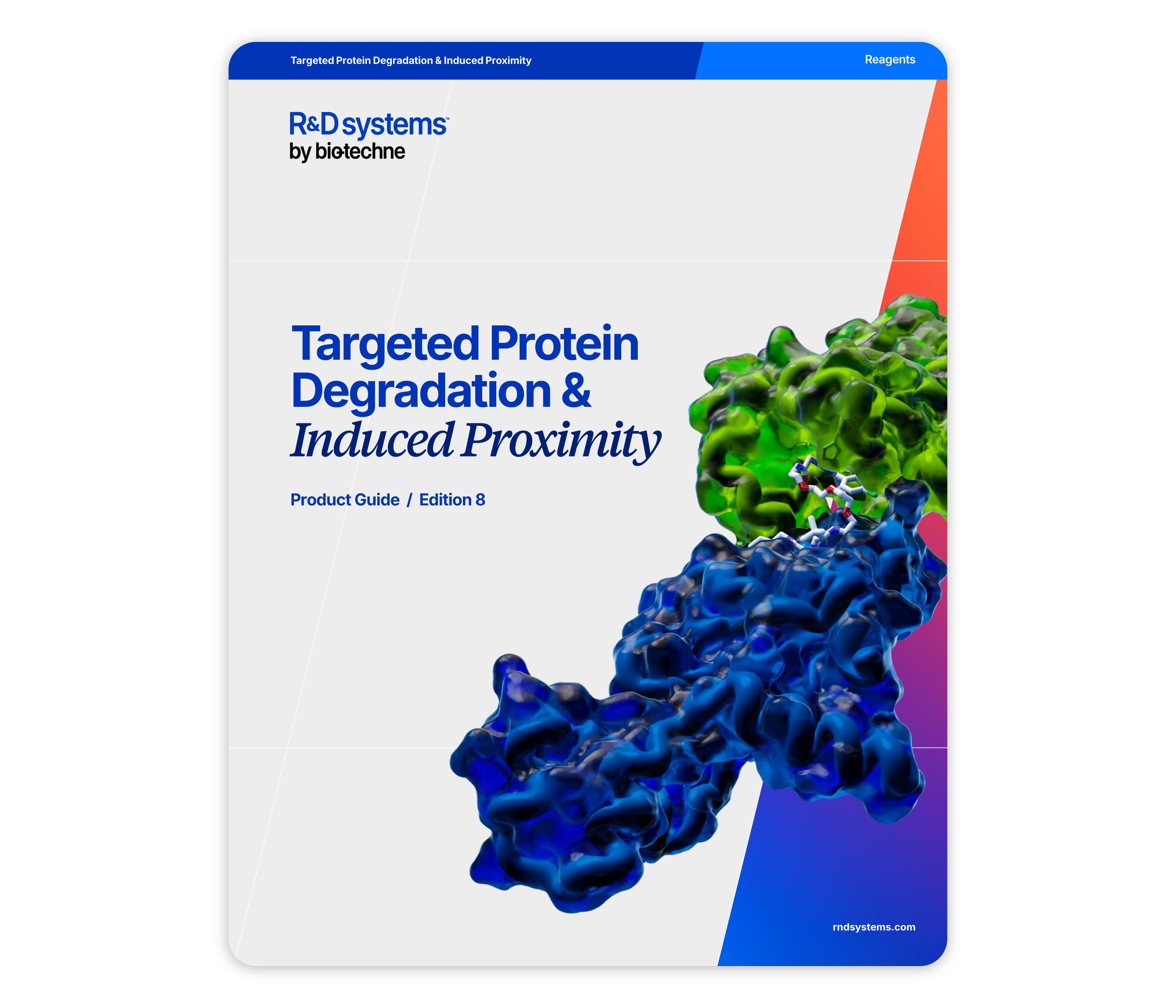
Our Targeted Protein Degradation and Induced Proximity Research Product Guide highlights the tools and services to support your research including Protein Degraders, Degrader Building Blocks, Custom Degrader Services, Proteins and Assays for protein degradation, and Tools for Induced Proximity Research.
6th Virtual Bio-Techne TPD and Induced Proximity Symposium
Our 6th Virtual Symposium brings together cutting-edge research from leading scientists across academia and industry. Topics covered include: approaches to rewiring the cell surface proteome, live-cell protein analysis using a novel self-labelling tag platform, new strategies for targeting extracellular disease proteins, industry perspective on DMPK optimization for PROTAC® Degraders and the development of bifunctional Degraders and Acetylation Targeting Chimera technologies for cancer therapy.
Scientific Review: Simple Western Hits the Bullseye of TPD
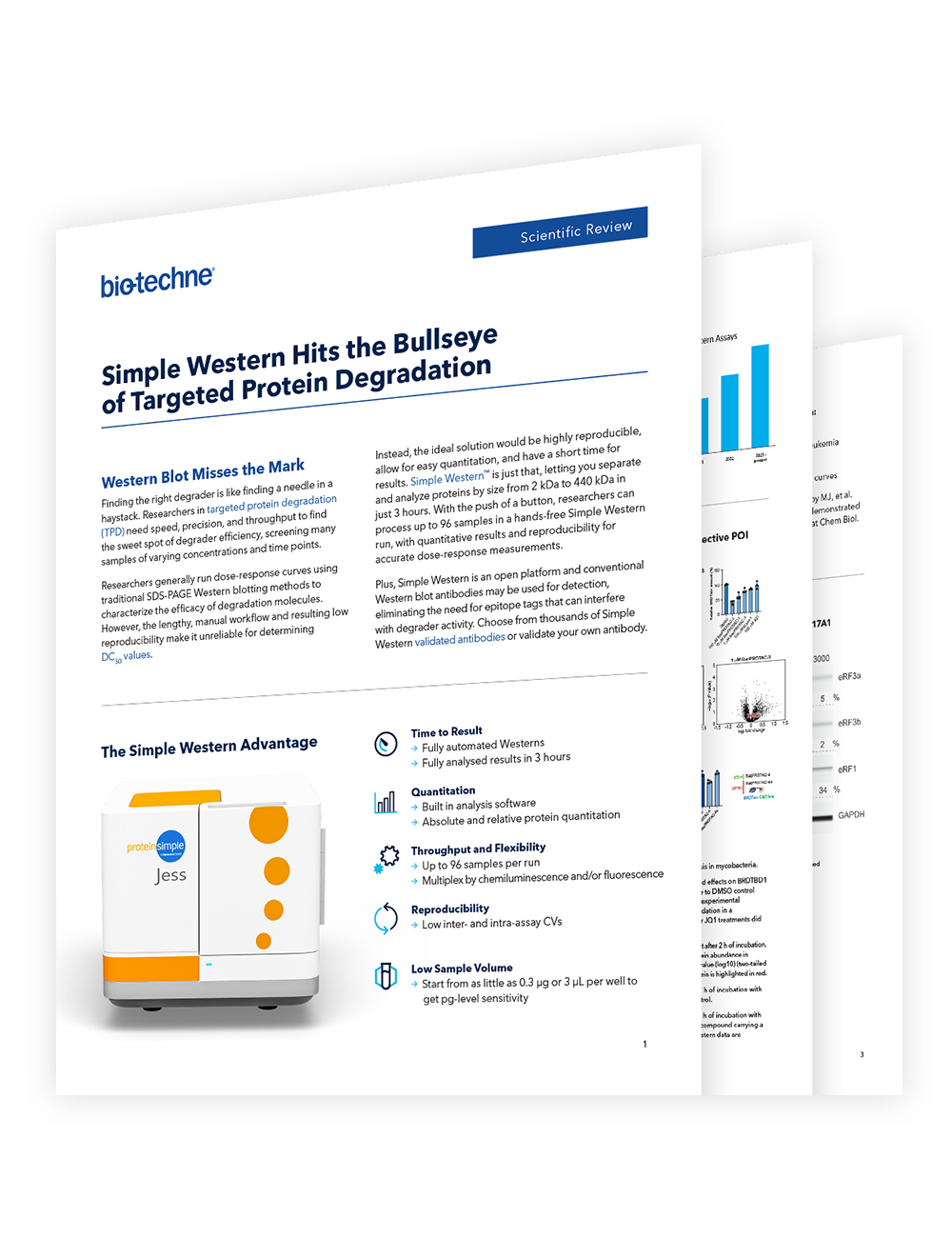
This review highlights vital publications that represent Simple Western’s high-throughput screening of degrader activity with reproducible quantification, flexible multiplex strategies, and fast time to results, from drug discovery of novel degraders through translation to the clinic.
Paper: Reviewing the Toolbox for Degrader Development in Oncology

This review discusses the toolbox of guidelines, reagents, and technologies available to support Degrader research and development in oncology.
Leo System for High-throughput Quantitative Western Analysis

The Leo™ System, powered by Simple Western™ Technology, is a high-throughput, fully automated capillary western platform. Provides efficient and reproducible protein detection and both relative and absolute quantitation. Automated processing of up to 100 capillaries per run generating reliable, quantitative results in as little as 3 hours.
Background Information
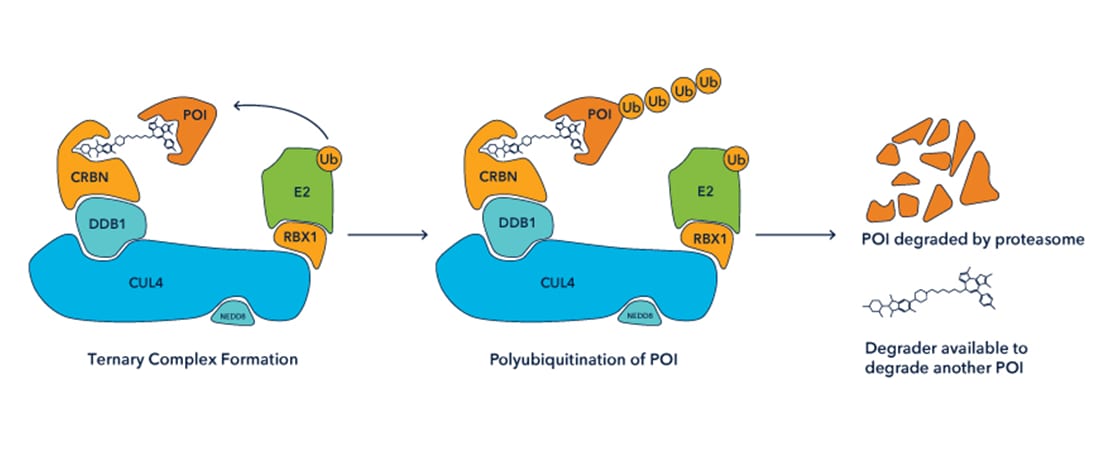
Figure 1. Schematic showing the catalytic mode of action of Degrader molecules.
What are Small Molecule Protein Degraders?
Protein Degraders are bifunctional compounds comprising 3 components: an E3 ubiquitin ligase ligand, a linker, and a ligand for a target protein of interest. They induce the formation of a ternary complex by simultaneously binding to both an E3 ligase and target protein. Ternary complex formation effectively ‘hijacks’ the E3 ligase to polyubiquitinate a target of interest, inducing subsequent degradation by the 26S proteasome.
The PROTAC® concept was first described in 2001. The first generation of Degraders synthesized were peptide-based and were not cell-permeable, however they demonstrated the principle that it is possible to direct an E3 ligase to degrade a protein of interest. The first small molecule protein Degraders were also reported by Craig Crews’ group in 2008. Since then, a wide range of degraders have been synthesized, recruiting different E3 ligase enzymes, including Cereblon, von Hippel Lindau (VHL) and inhibitor of apoptosis (IAP), and targeting a variety of protein targets, such as enzymes, receptors, bromodomains and transcription factors.
How do Degrader molecules work?
Targeted Protein Degradation is a technique that uses heterobifunctional small molecule Degraders to bring about efficient and highly selective degradation of a target protein of interest. Targeted protein degradation enables investigation of the downstream consequences of protein knockdown in a reversible and tuneable manner, without the requirement for genetic modification to cells, and provides an easy-to-use method for target validation. Degraders also have therapeutic potential as an approach to target the ‘undruggable’ proteome and overcome common resistance mechanisms to current therapies.
R&D Systems small molecules provides Protein Degraders, including PROTAC (PROteloysis TArgeting Chimera) molecules and TAG Degraders (dTAG/aTAG/BromoTag). PROTAC molecules comprise a ligand that binds a target of interest joined by a linker to an E3 ligase ligand. A ternary complex is formed by the simultaneous binding of the Degrader to the target protein and the E3 ligase, which initiates ubiquitination of the target protein and its subsequent destruction by the proteasome. TAG Degraders work on a similar principle, but comprise an E3 ligase ligand linked to a compound that binds a fusion of a TAG degron with a target protein of interest. Degraders enable the knockdown of proteins for which there are no known ligands, enabling targeting of previously undruggable targets.
The R&D Systems brand supplies a range of other products and services to support Targeted Protein Degradation studies, including Degrader Building Blocks to enable you to create your own Degraders, as well as Ubiquitin-Proteasome System (UPS) Proteins and Assays, Assays for Protein Degradation, and Custom Degraders Services.
Why Use Degraders?
Small molecule Degraders offer several advantages over gene editing methods such as CRISPR and RNAi for target protein knockdown:
- Degraders are cell-permeable, are suitable for use in vivo and in vitro, and can be applied directly to cells with no need for transfection or expression vectors.
- They are applicable to multiple cell lines with no requirement that cells are easily transfectable
- The duration of effect is adjustable and reversible on compound washout
- The level of protein degradation can be easily tuned by altering the dose of Degrader used
- They have a catalytic mode of action repeatedly engaging and directing ubiquitination of target molecules, allowing use at sub-stoichiometric concentrations.
Using Protein Degraders
The activity of Degraders is represented by the DC50 and Dmax values. The DC50 is a measure of potency and is the concentration at which 50% of the target protein is degraded; it is equivalent to the IC50 for an inhibitor. The Dmax is the maximum level of degradation achievable. These values are useful guides to determine the appropriate concentration of Degrader to use in your experiment. The timescale to achieve maximum degradation varies significantly between different Degraders and should also be taken into consideration when planning your experiment.
Effective knockdown of target proteins can be achieved with very low Degrader concentrations. In some cases, Degraders exhibit the “hook effect” at higher doses. This effect refers to the reduced degradation efficiency resulting from the increased formation of binary complexes at higher Degrader concentrations, which compete with formation of ternary complexes.
Molecular Glues
Molecular Glues are small molecule protein dimerizers that bring about targeted protein degradation via a similar mechanism to PROTAC® Degraders. However, molecular glues are not chimeric molecules. Molecular glues act by forming a ternary complex with a target protein and an E3 ligase leading to ubiquitination of the protein and its subsequent destruction by the proteasome. The interaction of the molecular glue with the E3 ligase may result in allosteric modification of the E3 ligase binding site, such that it is unable to bind its native substrate, enabling ternary complex formation with a protein of interest (or neosubstrate). Like other small molecule Protein Degraders, molecular glues act catalytically.
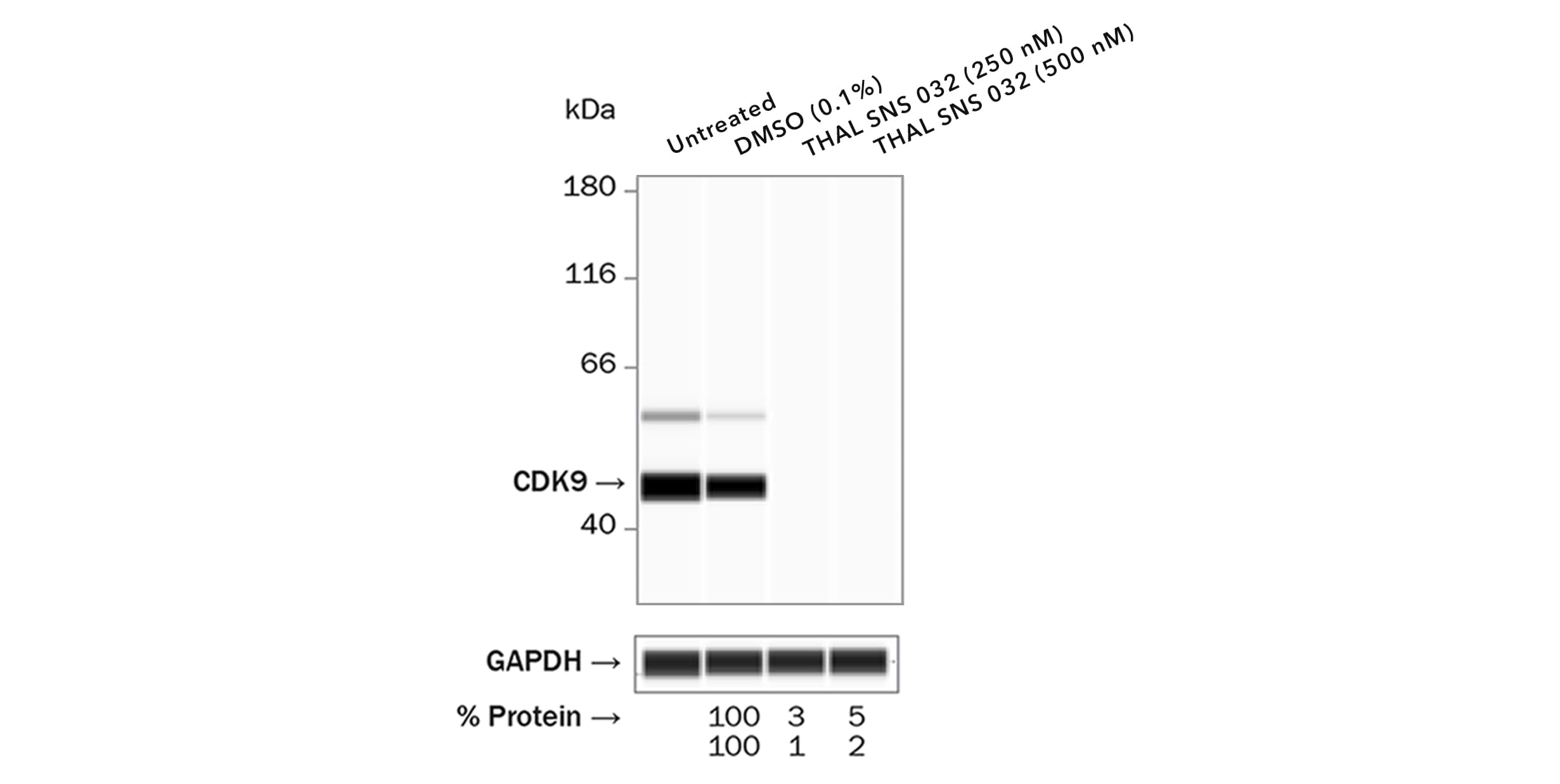
Figure 2: Wes data showing knockdown of both CDK9 isoforms after THAL SNS 032 (Cat. No. 6532) treatment (200 or 500 nM) of MOLT-4 cells. Protein quantification (relative to DMSO-only control) is shown beneath the corresponding lane.
Experiments were performed by the Simple Western™ applications science team. Simple Western fully automated western blotting systems provide quantitative data, which allows for an accurate determination of DC50 and Dmax values for Protein Degraders.
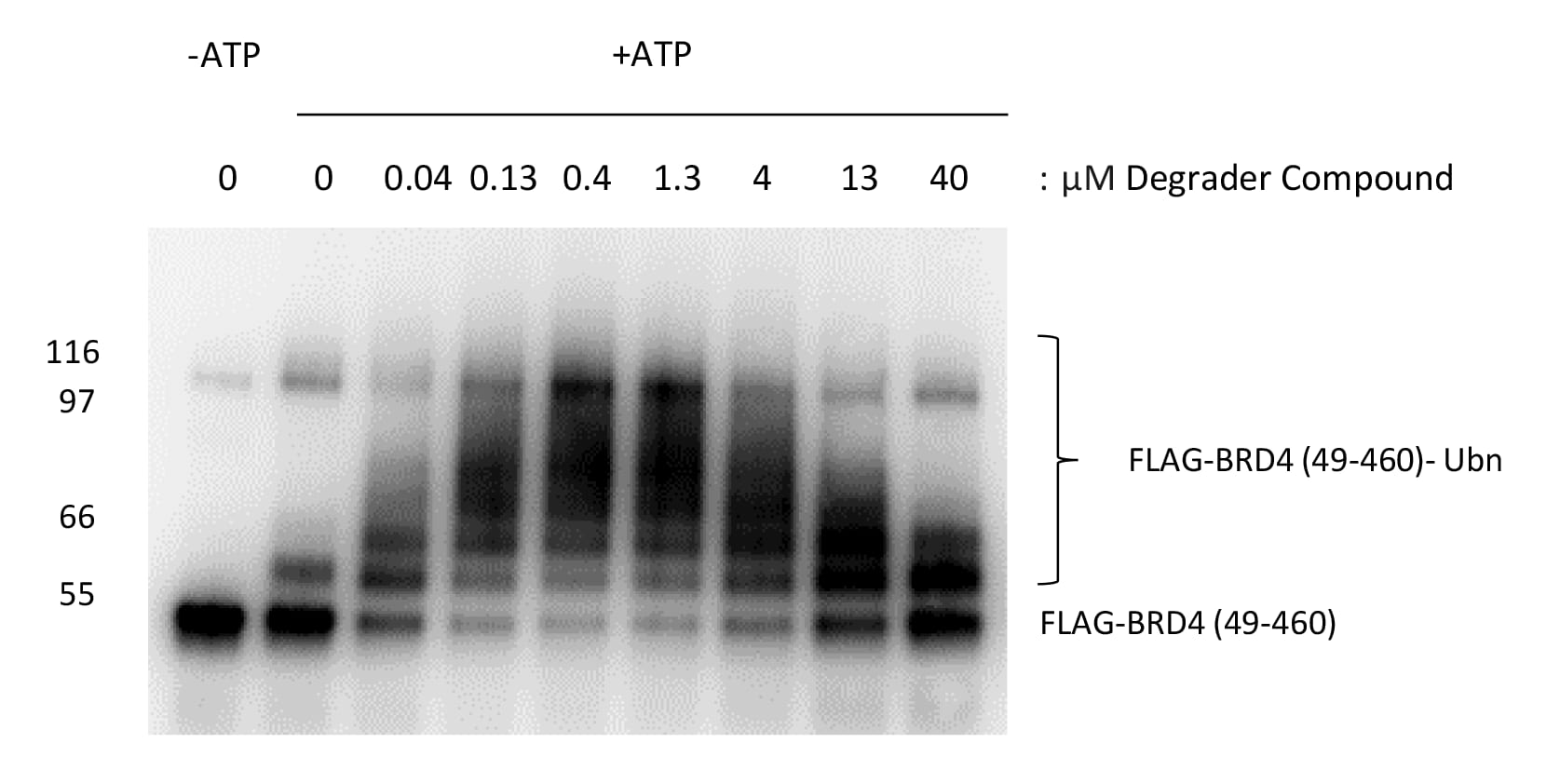
Figure 3: The so-called “hook effect” is demonstrated in this western blot, which shows Degrader-mediated polyubiquitination of recombinant BRD4. CRBN E3 ligase complex (Cat. No. E3-650) was used to investigate Degrader-induced in vitro polyubiquitination of recombinant FLAG-tagged BRD4 (Cat. No. SP-600). Results were analyzed using an anti-FLAG Western Blot. The degree of substrate ubiquitination varies with the concentration of Degrader used in the reaction.
Types of Degrader
- LYTAC ( (LYsosome TArgeting Chimera molecules): LYTACs direct an extracellular protein of interest to the lysosome for degradation and were invented at the University of Wisconsin
- PROTAC® (PROteolysis TArgeting Chimeric molecules): this term was coined in a paper from Craig Crews’ lab (Yale University) in a 2001 paper and is now widely used to refer to protein degrader molecules.
- SNIPERs (Specific and Nongenetic Inhibitor of apoptosis protein (IAP)-dependent Protein ERasers): SNIPERs specifically recruit the E3 ligase IAP and were developed at the University of Tokyo.
- PHOTAC (PHOtochemically TArgeting Chimeras): these are photoswitchable degraders that can be activated by different wavelengths of light and were originated at New York University.
- uSMITE™ (Ubiquitin-mediated, Small Molecule-Induced Target Elimination technology): a type of Degrader developed by Cullgen
PROTAC® is a registered trademark of Arvinas Operations, Inc., and is used under license.
BromoTag® is a registered trademark of the University of Dundee and is used under license.