
Neurotransmitters, Neuroactive Molecules, and Associated Enzymes
Neurotransmitters are chemicals released across the synapse to facilitate signal transduction from the pre-synaptic neuron to the postsynaptic target cell. R&D Systems offers quality products to study biological signaling cascades related to several neurotransmitter molecules, including acetylcholine, dopamine, gamma-aminobutyric acid (GABA), glutamate, serotonin, and nitric oxide. Synaptic failure and neurotransmitter dysfunction are known to underlie many neurodegenerative diseases, including Alzheimer's disease, Parkinson's disease, and Amyotrophic Lateral Sclerosis (ALS).
Neurotransmission-related Research Areas
Discover R&D Systems' catalog of receptors, enzymes, and small molecules to advance your neurotransmission research.
Neurotransmitters, Neuroactive Molecules, and Associated Enzyme Products
| Endothelins | ||
| Esterases | ||
| Exocytosis | ||
| Decarboxylases | ||
| GABAB Receptors | ||
| Glutamate Dehydrogenases | ||
| Glycine Receptors | ||
| Hormones | ||
| Hydroxylases | ||
| Kininogen | ||
| Orexins | ||
| Peptides and Neuropeptides | ||
| Prostaglandins | ||
| Purinergic (P2X) Receptors | ||
| Purinergic (P2Y) Receptors | ||
| Transferases | ||
| Vasoactive Intestinal Peptide and Related Receptors | ||
| Other Neurotransmitters, Neuroactive Molecules, and Associated Enzymes | ||
Background
Neurotransmission usually requires the release of endogenous chemicals, 'neurotransmitters', at synapses between neighboring neurons. Neurotransmitters are synthesized and stored in the axons of neurons and release upon an increase of intracellular Ca2+, caused by an action potential. This releases neurotransmitters into the synapse where they can exert effects at postsynaptic neurons. They do this by binding to receptors (usually ligand-gated ion channels or GPCRs) and exerting an effect by causing ion influxes which depolarize the post-synaptic membrane, or by initiating a complex signaling cascade. Both these effects initiate an action potential at the postsynaptic neuron, propagating waves of energy downstream. Synaptic signals and action potentials are integral for all the information processing capabilities of the brain.
Neurotransmission and the strength of a connection between neurons can depend on a variety of factors. This includes; the number of synaptic contacts between 2 neurons, the size of post-synaptic depolarization elicited by neurotransmitters and the probability of neurotransmitter release. Many neurological diseases can occur due to defective flow of neurotransmitters at neuronal synapses. This may result in no impulse reaching the post-synaptic neuron and therefore no responses are exerted by the neurotransmitter downstream. Some examples of diseases with altered neurotransmission include; schizophrenia, depression, ADHD, anxiety disorder and Alzheimer's. Changes in neurotransmission have also been related to drug addiction.
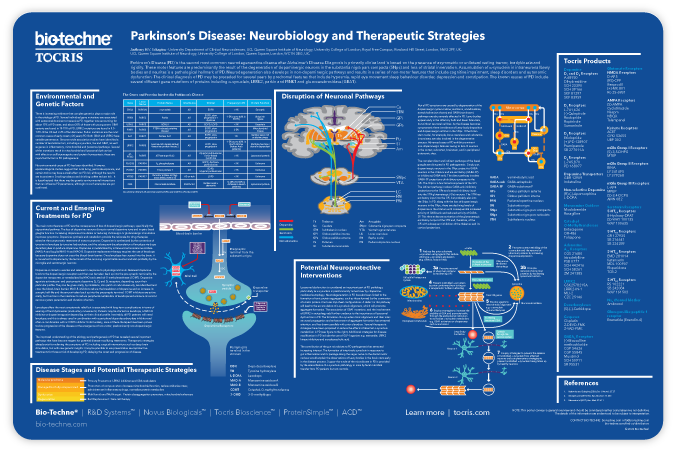
Parkinson's Disease Poster: Neurobiology and Therapeutic Strategies
Parkinson's disease (PD) causes chronic disability and is the second most common neurodegenerative condition. This poster outlines the neurobiology of the disease, as well as highlighting current therapeutic treatments for symptomatic PD, and emerging therapeutic strategies to delay PD onset and progression.