
Apoptosis-associated speck-like protein containing a CARD (ASC) is also known as Target of Methylation-mediated Silencing (TMS-1) and PYD and CARD-domain containing protein (PYCARD). ASC is a p53 target protein that serves as an adaptor to the pro-apoptotic Bax molecule. The interaction of ASC with Bax promotes apoptosis in response to many apoptotic stimuli.


Scientific images may be resized, cropped, or adjusted for brightness or contrast for presentation purposes. These updates are limited to presentation and do not affect the underlying scientific interpretation of the data. Where available, additional source data may be provided upon request.
Key Product Details
Validated by
Knockout/Knockdown
Species Reactivity
Validated:
Human
Cited:
Human, Mouse, Rat
Applications
Validated:
Knockout Validated, Western Blot, Simple Western
Cited:
Immunohistochemistry-Paraffin, Western Blot, Immunocytochemistry
Label
Unconjugated
Antibody Source
Polyclonal Goat IgG
Loading...
Product Specifications
Immunogen
E. coli-derived recombinant human ASC
Leu112-Ser195
Accession # Q9ULZ3
Leu112-Ser195
Accession # Q9ULZ3
Specificity
Detects human ASC in Western blots.
Clonality
Polyclonal
Host
Goat
Isotype
IgG
Scientific Data Images for Human ASC Antibody
Detection of Human ASC by Western Blot.
Western blot shows lysates of MCF-7 human breast cancer cell line and U937 human histiocytic lymphoma cell line. PVDF membrane was probed with 1 µg/mL of Goat Anti-Human ASC Antigen Affinity-purified Polyclonal Antibody (Catalog # AF3805) followed by HRP-conjugated Anti-Goat IgG Secondary Antibody (Catalog # HAF017). A specific band was detected for ASC at approximately 24 kDa (as indicated). This experiment was conducted using Immunoblot Buffer Group 1.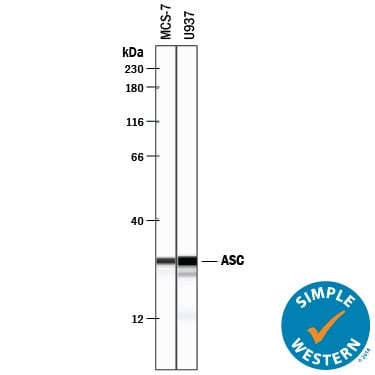
Detection of Human ASC by Simple WesternTM.
Simple Western lane view shows lysates of MCF-7 human breast cancer cell line and U937 human histiocytic lymphoma cell line, loaded at 0.2 mg/mL. A specific band was detected for ASC at approximately 28 kDa (as indicated) using 10 µg/mL of Goat Anti-Human ASC Antigen Affinity-purified Polyclonal Antibody (Catalog # AF3805) followed by 1:50 dilution of HRP-conjugated Anti-Goat IgG Secondary Antibody (Catalog # HAF109). This experiment was conducted under reducing conditions and using the 12-230 kDa separation system.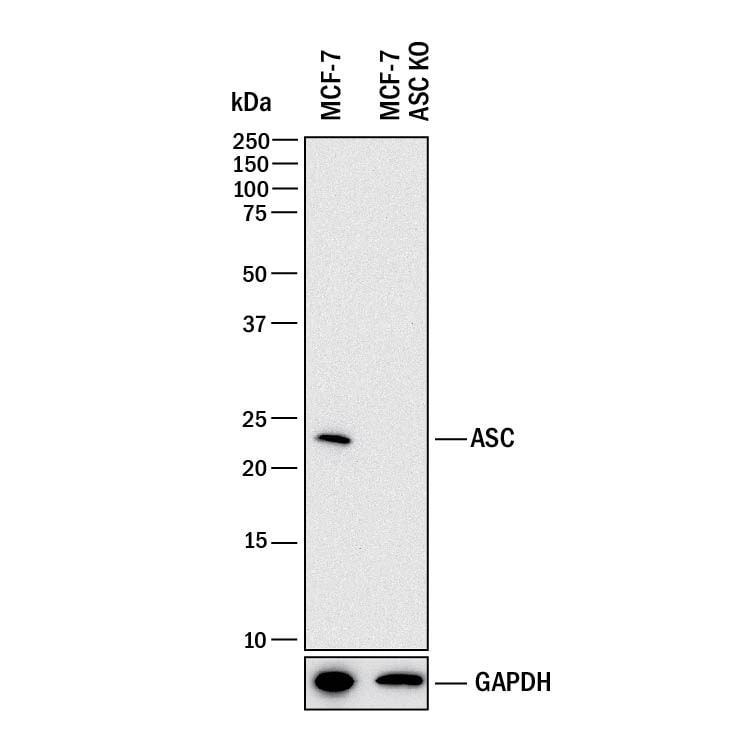
Western Blot Shows Human ASC Specificity by Using Knockout Cell Line.
Western blot shows lysates of MCF-7 human breast cancer parental cell line and ASC knockout MCF-7 cell line (KO). PVDF membrane was probed with 1 µg/mL of Goat Anti-Human ASC Antigen Affinity-purified Polyclonal Antibody (Catalog # AF3805) followed by HRP-conjugated Anti-Goat IgG Secondary Antibody (Catalog # HAF017). A specific band was detected for ASC at approximately 23 kDa (as indicated) in the parental MCF-7 cell line, but is not detectable in knockout MCF-7 cell line. GAPDH (Catalog # AF5718) is shown as a loading control. This experiment was conducted under reducing conditions and using Immunoblot Buffer Group 1.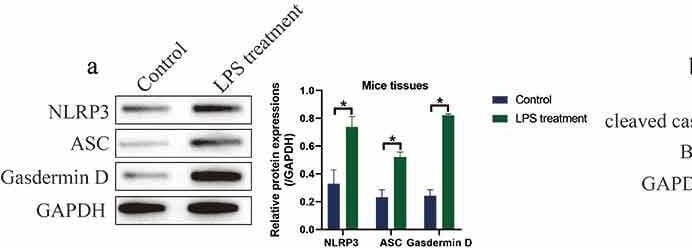
Detection of ASC by Western Blot
LPS induced cell pyroptosis, apoptosis and pro-inflammatory cytokines secretion in both IUA mice and cellular models. The expression status of (a) NLRP3, ASC and N-Gasdermin D, and (b) cleaved caspase-3 and Bax were detected by performing Western blot analysis. The pro-inflammatory cytokines generation and secretion were examined by (c) Real-Time qPCR in EPCs cells and (d-g) its supernatants were examined by Real-Time qPCR and ELISA assay. (h) Western blot was used to determine cell pytoptosis in EPCs cells. (i) MTT assay was used to determine cell viability in EPCs cells. (j) Generation and (k, l) secretion of IL-1 beta and IL-18 were respectively examined by Real-Time qPCR and ELISA. Individual experiment repeated 3 times, and *P < 0.05 Image collected and cropped by CiteAb from the following open publication (https://pubmed.ncbi.nlm.nih.gov/34738867), licensed under a CC-BY license. Not internally tested by R&D Systems.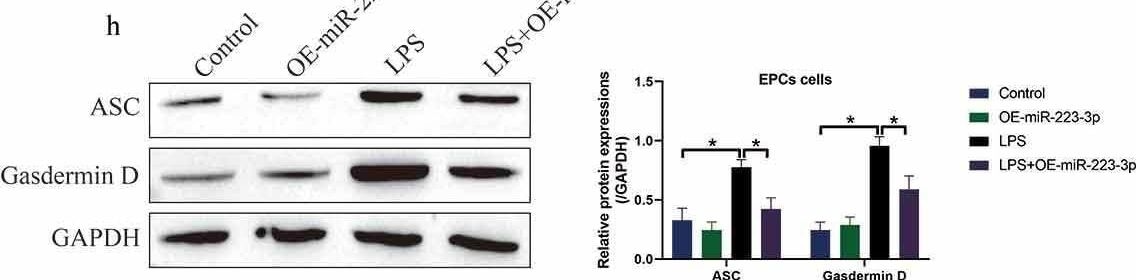
Detection of ASC by Western Blot
MiR-223-3p was capable of regulating NLRP3-mediated pyroptotic cell death in EPCs. (a) The eight miRNAs in BMSCs-exo were screened by using Real-Time qPCR, and (b) the process that BMSCs-exo delivered miR-223-3p into EPCs was examined. (c) The targeting sites in miR-223-3p and 3ʹ UTR of NLRP3 mRNA were predicted, and (d) those sites were validated by performing dual-luciferase reporter gene system assay. (e) miR-223-3p was overexpressed and silenced, and (f, g) the following experiments validated that miR-223-3p negatively regulated NLRP3 in EPCs cells. Upregulation of miR-223-3p suppressed LPS-induced (h) pyroptotic cell death, (i) cytokines generation and (j, k) secretion in EPCs cells. Individual experiment repeated 3 times, and *P < 0.05 Image collected and cropped by CiteAb from the following open publication (https://pubmed.ncbi.nlm.nih.gov/34738867), licensed under a CC-BY license. Not internally tested by R&D Systems.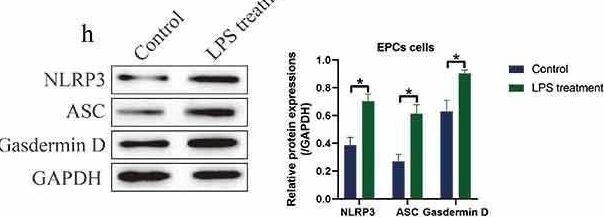
Detection of ASC by Western Blot
LPS induced cell pyroptosis, apoptosis and pro-inflammatory cytokines secretion in both IUA mice and cellular models. The expression status of (a) NLRP3, ASC and N-Gasdermin D, and (b) cleaved caspase-3 and Bax were detected by performing Western blot analysis. The pro-inflammatory cytokines generation and secretion were examined by (c) Real-Time qPCR in EPCs cells and (d-g) its supernatants were examined by Real-Time qPCR and ELISA assay. (h) Western blot was used to determine cell pytoptosis in EPCs cells. (i) MTT assay was used to determine cell viability in EPCs cells. (j) Generation and (k, l) secretion of IL-1 beta and IL-18 were respectively examined by Real-Time qPCR and ELISA. Individual experiment repeated 3 times, and *P < 0.05 Image collected and cropped by CiteAb from the following open publication (https://pubmed.ncbi.nlm.nih.gov/34738867), licensed under a CC-BY license. Not internally tested by R&D Systems.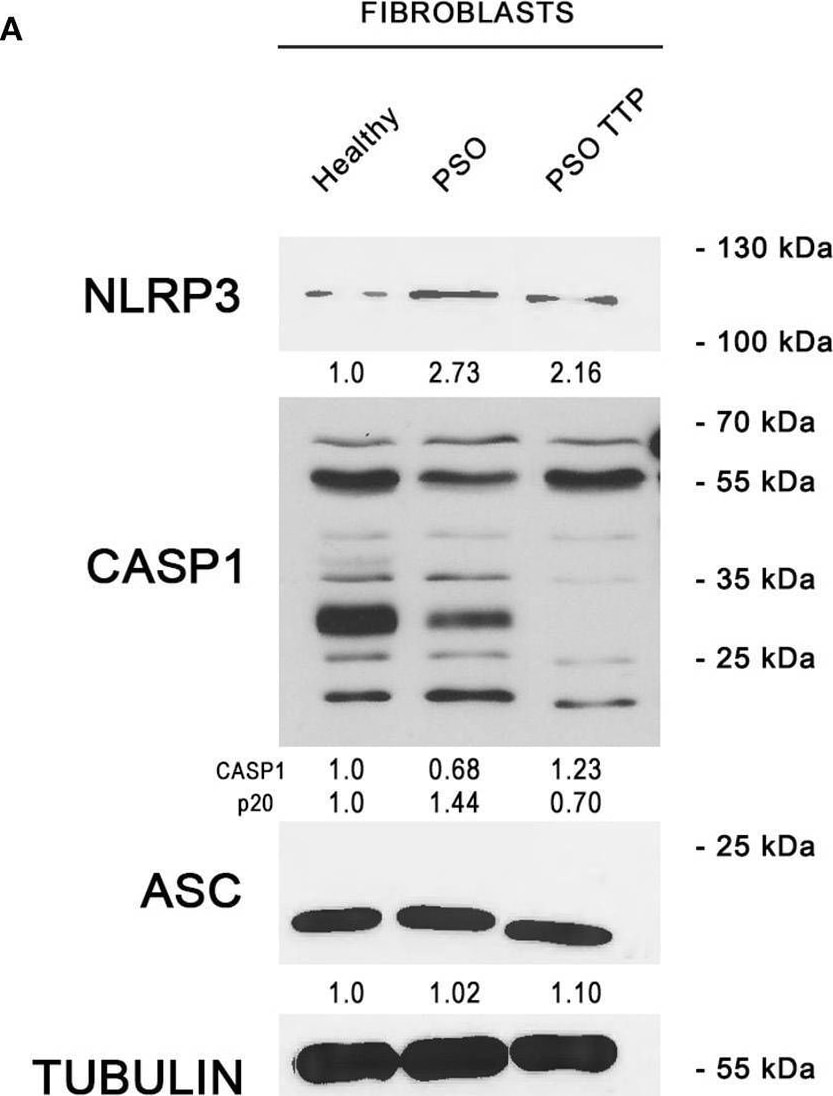
Detection of ASC by Western Blot
(A) NLRP3 inflammasome protein levels are displayed by Western blot in three different fibroblast cell populations: healthy fibroblasts (Healthy), psoriatic fibroblasts (PSO), and psoriatic fibroblasts infected with a pRRL-TTP-overexpressing vector (PSO TTP). Tubulin was used as loading control. (B) TTP overexpression is shown in psoriatic fibroblast sample. Actin was used as loading control. (C) Inflammasome components variation pattern already seen in primary fibroblasts is maintained in the HaCaT keratinocyte cell line. Actin was used as loading control. (D) pRRL-empty vector was used to obtain the overexpression vector pRRL-TTP, by substitution of delta NGFR sequence with TTP cDNA. Image collected and cropped by CiteAb from the following open publication (https://pubmed.ncbi.nlm.nih.gov/33585499), licensed under a CC-BY license. Not internally tested by R&D Systems.Applications for Human ASC Antibody
Application
Recommended Usage
Knockout Validated
ASC is
specifically detected in MCF‑7 human breast cancer parental cell line but is not detectable in ASC
knockout MCF‑7 cell line.
Simple Western
10 µg/mL
Sample: MCF‑7 human breast cancer cell line and U937 human histiocytic lymphoma cell line
Sample: MCF‑7 human breast cancer cell line and U937 human histiocytic lymphoma cell line
Western Blot
1 µg/mL
Sample: MCF-7 human breast cancer cell line and U937 human histiocytic lymphoma cell line
Sample: MCF-7 human breast cancer cell line and U937 human histiocytic lymphoma cell line
Formulation, Preparation, and Storage
Purification
Antigen Affinity-purified
Reconstitution
Reconstitute at 0.2 mg/mL in sterile PBS. For liquid material, refer to CoA for concentration.
Loading...
Formulation
Lyophilized from a 0.2 μm filtered solution in PBS with Trehalose. *Small pack size (SP) is supplied either lyophilized or as a 0.2 µm filtered solution in PBS.
Shipping
Lyophilized product is shipped at ambient temperature. Liquid small pack size (-SP) is shipped with polar packs. Upon receipt, store immediately at the temperature recommended below.
Stability & Storage
Use a manual defrost freezer and avoid repeated freeze-thaw cycles.
- 12 months from date of receipt, -20 to -70 °C as supplied.
- 1 month, 2 to 8 °C under sterile conditions after reconstitution.
- 6 months, -20 to -70 °C under sterile conditions after reconstitution.
Calculators
Background: ASC
Long Name
Apoptosis-Associated Speck-Like Protein Containing A CARD
Alternate Names
CARD5, PYCARD, TMS1
Entrez Gene IDs
29108 (Human)
Gene Symbol
PYCARD
UniProt
Additional ASC Products
Product Documents for Human ASC Antibody
Certificate of Analysis
To download a Certificate of Analysis, please enter a lot or batch number in the search box below.
Note: Certificate of Analysis not available for kit components.
Product Specific Notices for Human ASC Antibody
For research use only
Related Research Areas
Citations for Human ASC Antibody
 Powered by Bioz
Customer Reviews for Human ASC Antibody
There are currently no reviews for this product. Be the first to review Human ASC Antibody and earn rewards!
Have you used Human ASC Antibody?
Submit a review and receive an Amazon gift card!
$25/€18/£15/$25CAN/¥2500 for a review with an image
$10/€7/£6/$10CAN/¥1110 for a review without an image
Submit a review
Protocols
Find general support by application which include: protocols, troubleshooting, illustrated assays, videos and webinars.
- Cellular Response to Hypoxia Protocols
- R&D Systems Quality Control Western Blot Protocol
- Troubleshooting Guide: Western Blot Figures
- Western Blot Conditions
- Western Blot Protocol
- Western Blot Protocol for Cell Lysates
- Western Blot Troubleshooting
- Western Blot Troubleshooting Guide
- View all Protocols, Troubleshooting, Illustrated assays and Webinars
Loading...
Associated Pathways

