

Scientific images may be resized, cropped, or adjusted for brightness or contrast for presentation purposes. These updates are limited to presentation and do not affect the underlying scientific interpretation of the data. Where available, additional source data may be provided upon request.
Key Product Details
Species Reactivity
Validated:
Cited:
Applications
Validated:
Cited:
Label
Antibody Source
Product Specifications
Immunogen
Met1-Gln254
Accession # Q05516
Specificity
Clonality
Host
Isotype
Scientific Data Images for Human PLZF Antibody (6318100)
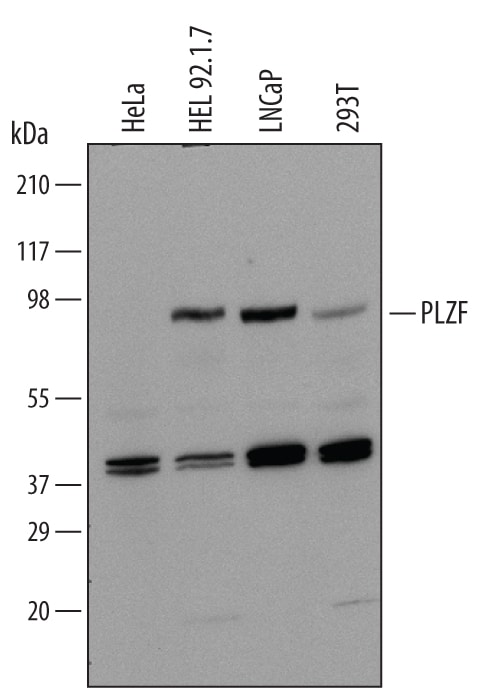
Detection of Human PLZF by Western Blot.
Western blot shows lysates of HeLa human cervical epithelial carcinoma cell line, HEL 92.1.7 human erythroleukemic cell line, LNCaP human prostate cancer cell line, and 293T human embryonic kidney cell line. PVDF Membrane was probed with 1 µg/mL of Human PLZF Monoclonal Antibody (Catalog # MAB2944) followed by HRP-conjugated Anti-Mouse IgG Secondary Antibody (Catalog # HAF007). A specific band was detected for PLZF at approximately 85 kDa (as indicated). This experiment was conducted under reducing conditions and using Immunoblot Buffer Group 1.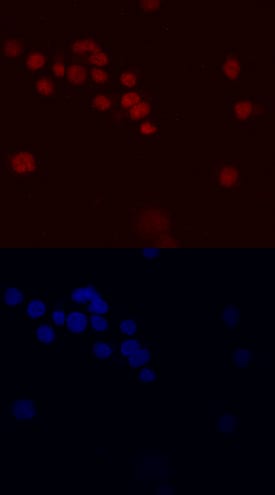
PLZF in HL‑60 Human Cell Line.
PLZF was detected in immersion fixed HL-60 human acute promyelocytic leukemia cell line using Human PLZF Monoclonal Antibody (Catalog # MAB2944) at 10 µg/mL for 3 hours at room temperature. Cells were stained using the NorthernLights™ 557-conjugated Anti-Mouse IgG Secondary Antibody (red, upper panel; Catalog # NL007) and counterstained with DAPI (blue, lower panel). Specific staining was localized to nuclei. View our protocol for Fluorescent ICC Staining of Non-adherent Cells.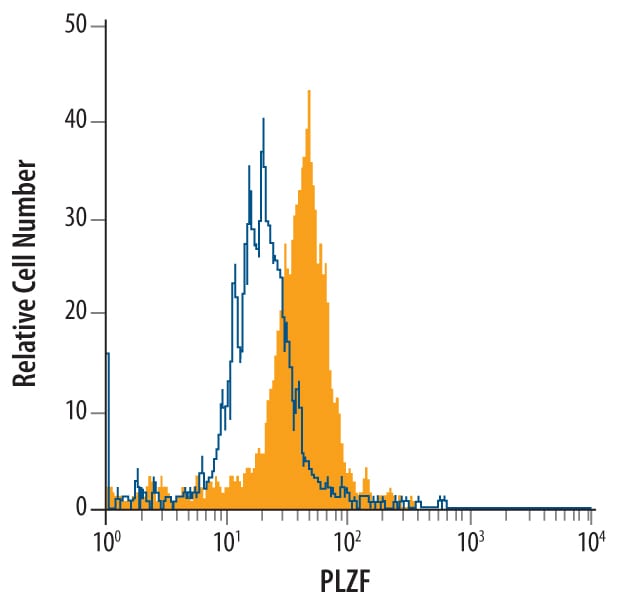
Detection of in HL‑60 Human Cell Line by Flow Cytometry.
HL-60 human acute promyelocytic leukemia cell line was stained with Human PLZF Monoclonal Antibody (Catalog # MAB2944, filled histogram) or isotype control antibody (Catalog # MAB003, open histogram), followed by Phycoerythrin-conjugated Anti-Mouse IgG F(ab')2Secondary Antibody (Catalog # F0102B). To facilitate intracellular staining, cells were fixed with paraformaldehyde and permeabilized with saponin.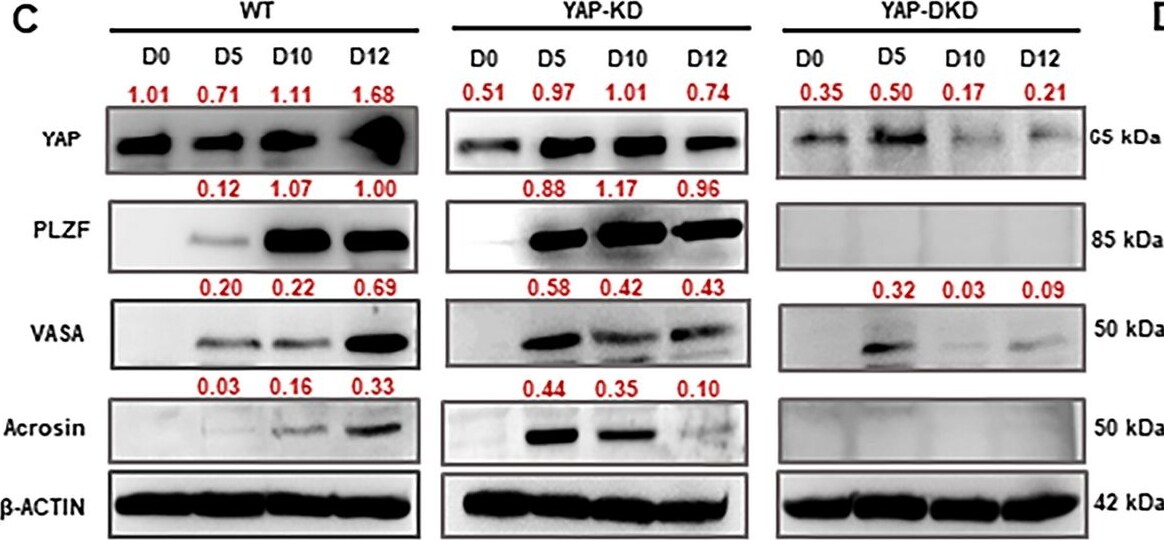
Detection of PLZF by Western Blot
Spermatogenic differentiation of YAP double knockdown hESCs (YAP-DKD cells) (A). Western blot shows the level of YAP relative to beta -ACTIN in YAP-DKD cells compared to that of YAP-KD cells and wild-type hESCs (WT). ****P < 0.0001. (B) Graphs show the expression levels of YAP target genes, CTGF and CYR61, in YAP-DKD cells compared to those of YAP-KD cells and WT. Data are presented as mean ± SD of 3 experiments. **P < 0.01, ***P < 0.001. (C) Western blot shows YAP, PLZF, VASA and acrosin protein levels relative to beta -ACTIN in WT, YAP-KD, and YAP-DKD cells during their spermatogenic differentiation. (D) Graphs show the level of PLZF protein relative to beta -ACTIN in YAP-DKD cells during their spermatogenic differentiation compared to YAP-KD cells and WT. (E) Graphs show the expression levels of spermatogenic cell markers (VASA, PLZF, GFRA1, GPR125 and ACR) during spermatogenic differentiation of YAP-DKD, compared to those of YAP-KD cells and WT. Data are presented as means ± SD of 3 experiments. *P < 0.05, **P < 0.01, ***P < 0.001, ****P < 0.0001. (F) Representative micrographs show the morphology of YAP-DKD cells during their spermatogenic differentiation. White dots indicate areas of dead cells. Scale bar: 200 μm for the upper panel and 100 μm for the lower panel. (G) Western blot shows the level of the apoptotic marker cleaved Caspase3 relative to beta -ACTIN in WT and YAP-DKD cells during their spermatogenic differentiation. The uncropped membranes associated with this figure are provided in Supplementary Fig. S10. Image collected and cropped by CiteAb from the following open publication (https://www.nature.com/articles/s41598-024-66852-x), licensed under a CC-BY license. Not internally tested by R&D Systems.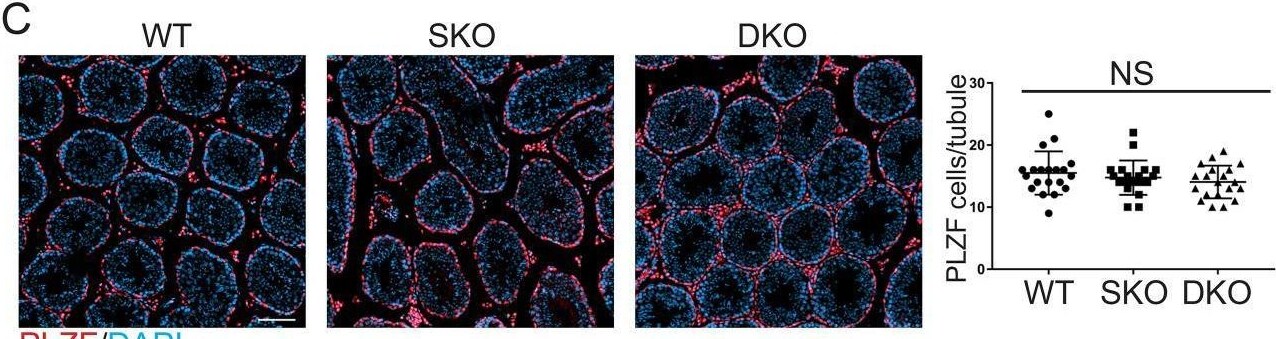
Detection of PLZF by Immunohistochemistry
G3BP2 deficiency-induced germ cell apoptosis.(A) Cell apoptosis detected by TUNEL assay from WT, SKO, and DKO adult mice. Apoptotic cells are marked red and nuclei were stained DAPI, scale bar = 100 μm. (B) Tunel positive cells in 100 tubules at WT, SKO, and DKO adult mice. Data are presented as mean ± S D, n = 5. ***, p < 0.001 by student’s t-test. (C) Immunodetection of PLZF in testis sections from adult WT, SKO, and DKO mice. Scale bar: 50 μm. Quantification of PLZF-positive cells in seminiferous tubule from WT, SKO, and DKO mice. A total of 20 tubules were counted. (D) Heat stress adult testis sections stained for TIA1, a marker of stress granules. Magnified images are shown at the bottom. The condensed stress granules are marked by white arrow. Scale bar: 20 μm. Quantification of TIA1-positive cells in seminiferous tubule from WT, SKO, and DKO mice. A total of 20 tubules were counted. NS, no significant. Image collected and cropped by CiteAb from the following open publication (https://pubmed.ncbi.nlm.nih.gov/35782098), licensed under a CC-BY license. Not internally tested by R&D Systems.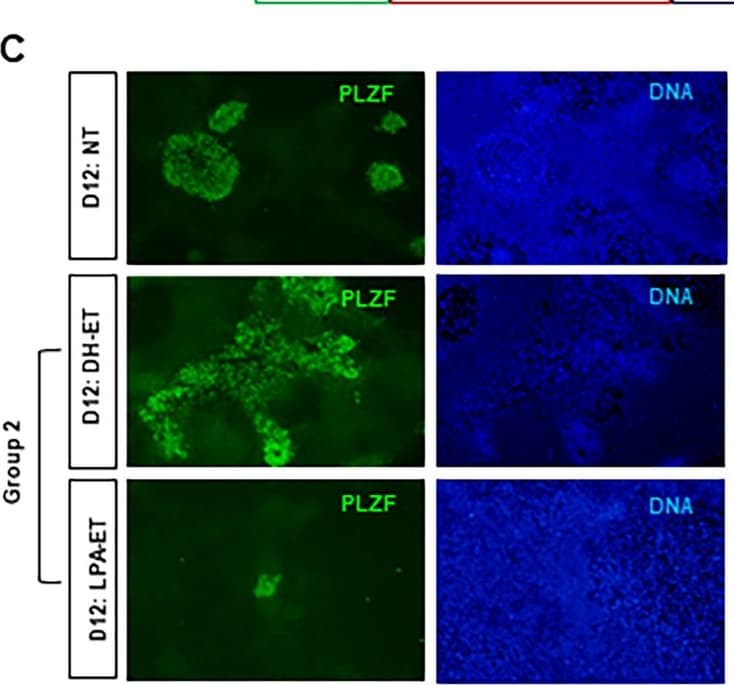
Detection of PLZF by Immunocytochemistry/ Immunofluorescence
Modulation of YAP expression during the various stages of spermatogenic cell differentiation of wild-type hESCs by using DH and LPA. (A) Diagrams show the timeline of DH and LPA supplementation during spermatogenic differentiation of wild-type hESCs. (B) Graphs show the total number of differentiated hESCs and the number of PLZF+ hSSCs derived from various conditions described in (A) at the end of the culture. Data are presented as mean ± SD of 3 experiments. **P < 0.01, ***P < 0.001, ****P < 0.0001 and ### P < 0.001 indicated the statistically significant of spermatogonia number from DH treated cells between each group. (C) Representative immunofluorescence micrographs show the level of PLZF expression in DH-ET and LPA-ET cells compared to that of their untreated counterpart. Scale bar: 200 μm. (D) Western blot shows the expression of YAP, PLZF, Acrosin, and beta -ACTIN proteins in DH-ET cells during their spermatogenic differentiation compared to those of DH-AT cells, untreated control cells, and non-differentiated hESCs. Red numbers indicate the expression level of each sample relative to beta -ACTIN. (E) Analysis of DNA content by flow cytometry shows the percentage of haploid spermatid-like cells derived from DH-ET cells at the end of their spermatogenic differentiation compared to that of LPA-ET and untreated cells. (F) The graph shows the percentage of haploid spermatid-like cells derived from DH-ET cells at the end of their spermatogenic differentiation compared to that of LPA-ET and untreated cells. Data are presented as mean ± SD of 3 experiments. **P < 0.01, ***P < 0.001. The uncropped membranes associated with Fig. 5D are provided in Supplementary Fig. S11. Image collected and cropped by CiteAb from the following open publication (https://www.nature.com/articles/s41598-024-66852-x), licensed under a CC-BY license. Not internally tested by R&D Systems.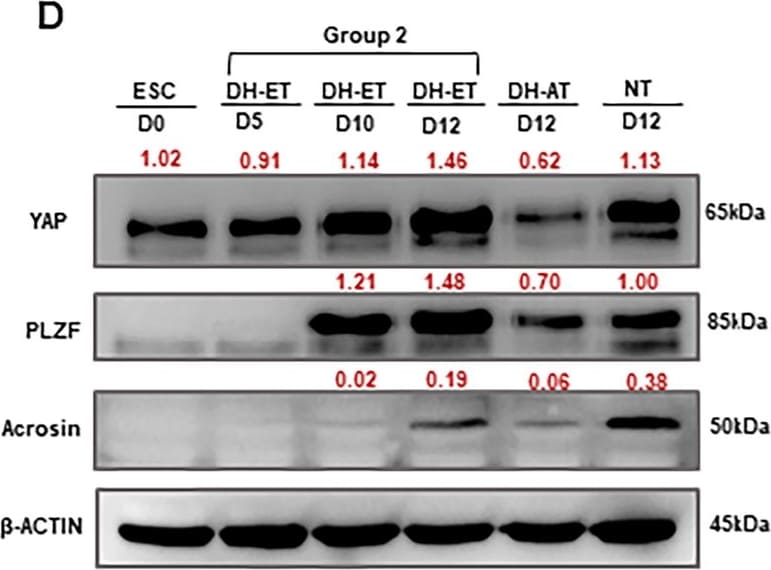
Detection of PLZF by Western Blot
Modulation of YAP expression during the various stages of spermatogenic cell differentiation of wild-type hESCs by using DH and LPA. (A) Diagrams show the timeline of DH and LPA supplementation during spermatogenic differentiation of wild-type hESCs. (B) Graphs show the total number of differentiated hESCs and the number of PLZF+ hSSCs derived from various conditions described in (A) at the end of the culture. Data are presented as mean ± SD of 3 experiments. **P < 0.01, ***P < 0.001, ****P < 0.0001 and ### P < 0.001 indicated the statistically significant of spermatogonia number from DH treated cells between each group. (C) Representative immunofluorescence micrographs show the level of PLZF expression in DH-ET and LPA-ET cells compared to that of their untreated counterpart. Scale bar: 200 μm. (D) Western blot shows the expression of YAP, PLZF, Acrosin, and beta -ACTIN proteins in DH-ET cells during their spermatogenic differentiation compared to those of DH-AT cells, untreated control cells, and non-differentiated hESCs. Red numbers indicate the expression level of each sample relative to beta -ACTIN. (E) Analysis of DNA content by flow cytometry shows the percentage of haploid spermatid-like cells derived from DH-ET cells at the end of their spermatogenic differentiation compared to that of LPA-ET and untreated cells. (F) The graph shows the percentage of haploid spermatid-like cells derived from DH-ET cells at the end of their spermatogenic differentiation compared to that of LPA-ET and untreated cells. Data are presented as mean ± SD of 3 experiments. **P < 0.01, ***P < 0.001. The uncropped membranes associated with Fig. 5D are provided in Supplementary Fig. S11. Image collected and cropped by CiteAb from the following open publication (https://www.nature.com/articles/s41598-024-66852-x), licensed under a CC-BY license. Not internally tested by R&D Systems.Applications for Human PLZF Antibody (6318100)
CyTOF-ready
Immunocytochemistry
Sample: Immersion fixed HL-60 human acute promyelocytic leukemia cell line
Intracellular Staining by Flow Cytometry
Sample: HL‑60 human acute promyelocytic leukemia cell line, fixed with paraformaldehyde and permeabilized with saponin
Western Blot
Sample: HeLa human cervical epithelial carcinoma cell line, HEL 92.1.7 human erythroleukemic cell line, LNCaP human prostate cancer cell line, and 293T human embryonic kidney cell line
Reviewed Applications
Read 1 review rated 5 using MAB2944 in the following applications:
Flow Cytometry Panel Builder
Bio-Techne Knows Flow Cytometry
Save time and reduce costly mistakes by quickly finding compatible reagents using the Panel Builder Tool.
Advanced Features
- Spectra Viewer - Custom analysis of spectra from multiple fluorochromes
- Spillover Popups - Visualize the spectra of individual fluorochromes
- Antigen Density Selector - Match fluorochrome brightness with antigen density

Formulation, Preparation, and Storage
Purification
Reconstitution
Reconstitute at 0.5 mg/mL in sterile PBS. For liquid material, refer to CoA for concentration.
Formulation
Shipping
Stability & Storage
- 12 months from date of receipt, -20 to -70 °C as supplied.
- 1 month, 2 to 8 °C under sterile conditions after reconstitution.
- 6 months, -20 to -70 °C under sterile conditions after reconstitution.
Calculators
Background: PLZF
Long Name
Alternate Names
Gene Symbol
UniProt
Additional PLZF Products
Product Documents for Human PLZF Antibody (6318100)
Certificate of Analysis
To download a Certificate of Analysis, please enter a lot or batch number in the search box below.
Note: Certificate of Analysis not available for kit components.
Product Specific Notices for Human PLZF Antibody (6318100)
For research use only
Citations for Human PLZF Antibody (6318100)
 Powered by Bioz
Customer Reviews for Human PLZF Antibody (6318100) (1)
Have you used Human PLZF Antibody (6318100)?
Submit a review and receive an Amazon gift card!
$25/€18/£15/$25CAN/¥2500 for a review with an image
$10/€7/£6/$10CAN/¥1110 for a review without an image
Submit a review
Customer Images
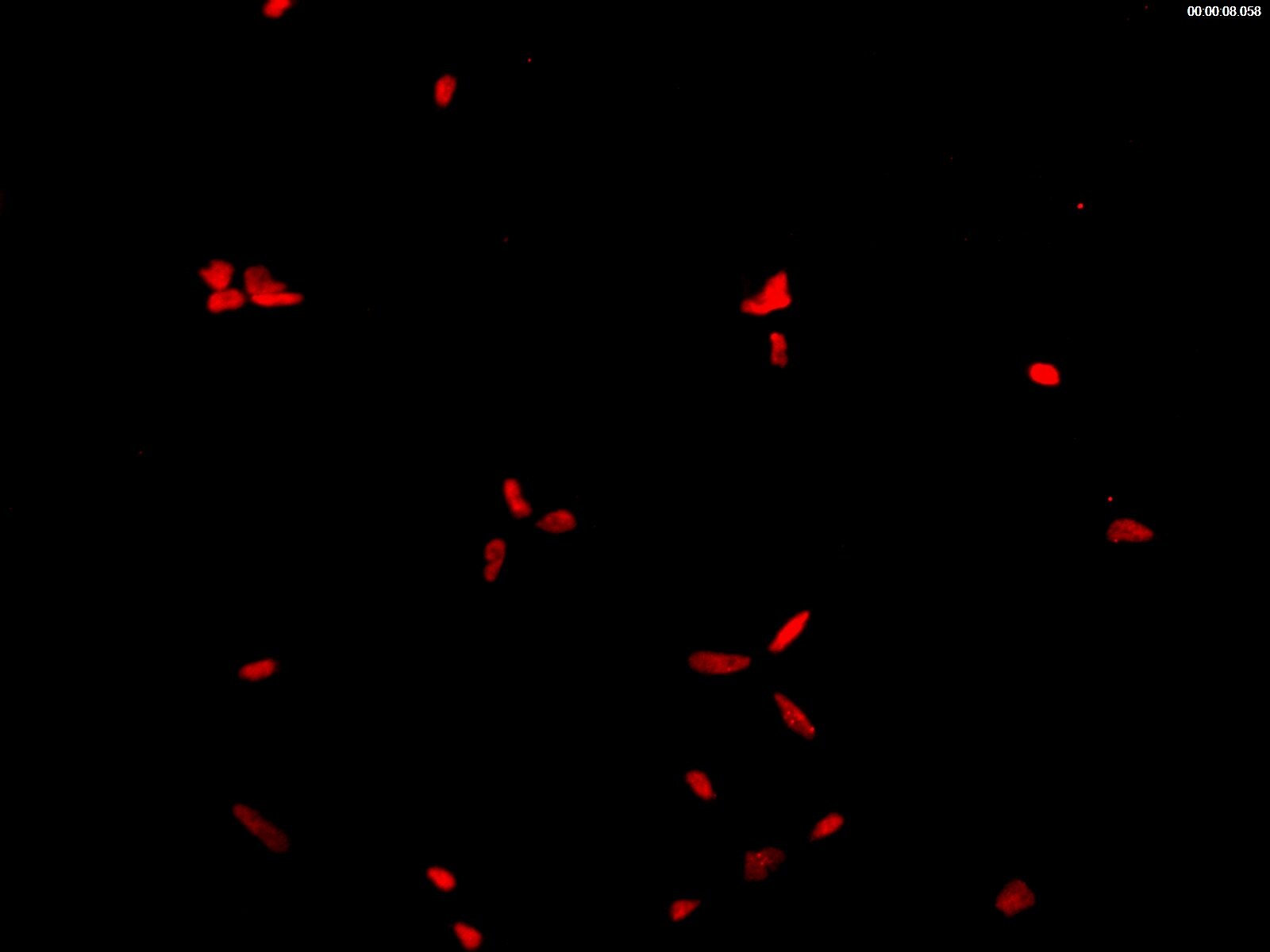
-
Application: Immunocytochemistry/ImmunofluorescenceSample Tested: human neural stem cellsSpecies: HumanVerified Customer | Posted 08/31/2020Human neural stem cells, MAB2944 used at a dilution of 1/200

There are no reviews that match your criteria.
Protocols
Find general support by application which include: protocols, troubleshooting, illustrated assays, videos and webinars.
- 7-Amino Actinomycin D (7-AAD) Cell Viability Flow Cytometry Protocol
- Appropriate Fixation of IHC/ICC Samples
- Cellular Response to Hypoxia Protocols
- ClariTSA™ Fluorophore Kits
- Detection & Visualization of Antibody Binding
- Extracellular Membrane Flow Cytometry Protocol
- Flow Cytometry Protocol for Cell Surface Markers
- Flow Cytometry Protocol for Staining Membrane Associated Proteins
- Flow Cytometry Staining Protocols
- Flow Cytometry Troubleshooting Guide
- ICC Cell Smear Protocol for Suspension Cells
- ICC Immunocytochemistry Protocol Videos
- ICC for Adherent Cells
- Immunocytochemistry (ICC) Protocol
- Immunocytochemistry Troubleshooting
- Immunofluorescence of Organoids Embedded in Cultrex Basement Membrane Extract
- Immunohistochemistry (IHC) and Immunocytochemistry (ICC) Protocols
- Intracellular Flow Cytometry Protocol Using Alcohol (Methanol)
- Intracellular Flow Cytometry Protocol Using Detergents
- Intracellular Nuclear Staining Flow Cytometry Protocol Using Detergents
- Intracellular Staining Flow Cytometry Protocol Using Alcohol Permeabilization
- Intracellular Staining Flow Cytometry Protocol Using Detergents to Permeabilize Cells
- Preparing Samples for IHC/ICC Experiments
- Preventing Non-Specific Staining (Non-Specific Binding)
- Primary Antibody Selection & Optimization
- Propidium Iodide Cell Viability Flow Cytometry Protocol
- Protocol for Liperfluo
- Protocol for VisUCyte™ HRP Polymer Detection Reagent
- Protocol for the Characterization of Human Th22 Cells
- Protocol for the Characterization of Human Th9 Cells
- Protocol for the Fluorescent ICC Staining of Cell Smears - Graphic
- Protocol for the Fluorescent ICC Staining of Cultured Cells on Coverslips - Graphic
- Protocol for the Preparation and Fluorescent ICC Staining of Cells on Coverslips
- Protocol for the Preparation and Fluorescent ICC Staining of Non-adherent Cells
- Protocol for the Preparation and Fluorescent ICC Staining of Stem Cells on Coverslips
- Protocol for the Preparation of a Cell Smear for Non-adherent Cell ICC - Graphic
- Protocol: Annexin V and PI Staining by Flow Cytometry
- Protocol: Annexin V and PI Staining for Apoptosis by Flow Cytometry
- R&D Systems Quality Control Western Blot Protocol
- TUNEL and Active Caspase-3 Detection by IHC/ICC Protocol
- The Importance of IHC/ICC Controls
- Troubleshooting Guide: Fluorokine Flow Cytometry Kits
- Troubleshooting Guide: Western Blot Figures
- Western Blot Conditions
- Western Blot Protocol
- Western Blot Protocol for Cell Lysates
- Western Blot Troubleshooting
- Western Blot Troubleshooting Guide
- View all Protocols, Troubleshooting, Illustrated assays and Webinars
Associated Pathways
