
Cathepsin C is a cysteine protease of the papain family (1). Cathepsin C sequentially removes dipeptides from the free N-termini of proteins and peptides. It has broad specificity except that it does not cleave a basic amino acid (Arg or Lys) in the N-terminal position or Pro on either side of the scissle bond. It requires halide ions for activity. The pro form contains a pro peptide and a catalytic region, which can be further processed into heavy/ alpha and light/ beta chains that are linked by a disulfide bond. It is broadly distributed. Cathepsin C plays a role in the lysosomal degradation. It also functions as a key enzyme in the activation of granule serine proteases in cytotoxic T lymphocytes and natural killer cells (granzymes A and B), mast cells (tryptase and chymase), and neutrophils (Cathepsin G and elastase) by removing their N-terminal activation dipeptides (2).

Scientific images may be resized, cropped, or adjusted for brightness or contrast for presentation purposes. These updates are limited to presentation and do not affect the underlying scientific interpretation of the data. Where available, additional source data may be provided upon request.
Key Product Details
Validated by
Species Reactivity
Validated:
Cited:
Applications
Validated:
Cited:
Label
Antibody Source
Product Specifications
Immunogen
Asp25-Leu462
Accession # P97821
Specificity
Clonality
Host
Isotype
Scientific Data Images for Cathepsin C/DPPI Antibody
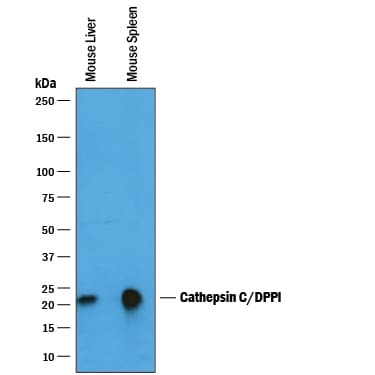
Detection of Mouse Cathepsin C/DPPI by Western Blot.
Western blot shows lysates of mouse liver tissue and mouse spleen tissue. PVDF membrane was probed with 0.25 µg/mL of Goat Anti-Mouse Cathepsin C/DPPI Antigen Affinity-purified Polyclonal Antibody (Catalog # AF1034) followed by HRP-conjugated Anti-Goat IgG Secondary Antibody (Catalog # HAF019). A specific band was detected for Cathepsin C/DPPI at approximately 20-25 kDa (as indicated). This experiment was conducted under reducing conditions and using Immunoblot Buffer Group 1.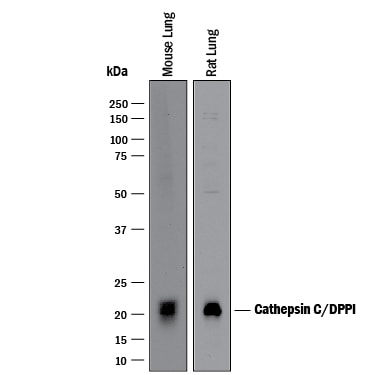
Detection of Mouse and Rat Cathepsin C/DPPI by Western Blot.
Western blot shows lysates of mouse lung tissue and rat lung tissue. PVDF membrane was probed with 1 µg/mL of Goat Anti-Mouse Cathepsin C/DPPI Antigen Affinity-purified Polyclonal Antibody (Catalog # AF1034) followed by HRP-conjugated Anti-Goat IgG Secondary Antibody (Catalog # HAF017). A specific band was detected for Cathepsin C/DPPI at approximately 20-22 kDa (as indicated). This experiment was conducted under reducing conditions and using Immunoblot Buffer Group 1.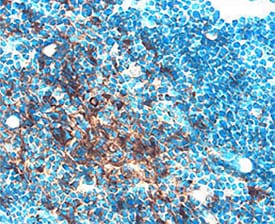
Cathepsin C/DPPI in Mouse Thymus.
Cathepsin C/DPPI was detected in perfusion fixed frozen sections of mouse thymus using Goat Anti-Mouse Cathepsin C/ DPPI Antigen Affinity-purified Polyclonal Antibody (Catalog # AF1034) at 15 µg/mL overnight at 4 °C. Tissue was stained using the Anti-Goat HRP-DAB Cell & Tissue Staining Kit (brown; Catalog # CTS008) and counter-stained with hematoxylin (blue). Specific staining was localized to thymocytes. View our protocol for Chromogenic IHC Staining of Frozen Tissue Sections.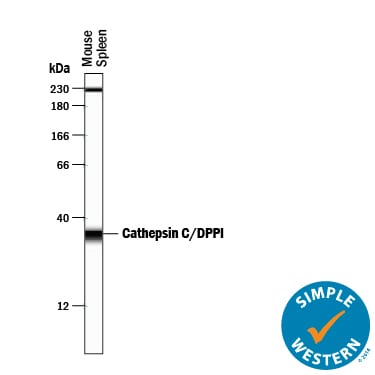
Detection of Mouse Cathepsin C/DPPI by Simple WesternTM.
Simple Western lane view shows lysates of mouse spleen tissue, loaded at 0.2 mg/mL. A specific band was detected for Cathepsin C/DPPI at approximately 35 kDa (as indicated) using 2.5 µg/mL of Goat Anti-Mouse Cathepsin C/DPPI Antigen Affinity-purified Polyclonal Antibody (Catalog # AF1034) followed by 1:50 dilution of HRP-conjugated Anti-Goat IgG Secondary Antibody (Catalog # HAF109). This experiment was conducted under reducing conditions and using the 12-230 kDa separation system. Non-specific interaction with the 230 kDa Simple Western standard may be seen with this antibody.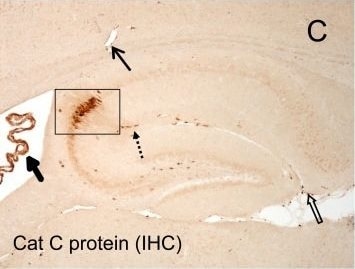
Detection of Mouse Cathepsin C/DPPI by Immunohistochemistry
The expression pattern of Cat C mRNA and protein in the control brain. ISH (A and B) and IHC (C and D) staining were performed in control mice. The rectangles in A and C which included the CA2 area were enlarged into B and D, respectively. Cat C gene was predominantly expressed in the CA2 neurons of the hippocampus (B and D), interneurons (dotted arrow in C), choroid plexus (thick solid arrows in A and C), leptomeninges (open arrow in C) and vascular cells (thin solid arrow in C). Scale bar = 100 μm (A, C); 20 μM (B, D). n = 5 per condition. Cat C, cathepsin C; IHC, immunohistochemistry; ISH, in situ hybridization. Image collected and cropped by CiteAb from the following open publication (https://pubmed.ncbi.nlm.nih.gov/22607609), licensed under a CC-BY license. Not internally tested by R&D Systems.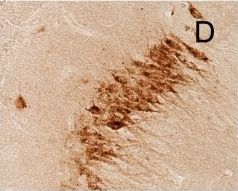
Detection of Mouse Cathepsin C/DPPI by Immunohistochemistry
The expression pattern of Cat C mRNA and protein in the control brain. ISH (A and B) and IHC (C and D) staining were performed in control mice. The rectangles in A and C which included the CA2 area were enlarged into B and D, respectively. Cat C gene was predominantly expressed in the CA2 neurons of the hippocampus (B and D), interneurons (dotted arrow in C), choroid plexus (thick solid arrows in A and C), leptomeninges (open arrow in C) and vascular cells (thin solid arrow in C). Scale bar = 100 μm (A, C); 20 μM (B, D). n = 5 per condition. Cat C, cathepsin C; IHC, immunohistochemistry; ISH, in situ hybridization. Image collected and cropped by CiteAb from the following open publication (https://pubmed.ncbi.nlm.nih.gov/22607609), licensed under a CC-BY license. Not internally tested by R&D Systems.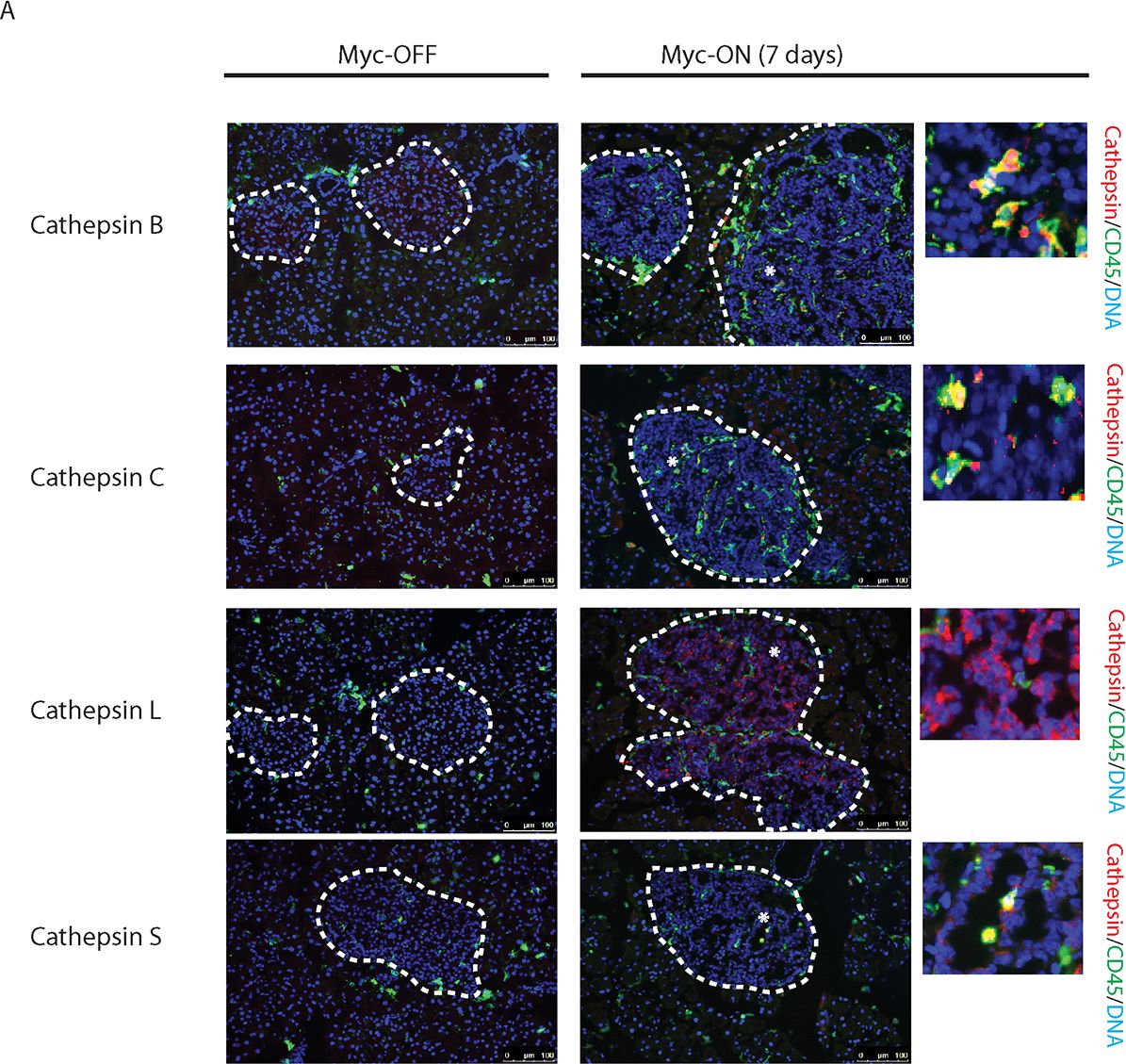
Detection of Mouse Cathepsin C/DPPI by Immunocytochemistry/ Immunofluorescence
Myc induces cathepsin L expression in beta-cells of pancreatic Islets.(A) Immunohistochemical analyses for CTS B, C, L or S expression (all in red) in combination with staining for the pan-leukocyte marker CD45 (green) in pancreatic islet tumors from the MycERTAM;Bcl-xL animals. Pancreata were harvested from the MycERTAM;Bcl-xL mice treated for 7 d with TAM (Myc-On, 7 days) or control vehicle in place of TAM (Myc-OFF). The islet area is indicated by dotted line. The asterisks indicate the area of tumor represented in the insets. The panels are representatives of at least three animals assayed at each data point, all immunohistochemical analyses were done in duplicate; eight randomized fields per analysis were examined. Scale bars, 100μm. (B) Immunohistochemical analysis for cathepsin L expression in beta-cells of pancreatic islets from MycERTAM;Bcl-xL animals identified by insulin expression. Pancreata were collected from the animals described above. Scale bars represent 25μm. The panels are representatives of three animals assayed at each data point, all immunohistochemical analyses were done in duplicate; ten randomized fields per analysis were examined. Image collected and cropped by CiteAb from the following open publication (https://dx.plos.org/10.1371/journal.pone.0120348), licensed under a CC-BY license. Not internally tested by R&D Systems.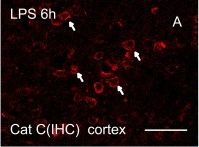
Detection of Mouse Cathepsin C/DPPI by Immunocytochemistry/ Immunofluorescence
The expression of Cat C was induced in the brain at six hours and twenty-four hours following LPS injection. IHC double staining showed that the Cat C expression was induced in cortical neurons at six hours after LPS injection (A to C). After LPS injection for twenty-four hours, the expression of Cat C mRNA and protein was induced further and distributed throughout the entire brain, such as the cortex (D and G), hippocampus (E and H) and SN (F and I). Double staining of Iba-1 (IHC) and Cat C (ISH) showed that Cat C expression was induced in microglial cells at twenty-four hours after LPS injection (J and K). Scale bar = 20 μm (A to C, J and K); 50 μm (D to I). n = 5 per condition. Cat C, cathepsin C; Iba-1, ionized calcium binding adaptor molecule-1; IHC, immunohistochemistry; ISH, in situ hybridization; LPS, lipopolysaccharide. SN, substantia nigra. Image collected and cropped by CiteAb from the following open publication (https://pubmed.ncbi.nlm.nih.gov/22607609), licensed under a CC-BY license. Not internally tested by R&D Systems.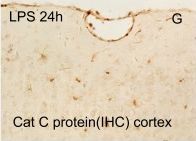
Detection of Mouse Cathepsin C/DPPI by Immunohistochemistry
The expression of Cat C was induced in the brain at six hours and twenty-four hours following LPS injection. IHC double staining showed that the Cat C expression was induced in cortical neurons at six hours after LPS injection (A to C). After LPS injection for twenty-four hours, the expression of Cat C mRNA and protein was induced further and distributed throughout the entire brain, such as the cortex (D and G), hippocampus (E and H) and SN (F and I). Double staining of Iba-1 (IHC) and Cat C (ISH) showed that Cat C expression was induced in microglial cells at twenty-four hours after LPS injection (J and K). Scale bar = 20 μm (A to C, J and K); 50 μm (D to I). n = 5 per condition. Cat C, cathepsin C; Iba-1, ionized calcium binding adaptor molecule-1; IHC, immunohistochemistry; ISH, in situ hybridization; LPS, lipopolysaccharide. SN, substantia nigra. Image collected and cropped by CiteAb from the following open publication (https://pubmed.ncbi.nlm.nih.gov/22607609), licensed under a CC-BY license. Not internally tested by R&D Systems.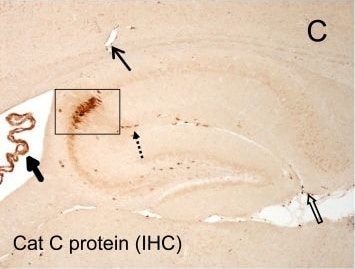
Detection of Mouse Cathepsin C/DPPI by Immunohistochemistry
The expression pattern of Cat C mRNA and protein in the control brain. ISH (A and B) and IHC (C and D) staining were performed in control mice. The rectangles in A and C which included the CA2 area were enlarged into B and D, respectively. Cat C gene was predominantly expressed in the CA2 neurons of the hippocampus (B and D), interneurons (dotted arrow in C), choroid plexus (thick solid arrows in A and C), leptomeninges (open arrow in C) and vascular cells (thin solid arrow in C). Scale bar = 100 μm (A, C); 20 μM (B, D). n = 5 per condition. Cat C, cathepsin C; IHC, immunohistochemistry; ISH, in situ hybridization. Image collected and cropped by CiteAb from the following open publication (https://pubmed.ncbi.nlm.nih.gov/22607609), licensed under a CC-BY license. Not internally tested by R&D Systems.Applications for Cathepsin C/DPPI Antibody
Immunohistochemistry
Sample: Perfusion fixed frozen section of mouse thymus
Simple Western
Sample: Mouse spleen tissue
Western Blot
Sample: Mouse liver tissue, mouse spleen tissue, mouse lung tissue, and rat lung tissue
Reviewed Applications
Read 1 review rated 3 using AF1034 in the following applications:
Formulation, Preparation, and Storage
Purification
Reconstitution
Reconstitute at 0.2 mg/mL in sterile PBS. For liquid material, refer to CoA for concentration.
Formulation
Shipping
Stability & Storage
- 12 months from date of receipt, -20 to -70 °C as supplied.
- 1 month, 2 to 8 °C under sterile conditions after reconstitution.
- 6 months, -20 to -70 °C under sterile conditions after reconstitution.
Calculators
Background: Cathepsin C/DPPI
References
- Turk, B. et al. (2004) in Handbook of Proteolytic Enzymes. Barrett, et al. eds. p. 1192, Academic Press, San Diego.
- Dahl, S.W. et al. (2001) Biochemistry 40:1671.
Alternate Names
Gene Symbol
UniProt
Additional Cathepsin C/DPPI Products
Product Documents for Cathepsin C/DPPI Antibody
Certificate of Analysis
To download a Certificate of Analysis, please enter a lot or batch number in the search box below.
Note: Certificate of Analysis not available for kit components.
Product Specific Notices for Cathepsin C/DPPI Antibody
For research use only
Related Research Areas
Citations for Cathepsin C/DPPI Antibody
 Powered by Bioz
Customer Reviews for Cathepsin C/DPPI Antibody (1)
Have you used Cathepsin C/DPPI Antibody?
Submit a review and receive an Amazon gift card!
$25/€18/£15/$25CAN/¥2500 for a review with an image
$10/€7/£6/$10CAN/¥1110 for a review without an image
Submit a review
-
Application: ELISASample Tested: Peritoneal resident macrophagesSpecies: MouseVerified Customer | Posted 09/27/2017
There are no reviews that match your criteria.
Protocols
Find general support by application which include: protocols, troubleshooting, illustrated assays, videos and webinars.
- Antigen Retrieval Protocol (PIER)
- Antigen Retrieval for Frozen Sections Protocol
- Appropriate Fixation of IHC/ICC Samples
- Cellular Response to Hypoxia Protocols
- Chromogenic IHC Staining of Formalin-Fixed Paraffin-Embedded (FFPE) Tissue Protocol
- Chromogenic Immunohistochemistry Staining of Frozen Tissue
- ClariTSA™ Fluorophore Kits
- Detection & Visualization of Antibody Binding
- Fluorescent IHC Staining of Frozen Tissue Protocol
- Graphic Protocol for Heat-induced Epitope Retrieval
- Graphic Protocol for the Preparation and Fluorescent IHC Staining of Frozen Tissue Sections
- Graphic Protocol for the Preparation and Fluorescent IHC Staining of Paraffin-embedded Tissue Sections
- Graphic Protocol for the Preparation of Gelatin-coated Slides for Histological Tissue Sections
- IHC Sample Preparation (Frozen sections vs Paraffin)
- Immunofluorescent IHC Staining of Formalin-Fixed Paraffin-Embedded (FFPE) Tissue Protocol
- Immunohistochemistry (IHC) and Immunocytochemistry (ICC) Protocols
- Immunohistochemistry Frozen Troubleshooting
- Immunohistochemistry Paraffin Troubleshooting
- Preparing Samples for IHC/ICC Experiments
- Preventing Non-Specific Staining (Non-Specific Binding)
- Primary Antibody Selection & Optimization
- Protocol for Heat-Induced Epitope Retrieval (HIER)
- Protocol for Making a 4% Formaldehyde Solution in PBS
- Protocol for VisUCyte™ HRP Polymer Detection Reagent
- Protocol for the Preparation & Fixation of Cells on Coverslips
- Protocol for the Preparation and Chromogenic IHC Staining of Frozen Tissue Sections
- Protocol for the Preparation and Chromogenic IHC Staining of Frozen Tissue Sections - Graphic
- Protocol for the Preparation and Chromogenic IHC Staining of Paraffin-embedded Tissue Sections
- Protocol for the Preparation and Chromogenic IHC Staining of Paraffin-embedded Tissue Sections - Graphic
- Protocol for the Preparation and Fluorescent IHC Staining of Frozen Tissue Sections
- Protocol for the Preparation and Fluorescent IHC Staining of Paraffin-embedded Tissue Sections
- Protocol for the Preparation of Gelatin-coated Slides for Histological Tissue Sections
- R&D Systems Quality Control Western Blot Protocol
- TUNEL and Active Caspase-3 Detection by IHC/ICC Protocol
- The Importance of IHC/ICC Controls
- Troubleshooting Guide: Immunohistochemistry
- Troubleshooting Guide: Western Blot Figures
- Western Blot Conditions
- Western Blot Protocol
- Western Blot Protocol for Cell Lysates
- Western Blot Troubleshooting
- Western Blot Troubleshooting Guide
- View all Protocols, Troubleshooting, Illustrated assays and Webinars