
Human BMP-9, also known as growth and differentiation factor 2 (GDF-2), is a member of the BMP subgroup of the TGF-beta superfamily proteins that signal through heterodimeric complexes composed of type I and type II BMP receptors. BMP-9 regulates the development and function of a variety of embryonal and adult tissues (1, 2). The human BMP-9 cDNA encodes a 429 amino acid (aa) precursor that includes a 22 aa signal sequence, a 298 aa propeptide, and a 111 aa mature protein (3). Unlike with other BMP family proteins, the propeptide does not interfere with the biological activity of BMP-9 and remains associated with the mature peptide after proteolytic cleavage (4). Human and mouse BMP-9 share 96% aa sequence identity. Within the mature protein, human BMP-9 shares 64% aa sequence identity with human BMP-10 and less than 50% aa sequence identity with other BMPs. BMP-9 is expressed by non-parenchymal cells in the liver, (5, 6) where it promotes lipid metabolism and inhibits glucose production (7). BMP-9 exerts a prolonged hypoglycemic effect which may be due to an enhancement of insulin release (7). BMP-9 interacts with a high affinity specific heteromeric receptor expressed on liver endothelial cells that has been identified as ALK-1 (4-6). In the embryonal CNS, BMP-9 functions in the development and maintenance of the cholinergic neuronal phenotype (8-10). BMP-9 also induces the differentiation of mesenchymal stem cells into the chondrogenic lineage (11, 12). At low concentrations, BMP-9 is a proliferative factor for hematopoietic progenitor cells, but at higher concentrations, it enhances TGF-beta 1 production and inhibits hematopoietic progenitor colony formation (13).


Scientific images may be resized, cropped, or adjusted for brightness or contrast for presentation purposes. These updates are limited to presentation and do not affect the underlying scientific interpretation of the data. Where available, additional source data may be provided upon request.
Key Product Details
Species Reactivity
Validated:
Cited:
Applications
Validated:
Cited:
Label
Antibody Source
Product Specifications
Immunogen
Ser320-Arg429
Accession # Q9UK05
Specificity
Clonality
Host
Isotype
Endotoxin Level
Scientific Data Images for BMP-9 Antibody (360107)
Alkaline Phosphatase Production Induced by BMP‑9 and Neutralization by Human BMP‑9 Antibody.
Recombinant Human BMP-9 (Catalog # 3209-BP) induces alkaline phosphatase production in the ATDC5 mouse chondrogenic cell line in a dose-dependent manner (orange line). Alkaline phosphatase production elicited by Recombinant Human BMP-9 (5 ng/mL) is neutralized (green line) by increasing concentrations of Mouse Anti-Human/Mouse/Primate BMP-9 Monoclonal Antibody (Catalog # MAB3209). The ND50 is typically 0.01-0.04 µg/mL.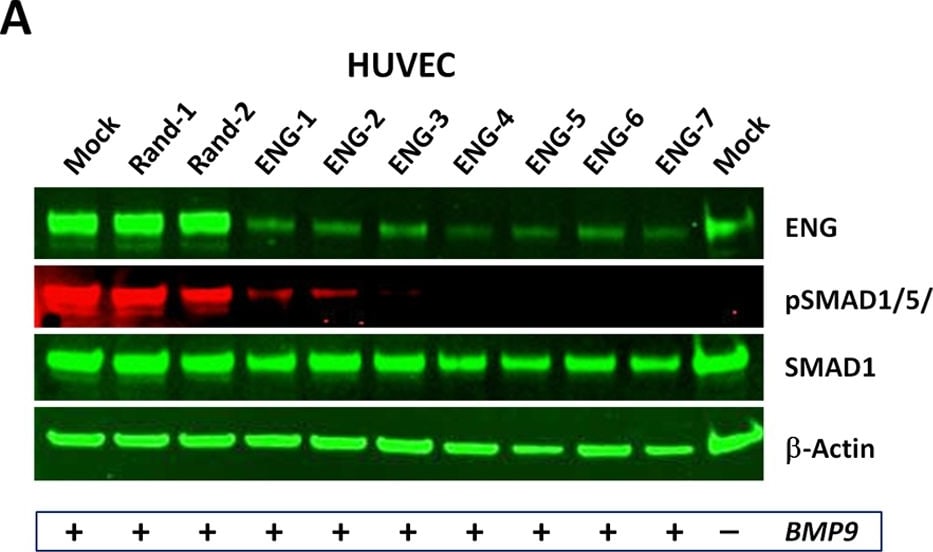
Detection of BMP-9 by Western Blot
ENG is required for BMP9-mediated SMAD1/5/8 phosphorylation in endothelial cells.A) HUVECs were reversed-transfected in a 96-well plate with Mock, Random or ENG siRNAs for 48 hours then serum-starved for 3 hours prior to stimulation with BMP9 (0.1 ng/ml) (+) or PBS (−). Levels of ENG, pSMAD1/5/8, SMAD1 and beta -Actin in the total cell extracts were measured by western blotting. (B–D) ECs were dispensed in each well of a 96-well plate (HUVEC, HPAEC, HAEC –2500 cells/well, MS1–1250 cells/well) in serum free media. Cells were incubated with antibodies at various concentrations for 1 hour and stimulated with BMP9 (0.1 ng/ml) (+) or PBS (−) for 30 min prior to lysis. Levels of pSMAD1 normalized for levels of total SMAD1 were monitored using a SMAD1/pSMAD1 MSD assay. The following antibodies were used: rIgG2a (rat IgG2a isotype control), M999 (rat IgG2a anti-human ENG), hIgG2 (human IgG2 isotype control), cSN6j (human IgG2 anti-human ENG), Ab3209 (mouse IgG2b anti-human BMP9), M1041-43 (rat IgG2a anti-mouse ENG). * Antibody concentrations of Ab3209 used were 10 times lower than other antibodies. Results are the mean +/− standard deviation of technical triplicates (** = P Value <10E-04; *** = P value <10E-03). Image collected and cropped by CiteAb from the following open publication (https://dx.plos.org/10.1371/journal.pone.0050920), licensed under a CC-BY license. Not internally tested by R&D Systems.
Human BMP-9 ELISA Standard Curve
Recombinant Human BMP‑9 (Catalog # 3209-BP) was serially diluted and captured by Mouse Anti-Human/Mouse/Primate BMP‑9 Monoclonal Antibody (Catalog # MAB3209) coated on a Clear Polystyrene Microplate (Catalog # DY990). Goat Anti-Human/Mouse BMP‑9 Antigen Affinity-purified Polyclonal Antibody (Catalog # AF3209) was biotinylated and incubated with the protein captured on the plate. Detection of the standard curve was achieved by incubating Streptavidin-HRP (Catalog # DY998)Applications for BMP-9 Antibody (360107)
Neutralization
Human/Primate BMP-9 Sandwich Immunoassay
Reviewed Applications
Read 1 review rated 5 using MAB3209 in the following applications:
Formulation, Preparation, and Storage
Purification
Reconstitution
Reconstitute at 0.5 mg/mL in sterile PBS. For liquid material, refer to CoA for concentration.
Formulation
Shipping
Stability & Storage
- 12 months from date of receipt, -20 to -70 °C as supplied.
- 1 month, 2 to 8 °C under sterile conditions after reconstitution.
- 6 months, -20 to -70 °C under sterile conditions after reconstitution.
Calculators
Background: BMP-9
References
- Chen, D. et al. (2004) Growth Factors 22:233.
- Miyazono, K. et al. (2005) Cytokine Growth Factor Rev. 16:251.
- Celeste, A.J. et al. (1994) J. Bone Miner. Res. 9:S136.
- Brown, M.A. et al. (2005) J. Biol. Chem. 280:25111.
- Song, J.J. et al. (1995) Endocrinology 136:4293.
- Miller, A.F. et al. (2000) J. Biol. Chem. 275:17937.
- Chen, C. et al. (2003) Nat. Biotechnol. 21:294.
- Lopez-Coviella, I. et al. (2000) Science 289:313.
- Lopez-Coviella, I. et al. (2005) Proc. Natl. Acad. Sci. USA 102:6984.
- Lopez-Coviella, I. et al. (2002) J. Physiol. Paris 96:53.
- Majumdar, M.K. et al. (2001) J. Cell. Physiol. 189:275.
- Hills, R.L. et al. (2005) J. Orthoped. Res. 23:611.
- Ploemacher, R.E. et al. (1999) Leukemia 13:428.
Long Name
Alternate Names
Gene Symbol
UniProt
Additional BMP-9 Products
Product Documents for BMP-9 Antibody (360107)
Certificate of Analysis
To download a Certificate of Analysis, please enter a lot or batch number in the search box below.
Note: Certificate of Analysis not available for kit components.
Product Specific Notices for BMP-9 Antibody (360107)
For research use only
Related Research Areas
Citations for BMP-9 Antibody (360107)
 Powered by Bioz
Customer Reviews for BMP-9 Antibody (360107) (1)
Have you used BMP-9 Antibody (360107)?
Submit a review and receive an Amazon gift card!
$25/€18/£15/$25CAN/¥2500 for a review with an image
$10/€7/£6/$10CAN/¥1110 for a review without an image
Submit a review
Customer Images
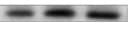
-
Application: Western BlotSample Tested: Liver tissueSpecies: MouseVerified Customer | Posted 09/27/2021

There are no reviews that match your criteria.