
PDGF is a major serum mitogen that can exist as a homo or hetero-dimeric protein consisting of disulfide-linked PDGF-A and PDGF-B chains. The PDGF-AA, PDGF‑BB, and PDGF‑AB isoforms have been shown to bind to two distinct cell surface PDGF receptors with different affinities. Where as PDGF R alpha binds all three PDGF isoforms with high affinity, PDGF R beta binds PDGF-BB only with high-affinity. Both PDGF R alpha and PDGF R beta are members of the class III subfamily of receptor tyrosine kinases (RTK) that also includes the receptors for M-CSF, SCF, and Flt-3 ligand. All class III RTKs are characterized by the presence of five immunoglobulin-like domains in their extracellular region and a split kinase domain in their intracellular region. PDGF binding induces receptor homo-and hetero-dimerization and signal transduction. The expression of the alpha and beta receptors is independently regulated in various cell types. Recombinant soluble PDGF R beta binds PDGF with high affinity and is potent PDGF antagonist.

Scientific images may be resized, cropped, or adjusted for brightness or contrast for presentation purposes. These updates are limited to presentation and do not affect the underlying scientific interpretation of the data. Where available, additional source data may be provided upon request.
Key Product Details
Species Reactivity
Validated:
Cited:
Applications
Validated:
Cited:
Label
Antibody Source
Product Specifications
Immunogen
Leu33-Phe530 (Glu241Asp)
Accession # P09619
Specificity
Clonality
Host
Isotype
Endotoxin Level
Scientific Data Images for Human PDGF R beta Antibody
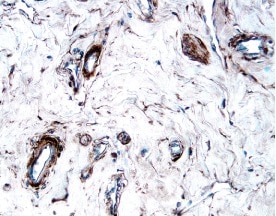
PDGF R beta in Human Breast Cancer Tissue.
PDGF R beta was detected in immersion fixed paraffin-embedded sections of human breast cancer tissue using 15 µg/mL Goat Anti-Human PDGF R beta Antigen Affinity-purified Polyclonal Antibody (Catalog # AF385) overnight at 4 °C. Tissue was stained with the Anti-Goat HRP-DAB Cell & Tissue Staining Kit (brown; CTS008) and counterstained with hematoxylin (blue). View our protocol for Chromogenic IHC Staining of Paraffin-embedded Tissue Sections.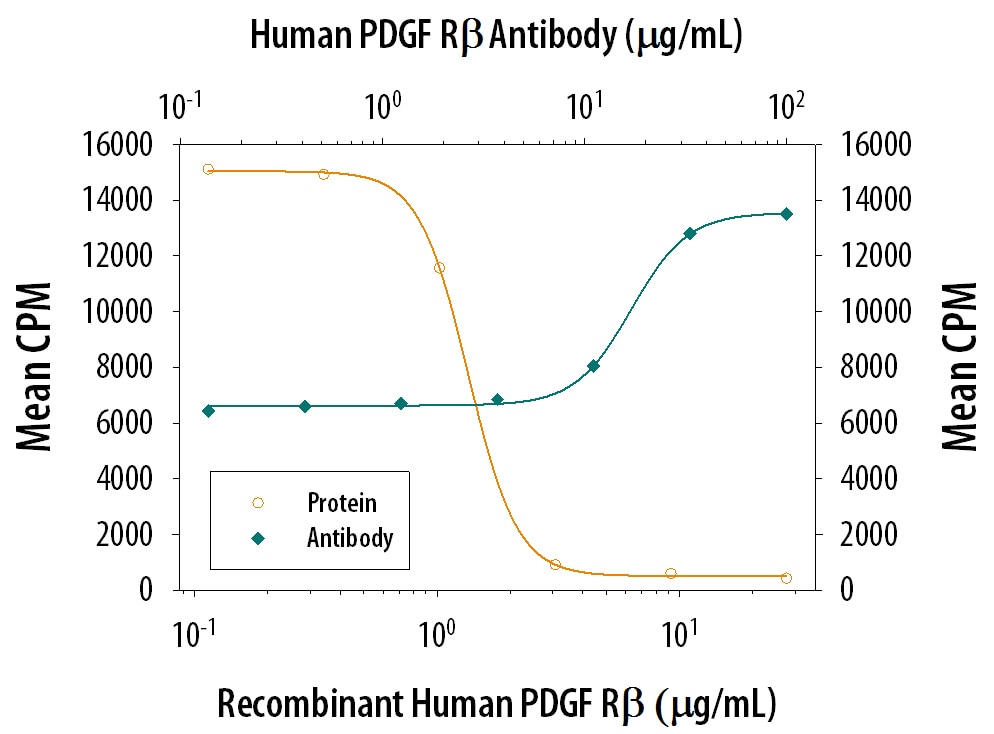
PDGF R beta Inhibition of PDGF-BB-dependent Cell Proliferation and Neutralization by Human PDGF R beta Antibody.
Recombinant Human PDGF R beta Fc Chimera (385-PR) inhibits Recombinant Human PDGF-BB (220-BB) induced proliferation in the NR6R-3T3 mouse fibroblast cell line in a dose-dependent manner (orange line). Inhibition of Recombinant Human PDGF-BB (4 ng/mL) activity elicited by Recombinant Human PDGF R beta Fc Chimera (2 µg/mL) is neutralized (green line) by increasing concentrations of Goat Anti-Human PDGF R beta Antigen Affinity-purified Polyclonal Antibody (Catalog # AF385). The ND50 is typically 10-40 µg/mL.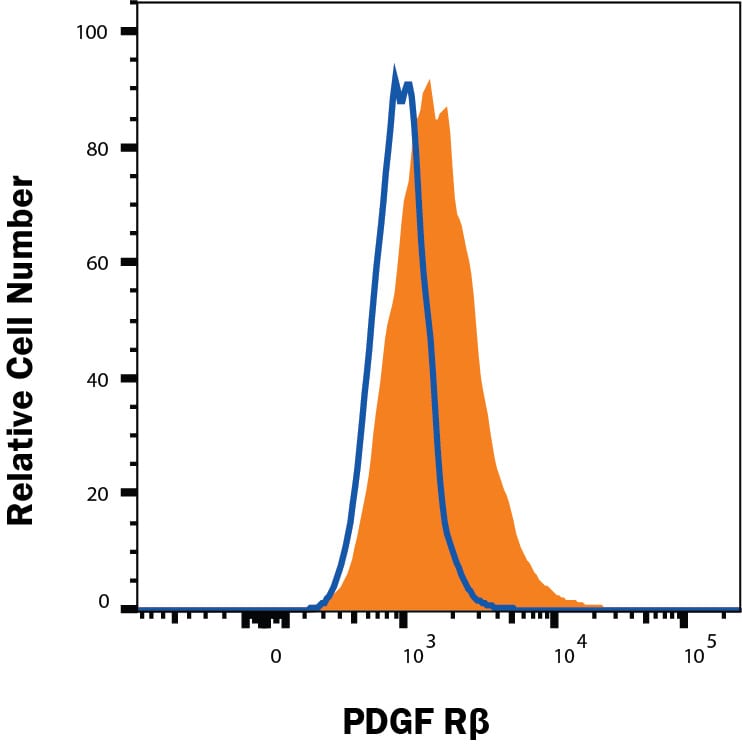
Detection of PDGF R beta in U87MG cells by Flow Cytometry.
U87MG cells were stained with Goat Anti-Human PDGF R beta Antigen Affinity-purified Polyclonal Antibody (Catalog # AF385, filled histogram) or isotype control antibody (Catalog # AB-108-C, open histogram), followed by Phycoerythrin-conjugated Anti-Goat IgG Secondary Antibody (Catalog # F0107). View our protocol for Staining Membrane-associated Proteins.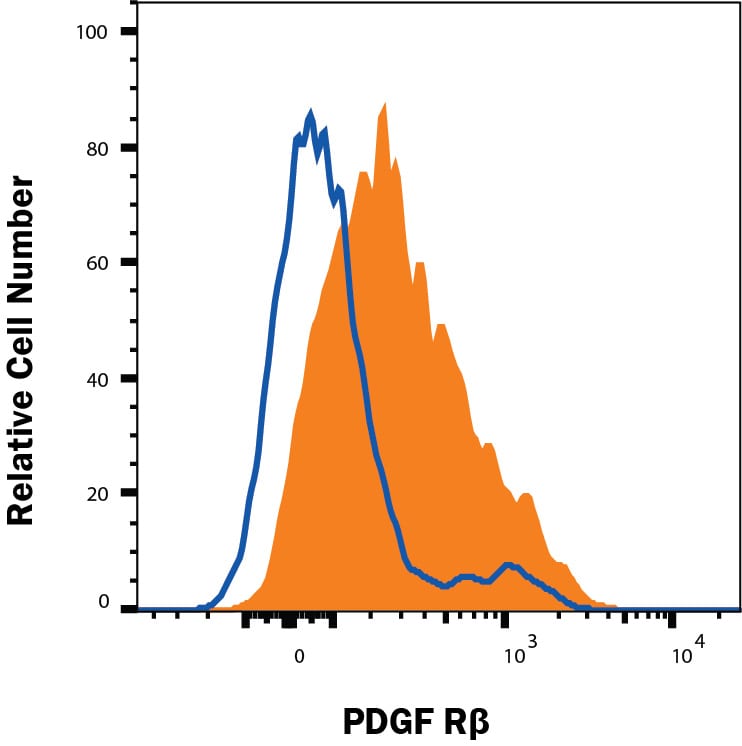
Detection of PDGF R beta in U118MG cells by Flow Cytometry.
U118MG cells were stained with Goat Anti-Human PDGF R beta Antigen Affinity-purified Polyclonal Antibody (Catalog # AF385, filled histogram) or isotype control antibody (Catalog # AB-108-C, open histogram), followed by Phycoerythrin-conjugated Anti-Goat IgG Secondary Antibody (Catalog # F0107). View our protocol for Staining Membrane-associated Proteins.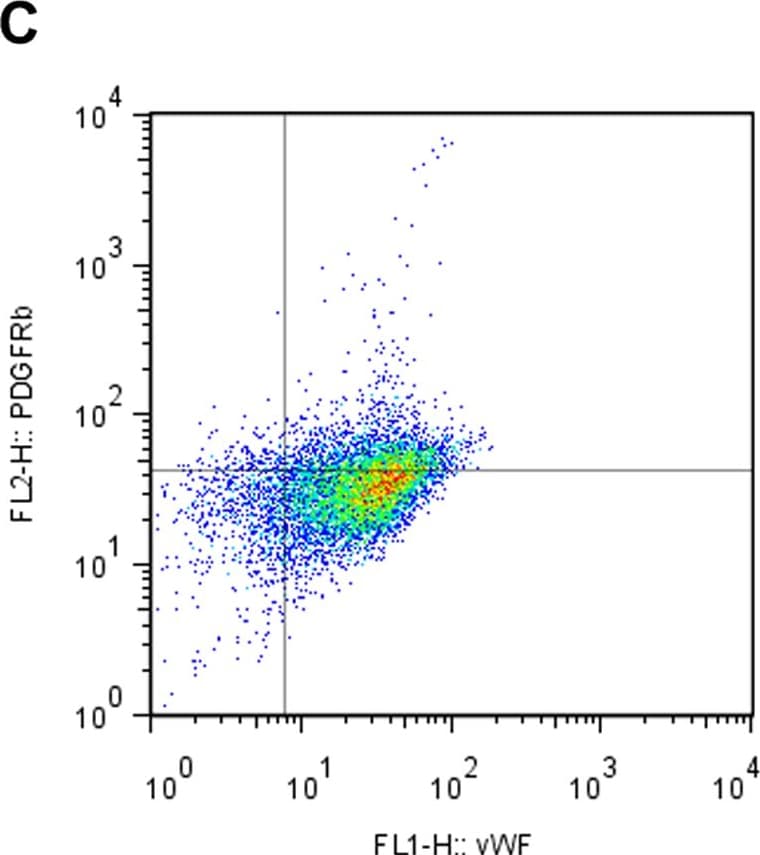
Detection of Human PDGF R beta by Flow Cytometry
Co-expression of EC marker and PDGFR beta after EPC-CM incubation.Co-expression of vWF and PDGFR beta was measured using dual color FACS analysis. HUVEC were kept in control medium containing only 1% FCS or EPC-CM for 24 h before the measurement. HUVEC incubated in control medium showed only a fractional amount of vWF+/PDGFR beta + cells (A). After EPC-CM exposure the proportion of vWF+/PDGFR beta + double positive population was significantly increased, suggesting a strong phenotype shift of endothelial cells towards PDGFR beta + (B). The addition of neutralizing antibody AF385 did not block the upreguation of the PDGFR beta by EPC-CM stimulation (C). However, such enhanced PDGFR beta expression could not be evoked by solely adding 100 ng/ml (D) or 100 pg/ml (E) rhPDGF-BB to the control medium. *, P<0.01 compared to controls. Image collected and cropped by CiteAb from the following publication (https://dx.plos.org/10.1371/journal.pone.0014107), licensed under a CC-BY license. Not internally tested by R&D Systems.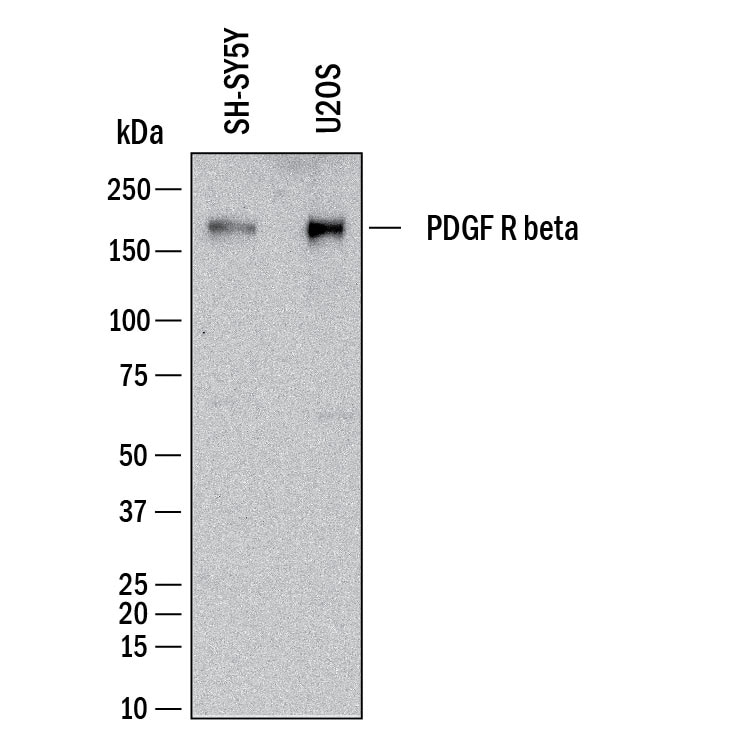
Detection of Human PDGF R beta by Western Blot.
Western Blot shows lysates of SH‑SY5Y human neuroblastoma cell line and U2OS human osteosarcoma cell line. PVDF membrane was probed with 2 µg/ml of Goat Anti-Human PDGF R beta Antigen Affinity-purified Polyclonal Antibody (Catalog # AF385) followed by HRP-conjugated Anti-Goat IgG Secondary Antibody (Catalog # HAF017). A specific band was detected for PDGF R beta at approximately 190 kDa (as indicated). This experiment was conducted under reducing conditions and using Western Blot Buffer Group 1.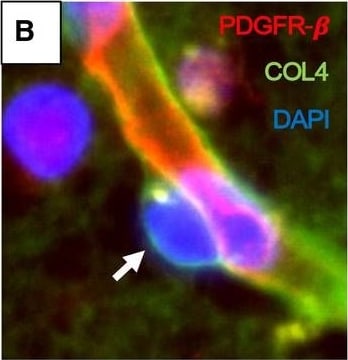
Detection of Mouse PDGF R beta by Immunohistochemistry
Pericyte soma on WM capillaries demonstrated by immunofluorescence. A–F. PDGFR‐ beta (red) and COL4 (green) immunofluorescence staining with nuclei (DAPI) (blue). A,B. Low‐ and high‐power images showing capillary segments (arrowheads) with overlapping PDGFR‐ beta (red), COL4 (green) and DAPI (blue). C. Same vessel segment as B with PDGFR‐ beta (red) and COL4 (green); D. COL4 (green) and DAPI (blue); E. PDGFR‐ beta (red) and DAPI (blue). F. Another capillary segment with PDGFR‐ beta (red), COL4 (green) and DAPI (blue) clearly showing pericyte cell body. G–J. Images taken by a confocal microscope showing pericyte cell bodies (arrows) with nuclear stain (DAPI). Capillaries and pericyte processes are revealed by COL4 and PDGFR‐ beta (red) immunoreactivities. Magnification bars: A = 50 µm, F, J = 10 µm. Image collected and cropped by CiteAb from the following open publication (https://pubmed.ncbi.nlm.nih.gov/32705757), licensed under a CC-BY license. Not internally tested by R&D Systems.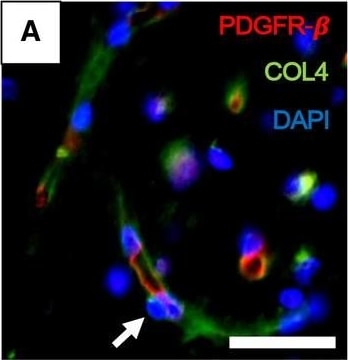
Detection of Mouse PDGF R beta by Immunohistochemistry
Pericyte soma on WM capillaries demonstrated by immunofluorescence. A–F. PDGFR‐ beta (red) and COL4 (green) immunofluorescence staining with nuclei (DAPI) (blue). A,B. Low‐ and high‐power images showing capillary segments (arrowheads) with overlapping PDGFR‐ beta (red), COL4 (green) and DAPI (blue). C. Same vessel segment as B with PDGFR‐ beta (red) and COL4 (green); D. COL4 (green) and DAPI (blue); E. PDGFR‐ beta (red) and DAPI (blue). F. Another capillary segment with PDGFR‐ beta (red), COL4 (green) and DAPI (blue) clearly showing pericyte cell body. G–J. Images taken by a confocal microscope showing pericyte cell bodies (arrows) with nuclear stain (DAPI). Capillaries and pericyte processes are revealed by COL4 and PDGFR‐ beta (red) immunoreactivities. Magnification bars: A = 50 µm, F, J = 10 µm. Image collected and cropped by CiteAb from the following open publication (https://pubmed.ncbi.nlm.nih.gov/32705757), licensed under a CC-BY license. Not internally tested by R&D Systems.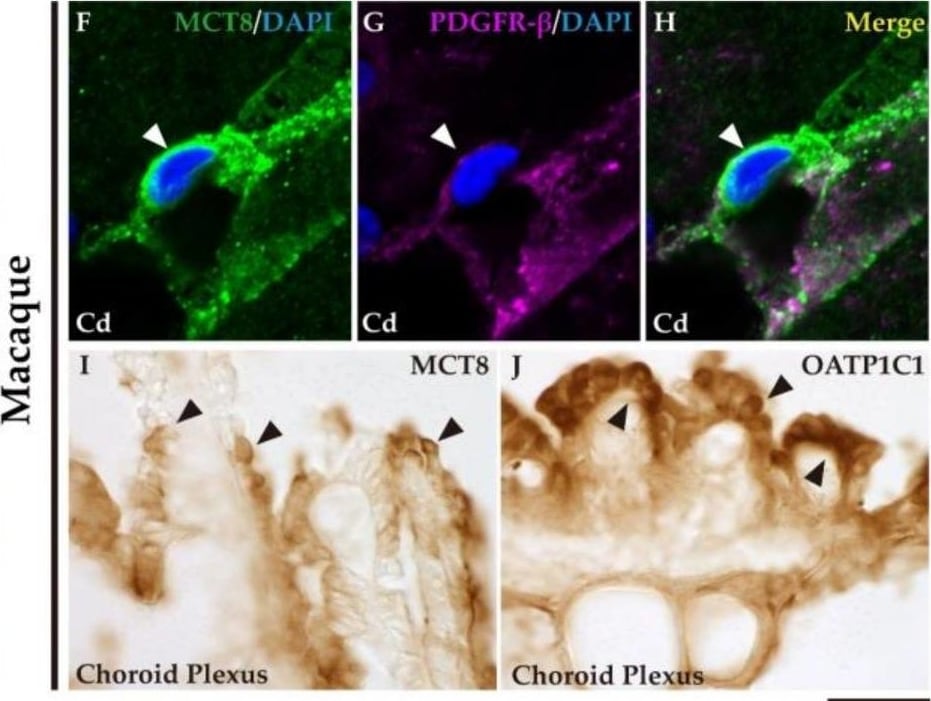
Detection of Rhesus Macaque PDGF R beta by Immunohistochemistry
Expression of MCT8 and OATP1C1 in blood vessels and brain barriers in the human and macaque basal ganglia and adjacent choroid plexus. (A) Representative brightfield photomicrograph shows immunostaining for MCT8 in the human putamen. Note that an MCT8 immunopositive signal is observed along the capillary wall (red arrowhead), fibers (green arrowhead), and “bump-on-a-log” morphology pericytelike cells (white arrowhead). (B–H) Representative confocal microscope compositions from multiple-stained sections for MCT8 (green), the endothelial marker UEA-I (red), and the vascular and pericyte biomarker PDGFR-beta (purple) in human and macaque caudate nucleus. Merged image (E,H) shows the colocalization of all signals. (B–E) Coexpression of MCT8, UEA-I, and PDGFR-beta is observed in a vessel, while coexpression of MCT8 and PDGFR-beta but not UEA-I is observed in a capillary-associated pericyte (white arrowheads) in humans. (F–H) Coexpression of MCT8 and PDGFR-beta in a vessel and pericytelike cells (white arrowheads) in macaques. Counterstaining with DAPI (blue) shows nuclei of all cells. (I,J) Representative brightfield photomicrographs show immunostaining for MCT8 (I) and OATP1C1 (J) in the macaque choroid plexus at the lateral ventricle. Black arrowheads point to ependymocytes. Cd: caudate nucleus, Put: putamen, PDGFR-beta : platelet-derived growth factor receptor-beta, UEA-I: Ulex europaeus agglutinin-I. Scale bar = 10 μm (A–H) and 50 μm (I,J). Image collected and cropped by CiteAb from the following open publication (https://pubmed.ncbi.nlm.nih.gov/37298594), licensed under a CC-BY license. Not internally tested by R&D Systems.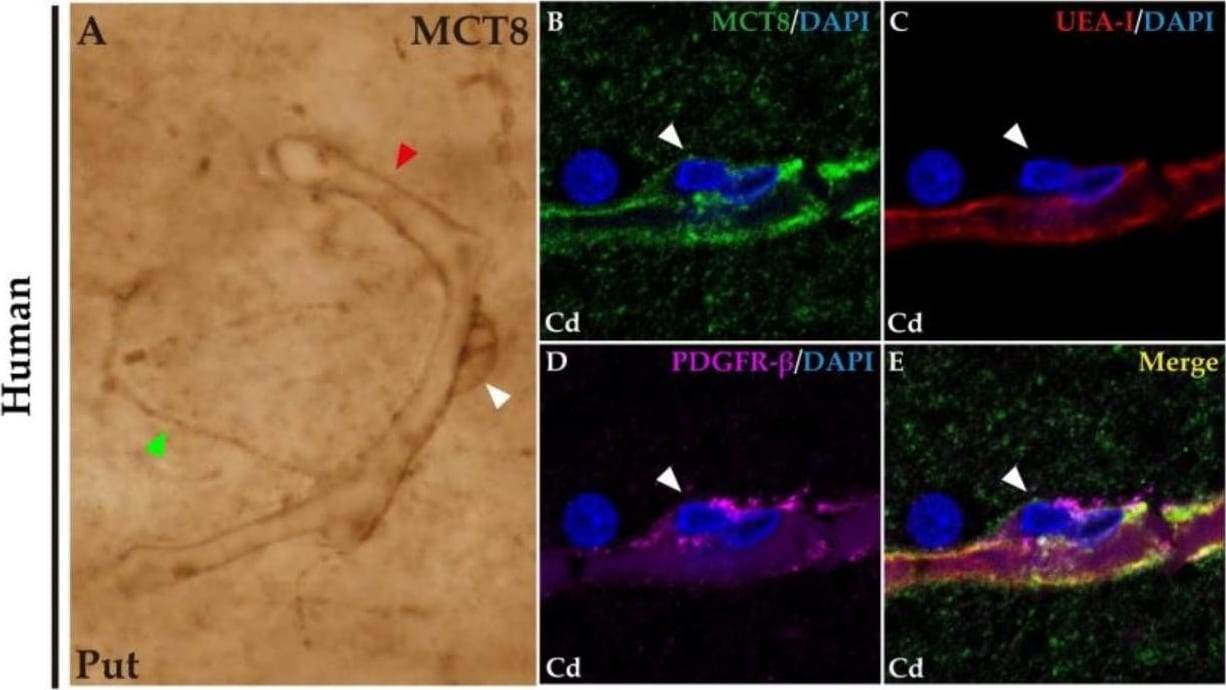
Detection of Human PDGF R beta by Immunohistochemistry
Expression of MCT8 and OATP1C1 in blood vessels and brain barriers in the human and macaque basal ganglia and adjacent choroid plexus. (A) Representative brightfield photomicrograph shows immunostaining for MCT8 in the human putamen. Note that an MCT8 immunopositive signal is observed along the capillary wall (red arrowhead), fibers (green arrowhead), and “bump-on-a-log” morphology pericytelike cells (white arrowhead). (B–H) Representative confocal microscope compositions from multiple-stained sections for MCT8 (green), the endothelial marker UEA-I (red), and the vascular and pericyte biomarker PDGFR-beta (purple) in human and macaque caudate nucleus. Merged image (E,H) shows the colocalization of all signals. (B–E) Coexpression of MCT8, UEA-I, and PDGFR-beta is observed in a vessel, while coexpression of MCT8 and PDGFR-beta but not UEA-I is observed in a capillary-associated pericyte (white arrowheads) in humans. (F–H) Coexpression of MCT8 and PDGFR-beta in a vessel and pericytelike cells (white arrowheads) in macaques. Counterstaining with DAPI (blue) shows nuclei of all cells. (I,J) Representative brightfield photomicrographs show immunostaining for MCT8 (I) and OATP1C1 (J) in the macaque choroid plexus at the lateral ventricle. Black arrowheads point to ependymocytes. Cd: caudate nucleus, Put: putamen, PDGFR-beta : platelet-derived growth factor receptor-beta, UEA-I: Ulex europaeus agglutinin-I. Scale bar = 10 μm (A–H) and 50 μm (I,J). Image collected and cropped by CiteAb from the following open publication (https://pubmed.ncbi.nlm.nih.gov/37298594), licensed under a CC-BY license. Not internally tested by R&D Systems.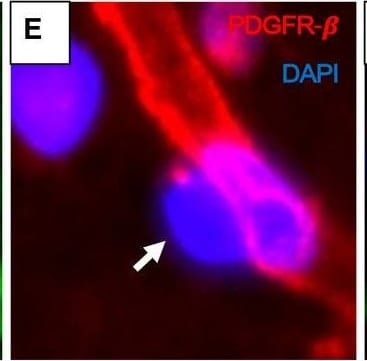
Detection of Mouse PDGF R beta by Immunohistochemistry
Pericyte soma on WM capillaries demonstrated by immunofluorescence. A–F. PDGFR‐ beta (red) and COL4 (green) immunofluorescence staining with nuclei (DAPI) (blue). A,B. Low‐ and high‐power images showing capillary segments (arrowheads) with overlapping PDGFR‐ beta (red), COL4 (green) and DAPI (blue). C. Same vessel segment as B with PDGFR‐ beta (red) and COL4 (green); D. COL4 (green) and DAPI (blue); E. PDGFR‐ beta (red) and DAPI (blue). F. Another capillary segment with PDGFR‐ beta (red), COL4 (green) and DAPI (blue) clearly showing pericyte cell body. G–J. Images taken by a confocal microscope showing pericyte cell bodies (arrows) with nuclear stain (DAPI). Capillaries and pericyte processes are revealed by COL4 and PDGFR‐ beta (red) immunoreactivities. Magnification bars: A = 50 µm, F, J = 10 µm. Image collected and cropped by CiteAb from the following open publication (https://pubmed.ncbi.nlm.nih.gov/32705757), licensed under a CC-BY license. Not internally tested by R&D Systems.Applications for Human PDGF R beta Antibody
CyTOF-ready
Flow Cytometry
Sample: BUD‑8 human fibroblast cell line, U87MG and U118MG
Immunohistochemistry
Sample: Immersion fixed paraffin-embedded sections of human breast cancer tissue
Western Blot
Sample: SH-SY5Y human neuroblastoma cell line and U2OS human osteosarcoma cell line
Neutralization
Reviewed Applications
Read 3 reviews rated 4 using AF385 in the following applications:
Flow Cytometry Panel Builder
Bio-Techne Knows Flow Cytometry
Save time and reduce costly mistakes by quickly finding compatible reagents using the Panel Builder Tool.
Advanced Features
- Spectra Viewer - Custom analysis of spectra from multiple fluorochromes
- Spillover Popups - Visualize the spectra of individual fluorochromes
- Antigen Density Selector - Match fluorochrome brightness with antigen density

Formulation, Preparation, and Storage
Purification
Reconstitution
Reconstitute at 0.2 mg/mL in sterile PBS. For liquid material, refer to CoA for concentration.
Formulation
Shipping
Stability & Storage
- 12 months from date of receipt, -20 to -70 °C as supplied.
- 1 month, 2 to 8 °C under sterile conditions after reconstitution.
- 6 months, -20 to -70 °C under sterile conditions after reconstitution.
Calculators
Background: PDGF R beta
References
- Heldin, C.H. and L. Claesson-Welsh (1994) in Guidebook to Cytokines and Their Receptors, Nicola, N.A. ed. Oxford University Press, New York, p. 202.
Long Name
Alternate Names
Gene Symbol
UniProt
Additional PDGF R beta Products
Product Documents for Human PDGF R beta Antibody
Certificate of Analysis
To download a Certificate of Analysis, please enter a lot or batch number in the search box below.
Note: Certificate of Analysis not available for kit components.
Product Specific Notices for Human PDGF R beta Antibody
For research use only
Related Research Areas
Citations for Human PDGF R beta Antibody
 Powered by Bioz
Customer Reviews for Human PDGF R beta Antibody (3)
Have you used Human PDGF R beta Antibody?
Submit a review and receive an Amazon gift card!
$25/€18/£15/$25CAN/¥2500 for a review with an image
$10/€7/£6/$10CAN/¥1110 for a review without an image
Submit a review
Customer Images
-
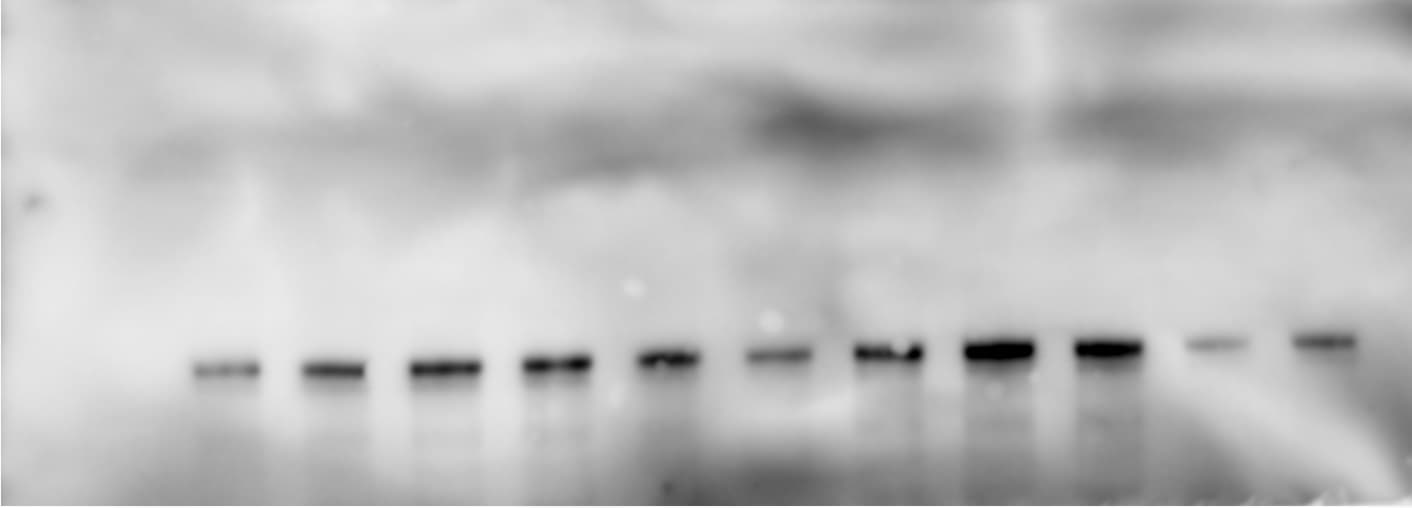
Application: Western BlotSample Tested: pericytesSpecies: human pericytes and HumanVerified Customer | Posted 04/30/2019

-
Application: Immunohistochemistry-ParaffinSample Tested: See PMID 23126372Species: HumanVerified Customer | Posted 01/08/2015
-
Application: ImmunofluorescenceSample Tested: See PMID 23126372Species: HumanVerified Customer | Posted 01/08/2015
There are no reviews that match your criteria.
Protocols
Find general support by application which include: protocols, troubleshooting, illustrated assays, videos and webinars.
- 7-Amino Actinomycin D (7-AAD) Cell Viability Flow Cytometry Protocol
- Antigen Retrieval Protocol (PIER)
- Antigen Retrieval for Frozen Sections Protocol
- Appropriate Fixation of IHC/ICC Samples
- Cellular Response to Hypoxia Protocols
- Chromogenic IHC Staining of Formalin-Fixed Paraffin-Embedded (FFPE) Tissue Protocol
- Chromogenic Immunohistochemistry Staining of Frozen Tissue
- ClariTSA™ Fluorophore Kits
- Detection & Visualization of Antibody Binding
- Extracellular Membrane Flow Cytometry Protocol
- Flow Cytometry Protocol for Cell Surface Markers
- Flow Cytometry Protocol for Staining Membrane Associated Proteins
- Flow Cytometry Staining Protocols
- Flow Cytometry Troubleshooting Guide
- Fluorescent IHC Staining of Frozen Tissue Protocol
- Graphic Protocol for Heat-induced Epitope Retrieval
- Graphic Protocol for the Preparation and Fluorescent IHC Staining of Frozen Tissue Sections
- Graphic Protocol for the Preparation and Fluorescent IHC Staining of Paraffin-embedded Tissue Sections
- Graphic Protocol for the Preparation of Gelatin-coated Slides for Histological Tissue Sections
- IHC Sample Preparation (Frozen sections vs Paraffin)
- Immunofluorescent IHC Staining of Formalin-Fixed Paraffin-Embedded (FFPE) Tissue Protocol
- Immunohistochemistry (IHC) and Immunocytochemistry (ICC) Protocols
- Immunohistochemistry Frozen Troubleshooting
- Immunohistochemistry Paraffin Troubleshooting
- Intracellular Flow Cytometry Protocol Using Alcohol (Methanol)
- Intracellular Flow Cytometry Protocol Using Detergents
- Intracellular Nuclear Staining Flow Cytometry Protocol Using Detergents
- Intracellular Staining Flow Cytometry Protocol Using Alcohol Permeabilization
- Intracellular Staining Flow Cytometry Protocol Using Detergents to Permeabilize Cells
- Preparing Samples for IHC/ICC Experiments
- Preventing Non-Specific Staining (Non-Specific Binding)
- Primary Antibody Selection & Optimization
- Propidium Iodide Cell Viability Flow Cytometry Protocol
- Protocol for Heat-Induced Epitope Retrieval (HIER)
- Protocol for Liperfluo
- Protocol for Making a 4% Formaldehyde Solution in PBS
- Protocol for VisUCyte™ HRP Polymer Detection Reagent
- Protocol for the Characterization of Human Th22 Cells
- Protocol for the Characterization of Human Th9 Cells
- Protocol for the Preparation & Fixation of Cells on Coverslips
- Protocol for the Preparation and Chromogenic IHC Staining of Frozen Tissue Sections
- Protocol for the Preparation and Chromogenic IHC Staining of Frozen Tissue Sections - Graphic
- Protocol for the Preparation and Chromogenic IHC Staining of Paraffin-embedded Tissue Sections
- Protocol for the Preparation and Chromogenic IHC Staining of Paraffin-embedded Tissue Sections - Graphic
- Protocol for the Preparation and Fluorescent IHC Staining of Frozen Tissue Sections
- Protocol for the Preparation and Fluorescent IHC Staining of Paraffin-embedded Tissue Sections
- Protocol for the Preparation of Gelatin-coated Slides for Histological Tissue Sections
- Protocol: Annexin V and PI Staining by Flow Cytometry
- Protocol: Annexin V and PI Staining for Apoptosis by Flow Cytometry
- R&D Systems Quality Control Western Blot Protocol
- TUNEL and Active Caspase-3 Detection by IHC/ICC Protocol
- The Importance of IHC/ICC Controls
- Troubleshooting Guide: Fluorokine Flow Cytometry Kits
- Troubleshooting Guide: Immunohistochemistry
- Troubleshooting Guide: Western Blot Figures
- Western Blot Conditions
- Western Blot Protocol
- Western Blot Protocol for Cell Lysates
- Western Blot Troubleshooting
- Western Blot Troubleshooting Guide
- View all Protocols, Troubleshooting, Illustrated assays and Webinars


