
Key Product Details

Species Reactivity

Validated:

Mouse

Cited:

Human, Mouse, Rat, Transgenic Mouse

Applications

Validated:

Immunohistochemistry, Western Blot, Flow Cytometry, Simple Western, CyTOF-ready

Cited:

Immunohistochemistry, Immunohistochemistry-Paraffin, Immunohistochemistry-Frozen, Western Blot, Neutralization, Cell Selection, In vivo assay

Label

Unconjugated

Antibody Source

Polyclonal Goat IgG
Loading...

Product Specifications

Immunogen

Mouse myeloma cell line NS0-derived recombinant mouse VCAM‑1/CD106
Phe25-Glu698
Accession # P29533

Specificity

Detects mouse VCAM‑1/CD106 in direct ELISAs and Western blots.  In direct ELISA and Western blots, approximately 5% cross-reactivity with recombinant human VCAM-1 is observed.

Clonality

Polyclonal

Host

Goat

Isotype

IgG

Endotoxin Level

<0.10 EU per 1 μg of the antibody by the LAL method.

Scientific Data Images for Mouse VCAM‑1/CD106 Antibody

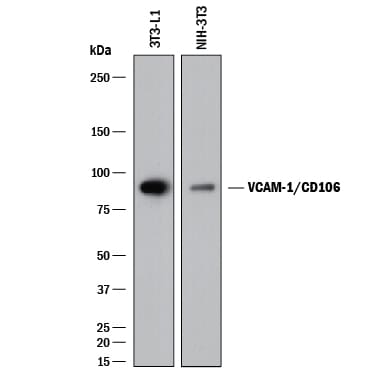
Detection of Mouse VCAM-1/CD106 antibody by Western Blot.

Detection of Mouse VCAM‑1/CD106 by Western Blot.

Western blot shows lysates of 3T3-L1 mouse embryonic fibroblast adipose-like cell line and NIH-3T3 mouse embryonic fibroblast cell line. PVDF membrane was probed with 0.25 µg/mL of Goat Anti-Mouse VCAM-1/CD106 Antigen Affinity-purified Polyclonal Antibody (Catalog # AF643) followed by HRP-conjugated Anti-Goat IgG Secondary Antibody (HAF017). A specific band was detected for VCAM-1/CD106 at approximately 95 kDa (as indicated). This experiment was conducted under reducing conditions and using Immunoblot Buffer Group 1.

VCAM-1/CD106 antibody in Mouse Embryo by Immunohistochemistry (IHC-Fr).

VCAM‑1/CD106 in Mouse Embryo.

VCAM-1/CD106 was detected in immersion fixed frozen sections of mouse embryo using Goat Anti-Mouse VCAM-1/CD106 Antigen Affinity-purified Polyclonal Antibody (Catalog # AF643) at 15 µg/mL overnight at 4 °C. Tissue was stained using the Anti-Goat HRP-DAB Cell & Tissue Staining Kit (brown; CTS008) and counterstained with hematoxylin (blue). Lower panel shows a lack of labeling if primary antibodies are omitted and tissue is stained only with secondary antibody followed by incubation with detection reagents. View our protocol for Chromogenic IHC Staining of Frozen Tissue Sections.

Detection of VCAM-1/CD106 antibody in Mouse Bone Marrow Cells antibody by Flow Cytometry.

Detection of VCAM‑1/CD106 in Mouse Bone Marrow Cells by Flow Cytometry.

Mouse bone marrow cells were stained with Goat Anti-Mouse VCAM-1/CD106 Antigen Affinity-purified Polyclonal Antibody (Catalog # AF643, filled histogram) or control antibody (AB-108-C, open histogram), followed by Phycoerythrin-conjugated Anti-Goat IgG Secondary Antibody (F0107).

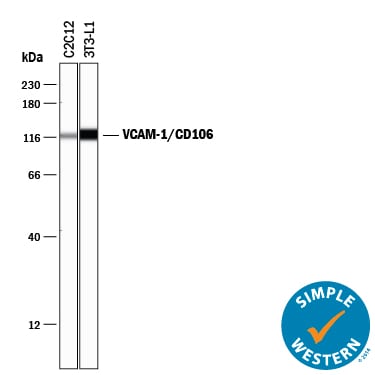
Detection of Mouse VCAM-1/CD106 antibody by Simple WesternTM.

Detection of Mouse VCAM‑1/CD106 by Simple WesternTM.

Simple Western lane view shows lysates of C2C12 mouse myoblast cell line and 3T3-L1 mouse embryonic fibroblast adipose-like cell line, loaded at 0.2 mg/mL. A specific band was detected for VCAM-1/CD106 at approximately 116 kDa (as indicated) using 1 µg/mL of Goat Anti-Mouse VCAM-1/CD106 Antigen Affinity-purified Polyclonal Antibody (Catalog # AF643) followed by 1:50 dilution of HRP-conjugated Anti-Goat IgG Secondary Antibody ( HAF109). This experiment was conducted under reducing conditions and using the 12-230 kDa separation system.

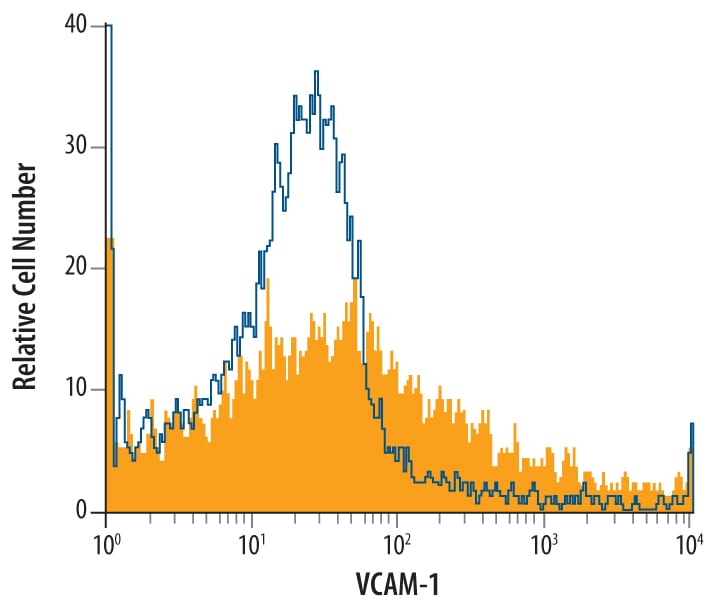
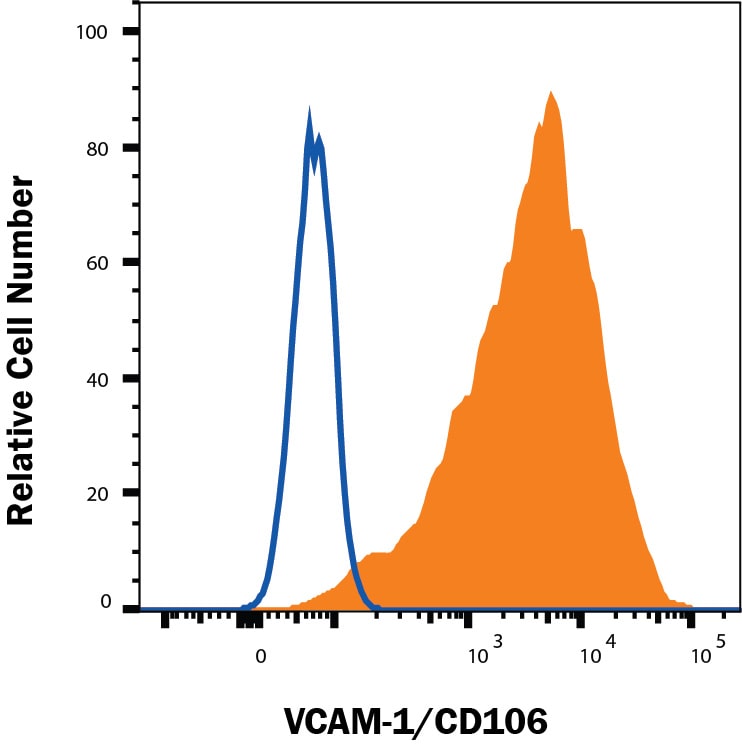
Detection of VCAM‑1/CD106 in bEND.3 cells by Flow Cytometry.

bEND.3 cells were stained with Goat Anti-Mouse VCAM‑1/CD106 Antigen Affinity-purified Polyclonal Antibody (Catalog # AF643, filled histogram) or isotype control antibody (Catalog # AB-108-C, open histogram), followed by Phycoerythrin-conjugated Anti-Goat IgG Secondary Antibody (Catalog # F0107). View our protocol for Staining Membrane-associated Proteins.

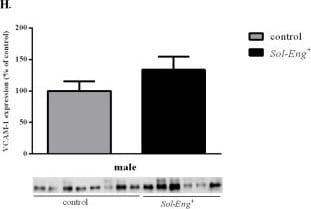
Detection of Mouse VCAM-1/CD106 by Western Blot

Detection of Mouse VCAM-1/CD106 by Western Blot

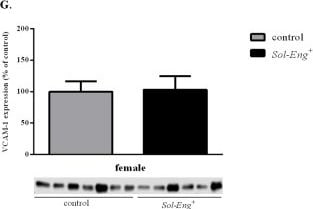
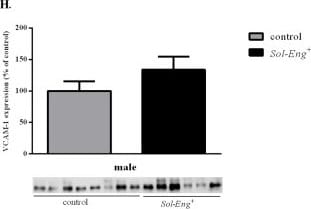
Markers of endothelial dysfunction in aorta.Expression of endoglin (A, B), eNOS (C, D), ICAM-1 (E, F) and VCAM-1 (G, H) in total protein extracts from mice aorta. Equal loading of samples was confirmed by immunodetection of GADPH (A, B). Top: densitometric analysis (control = 100%). Bottom: representative immunoblots. Data are shown as mean ± S.E.M. Mann-Whitney test, unpaired t-test. Image collected and cropped by CiteAb from the following publication (https://dx.plos.org/10.1371/journal.pone.0119665), licensed under a CC-BY license. Not internally tested by R&D Systems.
Detection of Mouse VCAM-1/CD106 by Western Blot

Detection of Mouse VCAM-1/CD106 by Western Blot

Markers of endothelial dysfunction in aorta.Expression of endoglin (A, B), eNOS (C, D), ICAM-1 (E, F) and VCAM-1 (G, H) in total protein extracts from mice aorta. Equal loading of samples was confirmed by immunodetection of GADPH (A, B). Top: densitometric analysis (control = 100%). Bottom: representative immunoblots. Data are shown as mean ± S.E.M. Mann-Whitney test, unpaired t-test. Image collected and cropped by CiteAb from the following publication (https://dx.plos.org/10.1371/journal.pone.0119665), licensed under a CC-BY license. Not internally tested by R&D Systems.
Detection of Mouse Mouse VCAM-1/CD106 Antibody by Western Blot

Detection of Mouse Mouse VCAM-1/CD106 Antibody by Western Blot

Markers of endothelial dysfunction in aorta.Expression of endoglin (A, B), eNOS (C, D), ICAM-1 (E, F) and VCAM-1 (G, H) in total protein extracts from mice aorta. Equal loading of samples was confirmed by immunodetection of GADPH (A, B). Top: densitometric analysis (control = 100%). Bottom: representative immunoblots. Data are shown as mean ± S.E.M. Mann-Whitney test, unpaired t-test. Image collected and cropped by CiteAb from the following publication (https://pubmed.ncbi.nlm.nih.gov/25768936), licensed under a CC-BY license. Not internally tested by R&D Systems.

Applications for Mouse VCAM‑1/CD106 Antibody

Application
Recommended Usage

CyTOF-ready

Ready to be labeled using established conjugation methods. No BSA or other carrier proteins that could interfere with conjugation.

Flow Cytometry

0.25 µg/106 cells
Sample: Mouse bone marrow cells and bEND.3 cells

Immunohistochemistry

5-15 µg/mL
Sample: Perfusion fixed frozen sections of rat brain (cerebellum) and immersion fixed frozen sections of mouse embryo

Simple Western

1 µg/mL
Sample: C2C12 mouse myoblast cell line and 3T3‑L1 mouse embryonic fibroblast adipose-like cell line

Western Blot

0.25 µg/mL
Sample: 3T3‑L1 mouse embryonic fibroblast adipose-like cell line and C2C12 mouse myoblast cell line

Reviewed Applications

Read 5 reviews rated 3.6 using AF643 in the following applications:

Flow Cytometry Panel Builder

Bio-Techne Knows Flow Cytometry

Save time and reduce costly mistakes by quickly finding compatible reagents using the Panel Builder Tool.

Advanced Features

  • Spectra Viewer - Custom analysis of spectra from multiple fluorochromes
  • Spillover Popups - Visualize the spectra of individual fluorochromes
  • Antigen Density Selector - Match fluorochrome brightness with antigen density
Build Your Panel Now

Formulation, Preparation, and Storage

Purification

Antigen Affinity-purified

Reconstitution

Reconstitute at 0.2 mg/mL in sterile PBS. For liquid material, refer to CoA for concentration.


Loading...

Formulation

Lyophilized from a 0.2 μm filtered solution in PBS with Trehalose. *Small pack size (SP) is supplied either lyophilized or as a 0.2 µm filtered solution in PBS.

Shipping

Lyophilized product is shipped at ambient temperature. Liquid small pack size (-SP) is shipped with polar packs. Upon receipt, store immediately at the temperature recommended below.

Stability & Storage

Use a manual defrost freezer and avoid repeated freeze-thaw cycles.
  • 12 months from date of receipt, -20 to -70 °C as supplied.
  • 1 month, 2 to 8 °C under sterile conditions after reconstitution.
  • 6 months, -20 to -70 °C under sterile conditions after reconstitution.

Calculators

The reconstitution calculator allows you to quickly calculate the volume of a reagent to reconstitute your vial. Simply enter the mass of reagent and the target concentration and the calculator will determine the rest.

=
÷

Background: VCAM-1/CD106

VCAM-1 (CD106), a member of the immunoglobulin superfamily, is a cell surface protein expressed by activated endothelial cells and certain leukocytes (such as macrophages). VCAM-1 expression is induced by IL-1 beta, IL-4, TNF-alpha and IFN-gamma. VCAM-1 binds to leukocyte integrins VLA-4 and alpha 4 beta 7. The human and mouse VCAM-1 proteins share approximately 76% amino acid similarity.

During the inflammatory adhesion mechanism, activated integrins halt rolling leukocytes and attach them firmly to the vascular endothelium. They do this by binding to their ligands, for example VCAM-1, on endothelium. The VCAM-1: VLA-4/ alpha 4 beta 7 interaction is also thought to be involved in the extravasation of white blood cells through the blood vessel wall to sites of inflammation.

ELISA techniques have shown that detectable levels of soluble VCAM-1 are present in the biological fluids of apparently normal individuals. Furthermore, a number of studies have reported that levels of VCAM-1 may be elevated or lowered in subjects with a variety of pathological conditions.

Long Name

Vascular Cell Adhesion Molecule 1

Alternate Names

CD106, VCAM1

Entrez Gene IDs

7412 (Human); 22329 (Mouse)

Gene Symbol

VCAM1

UniProt

Additional VCAM-1/CD106 Products

Product Documents for Mouse VCAM‑1/CD106 Antibody

Certificate of Analysis

To download a Certificate of Analysis, please enter a lot or batch number in the search box below.

Note: Certificate of Analysis not available for kit components.

Product Specific Notices for Mouse VCAM‑1/CD106 Antibody

For research use only

Citations for Mouse VCAM‑1/CD106 Antibody

Customer Reviews for Mouse VCAM‑1/CD106 Antibody (5)

3.6 out of 5
5 Customer Ratings
5 Stars
0%
4 Stars
60%
3 Stars
40%
2 Stars
0%
1 Stars
0%

Have you used Mouse VCAM‑1/CD106 Antibody?

Submit a review and receive an Amazon gift card!

$25/€18/£15/$25CAN/¥2500 Yen for a review with an image

$10/€7/£6/$10CAN/¥1110 Yen for a review without an image

Submit a review
Amazon Gift Card

Customer Images


Showing  1 - 5 of 5 reviews Showing All
Filter By:
  • Mouse VCAM-1/CD106 Antibody
    Name: Anonymous
    Application: Immunohistochemistry
    Sample Tested: Pancreas tissue, Lung tissue and Spleen tissue
    Species: Mouse
    Verified Customer | Posted 12/14/2022
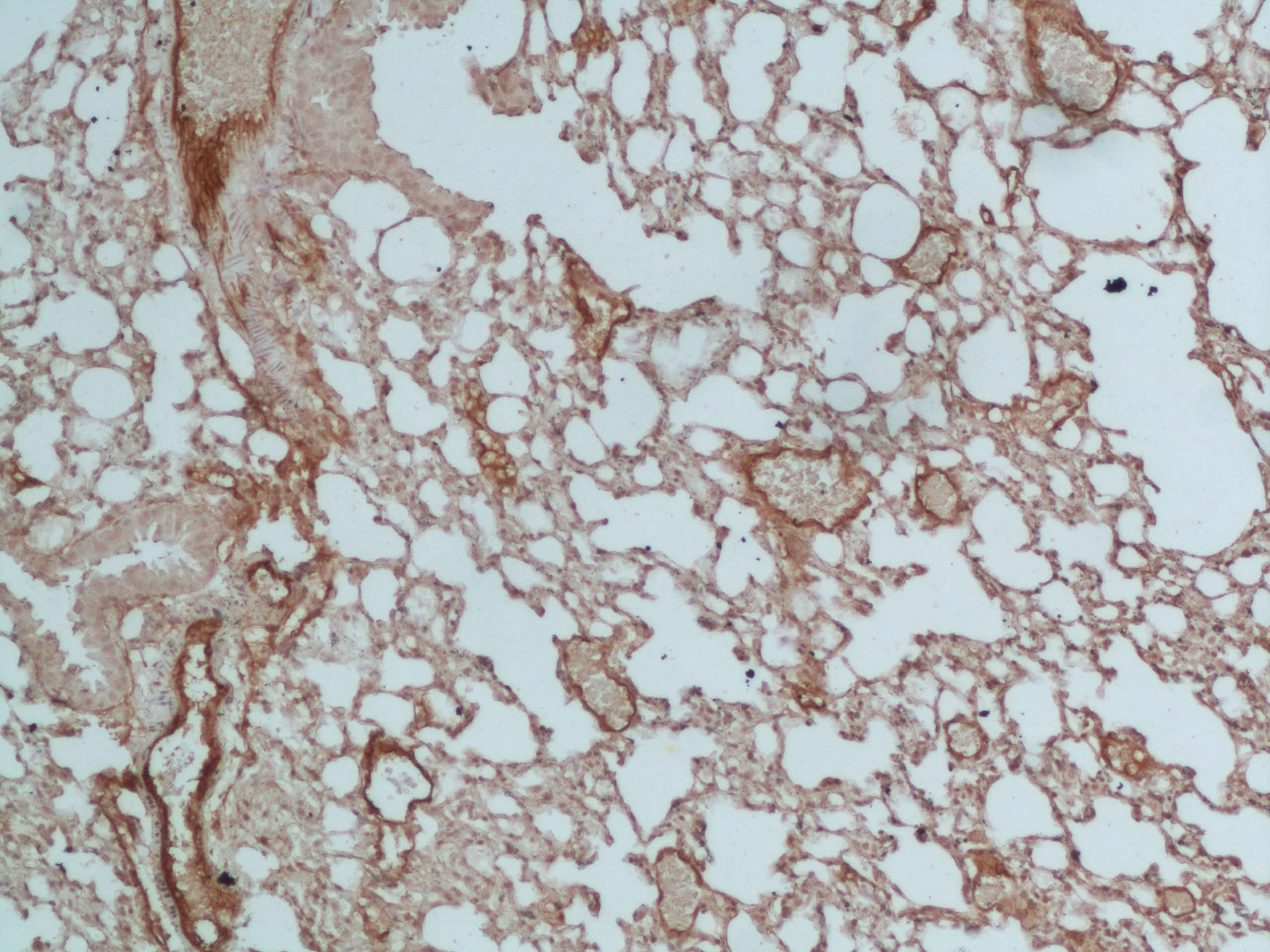
    paraffin-embedded tissue antigen retrieval in citrate buffer pH 6 concentrations tested: 1:50-1:300 all worked
    Mouse VCAM‑1/CD106 Antibody AF643
  • Mouse VCAM-1/CD106 Antibody
    Name: Anonymous
    Application: Immunocytochemistry/Immunofluorescence
    Sample Tested: Embryonic retina
    Species: Mouse
    Verified Customer | Posted 10/19/2018
  • Mouse VCAM-1/CD106 Antibody
    Name: Omer Aydin
    Application: Immunohistochemistry
    Sample Tested: 4T1 mouse breast cancer cell line and 4t1 tissue section
    Species: Mouse
    Verified Customer | Posted 03/27/2017
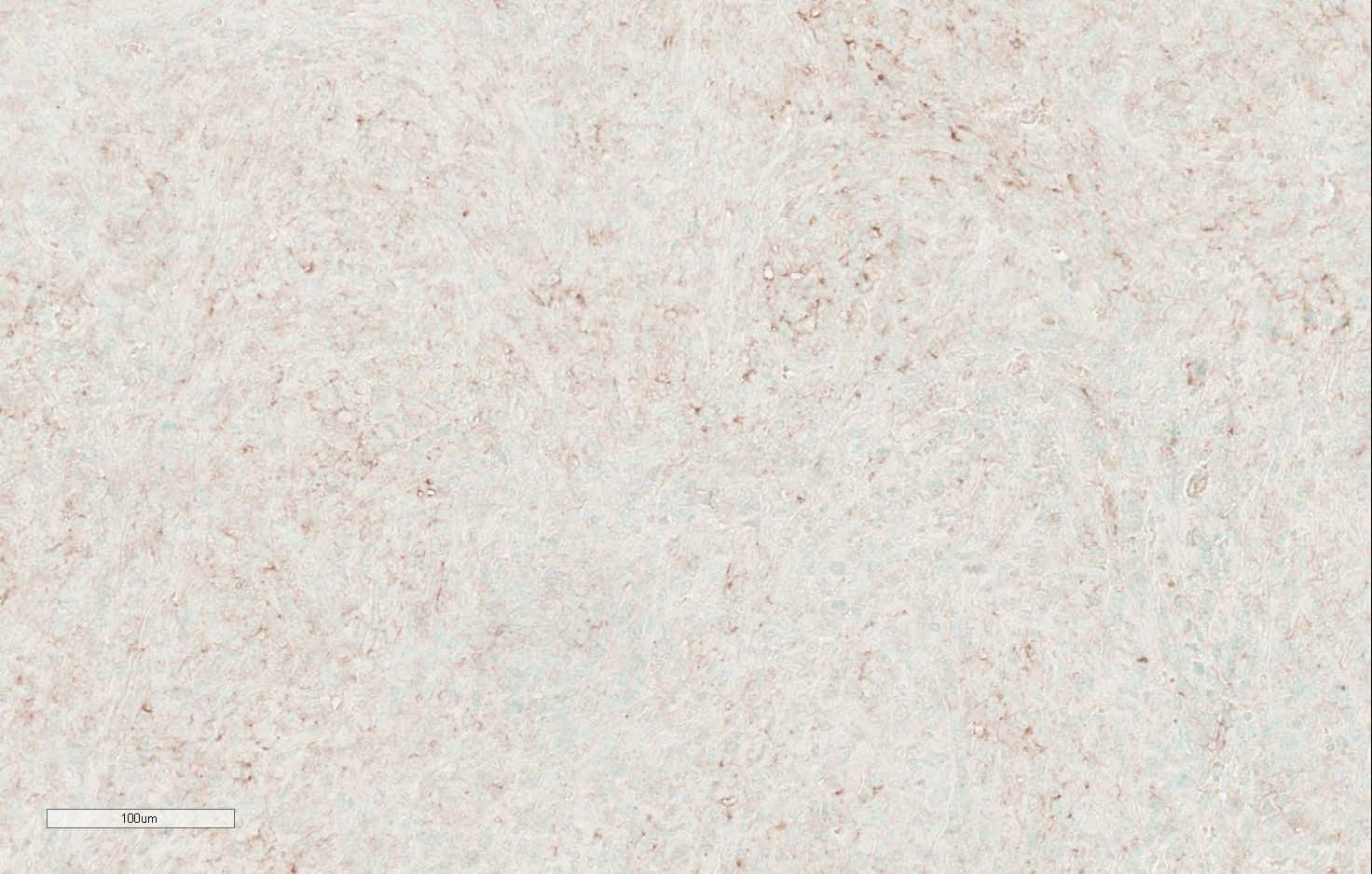
    Immunohistochemistry (Formalin/PFA-fixed paraffin-embedded sections). 4T1 tissues were cut 5 um. After deparaffin steps, the section was pre-treated using heat mediated antigen retrieval with Citrate buffer @ pH 6.0 (C9999, Thermo-Scientific) solution for 20 min at 100 C. Protein blocked was processed with superblock (#37515, Thermo Scientific) for 30 min. Afterwards, the section was then incubated with VCAM-1 pAb with 100X dilution of recommended concentration (100ug/500uL in PBS) for 1h at room temperature. A donkey anti-goat biotinylated secondary antibody (IgG H&L #ab7125, 1/200) was used to detect the primary and visualized using an HRP system (30 min incubation). DAB (#SK-4105, Vector) was used as the chromogen. The section was then counterstained with methyl green (#H-3402, Vector) and mounted with Cytoseal 60.
    Mouse VCAM‑1/CD106 Antibody AF643
  • Name: Anonymous
    Application: Immunohistochemistry-Frozen
    Sample Tested: See PMID 23021255
    Species: Mouse
    Verified Customer | Posted 01/09/2015
  • Name: Anonymous
    Application: Immunofluorescence
    Sample Tested: See PMID 23232501
    Species: Mouse
    Verified Customer | Posted 01/09/2015

There are no reviews that match your criteria.

Showing  1 - 5 of 5 reviews Showing All

Protocols

Find general support by application which include: protocols, troubleshooting, illustrated assays, videos and webinars.

FAQs

No product specific FAQs exist for this product.

View all FAQs for Antibodies