
HGF R, also known as Met (from N-methyl-N’-nitro-N-nitrosoguanidine induced), is a glycosylated receptor tyrosine kinase that plays a central role in epithelial morphogenesis and cancer development. HGF R is synthesized as a single chain precursor which undergoes cotranslational proteolytic cleavage. This generates a mature HGF R that is a disulfide-linked dimer composed of a 50 kDa extracellular alpha chain and a 145 kDa transmembrane beta chain (1, 2). The extracellular domain (ECD) contains a seven bladed beta -propeller sema domain, a cysteine-rich PSI/MRS, and four Ig-like E-set domains, while the cytoplasmic region includes the tyrosine kinase domain (3, 4). Proteolysis and alternate splicing generate additional forms of human HGF R which either lack of the kinase domain, consist of secreted extracellular domains, or are deficient in proteolytic separation of the alpha and beta chains (5-7). The sema domain, which is formed by both the alpha and beta chains of HGF R, mediates both ligand binding and receptor dimerization (3, 8). Ligand-induced tyrosine phosphorylation in the cytoplasmic region activates the kinase domain and provides docking sites for multiple SH2-containing molecules (9, 10). HGF stimulation induces HGF R downregulation via internalization and proteasome-dependent degradation (11). In the absence of ligand, HGF R forms non-covalent complexes with a variety of membrane proteins including CD44v6, CD151, EGF R, Fas, Integrin alpha 6/ beta 4, Plexins B1, 2, 3, and MSP R/Ron (12-19). Ligation of one complex component triggers activation of the other, followed by cooperative signaling effects (12-19). Formation of some of these heteromeric complexes is a requirement for epithelial cell morphogenesis and tumor cell invasion (12, 16, 17). Paracrine induction of epithelial cell scattering and branching tubulogenesis results from the stimulation of HGF R on undifferentiated epithelium by HGF released from neighboring mesenchymal cells (20). Genetic polymorphisms, chromosomal translocation, overexpression, and additional splicing and proteolytic cleavage of HGF R have been described in a wide range of cancers (1). Within the ECD, human HGF R shares 86-88% aa sequence identity with canine, mouse, and rat HGF R.

Key Product Details
Validated by
Knockout/Knockdown
Species Reactivity
Validated:
Human
Cited:
Human, Mouse, Canine
Applications
Validated:
Knockout Validated, Immunohistochemistry, Western Blot, Blockade of Receptor-ligand Interaction, Flow Cytometry, Immunocytochemistry, Simple Western, CyTOF-ready
Cited:
Immunohistochemistry, Immunohistochemistry-Paraffin, Western Blot, Neutralization, Flow Cytometry, Immunocytochemistry, Immunoprecipitation, Bioassay, ELISA Capture, ELISA Detection, ELISA Development (Detection)
Label
Unconjugated
Antibody Source
Polyclonal Goat IgG
Loading...
Product Specifications
Immunogen
Mouse myeloma cell line NS0-derived recombinant human HGF R/c-MET
Glu25-Thr932
Accession # P08581
Glu25-Thr932
Accession # P08581
Specificity
Detects human HGF R/c-MET in direct ELISAs and Western blots. In direct ELISAs and Western blots, approximately 30% cross-reactivity with recombinant mouse HGF R is observed.
Clonality
Polyclonal
Host
Goat
Isotype
IgG
Endotoxin Level
<0.10 EU per 1 μg of the antibody by the LAL method.
Scientific Data Images for Human HGFR/c-MET Antibody
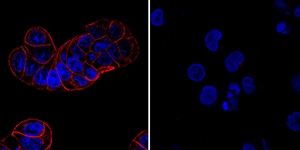
HGF R/c‑MET in HT‑29 and U937 Human Cell Line.
HGF R/c-MET was detected in immersion fixed HT-29 human colon adenocarcinoma cell line (positive control, left panel) and U937 human histiocytic lymphoma cell line (negative control, right panel) using Goat Anti-Human HGF R/c-MET Antigen Affinity-purified Polyclonal Antibody (Catalog # AF276) at 5 µg/mL for 3 hours at room temperature. Cells were stained using the NorthernLights™ 557-conjugated Anti-Goat IgG Secondary Antibody (red; NL001) and counterstained with DAPI (blue). Specific staining was localized to plasma membrane. View our protocol for Fluorescent ICC Staining of Cells on Coverslips.
HGF R/c‑MET in Human Liver.
HGF R/c-MET was detected in immersion fixed paraffin-embedded sections of human liver using Goat Anti-Human HGF R/c-MET Antigen Affinity-purified Polyclonal Antibody (Catalog # AF276) at 10 µg/mL overnight at 4 °C. Before incubation with the primary antibody tissue was subjected to heat-induced epitope retrieval using Antigen Retrieval Reagent-Basic (CTS013). Tissue was stained using the Anti-Goat HRP-DAB Cell & Tissue Staining Kit (brown; CTS008) and counterstained with hematoxylin (blue). View our protocol for Chromogenic IHC Staining of Paraffin-embedded Tissue Sections.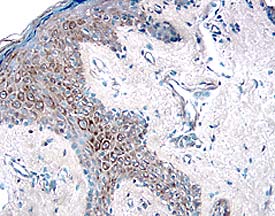
HGF R/c‑MET in Human Skin.
HGF R/c-MET was detected in immersion fixed paraffin-embedded sections of human skin using 15 µg/mL Goat Anti-Human HGF R/c-MET Antigen Affinity-purified Polyclonal Antibody (Catalog # AF276) overnight at 4 °C. Tissue was stained with the Anti-Goat HRP-DAB Cell & Tissue Staining Kit (brown; CTS008) and counterstained with hematoxylin (blue). View our protocol for Chromogenic IHC Staining of Paraffin-embedded Tissue Sections.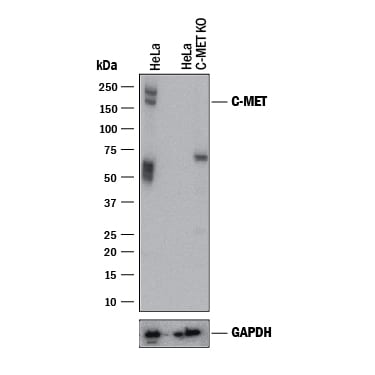
Western Blot Shows Human HGF R/c‑MET Specificity by Using Knockout Cell Line.
Western blot shows lysates of HeLa human cervical epithelial carcinoma parental cell line and HGF R/c-Met knockout HeLa cell line (KO). PVDF membrane was probed with 1 µg/mL of Goat Anti-Human HGF R/c-MET Antigen Affinity-purified Polyclonal Antibody (Catalog # AF276) followed by HRP-conjugated Anti-Goat IgG Secondary Antibody (HAF017). Specific bands were detected for HGF R/c-MET at approximately 150-200 kDa (as indicated) in the parental HeLa cell line, but is not detectable in knockout HeLa cell line. GAPDH (AF5718) is shown as a loading control. This experiment was conducted under reducing conditions and using Immunoblot Buffer Group 1.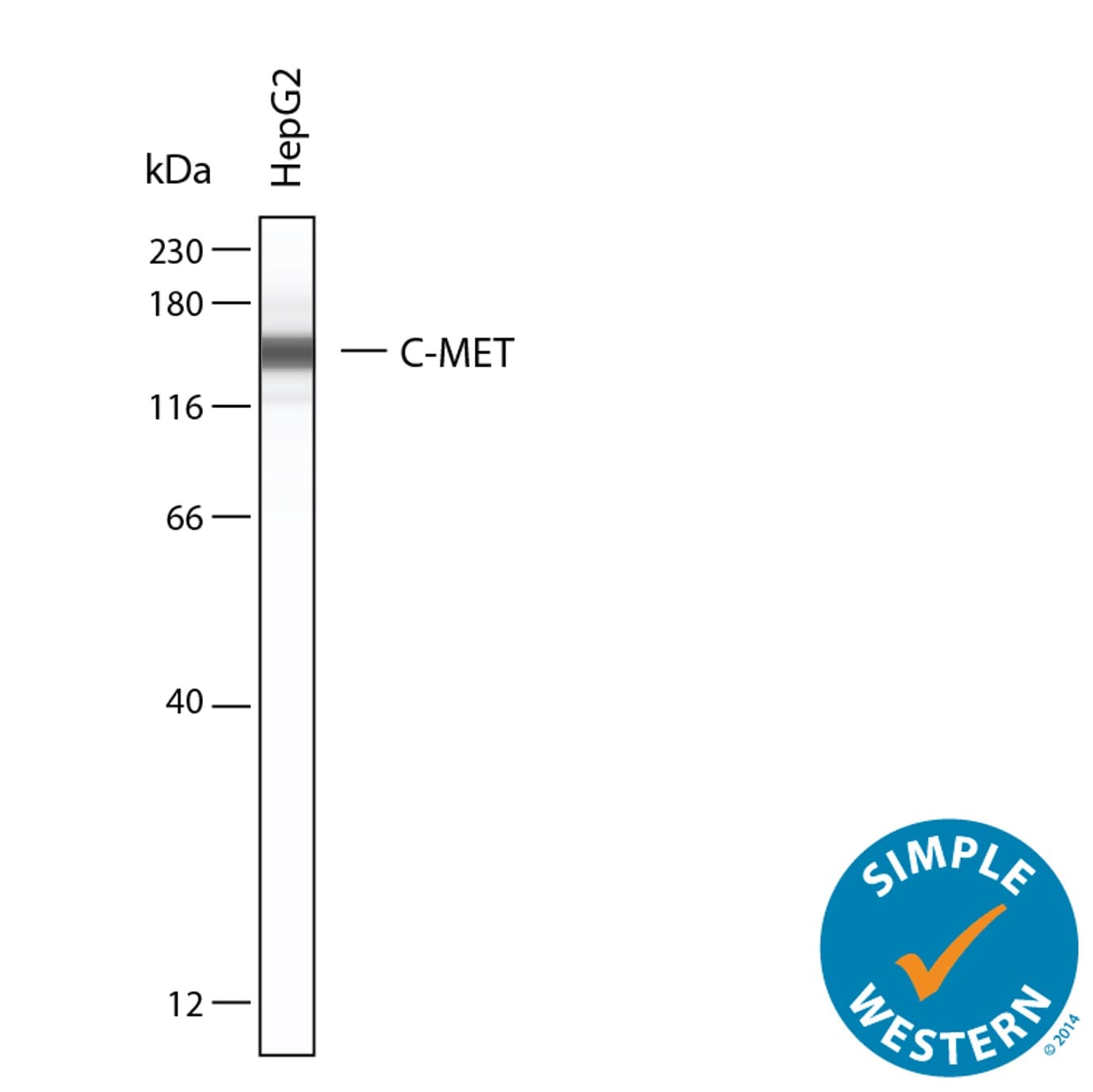
Detection of Human HGFR/c-MET by Simple WesternTM.
Simple Western lane view shows lysates of HepG2 human hepatocellular carcinoma cell line, loaded at 0.2 mg/mL. A specific band was detected for HGFR/c-MET at approximately 151 kDa (as indicated) using 25 µg/mL of Goat Anti-Human HGFR/c-MET Antigen Affinity-purified Polyclonal Antibody (Catalog # AF276). This experiment was conducted under reducing conditions and using the 12-230 kDa separation system.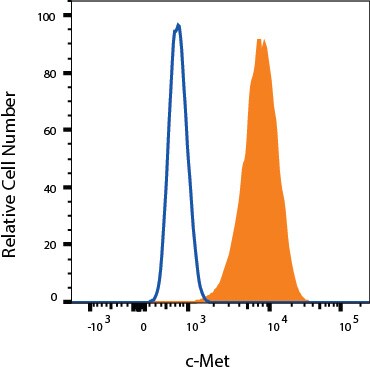
Detection of HGFR/c-MET in MDA-MB-231 cells by Flow Cytometry
MDA-MB-231 cells were stained with Goat Anti-Human HGFR/c-MET Antigen Affinity-purified Polyclonal Antibody (Catalog # AF276, filled histogram) or isotype control antibody (Catalog # AB-108-C, open histogram) followed by Phycoerythrin-conjugated Anti-Goat IgG Secondary Antibody (Catalog # F0107). View our protocol for Staining Membrane-associated Proteins.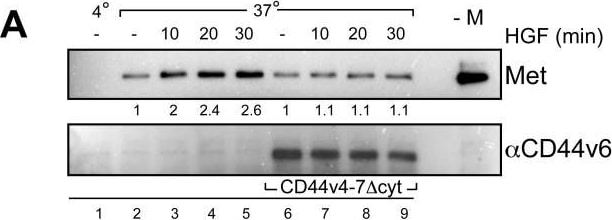
Detection of HGFR/c-MET by Western Blot
The link between CD44v6&the cytoskeleton through Ezrin is required for Met internalization.(A) HeLa cells transfected with a rat CD44v4-7 construct deleted from the cytoplasmic domain (CD44v4-7 delta cyt) or a control vector. The kinetic of Met internalization upon HGF induction was measured in a MESNA experiment (Material&Methods). In the first sample cells kept at 4°C. –M refers to a sample obtained from cells that not treated with MESNA. The Western Blot analysis was performed with a Met specific antibody&the rat specific CD44v6 antibody 1.1ASML (Material&Methods). Image collected & cropped by CiteAb from the following open publication (https://pubmed.ncbi.nlm.nih.gov/23626807), licensed under a CC-BY license. Not internally tested by R&D Systems.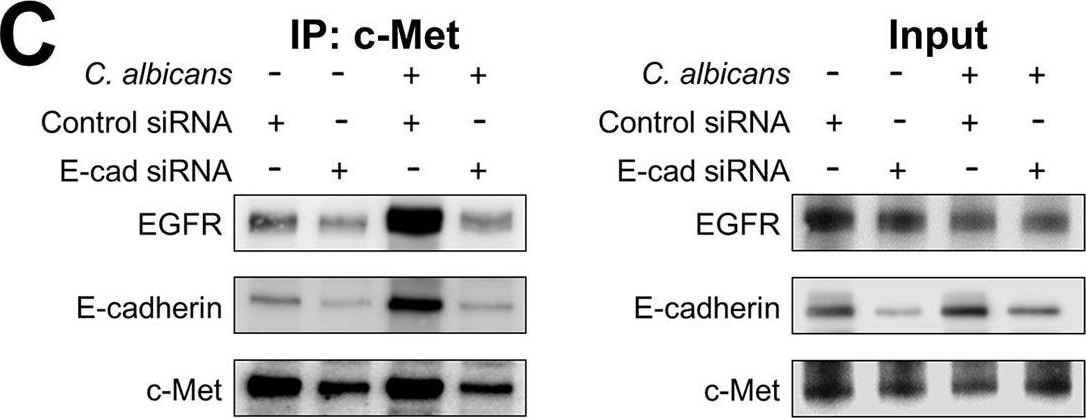
Detection of Human HGFR/c-MET by Western Blot
C. albicans induces c-Met, EGFR, and E-cadherin to form a multiprotein complex.(A-C) Proximity ligation assay showing the interaction of c-Met with E-cadherin, EGFR with E-cadherin, and c-Met with EGFR in oral epithelial cells with and without 20-min infection with C. albicans. Confocal microscopic images (A). Scale bar 10 μm. Signal counts (B). Proximity ligation assay showing the interaction of c-Met with E-cadherin, EGFR with E-cadherin, and c-Met with EGFR in oral epithelial cells with and without 20-min infection with C. albicans. (A) Confocal microscopic images. Scale bar 10 μm. (B) Signal counts. (C-E) Co-immunoprecipitation experiments in oral epithelial cells transfected with control or E-cadherin (E-cad) siRNA and then infected with C. albicans for 20 min. (C) Representative immunoblots of proteins obtained by immunoprecipitation with an anti-c-Met antibody. (D and E) Densitometric analysis of 5 immunoblots. Results are mean ± SD. **p < 0.01, ***p < 0.001, ****p < 0.0001, ns; not significant (two-tailed Student’s t test [B] or one-way ANOVA with Sidak’s multiple comparisons test [D and E]). Image collected and cropped by CiteAb from the following open publication (https://pubmed.ncbi.nlm.nih.gov/37611070), licensed under a CC-BY license. Not internally tested by R&D Systems.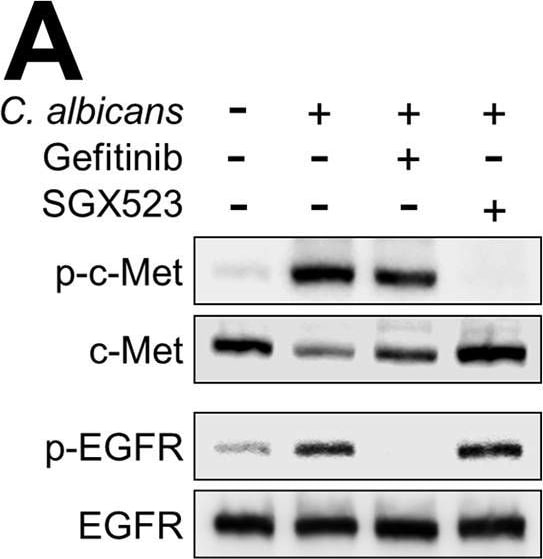
Detection of Human HGFR/c-MET by Western Blot
Functional interactions among c-Met, EGFR, and E-cadherin during the endocytosis of C. albicans.(A-C) Immunoblot analysis showing the effects of the EGFR inhibitor gefitinib and the c-Met inhibitor SGX523 on C. albicans-induced phosphorylation of c-Met and EGFR in oral epithelial cells after 20 min of infection. Representative immunoblot (A), densitometric analysis of 4 immunoblots showing the phosphorylation of EGFR (B) and c-Met (C). Data are mean ± SD. (D) Effects of SGX523 and gefitinib on the endocytosis of C. albicans by oral epithelial cells. (E and F) Endocytosis of C. albicans by NIH/3T3 cells that expressed human c-Met (E) or human c-Met, EGFR, and HER2 (F). (G) Confocal micrographs of NIH3T3 cells expressing no human receptors (control), human c-Met, human EGFR and HER2, or human c-Met, EGFR, and HER2. The cells were infected with wild-type C. albicans germ tubes for 20 min, after which phosphorylated c-Met was detected with a phosphospecific anti-c-Met antibody. Scale bar 10 μm. Results in (D-F) are the mean ± SD of three experiments, each performed in triplicate. *p < 05, **p < 0.01, ***p < 0.001, ****p < 0.0001, ns; not significant (one-way ANOVA with Sidak’s multiple comparisons test [B-D] or two-tailed Student’s t test [E and F]). Image collected and cropped by CiteAb from the following open publication (https://pubmed.ncbi.nlm.nih.gov/37611070), licensed under a CC-BY license. Not internally tested by R&D Systems.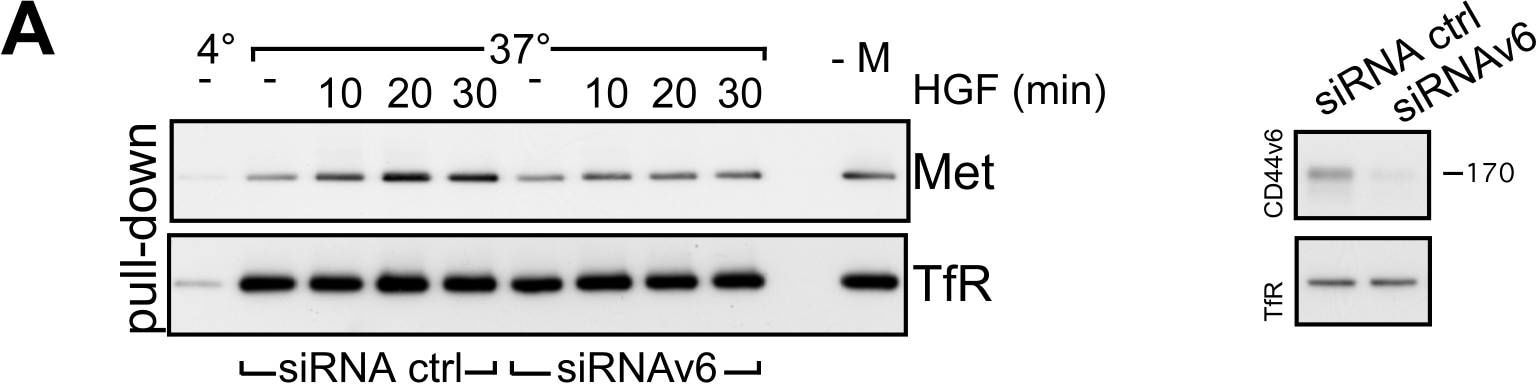
Detection of HGFR/c-MET by Western Blot
CD44v6 controls Met internalization.(A) Left side: HeLa cells were transfected either with a pool of control siRNAs or a mixture of two different CD44v6 specific siRNAs and starved for 24 hours (Material and Methods). The cells were biotinylated (0,5 mg/ml), induced with HGF (50 ng/ml) and treated with MESNA. After cell lysis, proteins were pulled down with a NeutrAvidin resin and subjected to Western Blot analysis with Met or the Transferrin receptor (TfR) antibodies. For the first sample the cells were kept at 4°C. –M: the cells were not treated with MESNA. Right side: Western Blot analysis of cell lysates of ctrl siRNAs and CD44v6 siRNAs transfected HeLa cells using the CD44v6 and the TfR antibodies. (B) Starved HeLa cells respectively HT29 cells were incubated with the v6 peptide or a control peptide for 10 minutes at 37°C and then induced with 25 ng/ml of HGF for the indicated time points. Cells were then either lysed and the lysates were subjected to Western Blot analysis for phospho-Met and Met (below) or cells were fixed, permeabilized and stained for Met with specific antibodies (red) (above). Nuclei were stained with Dapi and images were taken with a confocal microscope (Leica SPE) using a 63× objective. The quantification of three independent experiments (n = 40) is shown. The percentage of cells with Met exclusively located at the plasma membrane was calculated for each time point. Student´s t test: ***p<0,001. Image collected and cropped by CiteAb from the following open publication (https://pubmed.ncbi.nlm.nih.gov/23626807), licensed under a CC-BY license. Not internally tested by R&D Systems.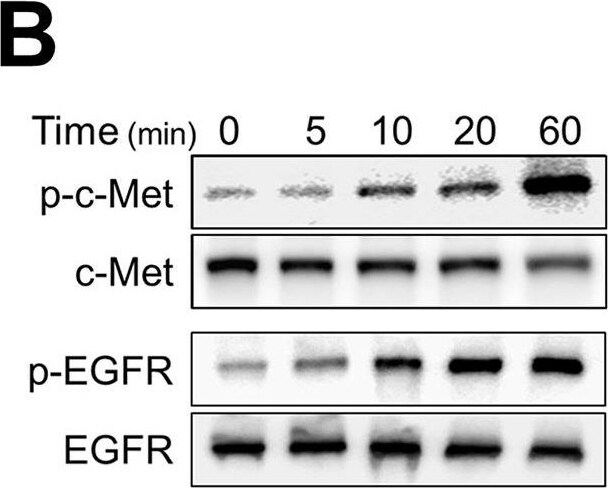
Detection of Human HGFR/c-MET by Western Blot
C. albicans activates c-Met in oral epithelial cells.(A) Confocal microscopic images of OKF6/TERT-2 oral epithelial cells infected with C. albicans SC5314 for 20 min. c-Met, the epidermal growth factor receptor (EGFR), and E-cadherin were detected by indirect immunofluorescence using specific antibodies. Arrows point to the organisms in the magnified insets. Scale bar 10 μm. (B and C) Immunoblot analysis showing the time course of the phosphorylation of c-Met and EGFR in oral epithelial cells induced by C. albicans germ tubes (B). Densitometric analysis of 4 immunoblots (C). Data are mean ± SD. (D and E) Knockdown of c-Met with siRNA (D) or inhibition of c-Met signaling with SG523 (E) in oral epithelial cells inhibits the endocytosis of C. albicans. (F) Stimulation of oral epithelial cells with recombinant hepatocyte growth factor (HGF) enhances the endocytosis of C. albicans. Data in (D-F) are the mean ± SD of three experiments, each performed in triplicate. **p < 0.01, ****p < 0.0001, ns; not significant (two-tailed Student’s t test [D and E] or one-way ANOVA with Sidak’s multiple comparisons test [F]). Image collected and cropped by CiteAb from the following open publication (https://pubmed.ncbi.nlm.nih.gov/37611070), licensed under a CC-BY license. Not internally tested by R&D Systems.
Human HGF R / c-MET ELISA Standard Curve
Recombinant Human HGFR/c-MET Fc Chimera (Catalog # 358-MT) was serially diluted and captured by Mouse Anti-Human HGFR/c-MET Monoclonal Antibody (Catalog # MAB3581) coated on a Clear Polystyrene Microplate (Catalog # DY990). Goat Anti-Human HGFR/c-MET Antigen Affinity-purified Polyclonal Antibody (Catalog # AF276) was biotinylated and incubated with the protein captured on the plate. Detection of the standard curve was achieved by incubating Streptavidin-HRP (Catalog # DY998)Applications for Human HGFR/c-MET Antibody
Application
Recommended Usage
Blockade of Receptor-ligand Interaction
In a functional ELISA, 0.5-2 µg/mL of this antibody will block 50% of the binding of 5 ng/mL of Recombinant Human HGF (Catalog # 294-HGN) to immobilized Recombinant Human HGF R/c-MET Fc Chimera (Catalog # 358‑MT) coated at 1 µg/mL (100 µL/well). At 10 μg/mL, this antibody will block >90% of the binding.
CyTOF-ready
Ready to be labeled using established conjugation methods. No BSA or other carrier proteins that could interfere with conjugation.
Flow Cytometry
2.5 µg/106 cells
Sample: MDA‑MB‑231 human breast cancer cell line
Sample: MDA‑MB‑231 human breast cancer cell line
Immunocytochemistry
5-15 µg/mL
Sample: Immersion fixed HT‑29 human colon adenocarcinoma cell line
Sample: Immersion fixed HT‑29 human colon adenocarcinoma cell line
Immunohistochemistry
5-15 µg/mL
Sample: Immersion fixed paraffin-embedded sections of human skin and human liver tissue
Sample: Immersion fixed paraffin-embedded sections of human skin and human liver tissue
Knockout Validated
HGF R/c‑MET
is specifically detected in HeLa human cervical epithelial carcinoma parental cell line but is not detectable in
HGF R/c‑MET knockout HeLa cell line.
Simple Western
25 µg/mL
Sample: HepG2 human hepatocellular carcinoma cell line
Sample: HepG2 human hepatocellular carcinoma cell line
Western Blot
0.1 µg/mL
Sample: Recombinant Human HGF R/c-MET Fc Chimera (Catalog # 358-MT)
Sample: Recombinant Human HGF R/c-MET Fc Chimera (Catalog # 358-MT)
Reviewed Applications
Read 1 review rated 4 using AF276 in the following applications:
Flow Cytometry Panel Builder
Bio-Techne Knows Flow Cytometry
Save time and reduce costly mistakes by quickly finding compatible reagents using the Panel Builder Tool.
Advanced Features
- Spectra Viewer - Custom analysis of spectra from multiple fluorochromes
- Spillover Popups - Visualize the spectra of individual fluorochromes
- Antigen Density Selector - Match fluorochrome brightness with antigen density

Formulation, Preparation, and Storage
Purification
Antigen Affinity-purified
Reconstitution
Reconstitute at 0.2 mg/mL in sterile PBS. For liquid material, refer to CoA for concentration.
Loading...
Formulation
Lyophilized from a 0.2 μm filtered solution in PBS with Trehalose. *Small pack size (SP) is supplied either lyophilized or as a 0.2 µm filtered solution in PBS.
Shipping
Lyophilized product is shipped at ambient temperature. Liquid small pack size (-SP) is shipped with polar packs. Upon receipt, store immediately at the temperature recommended below.
Stability & Storage
Use a manual defrost freezer and avoid repeated freeze-thaw cycles.
- 12 months from date of receipt, -20 to -70 °C as supplied.
- 1 month, 2 to 8 °C under sterile conditions after reconstitution.
- 6 months, -20 to -70 °C under sterile conditions after reconstitution.
Calculators
Background: HGFR/c-MET
References
- Birchmeier, C. et al. (2003) Nat. Rev. Mol. Cell Biol. 4:915.
- Corso, S. et al. (2005) Trends Mol. Med. 11:284.
- Gherardi, E. et al. (2003) Proc. Natl. Acad. Sci. USA 100:12039.
- Park, M. et al. (1987) Proc. Natl. Acad. Sci. USA 84:6379.
- Crepaldi, T. et al. (1994) J. Biol. Chem. 269:1750.
- Prat, M. et al. (1991) Mol. Cell. Biol. 12:5954.
- Rodrigues, G.A. et al. (1991) Mol. Cell. Biol. 11:2962.
- Kong-Beltran, M. et al. (2004) Cancer Cell 6:75.
- Naldini, L. et al. (1991) Mol. Cell. Biol. 11:1793.
- Ponzetto, C. et al. (1994) Cell 77:261.
- Jeffers, M. et al. (1997) Mol. Cell. Biol. 17:799.
- Orian-Rousseau, V. et al. (2002) Genes Dev. 16:3074.
- Klosek, S.K. et al. (2005) Biochem. Biophys. Res. Commun. 336:408.
- Jo, M. et al. (2000) J. Biol. Chem. 275:8806.
- Wang, X. et al. (2002) Mol. Cell 9:411.
- Trusolino, L. et al. (2001) Cell 107:643.
- Giordano, S. et al. (2002) Nat. Cell Biol. 4:720.
- Conrotto, P. et al. (2004) Oncogene 23:5131.
- Follenzi, A. et al. (2000) Oncogene 19:3041.
- Sonnenberg, E. et al. (1993) J. Cell Biol. 123:223.
Long Name
Hepatocyte Growth Factor Receptor
Alternate Names
c-MET, cMET, HGF R, MET
Gene Symbol
MET
UniProt
Additional HGFR/c-MET Products
Product Documents for Human HGFR/c-MET Antibody
Certificate of Analysis
To download a Certificate of Analysis, please enter a lot or batch number in the search box below.
Note: Certificate of Analysis not available for kit components.
Product Specific Notices for Human HGFR/c-MET Antibody
For research use only
Citations for Human HGFR/c-MET Antibody
 Powered by Bioz
Customer Reviews for Human HGFR/c-MET Antibody (1)
4 out of 5
1 Customer Rating
Have you used Human HGFR/c-MET Antibody?
Submit a review and receive an Amazon gift card!
$25/€18/£15/$25CAN/¥2500 for a review with an image
$10/€7/£6/$10CAN/¥1110 for a review without an image
Submit a review
Showing
1
-
1 of
1 review
Showing All
Filter By:
-
Application: Western BlotSample Tested: See PMID 22897854Species: HumanVerified Customer | Posted 01/07/2015
There are no reviews that match your criteria.
Protocols
Find general support by application which include: protocols, troubleshooting, illustrated assays, videos and webinars.
- 7-Amino Actinomycin D (7-AAD) Cell Viability Flow Cytometry Protocol
- Antigen Retrieval Protocol (PIER)
- Antigen Retrieval for Frozen Sections Protocol
- Appropriate Fixation of IHC/ICC Samples
- Cellular Response to Hypoxia Protocols
- Chromogenic IHC Staining of Formalin-Fixed Paraffin-Embedded (FFPE) Tissue Protocol
- Chromogenic Immunohistochemistry Staining of Frozen Tissue
- ClariTSA™ Fluorophore Kits
- Detection & Visualization of Antibody Binding
- Extracellular Membrane Flow Cytometry Protocol
- Flow Cytometry Protocol for Cell Surface Markers
- Flow Cytometry Protocol for Staining Membrane Associated Proteins
- Flow Cytometry Staining Protocols
- Flow Cytometry Troubleshooting Guide
- Fluorescent IHC Staining of Frozen Tissue Protocol
- Graphic Protocol for Heat-induced Epitope Retrieval
- Graphic Protocol for the Preparation and Fluorescent IHC Staining of Frozen Tissue Sections
- Graphic Protocol for the Preparation and Fluorescent IHC Staining of Paraffin-embedded Tissue Sections
- Graphic Protocol for the Preparation of Gelatin-coated Slides for Histological Tissue Sections
- ICC Cell Smear Protocol for Suspension Cells
- ICC Immunocytochemistry Protocol Videos
- ICC for Adherent Cells
- IHC Sample Preparation (Frozen sections vs Paraffin)
- Immunocytochemistry (ICC) Protocol
- Immunocytochemistry Troubleshooting
- Immunofluorescence of Organoids Embedded in Cultrex Basement Membrane Extract
- Immunofluorescent IHC Staining of Formalin-Fixed Paraffin-Embedded (FFPE) Tissue Protocol
- Immunohistochemistry (IHC) and Immunocytochemistry (ICC) Protocols
- Immunohistochemistry Frozen Troubleshooting
- Immunohistochemistry Paraffin Troubleshooting
- Intracellular Flow Cytometry Protocol Using Alcohol (Methanol)
- Intracellular Flow Cytometry Protocol Using Detergents
- Intracellular Nuclear Staining Flow Cytometry Protocol Using Detergents
- Intracellular Staining Flow Cytometry Protocol Using Alcohol Permeabilization
- Intracellular Staining Flow Cytometry Protocol Using Detergents to Permeabilize Cells
- Preparing Samples for IHC/ICC Experiments
- Preventing Non-Specific Staining (Non-Specific Binding)
- Primary Antibody Selection & Optimization
- Propidium Iodide Cell Viability Flow Cytometry Protocol
- Protocol for Heat-Induced Epitope Retrieval (HIER)
- Protocol for Liperfluo
- Protocol for Making a 4% Formaldehyde Solution in PBS
- Protocol for VisUCyte™ HRP Polymer Detection Reagent
- Protocol for the Characterization of Human Th22 Cells
- Protocol for the Characterization of Human Th9 Cells
- Protocol for the Fluorescent ICC Staining of Cell Smears - Graphic
- Protocol for the Fluorescent ICC Staining of Cultured Cells on Coverslips - Graphic
- Protocol for the Preparation & Fixation of Cells on Coverslips
- Protocol for the Preparation and Chromogenic IHC Staining of Frozen Tissue Sections
- Protocol for the Preparation and Chromogenic IHC Staining of Frozen Tissue Sections - Graphic
- Protocol for the Preparation and Chromogenic IHC Staining of Paraffin-embedded Tissue Sections
- Protocol for the Preparation and Chromogenic IHC Staining of Paraffin-embedded Tissue Sections - Graphic
- Protocol for the Preparation and Fluorescent ICC Staining of Cells on Coverslips
- Protocol for the Preparation and Fluorescent ICC Staining of Non-adherent Cells
- Protocol for the Preparation and Fluorescent ICC Staining of Stem Cells on Coverslips
- Protocol for the Preparation and Fluorescent IHC Staining of Frozen Tissue Sections
- Protocol for the Preparation and Fluorescent IHC Staining of Paraffin-embedded Tissue Sections
- Protocol for the Preparation of Gelatin-coated Slides for Histological Tissue Sections
- Protocol for the Preparation of a Cell Smear for Non-adherent Cell ICC - Graphic
- Protocol: Annexin V and PI Staining by Flow Cytometry
- Protocol: Annexin V and PI Staining for Apoptosis by Flow Cytometry
- R&D Systems Quality Control Western Blot Protocol
- TUNEL and Active Caspase-3 Detection by IHC/ICC Protocol
- The Importance of IHC/ICC Controls
- Troubleshooting Guide: Fluorokine Flow Cytometry Kits
- Troubleshooting Guide: Immunohistochemistry
- Troubleshooting Guide: Western Blot Figures
- Western Blot Conditions
- Western Blot Protocol
- Western Blot Protocol for Cell Lysates
- Western Blot Troubleshooting
- Western Blot Troubleshooting Guide
- View all Protocols, Troubleshooting, Illustrated assays and Webinars


