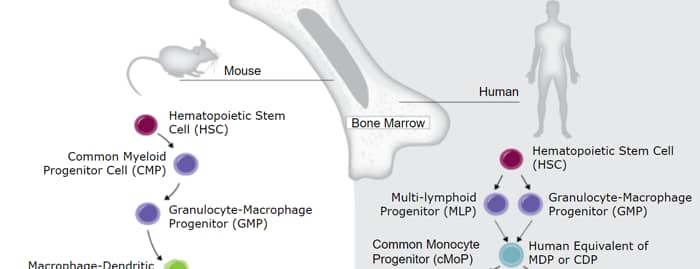
Flt-3 Ligand, also known as FL, is an alpha -helical cytokine that promotes the differentiation of multiple hematopoietic cell lineages (1‑3). Mature mouse Flt-3 Ligand consists of a 161 amino acid (aa) extracellular domain (ECD) with a cytokine-like domain and a juxtamembrane tether region, a 21 aa transmembrane segment, and a 22 aa cytoplasmic tail (4‑6). Within the ECD, mouse Flt-3 Ligand shares 71% and 81% aa sequence identity with human and rat Flt-3 Ligand, respectively. Mouse and human Flt-3 Ligand show cross-species activity (4, 5, 7). Flt-3 Ligand is expressed as a noncovalently-linked dimer by T cells and bone marrow and thymic fibroblasts (1, 8). Each 36 kDa chain carries approximately 12 kDa of N- and O-linked carbohydrates (8). Alternate splicing and proteolytic cleavage of the transmembrane form can generate a soluble 30 kDa fragment that includes the cytokine domain (4, 8). Alternate splicing of mouse Flt-3 Ligand also generates a membrane-associated isoform with a 57 aa substitution following the cytokine domain (4, 5, 8, 9). Both transmembrane and soluble Flt-3 Ligand signal through the tyrosine kinase receptor Flt-3/Flk-2 (3‑6). Flt-3 Ligand induces the expansion of monocytes and immature dendritic cells as well as early B cell lineage differentiation (2, 10). It synergizes with IL-3, GM-CSF, and SCF to promote the mobilization and myeloid differentiation of hematopoietic stem cells (4, 5, 7). It cooperates with IL-2, -6, -7, and -15 to induce NK cell development and with IL-3, -7, and -11 to induce terminal B cell maturation (1, 11). Animal studies also show Flt-3 Ligand to reduce the severity of experimentally induced allergic inflammation (12).
Mouse Flt-3 Ligand/FLT3L Antibody
R&D Systems | Catalog # AF427


Key Product Details
Validated by
Biological Validation
Species Reactivity
Validated:
Mouse
Cited:
Human, Mouse, Bacteria - Vibrio cholerae
Applications
Validated:
Western Blot, ELISA Capture (Matched Antibody Pair), Neutralization, Immunocytochemistry
Cited:
Western Blot, Neutralization, ELISA Development (Capture), Multiplex Assay
Label
Unconjugated
Antibody Source
Polyclonal Goat IgG
Loading...
Product Specifications
Immunogen
Mouse myeloma cell line NS0-derived recombinant mouse Flt-3 Ligand/FLT3L
Gly27-Arg188
Accession # P49772
Gly27-Arg188
Accession # P49772
Specificity
Detects mouse Flt-3 Ligand/FLT3L in ELISAs and Western blots. In sandwich immunoassays, less than 0.1% cross-reactivity with recombinant human Flt-3 Ligand/FLT3L is observed.
Clonality
Polyclonal
Host
Goat
Isotype
IgG
Endotoxin Level
<0.10 EU per 1 μg of the antibody by the LAL method.
Scientific Data Images for Mouse Flt-3 Ligand/FLT3L Antibody
Cell Proliferation Induced by Flt-3 Ligand/FLT3L and Neutralization by Mouse Flt-3 Ligand/FLT3L Antibody.
Recombinant Mouse Flt-3 Ligand/FLT3L (Catalog # 427-FL) stimulates proliferation in BaF3 mouse pro-B cell line transfected with mouse Flt-3 in a dose-dependent manner (orange line). Proliferation elicited by Recombinant Mouse Flt-3 Ligand/FLT3L (10 ng/mL) is neutralized (green line) by increasing concentrations of Goat Anti-Mouse Flt-3 Ligand/FLT3L Antigen Affinity-purified Polyclonal Antibody (Catalog # AF427). The ND50 is typically 0.05-0.25 µg/mL.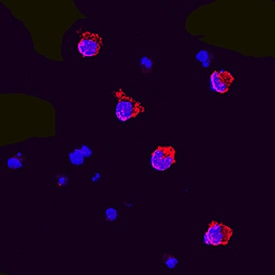
Flt-3 Ligand/FLT3L in HT‑2 Mouse Cell Line.
Flt-3 Ligand/FLT3L was detected in immersion fixed HT-2 mouse T cell line using Goat Anti-Mouse Flt-3 Ligand/FLT3L Antigen Affinity-purified Polyclonal Antibody (Catalog # AF427) at 5 µg/mL for 3 hours at room temperature. Cells were stained using the NorthernLights™ 557-conjugated Anti-Goat IgG Secondary Antibody (red; Catalog # NL001) and counterstained with DAPI (blue). Specific staining was localized to cytoplasm. View our protocol for Fluorescent ICC Staining of Non-adherent Cells.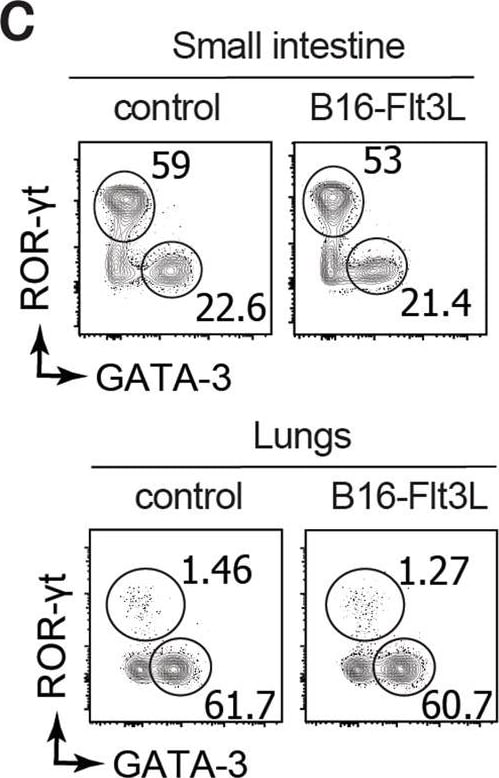
Detection of Mouse Flt-3 Ligand/FLT3L by Flow Cytometry
Flt3L-producing tumors do not expand mature ILCs in periphery. Mice were injected with 2 × 10⁶ B16-Flt3L or B16/PBS as a control. Two weeks after tumor injection, ILCs were analyzed by FACS in the lungs, small intestine and colonic lamina propria. (a) Representative dot plots showing NK1.1+T-bet+Eomes− ILC1, NK1.1+T-bet+Eomes+ cNK, GATA-3+ ILC2, ROR gamma t+ ILC3 and NKp46+ and CCR6+ ILC3 subsets gated on CD45+ Lin (CD3, CD19)neg CD90+ cells in the colonic lamina propria and (b) quantification of absolute numbers (n = 5 to 7/group, 3 experiments). Representative dot plots (c) and absolute numbers (d) of ILC2 and ILC3 in the small intestine lamina propria and lungs of B16-Flt3L and B16/PBS injected mice (n = 5 to 8/group, 3 experiments). (e) Representative dot plots of IL22+ ROR gamma t+ ILC3 and IL-5+ GATA-3+ ILC2 in the small intestine of B16-Flt3L and B16 injected mice (n = 3 to 4, 2 experiments). *P < 0.05; ns, not significant; Student’s t-test (b,d,e). Error bars represent SEM in all panels. Image collected and cropped by CiteAb from the following open publication (https://pubmed.ncbi.nlm.nih.gov/29317685), licensed under a CC-BY license. Not internally tested by R&D Systems.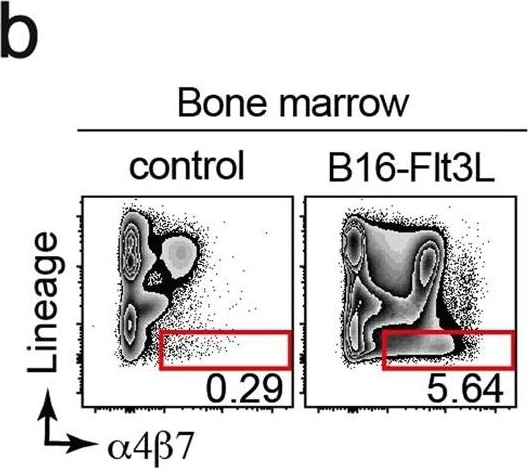
Detection of Mouse Flt-3 Ligand/FLT3L by Flow Cytometry
Flt3L-producing tumors expand CHILPs in the BM. Mice were injected with 2 × 10⁶ B16-Flt3L or B16/PBS as a control. Two weeks after tumor injection, Flt3L serum levels were analyzed by ELISA and CHILPs and ILC2P were analyzed by FACS on BM single-cell suspension. (a) Flt3L serum levels in B16/PBS and B16-Flt3L injected mice (n = 3/group, 2 experiments). Representative dot plots (b) and total number (c) of Lin− alpha 4 beta 7+ cells in the BM of wild-type mice injected with B16-Flt3L or B16/PBS (n = 6/group, 3 experiments). Representative dot plots (d) and absolute numbers (e) of CHILPs and ILC2P in the BM of Id2Gfp/+ mice injected with B16-Flt3L or B16/PBS (n = 6/group, 3 experiments). (f) Correlation plot between Flt3L serum levels determined by ELISA and BM CHILPs absolute numbers determined by FACS in mice treated with B16-Flt3L or B16 (n = 6, 2 experiments). Representative dot plots (g) and absolute numbers (h) of ILCP in the bone marrow of wild type mice injected with B16-Flt3L or B16 cells (n = 5 to 7/group, 3 experiments). *P < 0.05; **P < 0.01; ns, not significant; Student’s t-test (c,e,h), Linear regression with Pearson’s correlation analysis (f). Error bars represent SEM in all panels. Image collected and cropped by CiteAb from the following open publication (https://pubmed.ncbi.nlm.nih.gov/29317685), licensed under a CC-BY license. Not internally tested by R&D Systems.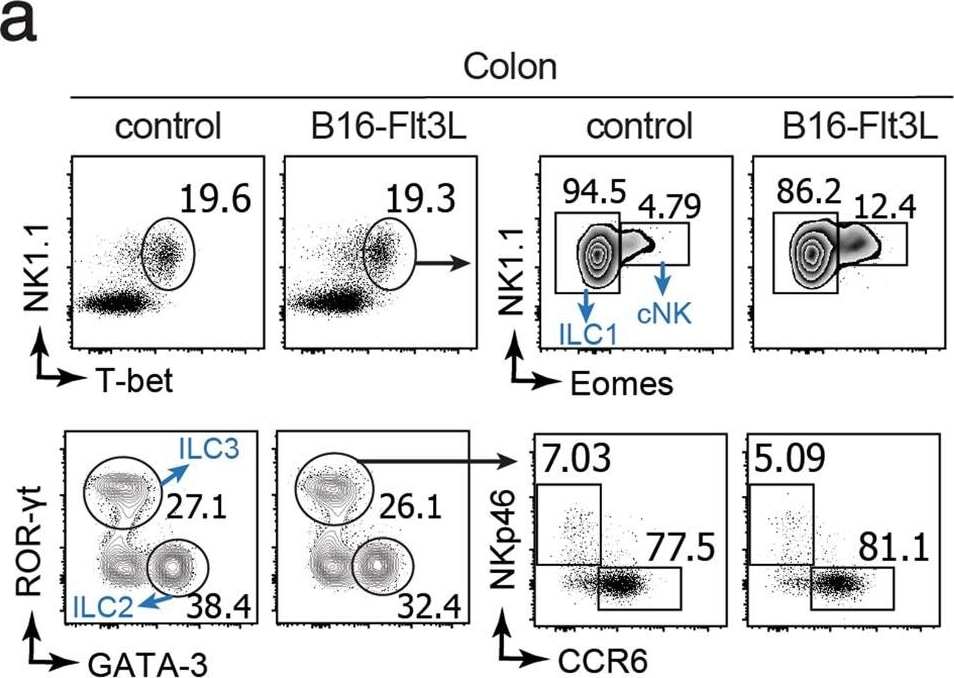
Detection of Mouse Flt-3 Ligand/FLT3L by Flow Cytometry
Flt3L-producing tumors do not expand mature ILCs in periphery. Mice were injected with 2 × 10⁶ B16-Flt3L or B16/PBS as a control. Two weeks after tumor injection, ILCs were analyzed by FACS in the lungs, small intestine and colonic lamina propria. (a) Representative dot plots showing NK1.1+T-bet+Eomes− ILC1, NK1.1+T-bet+Eomes+ cNK, GATA-3+ ILC2, ROR gamma t+ ILC3 and NKp46+ and CCR6+ ILC3 subsets gated on CD45+ Lin (CD3, CD19)neg CD90+ cells in the colonic lamina propria and (b) quantification of absolute numbers (n = 5 to 7/group, 3 experiments). Representative dot plots (c) and absolute numbers (d) of ILC2 and ILC3 in the small intestine lamina propria and lungs of B16-Flt3L and B16/PBS injected mice (n = 5 to 8/group, 3 experiments). (e) Representative dot plots of IL22+ ROR gamma t+ ILC3 and IL-5+ GATA-3+ ILC2 in the small intestine of B16-Flt3L and B16 injected mice (n = 3 to 4, 2 experiments). *P < 0.05; ns, not significant; Student’s t-test (b,d,e). Error bars represent SEM in all panels. Image collected and cropped by CiteAb from the following open publication (https://pubmed.ncbi.nlm.nih.gov/29317685), licensed under a CC-BY license. Not internally tested by R&D Systems.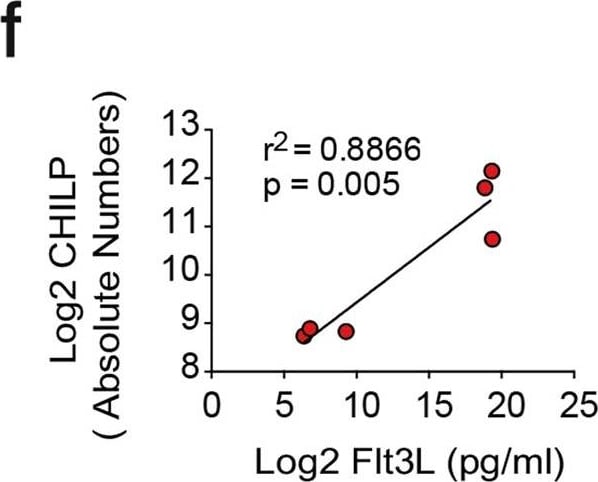
Detection of Mouse Flt-3 Ligand/FLT3L by ELISA
Flt3L-producing tumors expand CHILPs in the BM. Mice were injected with 2 × 10⁶ B16-Flt3L or B16/PBS as a control. Two weeks after tumor injection, Flt3L serum levels were analyzed by ELISA and CHILPs and ILC2P were analyzed by FACS on BM single-cell suspension. (a) Flt3L serum levels in B16/PBS and B16-Flt3L injected mice (n = 3/group, 2 experiments). Representative dot plots (b) and total number (c) of Lin− alpha 4 beta 7+ cells in the BM of wild-type mice injected with B16-Flt3L or B16/PBS (n = 6/group, 3 experiments). Representative dot plots (d) and absolute numbers (e) of CHILPs and ILC2P in the BM of Id2Gfp/+ mice injected with B16-Flt3L or B16/PBS (n = 6/group, 3 experiments). (f) Correlation plot between Flt3L serum levels determined by ELISA and BM CHILPs absolute numbers determined by FACS in mice treated with B16-Flt3L or B16 (n = 6, 2 experiments). Representative dot plots (g) and absolute numbers (h) of ILCP in the bone marrow of wild type mice injected with B16-Flt3L or B16 cells (n = 5 to 7/group, 3 experiments). *P < 0.05; **P < 0.01; ns, not significant; Student’s t-test (c,e,h), Linear regression with Pearson’s correlation analysis (f). Error bars represent SEM in all panels. Image collected and cropped by CiteAb from the following open publication (https://pubmed.ncbi.nlm.nih.gov/29317685), licensed under a CC-BY license. Not internally tested by R&D Systems.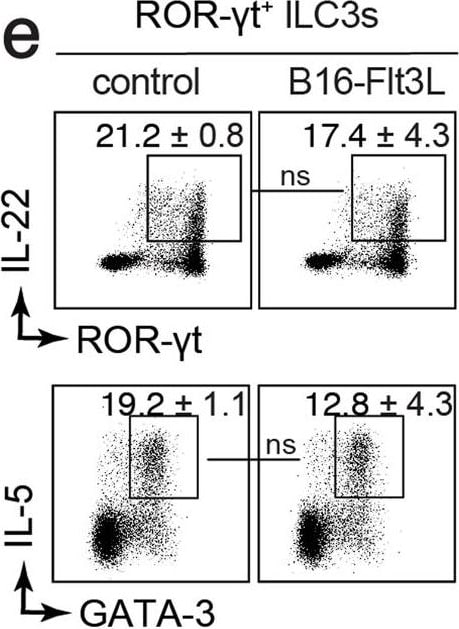
Detection of Mouse Flt-3 Ligand/FLT3L by Flow Cytometry
Flt3L-producing tumors do not expand mature ILCs in periphery. Mice were injected with 2 × 10⁶ B16-Flt3L or B16/PBS as a control. Two weeks after tumor injection, ILCs were analyzed by FACS in the lungs, small intestine and colonic lamina propria. (a) Representative dot plots showing NK1.1+T-bet+Eomes− ILC1, NK1.1+T-bet+Eomes+ cNK, GATA-3+ ILC2, ROR gamma t+ ILC3 and NKp46+ and CCR6+ ILC3 subsets gated on CD45+ Lin (CD3, CD19)neg CD90+ cells in the colonic lamina propria and (b) quantification of absolute numbers (n = 5 to 7/group, 3 experiments). Representative dot plots (c) and absolute numbers (d) of ILC2 and ILC3 in the small intestine lamina propria and lungs of B16-Flt3L and B16/PBS injected mice (n = 5 to 8/group, 3 experiments). (e) Representative dot plots of IL22+ ROR gamma t+ ILC3 and IL-5+ GATA-3+ ILC2 in the small intestine of B16-Flt3L and B16 injected mice (n = 3 to 4, 2 experiments). *P < 0.05; ns, not significant; Student’s t-test (b,d,e). Error bars represent SEM in all panels. Image collected and cropped by CiteAb from the following open publication (https://pubmed.ncbi.nlm.nih.gov/29317685), licensed under a CC-BY license. Not internally tested by R&D Systems.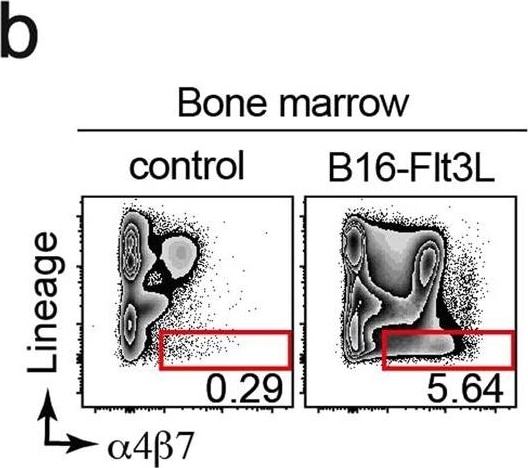
Detection of Mouse Flt-3 Ligand/FLT3L by Flow Cytometry
Flt3L-producing tumors expand CHILPs in the BM. Mice were injected with 2 × 10⁶ B16-Flt3L or B16/PBS as a control. Two weeks after tumor injection, Flt3L serum levels were analyzed by ELISA and CHILPs and ILC2P were analyzed by FACS on BM single-cell suspension. (a) Flt3L serum levels in B16/PBS and B16-Flt3L injected mice (n = 3/group, 2 experiments). Representative dot plots (b) and total number (c) of Lin− alpha 4 beta 7+ cells in the BM of wild-type mice injected with B16-Flt3L or B16/PBS (n = 6/group, 3 experiments). Representative dot plots (d) and absolute numbers (e) of CHILPs and ILC2P in the BM of Id2Gfp/+ mice injected with B16-Flt3L or B16/PBS (n = 6/group, 3 experiments). (f) Correlation plot between Flt3L serum levels determined by ELISA and BM CHILPs absolute numbers determined by FACS in mice treated with B16-Flt3L or B16 (n = 6, 2 experiments). Representative dot plots (g) and absolute numbers (h) of ILCP in the bone marrow of wild type mice injected with B16-Flt3L or B16 cells (n = 5 to 7/group, 3 experiments). *P < 0.05; **P < 0.01; ns, not significant; Student’s t-test (c,e,h), Linear regression with Pearson’s correlation analysis (f). Error bars represent SEM in all panels. Image collected and cropped by CiteAb from the following open publication (https://pubmed.ncbi.nlm.nih.gov/29317685), licensed under a CC-BY license. Not internally tested by R&D Systems.
Mouse Flt-3 Ligand ELISA Standard Curve
Recombinant Mouse Flt‑3 Ligand (Catalog # 427-FL) was serially diluted and captured by Goat Anti-Mouse Flt-3 Ligand/FLT3L Antigen Affinity-purified Polyclonal Antibody (Catalog # AF427) coated on a Clear Polystyrene Microplate (Catalog # DY990). Goat Anti-Mouse Flt-3 Ligand/FLT3L Antigen Affinity-purified Polyclonal Antibody (Catalog # AF427) was biotinylated and incubated with the protein captured on the plate. Detection of the standard curve was achieved by incubating Streptavidin-HRP (Catalog # DY998)
Mouse Flt-3 Ligand ELISA Standard Curve
Recombinant Mouse Flt‑3 Ligand (Catalog # 427-FL) was serially diluted and captured by Goat Anti-Mouse Flt-3 Ligand/FLT3L Antigen Affinity-purified Polyclonal Antibody (Catalog # AF427) coated on a Clear Polystyrene Microplate (Catalog # DY990). Goat Anti-Mouse Flt-3 Ligand/FLT3L Antigen Affinity-purified Polyclonal Antibody (Catalog # AF427) was biotinylated and incubated with the protein captured on the plate. Detection of the standard curve was achieved by incubating Streptavidin-HRP (Catalog # DY998)Applications for Mouse Flt-3 Ligand/FLT3L Antibody
Application
Recommended Usage
Immunocytochemistry
5-15 µg/mL
Sample: Immersion fixed HT-2 mouse T cell line
Sample: Immersion fixed HT-2 mouse T cell line
Western Blot
0.1 µg/mL
Sample: Recombinant Mouse Flt-3 Ligand/FLT3L (Catalog # 427-FL)
Sample: Recombinant Mouse Flt-3 Ligand/FLT3L (Catalog # 427-FL)
Neutralization
Measured by its ability to neutralize Flt‑3 Ligand/FLT3L-induced proliferation in BaF3 mouse pro‑B cell line transfected with mouse Flt‑3. Hannum, C. et al. (1994) Nature 368:643. The Neutralization Dose (ND50) is typically 0.05-0.25 µg/mL in the presence of 10 ng/mL Recombinant Mouse Flt‑3 Ligand/FLT3L.
Mouse Flt-3 Ligand/FLT3L Sandwich Immunoassay
Please Note: Optimal dilutions of this antibody should be experimentally determined.
Formulation, Preparation, and Storage
Purification
Antigen Affinity-purified
Reconstitution
Reconstitute at 0.2 mg/mL in sterile PBS. For liquid material, refer to CoA for concentration.
Loading...
Formulation
Lyophilized from a 0.2 μm filtered solution in PBS with Trehalose. *Small pack size (SP) is supplied either lyophilized or as a 0.2 µm filtered solution in PBS.
Shipping
Lyophilized product is shipped at ambient temperature. Liquid small pack size (-SP) is shipped with polar packs. Upon receipt, store immediately at the temperature recommended below.
Stability & Storage
Use a manual defrost freezer and avoid repeated freeze-thaw cycles.
- 12 months from date of receipt, -20 to -70 °C as supplied.
- 1 month, 2 to 8 °C under sterile conditions after reconstitution.
- 6 months, -20 to -70 °C under sterile conditions after reconstitution.
Calculators
Background: Flt-3 Ligand/FLT3L
References
- Wodnar-Filipowicz, A. (2003) News Physiol. Sci. 18:247.
- Dong, J. et al. (2002) Cancer Biol. Ther. 1:486.
- Gilliland, D.G. and J.D. Griffin (2002) Blood 100:1532.
- Hannum, C. et al. (1994) Nature 368:643.
- Lyman, S.D. et al. (1993) Cell 75:1157.
- Savvides, S.N. et al. (2000) Nat. Struct. Biol. 7:486.
- Lyman, S.D. et al. (1994) Blood 83:2795.
- McClanahan, T. et al. (1996) Blood 88:3371.
- Lyman, S.D. et al. (1995) Oncogene 10:149.
- Diener, K.R. et al. (2008) Exp. Hematol. 36:51.
- Farag, S.S. and M.A. Caligiuri (2006) Blood Rev. 20:123.
- Edwan, J.H. et al. (2004) J. Immunol. 172:5016.
Long Name
fms-like Tyrosine Kinase 3 Ligand
Alternate Names
FLG3L, Flt3L, FLT3LG
Gene Symbol
FLT3LG
UniProt
Additional Flt-3 Ligand/FLT3L Products
Product Documents for Mouse Flt-3 Ligand/FLT3L Antibody
Certificate of Analysis
To download a Certificate of Analysis, please enter a lot or batch number in the search box below.
Note: Certificate of Analysis not available for kit components.
Product Specific Notices for Mouse Flt-3 Ligand/FLT3L Antibody
For research use only
Related Research Areas
Citations for Mouse Flt-3 Ligand/FLT3L Antibody
 Powered by Bioz
Customer Reviews for Mouse Flt-3 Ligand/FLT3L Antibody
There are currently no reviews for this product. Be the first to review Mouse Flt-3 Ligand/FLT3L Antibody and earn rewards!
Have you used Mouse Flt-3 Ligand/FLT3L Antibody?
Submit a review and receive an Amazon gift card!
$25/€18/£15/$25CAN/¥2500 for a review with an image
$10/€7/£6/$10CAN/¥1110 for a review without an image
Submit a review
Protocols
Find general support by application which include: protocols, troubleshooting, illustrated assays, videos and webinars.
- Appropriate Fixation of IHC/ICC Samples
- Cellular Response to Hypoxia Protocols
- ClariTSA™ Fluorophore Kits
- Detection & Visualization of Antibody Binding
- ICC Cell Smear Protocol for Suspension Cells
- ICC Immunocytochemistry Protocol Videos
- ICC for Adherent Cells
- Immunocytochemistry (ICC) Protocol
- Immunocytochemistry Troubleshooting
- Immunofluorescence of Organoids Embedded in Cultrex Basement Membrane Extract
- Immunohistochemistry (IHC) and Immunocytochemistry (ICC) Protocols
- Preparing Samples for IHC/ICC Experiments
- Preventing Non-Specific Staining (Non-Specific Binding)
- Primary Antibody Selection & Optimization
- Protocol for VisUCyte™ HRP Polymer Detection Reagent
- Protocol for the Fluorescent ICC Staining of Cell Smears - Graphic
- Protocol for the Fluorescent ICC Staining of Cultured Cells on Coverslips - Graphic
- Protocol for the Preparation and Fluorescent ICC Staining of Cells on Coverslips
- Protocol for the Preparation and Fluorescent ICC Staining of Non-adherent Cells
- Protocol for the Preparation and Fluorescent ICC Staining of Stem Cells on Coverslips
- Protocol for the Preparation of a Cell Smear for Non-adherent Cell ICC - Graphic
- R&D Systems Quality Control Western Blot Protocol
- TUNEL and Active Caspase-3 Detection by IHC/ICC Protocol
- The Importance of IHC/ICC Controls
- Troubleshooting Guide: Western Blot Figures
- Western Blot Conditions
- Western Blot Protocol
- Western Blot Protocol for Cell Lysates
- Western Blot Troubleshooting
- Western Blot Troubleshooting Guide
- View all Protocols, Troubleshooting, Illustrated assays and Webinars