
Vascular endothelial growth factor C (VEGF-C) and VEGF-D constitute a VEGF sub-family that share the conserved VEGF homology domain (VHD) with other VEGF family members but are distinguished by their preferential formation of non-covalent homodimers. Both VEGF-C and -D have long N- and C-terminal propeptide extensions. The VEGF-C propeptide undergoes stepwise proteolytic processing to generate ligands with increasing affinity for VEGF-R3. However, only the fully processed VEGF-C containing just the VHD can bind VEGF-R2. None of the VEGF-C forms have appreciable affinity for VEGF-R1. VEGF-C is expressed in multiple adult human tissues, most prominently in lymph nodes, heart, placenta, ovary, and small intestine. Traces of VEGF-C are also detected in brain, liver, thymus, skeletal muscles, spleen, prostate, testis and colon. Unlike other VEGF family members, VEGF-C expression is not regulated by hypoxia. VEGF-C is a lymphangiogenic growth factor and the VEGF-C/VEGF-R3 signaling pathway has been shown to be crucial for lymphangiogenesis. VEGF-C and VEGF-R3 are usually co-expressed at sites with lymphatic vessel sprouting, in the embryo, and in various pathological conditions. VEGF-C stimulates lymphangiogenesis in the avian chorioallantoic membrane model. Over-expression of VEGF-C in breast cancer cells has been shown to increase intratumoral lymphangiogenesis, resulting in enhanced metastasis to regional lymph nodes and to the lungs. Mouse tumors expressing elevated levels of VEGF-C have increased lymphatic metastasis and increased lymphatic surface area in the tumor margin. VEGF-C is also associated with lymph node metastasis of colorectal carcinoma. Besides lymphangiogenesis, VEGF-C can have potent effects on physiological angiogenesis through its interaction with VEGF R2. The protein can stimulate migration and proliferation of endothelial cells in vitro and in vivo and has been shown to stimulate angiogenesis in the mouse cornea and in rabbit hind limb ischaemia.

Scientific images may be resized, cropped, or adjusted for brightness or contrast for presentation purposes. These updates are limited to presentation and do not affect the underlying scientific interpretation of the data. Where available, additional source data may be provided upon request.
Key Product Details
Species Reactivity
Validated:
Cited:
Applications
Validated:
Cited:
Label
Antibody Source
Product Specifications
Immunogen
Specificity
Clonality
Host
Isotype
Scientific Data Images for Human VEGF-C Antibody
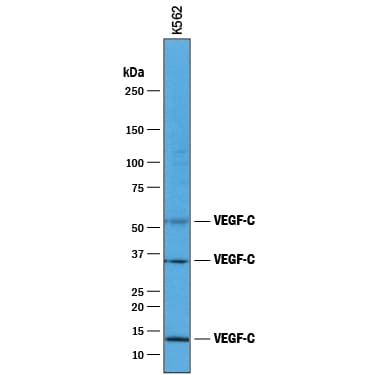
Detection of Human VEGF‑C by Western Blot.
Western blot shows lysates of K562 human chronic myelogenous leukemia cell line. PVDF membrane was probed with 1 µg/mL of Goat Anti-Human VEGF-C Antigen Affinity-purified Polyclonal Antibody (Catalog # AF752) followed by HRP-conjugated Anti-Goat IgG Secondary Antibody (HAF017). Specific bands were detected for VEGF-C at approximately 52 kDa, 34 kDa, and 13 kDa (as indicated). This experiment was conducted under reducing conditions and using Immunoblot Buffer Group 1.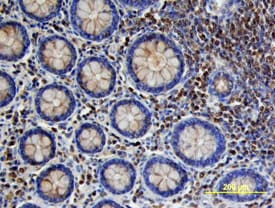
VEGF-C in Human Colon Cancer Tissue.
VEGF-C was detected in immersion fixed paraffin-embedded sections of human colon cancer tissue using Goat Anti-Human VEGF-C Antigen Affinity-purified Polyclonal Antibody (Catalog # AF752) at 10 µg/mL overnight at 4 °C. Tissue was stained using the Anti-Goat HRP-DAB Cell & Tissue Staining Kit (brown; CTS008) and counterstained with hematoxylin (blue). Specific labeling was localized to stromal cells surrounding crypts in the colon mucosa (cross section across crypts). View our protocol for Chromogenic IHC Staining of Paraffin-embedded Tissue Sections.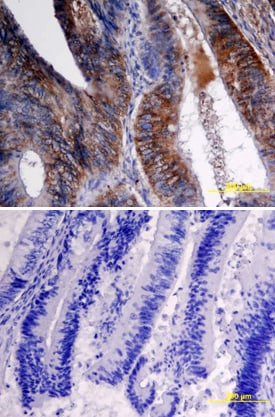
VEGF-C in Human Colon Cancer Tissue.
VEGF-C was detected in immersion fixed paraffin-embedded sections of human colon cancer tissue using Goat Anti-Human VEGF-C Antigen Affinity-purified Polyclonal Antibody (Catalog # AF752) at 15 µg/mL overnight at 4 °C. Tissue was stained using the Anti-Goat HRP-DAB Cell & Tissue Staining Kit (brown; CTS008) and counterstained with hematoxylin (blue). Specific labeling was localized to epithelial cells in crypts of the colon mucusa (longitudinal section of crypts). Lower panel shows a lack of labeling if primary antibodies are omitted and tissue is stained only with secondary antibody followed by incubation with detection reagents. View our protocol for Chromogenic IHC Staining of Paraffin-embedded Tissue Sections.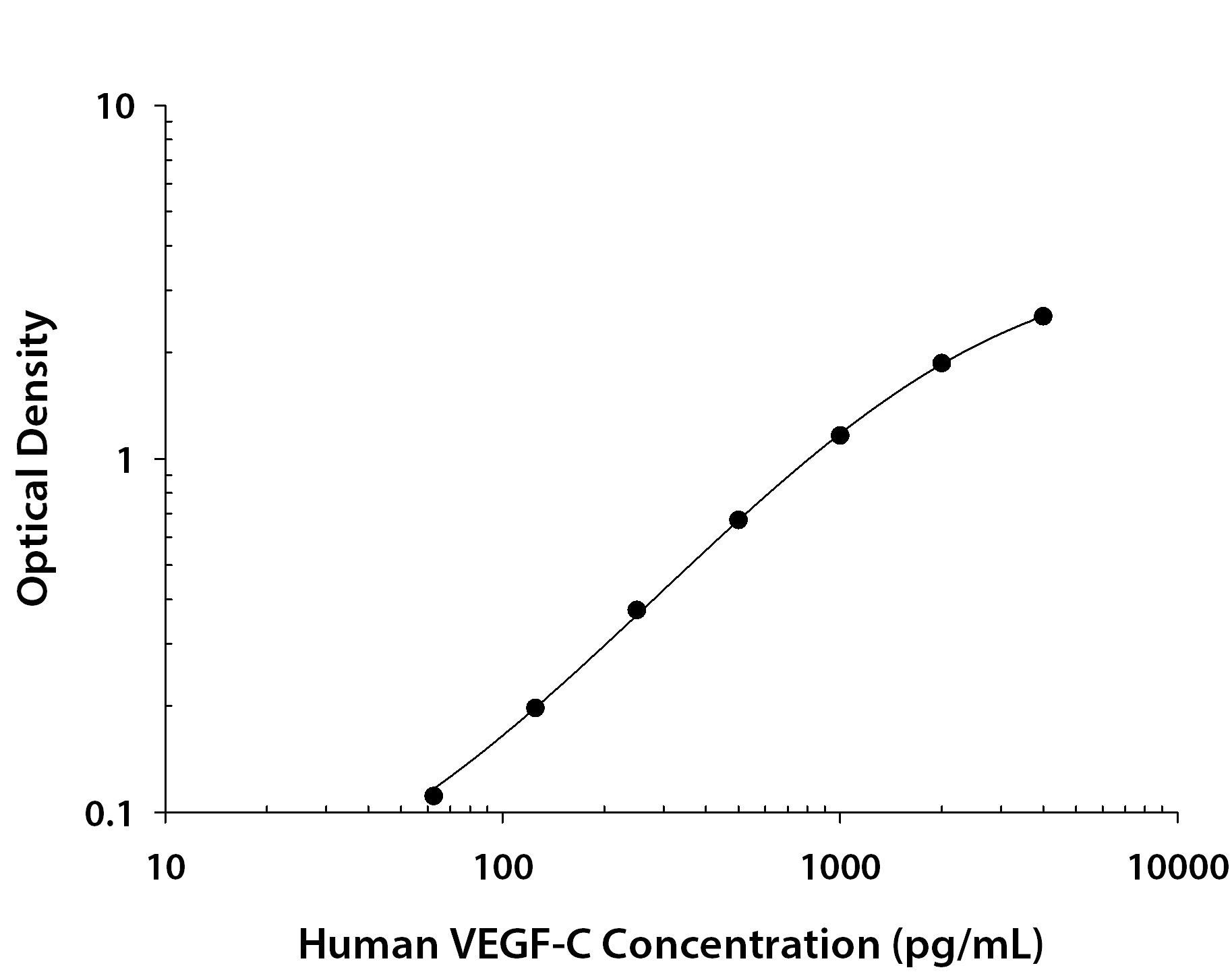
Human VEGF‑C ELISA Standard Curve.
Recombinant Human VEGF‑C protein was serially diluted 2-fold and captured by Mouse Anti-Human VEGF‑C Monoclonal Antibody (MAB752) coated on a Clear Polystyrene Microplate (DY990). Goat Anti-Human VEGF‑C Antigen Affinity-purified Polyclonal Antibody (Catalog # AF752) was biotinylated and incubated with the protein captured on the plate. Detection of the standard curve was achieved by incubating Streptavidin-HRP (DY998) followed by Substrate Solution (DY999) and stopping the enzymatic reaction with Stop Solution (DY994).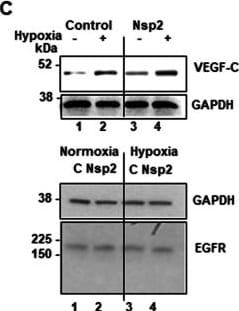
Detection of Human VEGF-C by Western Blot
Western blot analyses of FGF2 and VEGF proteins in lysates. A FGF2 CUG1 and AUG isoforms in Nsp2 expressing cells in normoxic and hypoxic conditions (Right and left panel represents three biologically independent experiments). GAPDH was used as a normalization control. B Densitometric ratio of CUG1 to GAPDH (left panel) and AUG to GAPDH (right panel). C Left, the representative images of western blots of VEGF-C, EGFR, and GAPDH. Right, graphs of the densitometric analysis of western blots. The graphs represent the mean ratio of signal of VEGF-C to GAPDH normalized to that in control cells grown under normal conditions, set as one (± SD). Western blot analysis was performed for each set of proteins using lysates from three separate experiments and repeated at least twice for each set of lysates Image collected and cropped by CiteAb from the following open publication (https://pubmed.ncbi.nlm.nih.gov/36998012), licensed under a CC-BY license. Not internally tested by R&D Systems.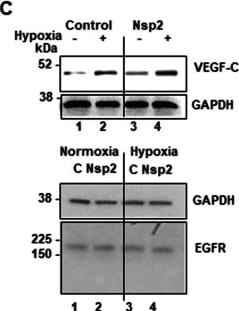
Detection of Human VEGF-C by Western Blot
Western blot analyses of FGF2 and VEGF proteins in lysates. A FGF2 CUG1 and AUG isoforms in Nsp2 expressing cells in normoxic and hypoxic conditions (Right and left panel represents three biologically independent experiments). GAPDH was used as a normalization control. B Densitometric ratio of CUG1 to GAPDH (left panel) and AUG to GAPDH (right panel). C Left, the representative images of western blots of VEGF-C, EGFR, and GAPDH. Right, graphs of the densitometric analysis of western blots. The graphs represent the mean ratio of signal of VEGF-C to GAPDH normalized to that in control cells grown under normal conditions, set as one (± SD). Western blot analysis was performed for each set of proteins using lysates from three separate experiments and repeated at least twice for each set of lysates Image collected and cropped by CiteAb from the following open publication (https://pubmed.ncbi.nlm.nih.gov/36998012), licensed under a CC-BY license. Not internally tested by R&D Systems.Applications for Human VEGF-C Antibody
ELISA
This antibody functions as an ELISA detection antibody when paired with Mouse Anti-Human VEGF‑C Monoclonal Antibody (Catalog # MAB752).
This product is intended for assay development on various assay platforms requiring antibody pairs. We recommend the Human VEGF-C DuoSet ELISA Kit (Catalog # DY752B) for convenient development of a sandwich ELISA or the Human VEGF-C Quantikine ELISA Kit (Catalog # DVEC00) for a complete optimized ELISA.
Immunohistochemistry
Sample: Immersion fixed paraffin-embedded sections of human colon and human colon cancer tissue
Western Blot
Sample: K562 human chronic myelogenous leukemia cell line
Reviewed Applications
Read 2 reviews rated 4.5 using AF752 in the following applications:
Formulation, Preparation, and Storage
Purification
Reconstitution
Reconstitute at 0.2 mg/mL in sterile PBS. For liquid material, refer to CoA for concentration.
Formulation
Shipping
Stability & Storage
- 12 months from date of receipt, -20 to -70 °C as supplied.
- 1 month, 2 to 8 °C under sterile conditions after reconstitution.
- 6 months, -20 to -70 °C under sterile conditions after reconstitution.
Calculators
Background: VEGF-C
Long Name
Alternate Names
Gene Symbol
Additional VEGF-C Products
Product Documents for Human VEGF-C Antibody
Certificate of Analysis
To download a Certificate of Analysis, please enter a lot or batch number in the search box below.
Note: Certificate of Analysis not available for kit components.
Product Specific Notices for Human VEGF-C Antibody
For research use only
Citations for Human VEGF-C Antibody
 Powered by Bioz
Customer Reviews for Human VEGF-C Antibody (2)
Have you used Human VEGF-C Antibody?
Submit a review and receive an Amazon gift card!
$25/€18/£15/$25CAN/¥2500 for a review with an image
$10/€7/£6/$10CAN/¥1110 for a review without an image
Submit a review
Customer Images
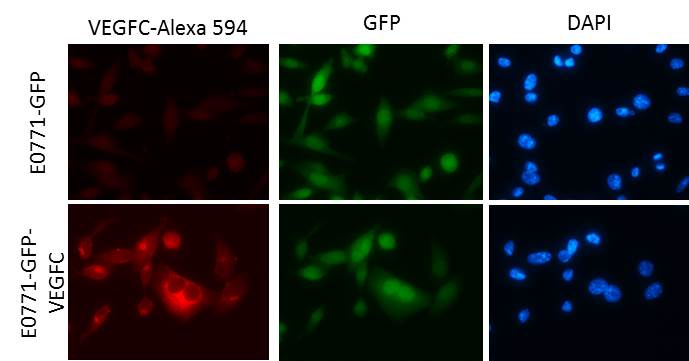
-
Application: Immunocytochemistry/ImmunofluorescenceSample Tested: Cell Culture SamplesSpecies: MouseVerified Customer | Posted 01/22/2020

-
Application: ImmunofluorescenceSample Tested: See PMID 23423575Species: HumanVerified Customer | Posted 01/09/2015
There are no reviews that match your criteria.
Protocols
Find general support by application which include: protocols, troubleshooting, illustrated assays, videos and webinars.
- Antigen Retrieval Protocol (PIER)
- Antigen Retrieval for Frozen Sections Protocol
- Appropriate Fixation of IHC/ICC Samples
- Cellular Response to Hypoxia Protocols
- Chromogenic IHC Staining of Formalin-Fixed Paraffin-Embedded (FFPE) Tissue Protocol
- Chromogenic Immunohistochemistry Staining of Frozen Tissue
- ClariTSA™ Fluorophore Kits
- Detection & Visualization of Antibody Binding
- ELISA Sample Preparation & Collection Guide
- ELISA Troubleshooting Guide
- Fluorescent IHC Staining of Frozen Tissue Protocol
- Graphic Protocol for Heat-induced Epitope Retrieval
- Graphic Protocol for the Preparation and Fluorescent IHC Staining of Frozen Tissue Sections
- Graphic Protocol for the Preparation and Fluorescent IHC Staining of Paraffin-embedded Tissue Sections
- Graphic Protocol for the Preparation of Gelatin-coated Slides for Histological Tissue Sections
- How to Run an R&D Systems DuoSet ELISA
- How to Run an R&D Systems Quantikine ELISA
- How to Run an R&D Systems Quantikine™ QuicKit™ ELISA
- IHC Sample Preparation (Frozen sections vs Paraffin)
- Immunofluorescent IHC Staining of Formalin-Fixed Paraffin-Embedded (FFPE) Tissue Protocol
- Immunohistochemistry (IHC) and Immunocytochemistry (ICC) Protocols
- Immunohistochemistry Frozen Troubleshooting
- Immunohistochemistry Paraffin Troubleshooting
- Preparing Samples for IHC/ICC Experiments
- Preventing Non-Specific Staining (Non-Specific Binding)
- Primary Antibody Selection & Optimization
- Protocol for Heat-Induced Epitope Retrieval (HIER)
- Protocol for Making a 4% Formaldehyde Solution in PBS
- Protocol for VisUCyte™ HRP Polymer Detection Reagent
- Protocol for the Preparation & Fixation of Cells on Coverslips
- Protocol for the Preparation and Chromogenic IHC Staining of Frozen Tissue Sections
- Protocol for the Preparation and Chromogenic IHC Staining of Frozen Tissue Sections - Graphic
- Protocol for the Preparation and Chromogenic IHC Staining of Paraffin-embedded Tissue Sections
- Protocol for the Preparation and Chromogenic IHC Staining of Paraffin-embedded Tissue Sections - Graphic
- Protocol for the Preparation and Fluorescent IHC Staining of Frozen Tissue Sections
- Protocol for the Preparation and Fluorescent IHC Staining of Paraffin-embedded Tissue Sections
- Protocol for the Preparation of Gelatin-coated Slides for Histological Tissue Sections
- Quantikine HS ELISA Kit Assay Principle, Alkaline Phosphatase
- Quantikine HS ELISA Kit Principle, Streptavidin-HRP Polymer
- R&D Systems Quality Control Western Blot Protocol
- Sandwich ELISA (Colorimetric) – Biotin/Streptavidin Detection Protocol
- Sandwich ELISA (Colorimetric) – Direct Detection Protocol
- TUNEL and Active Caspase-3 Detection by IHC/ICC Protocol
- The Importance of IHC/ICC Controls
- Troubleshooting Guide: ELISA
- Troubleshooting Guide: Immunohistochemistry
- Troubleshooting Guide: Western Blot Figures
- Western Blot Conditions
- Western Blot Protocol
- Western Blot Protocol for Cell Lysates
- Western Blot Troubleshooting
- Western Blot Troubleshooting Guide
- View all Protocols, Troubleshooting, Illustrated assays and Webinars