
Small Molecules for Stem Cell Differentiation
Stem cell differentiation involves the changing of a cell to a more specialized cell type, involving a switch from proliferation to specialization. This involves a succession of alterations in cell morphology, membrane potential, metabolic activity and signal responsiveness.
Stem cell differentiation involves the changing of a cell to a more specialized cell type, involving a switch from proliferation to specialization. This involves a succession of alterations in cell morphology, membrane potential, metabolic activity and responsiveness to certain signals. Differentiation leads to the commitment of a cell to developmental lineages and the acquisition of specific functions of committed cells depending upon the tissue in which they will finally reside. Stem cell differentiation is tightly regulated by signaling pathways and modifications in gene expression.
Stem cells can be categorized into groups depending on their ability to differentiate.
- Totipotent: can differentiate into all cell types;
- Pluripotent: can differentiate into almost all cell types;
- Multipotent: can differentiate into a related family of cell types;
- Oligopotent: can differentiate into a few different cells;
- Unipotent: can produce one cell type only.
Embryonic stem cells (ESCs) are pluripotent cells that differentiate as a result of signaling mechanisms. These are tightly controlled by most growth factors, cytokines and epigenetic processes such as DNA methylation and chromatin remodeling. ESCs divide into two cells: one is a duplicate stem cell (the process of self-renewal) and the other daughter cell is one which will differentiate. The daughter cells divides and after each division it becomes more specialized. When it reaches a mature cell type downstream (for example, becomes a red blood cell) it will no longer divide. The ability of ESCs to differentiate is currently being researched for the treatment of many diseases including Parkinson's disease and cancer.
Adult or 'somatic' stem cells are thought to be undifferentiated. Their primary role is to self-renew and maintain or repair the tissue in which they reside.
View all pluripotent stem cell resources available from R&D Systems.
Related Products & Information
| GMP iPSC Expansion Medium | Small Molecules for Stem Cell Research | Stem Cell Transcription Factors |
Resources
Literature | Pathways
Stem Cell Research Product Guide
This product guide provides a background to the use of small molecules in stem cell research and lists over 200 products for use in:
- Self-renewal and Maintenance
- Differentiation
- Reprogramming
- Organoid Generation
- GMP and Ancillary Material Grade Products
Stem Cell Workflow Poster
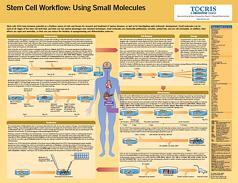
Stem cells have potential as a source of cells and tissues for research and treatment of disease. This poster summarizes some key protocols demonstrating the use of small molecules across the stem cell workflow, from reprogramming, through self-renewal, storage and differentiation to verification. Advantages of using small molecules are also highlighted.
Stem Cells Poster

Written by Rebecca Quelch and Stefan Przyborski from Durham University (UK), this poster describes the isolation of pluripotent stem cells, their maintenance in culture, differentiation, and the generation and potential uses of organoids.
Notch Signaling Pathway
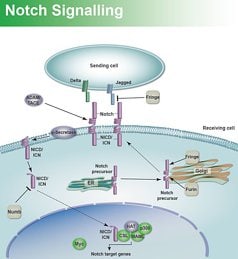
The Notch pathway is involved in determination of cell fate, regulation of pattern formation and other developmental settings. Disrupted signaling can cause developmental defects and a range of adult pathologies.