Scientific images may be resized, cropped, or adjusted for brightness or contrast for presentation purposes. These updates are limited to presentation and do not affect the underlying scientific interpretation of the data. Where available, additional source data may be provided upon request.
Key Product Details
Species Reactivity
Validated:
Cited:
Applications
Validated:
Cited:
Label
Antibody Source
Product Specifications
Immunogen
Asn189-Thr353
Accession # P04049
Specificity
Clonality
Host
Isotype
Scientific Data Images for Raf-1 Antibody (563002)
Detection of Human, Mouse, and Rat Raf‑1 by Western Blot.
Western blot shows lysates of MCF-7 human breast cancer cell line, HepG2 human hepatocellular carcinoma cell line, A431 human epithelial carcinoma cell line, L-929 mouse fibroblast cell line, and NRK rat normal kidney cell line. PVDF Membrane was probed with 1 µg/mL of Mouse Anti-Human/Mouse/Rat Raf-1 Monoclonal Antibody (Catalog # MAB4540) followed by HRP-conjugated Anti-Mouse IgG Secondary Antibody (Catalog # HAF007). A specific band was detected for Raf-1 at approximately 74 kDa (as indicated). This experiment was conducted under reducing conditions and using Immunoblot Buffer Group 3.
Raf‑1 in Human Liver.
Raf-1 was detected in immersion fixed paraffin-embedded sections of human liver array using Mouse Anti-Human/Mouse/Rat Raf-1 Monoclonal Antibody (Catalog # MAB4540) at 15 µg/mL overnight at 4 °C. Tissue was stained using the Anti-Mouse HRP-DAB Cell & Tissue Staining Kit (brown; Catalog # CTS002) and counterstained with hematoxylin (blue). Lower panel shows a lack of labeling if primary antibodies are omitted and tissue is stained only with secondary antibody followed by incubation with detection reagents. View our protocol for Chromogenic IHC Staining of Paraffin-embedded Tissue Sections.
Detection of Human Raf‑1 by Simple WesternTM.
Simple Western lane view shows lysates of MCF‑7 human breast cancer cell line, loaded at 0.2 mg/mL. A specific band was detected for Raf‑1 at approximately 75 kDa (as indicated) using 10 µg/mL of Mouse Anti-Human/Mouse/Rat Raf‑1 Monoclonal Antibody (Catalog # MAB4540). This experiment was conducted under reducing conditions and using the 12-230 kDa separation system.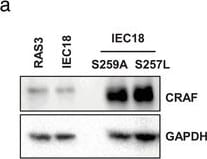
Detection of Raf-1 by Western Blot
CRAF activity is sufficient to drive macropinocytosis. Overexpression of constitutively active mutants of the CRAF kinase (S259A or S257L) activates the EV uptake, causes phenotypic transformation and triggers formation of ruffle structures. (a) Western blotting documents overexpression of the CRAF kinase mutants in IEC18 cells including IEC18‐CRAF/S259A and IEC18‐CRAF/S257L cells. (b) Flow cytometry indicates the increased uptake of fluorescent RAS3 EVs by IEC18‐CRAF/S259A and IEC18‐CRAF/S257L relative to RAS3 cells. CRAF mediated EV uptake is obliterated by a specific CRAF inhibitor GW5407 (flow cytometry, three biological replicates for RAS3 and GW5074‐treated cells and six for control CRAF mutant IEC18 cells). (c) Confocal images illustrating a dramatic morphological transformation coupled with the generation of ruffle structures and increased uptake of fluorescent EVs by IEC18‐CRAF/S259A and IEC18‐CRAF/S257L cell lines compared to parental IEC18 cells. (d) Confocal images of immunofluorescent staining show that intracellular distribution of the endogenous RAS protein is re‐organized following activated CRAF expression. RAS signal was enhanced and clustered around ruffle region in contrast to its dimmer appearance and distribution around plasma membrane in non‐transformed cells Image collected and cropped by CiteAb from the following open publication (https://pubmed.ncbi.nlm.nih.gov/34136107), licensed under a CC-BY license. Not internally tested by R&D Systems.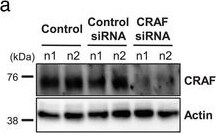
Detection of Raf-1 by Western Blot
CRAF is required for particle macropinocytosis by HRAS transformed cells. (a) Western blotting documenting the downregulation of CRAF by siRNA in RAS3 cells. (b) Flow cytometry illustrates the reduced EV uptake by RAS3 cells following CRAF down‐regulation. (c to e) Confocal images documenting the decreased 70‐kDa dextran and EV uptake in CRAF siRNA‐treated RAS3 cells (c). However, transferrin uptake was not affected in CRAF siRNA treated RAS3 cells (d). Quantification of EV uptake in confocal images; fluorescent deposit counting was conducted in 3 randomly taken images of individual cells Image collected and cropped by CiteAb from the following open publication (https://pubmed.ncbi.nlm.nih.gov/34136107), licensed under a CC-BY license. Not internally tested by R&D Systems.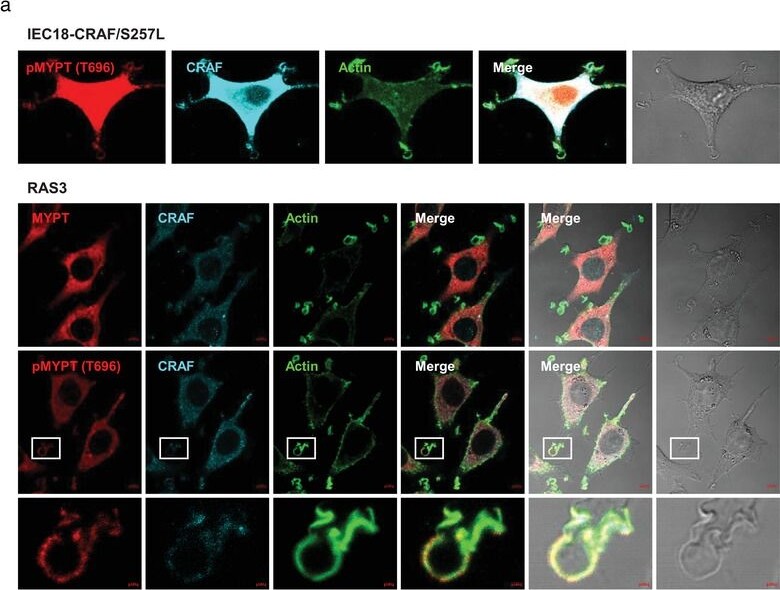
Detection of Raf-1 by Immunocytochemistry/ Immunofluorescence
Signalling intermediates of the RAS/CRAF macropinocytosis pathway and its impact on experimental metastasis. (a) Phosphorylation of myosin phosphatase (MYPT) in cells harbouring transformed CRAF and RAS. Confocal images point to co‐localization between CRAF and pMYPT (T696) in IEC18‐CRAF/S257L and RAS3 cells. Additional co‐localization images were represented in Figure S9. (b and c) Metastasis assays: Control and EIPA pre‐treated (19 h) RAS3 cells were injected to the YFP‐SCID mouse via tail vein (n = 8 for control and n = 9 for EIPA pre‐treated RAS3 cells). After 4 weeks, mice were sacrificed and lung tissues were extracted to enumerate metastatic nodules. Additional biological replicate in NSG mice (n = 7) are presented in Figure S12C Image collected and cropped by CiteAb from the following open publication (https://pubmed.ncbi.nlm.nih.gov/34136107), licensed under a CC-BY license. Not internally tested by R&D Systems.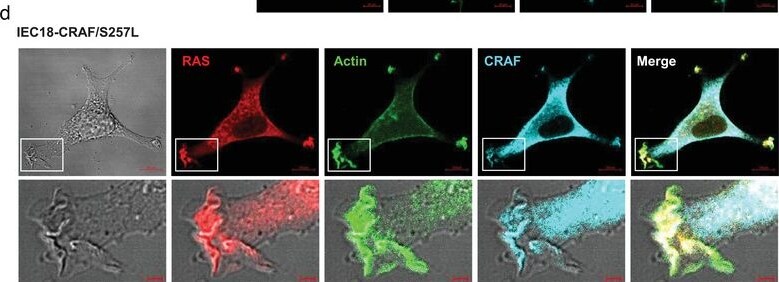
Detection of Raf-1 by Immunocytochemistry/ Immunofluorescence
CRAF activity is sufficient to drive macropinocytosis. Overexpression of constitutively active mutants of the CRAF kinase (S259A or S257L) activates the EV uptake, causes phenotypic transformation and triggers formation of ruffle structures. (a) Western blotting documents overexpression of the CRAF kinase mutants in IEC18 cells including IEC18‐CRAF/S259A and IEC18‐CRAF/S257L cells. (b) Flow cytometry indicates the increased uptake of fluorescent RAS3 EVs by IEC18‐CRAF/S259A and IEC18‐CRAF/S257L relative to RAS3 cells. CRAF mediated EV uptake is obliterated by a specific CRAF inhibitor GW5407 (flow cytometry, three biological replicates for RAS3 and GW5074‐treated cells and six for control CRAF mutant IEC18 cells). (c) Confocal images illustrating a dramatic morphological transformation coupled with the generation of ruffle structures and increased uptake of fluorescent EVs by IEC18‐CRAF/S259A and IEC18‐CRAF/S257L cell lines compared to parental IEC18 cells. (d) Confocal images of immunofluorescent staining show that intracellular distribution of the endogenous RAS protein is re‐organized following activated CRAF expression. RAS signal was enhanced and clustered around ruffle region in contrast to its dimmer appearance and distribution around plasma membrane in non‐transformed cells Image collected and cropped by CiteAb from the following open publication (https://pubmed.ncbi.nlm.nih.gov/34136107), licensed under a CC-BY license. Not internally tested by R&D Systems.Applications for Raf-1 Antibody (563002)
Immunohistochemistry
Sample: Immersion-fixed paraffin-embedded sections of human liver and human liver cancer tissue
Simple Western
Sample: MCF‑7 human breast cancer cell line
Western Blot
Sample: MCF‑7 human breast cancer cell line, HepG2 human hepatocellular carcinoma cell line, A431 human epithelial carcinoma cell line, L‑929 mouse fibroblast cell line, and NRK rat normal kidney cell line
Reviewed Applications
Read 3 reviews rated 4.3 using MAB4540 in the following applications:
Formulation, Preparation, and Storage
Purification
Reconstitution
Reconstitute at 0.5 mg/mL in sterile PBS. For liquid material, refer to CoA for concentration.
Formulation
Shipping
Stability & Storage
- 12 months from date of receipt, -20 to -70 °C as supplied.
- 1 month, 2 to 8 °C under sterile conditions after reconstitution.
- 6 months, -20 to -70 °C under sterile conditions after reconstitution.
Calculators
Background: Raf-1
Long Name
Alternate Names
Gene Symbol
UniProt
Additional Raf-1 Products
Product Documents for Raf-1 Antibody (563002)
Certificate of Analysis
To download a Certificate of Analysis, please enter a lot or batch number in the search box below.
Note: Certificate of Analysis not available for kit components.
Product Specific Notices for Raf-1 Antibody (563002)
For research use only
Related Research Areas
Citations for Raf-1 Antibody (563002)
 Powered by Bioz
Customer Reviews for Raf-1 Antibody (563002) (3)
Have you used Raf-1 Antibody (563002)?
Submit a review and receive an Amazon gift card!
$25/€18/£15/$25CAN/¥2500 for a review with an image
$10/€7/£6/$10CAN/¥1110 for a review without an image
Submit a review
Customer Images
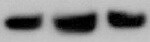
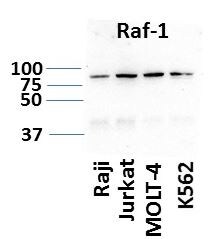
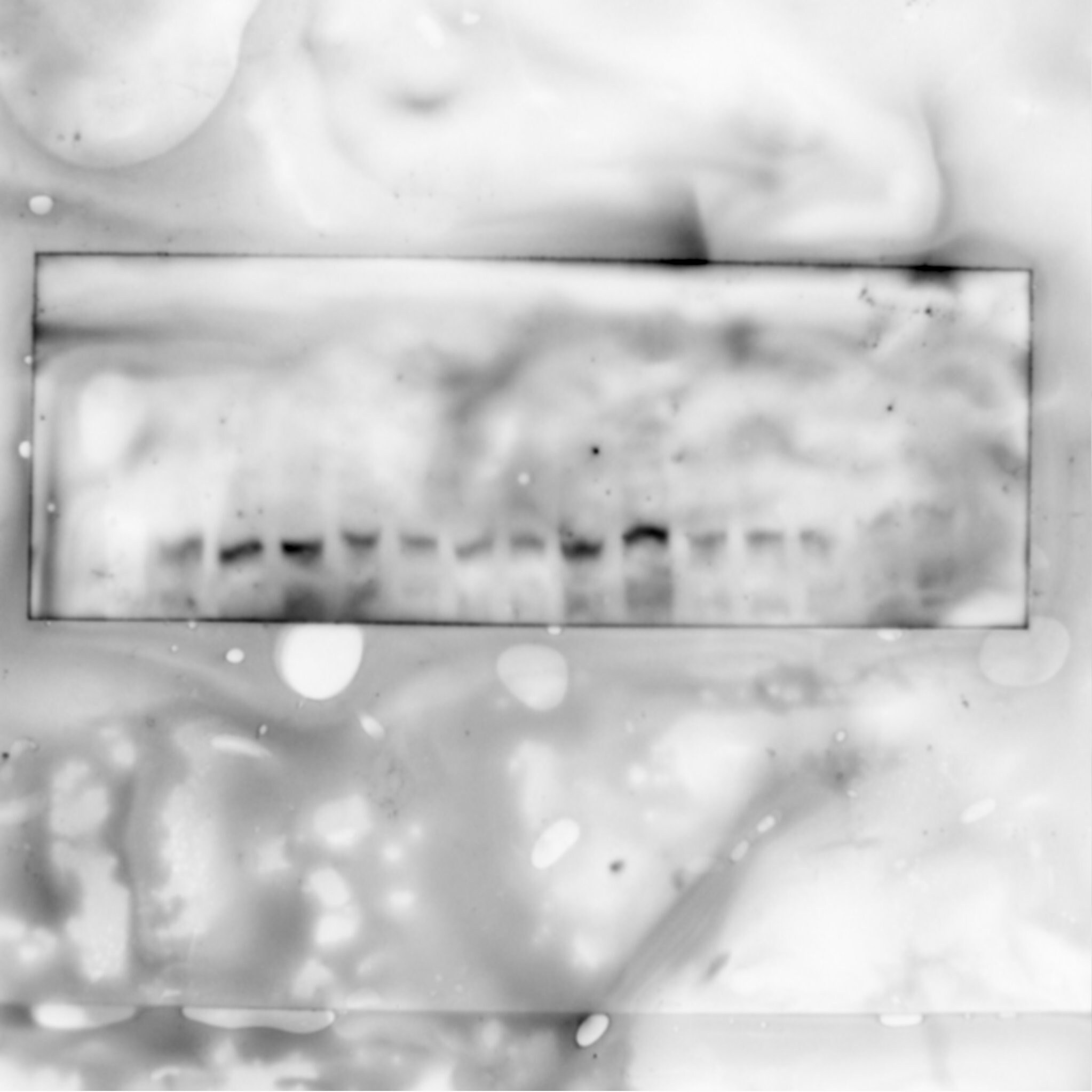
-
Application: Western BlotSample Tested: Lung cellsSpecies: MouseVerified Customer | Posted 10/26/2021

-
Application: Western BlotSample Tested: Hematological cancer cell lines lysatesSpecies: HumanVerified Customer | Posted 11/18/201930 ug of protein per sample. 1:500 dilution of primary Ab.
-
Application: Western BlotSample Tested: Lung single-cell suspensionSpecies: MouseVerified Customer | Posted 06/06/2019
There are no reviews that match your criteria.
Protocols
Find general support by application which include: protocols, troubleshooting, illustrated assays, videos and webinars.
- Antigen Retrieval Protocol (PIER)
- Antigen Retrieval for Frozen Sections Protocol
- Appropriate Fixation of IHC/ICC Samples
- Cellular Response to Hypoxia Protocols
- Chromogenic IHC Staining of Formalin-Fixed Paraffin-Embedded (FFPE) Tissue Protocol
- Chromogenic Immunohistochemistry Staining of Frozen Tissue
- ClariTSA™ Fluorophore Kits
- Detection & Visualization of Antibody Binding
- Fluorescent IHC Staining of Frozen Tissue Protocol
- Graphic Protocol for Heat-induced Epitope Retrieval
- Graphic Protocol for the Preparation and Fluorescent IHC Staining of Frozen Tissue Sections
- Graphic Protocol for the Preparation and Fluorescent IHC Staining of Paraffin-embedded Tissue Sections
- Graphic Protocol for the Preparation of Gelatin-coated Slides for Histological Tissue Sections
- IHC Sample Preparation (Frozen sections vs Paraffin)
- Immunofluorescent IHC Staining of Formalin-Fixed Paraffin-Embedded (FFPE) Tissue Protocol
- Immunohistochemistry (IHC) and Immunocytochemistry (ICC) Protocols
- Immunohistochemistry Frozen Troubleshooting
- Immunohistochemistry Paraffin Troubleshooting
- Preparing Samples for IHC/ICC Experiments
- Preventing Non-Specific Staining (Non-Specific Binding)
- Primary Antibody Selection & Optimization
- Protocol for Heat-Induced Epitope Retrieval (HIER)
- Protocol for Making a 4% Formaldehyde Solution in PBS
- Protocol for VisUCyte™ HRP Polymer Detection Reagent
- Protocol for the Preparation & Fixation of Cells on Coverslips
- Protocol for the Preparation and Chromogenic IHC Staining of Frozen Tissue Sections
- Protocol for the Preparation and Chromogenic IHC Staining of Frozen Tissue Sections - Graphic
- Protocol for the Preparation and Chromogenic IHC Staining of Paraffin-embedded Tissue Sections
- Protocol for the Preparation and Chromogenic IHC Staining of Paraffin-embedded Tissue Sections - Graphic
- Protocol for the Preparation and Fluorescent IHC Staining of Frozen Tissue Sections
- Protocol for the Preparation and Fluorescent IHC Staining of Paraffin-embedded Tissue Sections
- Protocol for the Preparation of Gelatin-coated Slides for Histological Tissue Sections
- R&D Systems Quality Control Western Blot Protocol
- TUNEL and Active Caspase-3 Detection by IHC/ICC Protocol
- The Importance of IHC/ICC Controls
- Troubleshooting Guide: Immunohistochemistry
- Troubleshooting Guide: Western Blot Figures
- Western Blot Conditions
- Western Blot Protocol
- Western Blot Protocol for Cell Lysates
- Western Blot Troubleshooting
- Western Blot Troubleshooting Guide
- View all Protocols, Troubleshooting, Illustrated assays and Webinars
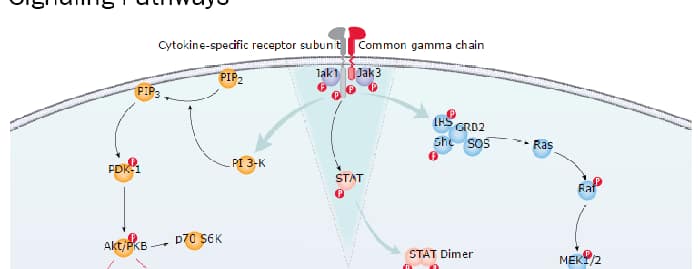
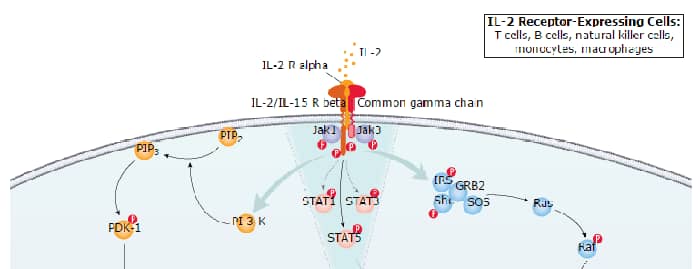
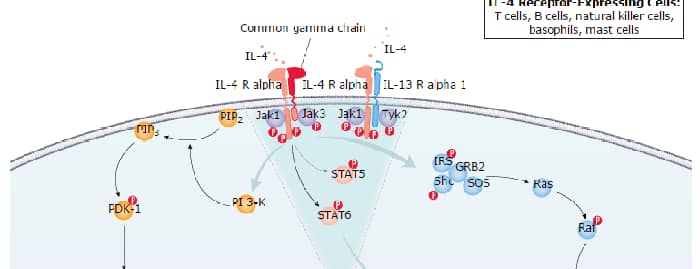
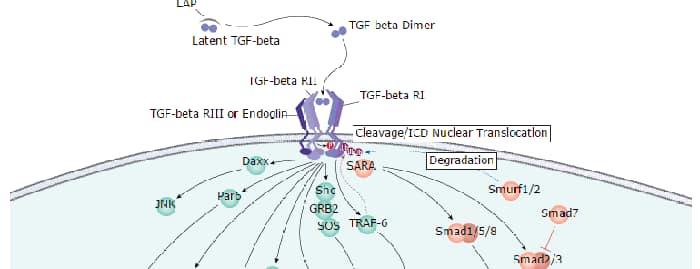
Associated Pathways