
Myeloperoxidase (MPO) is a hemeprotein that belongs to the XPO subfamily of the heme peroxidase superfamily. MPO is synthesized as a preproprotein that undergoes proteolytic processing to generate a disulfide-linked heterodimer of the N-terminal beta -subunit (12 kDa) and C-terminal alpha subunit (60 kDa). Active MPO is a tetramer of two beta -subunits and two alpha -subunits that are also disulfide-linked through the two alpha -subunits. MPO is stored in granules and is an abundant protein in neutrophils and monocytes. MPO is released upon activation to catalyze the formation of powerful oxidants such as hypochlorous acid, which kills microbes. Unprocessed pro-MPO can also be released. Human and mouse MPO share 87% amino acid sequence identity.
Human Myeloperoxidase/MPO Antibody (392105)
R&D Systems | Catalog # MAB3174


Scientific images may be resized, cropped, or adjusted for brightness or contrast for presentation purposes. These updates are limited to presentation and do not affect the underlying scientific interpretation of the data. Where available, additional source data may be provided upon request.
Key Product Details
Species Reactivity
Validated:
Cited:
Applications
Validated:
Cited:
Label
Antibody Source
Product Specifications
Immunogen
Val279-Ser745
Accession # P05164
Specificity
Clonality
Host
Isotype
Scientific Data Images for Human Myeloperoxidase/MPO Antibody (392105)
Detection of Human Myeloperoxidase/MPO by Western Blot.
Western blot shows lysates of HL-60 human acute promyelocytic leukemia cell line and human neutrophil. PVDF membrane was probed with 1 µg/mL of Mouse Anti-Human Myeloperoxidase/MPO Monoclonal Antibody (Catalog # MAB3174) followed by HRP-conjugated Anti-Mouse IgG Secondary Antibody (Catalog # HAF007). A specific band was detected for Myeloperoxidase/MPO at approximately 65 kDa (as indicated). This experiment was conducted under reducing conditions and using Immunoblot Buffer Group 2.
Myeloperoxidase/MPO in MOLT-4 Human Cell Line.
Myeloperoxidase/ MPO was detected in immersion fixed MOLT-4 human acute lymphoblastic leukemia cell line using 8 µg/mL Mouse Anti-Human Myeloperoxidase/ MPO Monoclonal Antibody (Catalog # MAB3174) for 3 hours at room temperature. Cells were stained (red) and counter-stained (green). View our protocol for Fluorescent ICC Staining of Cells on Coverslips.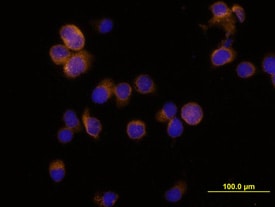
Myeloperoxidase/MPO in HL‑60 Human Cell Line.
Myeloperoxidase/MPO was detected in immersion fixed HL-60 human acute promyelocytic leukemia cell line using Mouse Anti-Human Myeloperoxidase/MPO Mono-clonal Antibody (Catalog # MAB3174) at 10 µg/mL for 3 hours at room temperature. Cells were stained using the NorthernLights™ 557-conju-gated Anti-Mouse IgG Secondary Antibody (yellow; Catalog # NL007) and counterstained with DAPI (blue). View our protocol for Fluorescent ICC Staining of Non-adherent Cells.
Myeloperoxidase/MPO in Human Spleen.
Myeloperoxidase/MPO was detected in immersion fixed paraffin-embedded sections of human spleen using 15 µg/mL Mouse Anti-Human Myeloperoxidase/MPO Monoclonal Antibody (Catalog # MAB3174) overnight at 4 °C. Before incubation with the primary antibody tissue was subjected to heat-induced epitope retrieval using Antigen Retrieval Reagent-Basic (Catalog # CTS013). Tissue was stained with the Anti-Mouse HRP-DAB Cell & Tissue Staining Kit (brown; Catalog # CTS002) and counterstained with hematoxylin (blue). View our protocol for Chromogenic IHC Staining of Paraffin-embedded Tissue Sections.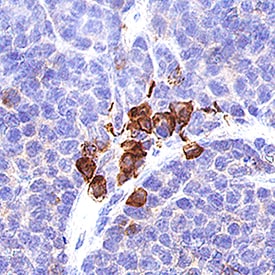
Myeloperoxidase/MPO in Mouse Spleen.
Myeloperoxidase/MPO was detected in immersion fixed paraffin-embedded sections of mouse spleen using Mouse Anti-Human Myeloperoxidase/MPO Monoclonal Antibody (Catalog # MAB3174) at 10 µg/mL for 1 hour at room temperature followed by incubation with the Anti-Mouse IgG VisUCyte™ HRP Polymer Antibody (VC001). Before incubation with the primary antibody, tissue was subjected to heat-induced epitope retrieval using Antigen Retrieval Reagent-Basic (CTS013). Tissue was stained using DAB (brown) and counterstained with hematoxylin (blue). Specific staining was localized to cytoplasm in lymphocytes. Staining was performed using our protocol for IHC Staining with VisUCyte HRP Polymer Detection Reagents.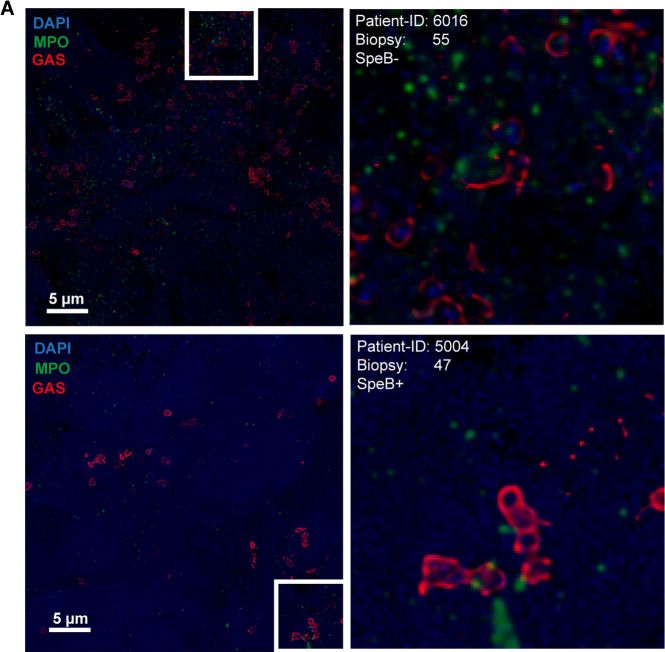
Detection of Myeloperoxidase by Immunohistochemistry
Increased levels of MPO in patient tissue biopsies associated with SpeB− GAS. A Representative immunofluorescence micrographs of the distribution of MPO in patient biopsies are shown. B Image analyses of MPO and C GAS stainings. Calculation of the stained area (px2) per analyzed micrograph is presented. Each bar within diagrams denotes analysis of one image from indicated tissue biopsies. Bars on the right of each diagram denote mean values ± SD. The level of significance between the groups was determined using 2-tailed Mann–Whitney U test Image collected and cropped by CiteAb from the following open publication (https://pubmed.ncbi.nlm.nih.gov/37430325), licensed under a CC-BY license. Not internally tested by R&D Systems.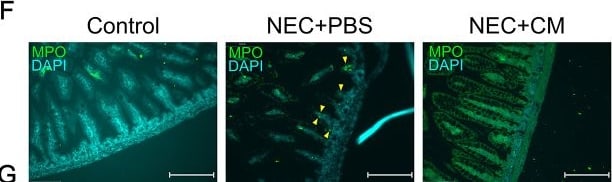
Detection of Myeloperoxidase by Immunohistochemistry
NEC survival and intestinal injury.(A) Survival curves for mice pups from the 3 groups on postnatal days 5 to 9. (B) Representative histological images of the terminal ileum. (C) Histological score of intestinal injury. Inflammatory gene marker expression of (D) Il-6 and (E) Tnf-alpha. Immunofluorescent protein expression of (F) MPO and (G) CC3 in the terminal ilea of the 3 groups. Yellow arrows indicate positive staining. Relative quantification of the (H) MPO and (I) CC3 protein expressions. (J) Angiogenesis/vascularization Vegf gene expression in the 3 groups. Data are presented as mean ± standard error, with significance of group comparisons based on one-way ANOVA and Tukey post-hoc tests. n = 10 for each group, *p<0.05, **p<0.01, and ***p<0.001. Image collected and cropped by CiteAb from the following open publication (https://pubmed.ncbi.nlm.nih.gov/34855833), licensed under a CC-BY license. Not internally tested by R&D Systems.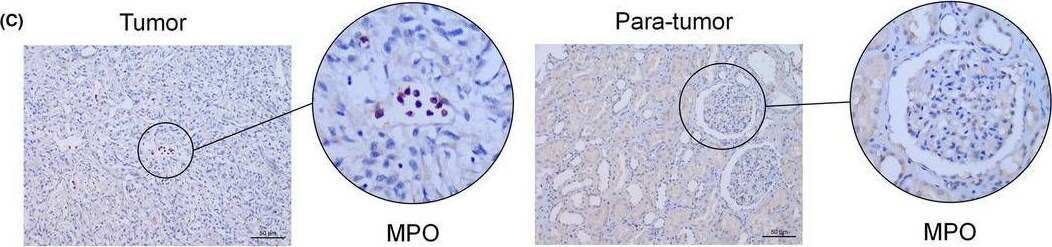
Detection of Myeloperoxidase by Immunohistochemistry
Pathological features and NET marker expression in metastatic ccRCC. (A) Tissue HE staining (B) Tissue H3Cit immunohistochemistry (IHC) staining (C) Tissue MPO IHC staining (80×, magnification 400×, scale bar: 200 μm) D. 800× magnified Immunofluorescence staining of NET in tumor tissue (scale bar: 25 μm) E. NET in matched tumor tissue and adjacent normal tissue (magnification 200× and 400×, scale bar: 50 μm, ***p < 0.001). Image collected and cropped by CiteAb from the following open publication (https://pubmed.ncbi.nlm.nih.gov/38018346), licensed under a CC-BY license. Not internally tested by R&D Systems.Applications for Human Myeloperoxidase/MPO Antibody (392105)
Immunocytochemistry
Sample: Immersion fixed MOLT-4 human acute lymphoblastic leukemia cell line and HL-60 human acute promyelocytic leukemia cell line
Immunohistochemistry
Sample: Immersion fixed paraffin-embedded sections of human spleen and mouse spleen
Western Blot
Sample: HL-60 human acute promyelocytic leukemia cell line and human neutrophil
Reviewed Applications
Read 5 reviews rated 3.4 using MAB3174 in the following applications:
Formulation, Preparation, and Storage
Purification
Reconstitution
Reconstitute at 0.5 mg/mL in sterile PBS. For liquid material, refer to CoA for concentration.
Formulation
Shipping
Stability & Storage
- 12 months from date of receipt, -20 to -70 °C as supplied.
- 1 month, 2 to 8 °C under sterile conditions after reconstitution.
- 6 months, -20 to -70 °C under sterile conditions after reconstitution.
Calculators
Background: Myeloperoxidase/MPO
Alternate Names
Gene Symbol
UniProt
Additional Myeloperoxidase/MPO Products
Product Documents for Human Myeloperoxidase/MPO Antibody (392105)
Certificate of Analysis
To download a Certificate of Analysis, please enter a lot or batch number in the search box below.
Note: Certificate of Analysis not available for kit components.
Product Specific Notices for Human Myeloperoxidase/MPO Antibody (392105)
For research use only
Related Research Areas
Citations for Human Myeloperoxidase/MPO Antibody (392105)
 Powered by Bioz
Customer Reviews for Human Myeloperoxidase/MPO Antibody (392105) (5)
Have you used Human Myeloperoxidase/MPO Antibody (392105)?
Submit a review and receive an Amazon gift card!
$25/€18/£15/$25CAN/¥2500 for a review with an image
$10/€7/£6/$10CAN/¥1110 for a review without an image
Submit a review
Customer Images
-
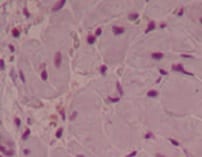
Application: ImmunohistochemistrySample Tested: MyocardiaSpecies: HumanVerified Customer | Posted 10/10/2021

-
Application: ELISASample Tested: EDTA PlasmaSpecies: HumanVerified Customer | Posted 12/20/2017
-
Application: Immunocytochemistry/ImmunofluorescenceSample Tested: Peripheral blood neutrophilsSpecies: HumanVerified Customer | Posted 09/08/2016This antibody does not stain Neutrophil Extracellular Traps (NETs) on coverslips, whereas it does stain intracellular MPO. This raises questions about its specificity. This antibody is also not reactive in a sandwich ELISA to detect NETs, despite the fact that MPO is known to be a very abundant protein on NETs... On western blot it does detect a protein at the right molecular weight already at low concentrations.Bio-Techne ResponseR&D Systems Technical Service is investigating.
-
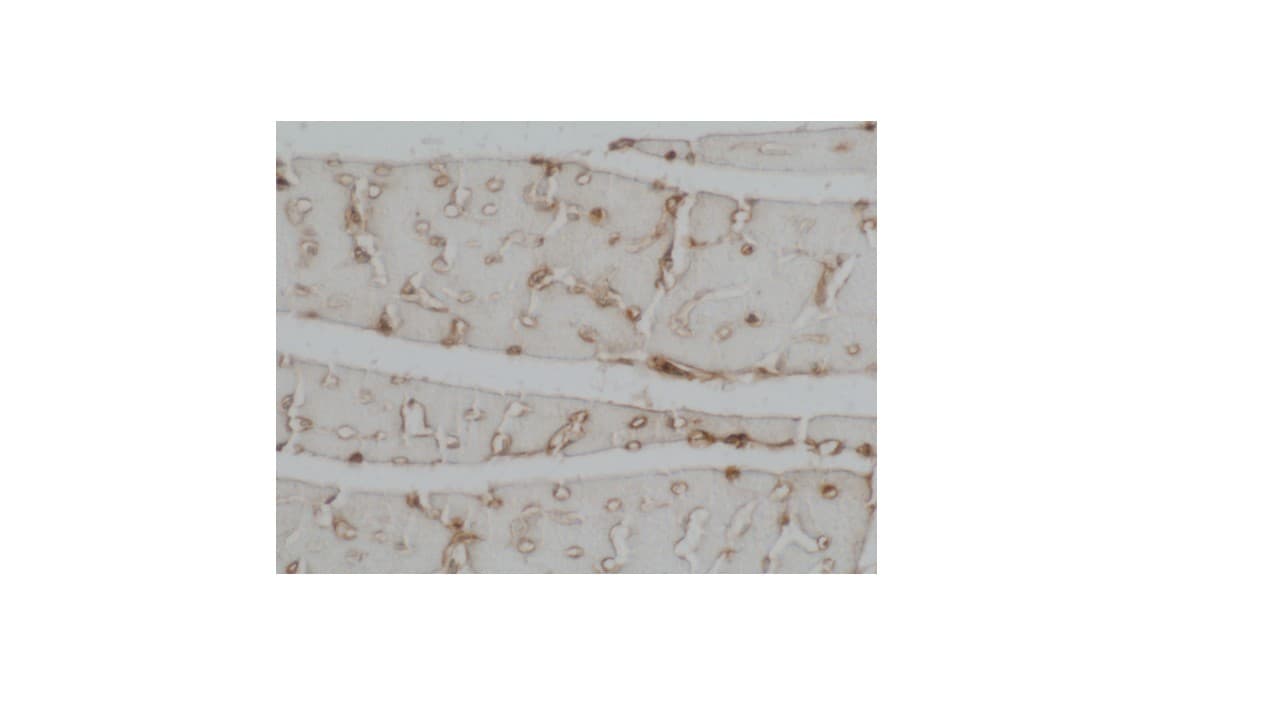
Application: ImmunohistochemistrySample Tested: Adult heartSpecies: MouseVerified Customer | Posted 09/02/2016Used at a dilution of 1:50. Non-R-D secondary, biotinylated at a dilution of 1:200
-
Application: Western BlotSample Tested: Colon tissueSpecies: MouseVerified Customer | Posted 03/30/2016None
There are no reviews that match your criteria.
Protocols
Find general support by application which include: protocols, troubleshooting, illustrated assays, videos and webinars.
- Antigen Retrieval Protocol (PIER)
- Antigen Retrieval for Frozen Sections Protocol
- Appropriate Fixation of IHC/ICC Samples
- Cellular Response to Hypoxia Protocols
- Chromogenic IHC Staining of Formalin-Fixed Paraffin-Embedded (FFPE) Tissue Protocol
- Chromogenic Immunohistochemistry Staining of Frozen Tissue
- ClariTSA™ Fluorophore Kits
- Detection & Visualization of Antibody Binding
- Fluorescent IHC Staining of Frozen Tissue Protocol
- Graphic Protocol for Heat-induced Epitope Retrieval
- Graphic Protocol for the Preparation and Fluorescent IHC Staining of Frozen Tissue Sections
- Graphic Protocol for the Preparation and Fluorescent IHC Staining of Paraffin-embedded Tissue Sections
- Graphic Protocol for the Preparation of Gelatin-coated Slides for Histological Tissue Sections
- ICC Cell Smear Protocol for Suspension Cells
- ICC Immunocytochemistry Protocol Videos
- ICC for Adherent Cells
- IHC Sample Preparation (Frozen sections vs Paraffin)
- Immunocytochemistry (ICC) Protocol
- Immunocytochemistry Troubleshooting
- Immunofluorescence of Organoids Embedded in Cultrex Basement Membrane Extract
- Immunofluorescent IHC Staining of Formalin-Fixed Paraffin-Embedded (FFPE) Tissue Protocol
- Immunohistochemistry (IHC) and Immunocytochemistry (ICC) Protocols
- Immunohistochemistry Frozen Troubleshooting
- Immunohistochemistry Paraffin Troubleshooting
- Preparing Samples for IHC/ICC Experiments
- Preventing Non-Specific Staining (Non-Specific Binding)
- Primary Antibody Selection & Optimization
- Protocol for Heat-Induced Epitope Retrieval (HIER)
- Protocol for Making a 4% Formaldehyde Solution in PBS
- Protocol for VisUCyte™ HRP Polymer Detection Reagent
- Protocol for the Fluorescent ICC Staining of Cell Smears - Graphic
- Protocol for the Fluorescent ICC Staining of Cultured Cells on Coverslips - Graphic
- Protocol for the Preparation & Fixation of Cells on Coverslips
- Protocol for the Preparation and Chromogenic IHC Staining of Frozen Tissue Sections
- Protocol for the Preparation and Chromogenic IHC Staining of Frozen Tissue Sections - Graphic
- Protocol for the Preparation and Chromogenic IHC Staining of Paraffin-embedded Tissue Sections
- Protocol for the Preparation and Chromogenic IHC Staining of Paraffin-embedded Tissue Sections - Graphic
- Protocol for the Preparation and Fluorescent ICC Staining of Cells on Coverslips
- Protocol for the Preparation and Fluorescent ICC Staining of Non-adherent Cells
- Protocol for the Preparation and Fluorescent ICC Staining of Stem Cells on Coverslips
- Protocol for the Preparation and Fluorescent IHC Staining of Frozen Tissue Sections
- Protocol for the Preparation and Fluorescent IHC Staining of Paraffin-embedded Tissue Sections
- Protocol for the Preparation of Gelatin-coated Slides for Histological Tissue Sections
- Protocol for the Preparation of a Cell Smear for Non-adherent Cell ICC - Graphic
- R&D Systems Quality Control Western Blot Protocol
- TUNEL and Active Caspase-3 Detection by IHC/ICC Protocol
- The Importance of IHC/ICC Controls
- Troubleshooting Guide: Immunohistochemistry
- Troubleshooting Guide: Western Blot Figures
- Western Blot Conditions
- Western Blot Protocol
- Western Blot Protocol for Cell Lysates
- Western Blot Troubleshooting
- Western Blot Troubleshooting Guide
- View all Protocols, Troubleshooting, Illustrated assays and Webinars
Associated Pathways
