
Skeletal System Development
Research Areas | Products | Background | Literature | Pathways | Related Information
The skeletal system is composed of cartilage and bone and functions as a structural framework for the body, facilitating movement and protecting internal organs. Bone also serves as a reservoir for inorganic salts and cells of the immune system. During fetal development, long bones form through the process of endochondral ossification, and flat bones develop by intramembranous ossification. Both processes involve the aggregation of mesenchymal stem cells into mesenchymal condensations, which provide a microenvironment conducive for chondrogenesis. Following chondrocyte differentiation, the cells produce extracellular matrix components and the cartilage is then replaced by calcified bone during endochondral ossification. During intramembranous ossification, flat bones are formed from connective tissue that arises from mesenchymal condensations, rather than through a cartilage intermediate.
Skeletal System Development Research Areas
| BMP Family | Chondrogenesis Markers | Osteoblast and Osteoclast Markers | PDGF Family |
| Calcium-binding Proteins and Related Molecules | IGF Family | Osteogenesis Markers | Wnt Family |
Products for Skeletal System Development Research
AP-1 | TGF-β Receptors (TGF-beta RI, TGF-beta RII, TGF-beta RIII) | ||
BMP and Other Activin Receptors | Matrix Metalloproteases | PDGFR | Vitamin D Receptors (VDR) |
Calcium Signaling | NF-κB and IκB | ||
Estrogen and Related Receptors
| Nitric Oxide Signaling | Stem Cell Differentiation |
Background
Bones | Osteoblasts and Osteoclasts | Metabolic Bone Disease
Bones
Bone is a rigid tissue that performs several key functions: it supports the body; it provides a point of attachment for tendons; it protects the internal organs; it produces blood cells; and it stores key minerals such as calcium and phosphorus. Throughout life, bone is remodeled by the activity of osteoblasts and osteoclasts. Osteoblasts are responsible for the synthesis of bone, while osteoclasts resorb bone tissue. A carefully controlled balance of these activities underlies bone remodeling and an imbalance can result in disorders such as osteoporosis, which weakens bones.
Osteoblasts and Osteoclasts
Osteoblasts and osteoclasts are derived from different cell precursors - mesenchymal and hematopoietic stem cells (MSCs and HSCs), respectively. Differentiation of HSCs to osteoclasts involves a number of cytokines such as bone morphogenetic protein (BMP) and TNF-α. Rho kinase (ROCK) inhibition may also stimulate osteoblast differentiation. Osteoblasts and osteoclasts are responsible for bone repair and growth, as well as the maintenance of bone size, shape, integrity and density.
Metabolic Bone Disease
Loss of bone density normally occurs after the age of 35, and is a natural part of ageing. Bone turnover is regulated by a number of factors, including estrogen, nitric oxide and calcium-regulated calcium channels. However, bone loss may also be a result of metabolic bone disease, a term that describes a number of disorders resulting from mineral abnormalities in bone tissue. Disorders which result from disruptions of bone homeostasis include osteoporosis, arthritis, Paget's disease of bone, osteomalacia and rickets.
Osteoporosis is relatively common, particularly in post-menopausal women, and can result in an increased likelihood of bone fracture. Osteomalacia and rickets describe deficiencies in bone mineralization in adults and children, respectively. Paget's disease of bone results from increased bone resorption by osteoclasts, followed by rapid, disorganized bone deposition by osteoblasts. The resulting tissue is larger and weaker than normal bone.
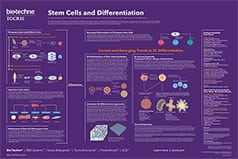
Stem Cells Poster
Written by Rebecca Quelch and Stefan Przyborski from Durham University (UK), this poster describes the isolation of pluripotent stem cells, their maintenance in culture, differentiation, and the generation and potential uses of organoids.