Key Product Details

Species Reactivity

Validated:

Human, Mouse, Rat

Cited:

Human, Mouse, Rat

Applications

Validated:

Immunohistochemistry, Western Blot, ELISA, Neutralization

Cited:

Immunohistochemistry, Immunohistochemistry-Paraffin, Western Blot, Neutralization, Electrochemiluminescent Assay

Label

Unconjugated

Antibody Source

Polyclonal Goat IgG
Loading...

Product Specifications

Immunogen

E. coli-derived recombinant human Growth Hormone
Phe27-Phe217
Accession # CAA23779

Specificity

Detects human Growth Hormone in direct ELISAs and Western blots.

Clonality

Polyclonal

Host

Goat

Isotype

IgG

Endotoxin Level

<0.10 EU per 1 μg of the antibody by the LAL method.

Scientific Data Images for Human/Mouse/Rat Growth Hormone Antibody

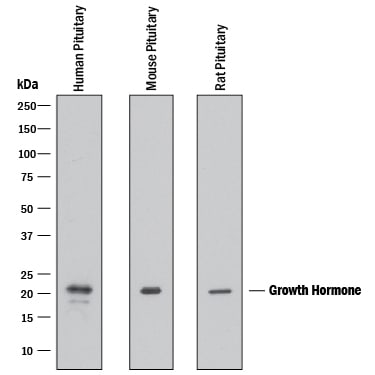
Detection of Human, Mouse, and Rat Growth Hormone antibody by Western Blot.

Detection of Human, Mouse, and Rat Growth Hormone by Western Blot.

Western blot shows lysates of human, mouse, and rat pituitary gland tissue. PVDF membrane was probed with 0.5 µg/mL of Goat Anti-Human Growth Hormone Antigen Affinity-purified Polyclonal Antibody (Catalog # AF1067) followed by HRP-conjugated Anti-Goat IgG Secondary Antibody (Catalog # HAF017). A specific band was detected for Growth Hormone at approximately 22 kDa (as indicated). This experiment was conducted under reducing conditions and using Immunoblot Buffer Group 1.
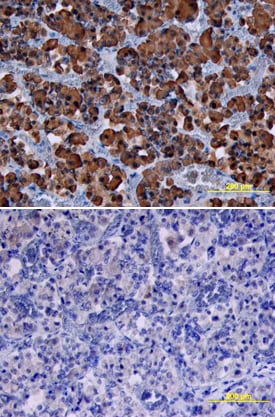
Growth Hormone antibody in Human Pituitary by Immunohistochemistry (IHC-P).

Growth Hormone in Human Pituitary.

Growth Hormone was detected in immersion fixed paraffin-embedded sections of human pituitary using Goat Anti-Human/Mouse/Rat Growth Hormone Antigen Affinity-purified Polyclonal Antibody (Catalog # AF1067) at 10 µg/mL overnight at 4 °C. Tissue was stained using the Anti-Goat HRP-DAB Cell & Tissue Staining Kit (brown; Catalog # CTS008) and counterstained with hematoxylin (blue). Lower panel shows a lack of labeling if primary antibodies are omitted and tissue is stained only with secondary antibody followed by incubation with detection reagents. View our protocol for Chromogenic IHC Staining of Paraffin-embedded Tissue Sections.
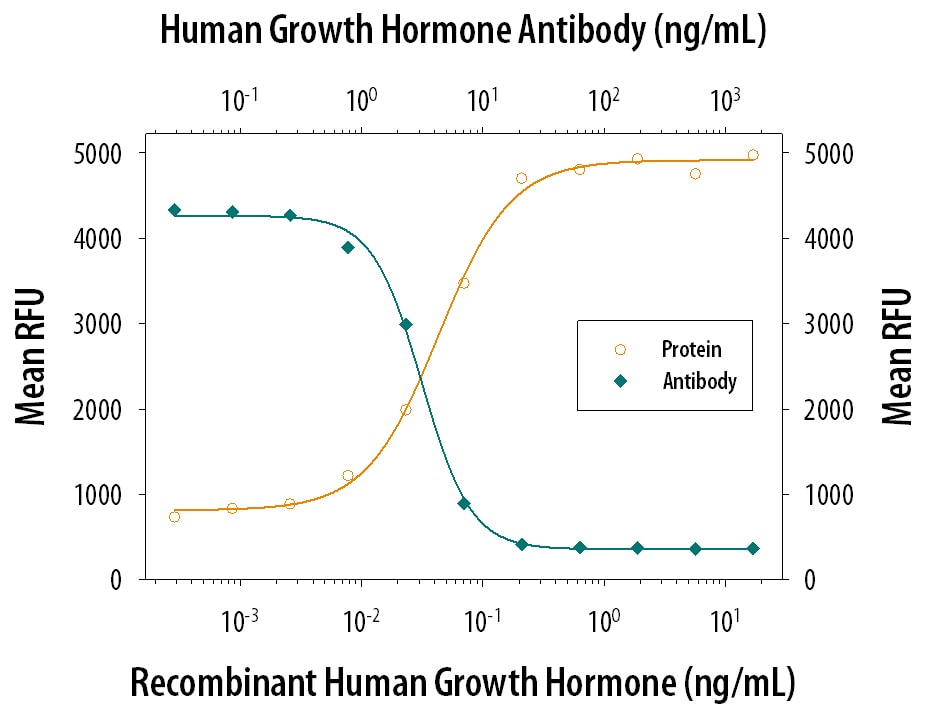
Cell Proliferation Induced by Growth Hormone and Neutralization by Human Growth Hormone Antibody.

Cell Proliferation Induced by Growth Hormone and Neutralization by Human Growth Hormone Antibody.

Recombinant Human Growth Hormone (Catalog # 1067-GH) stimulates proliferation in the Nb2-11 rat lymphoma cell line in a dose-dependent manner (orange line). Proliferation elicited by Recombinant Human Growth Hormone (0.2 ng/mL) is neutralized (green line) by increasing concentrations of Goat Anti-Human/Mouse/Rat Growth Hormone Antigen Affinity-purified Polyclonal Antibody (Catalog # AF1067). The ND50 is typically 1.5-7.5 ng/mL.
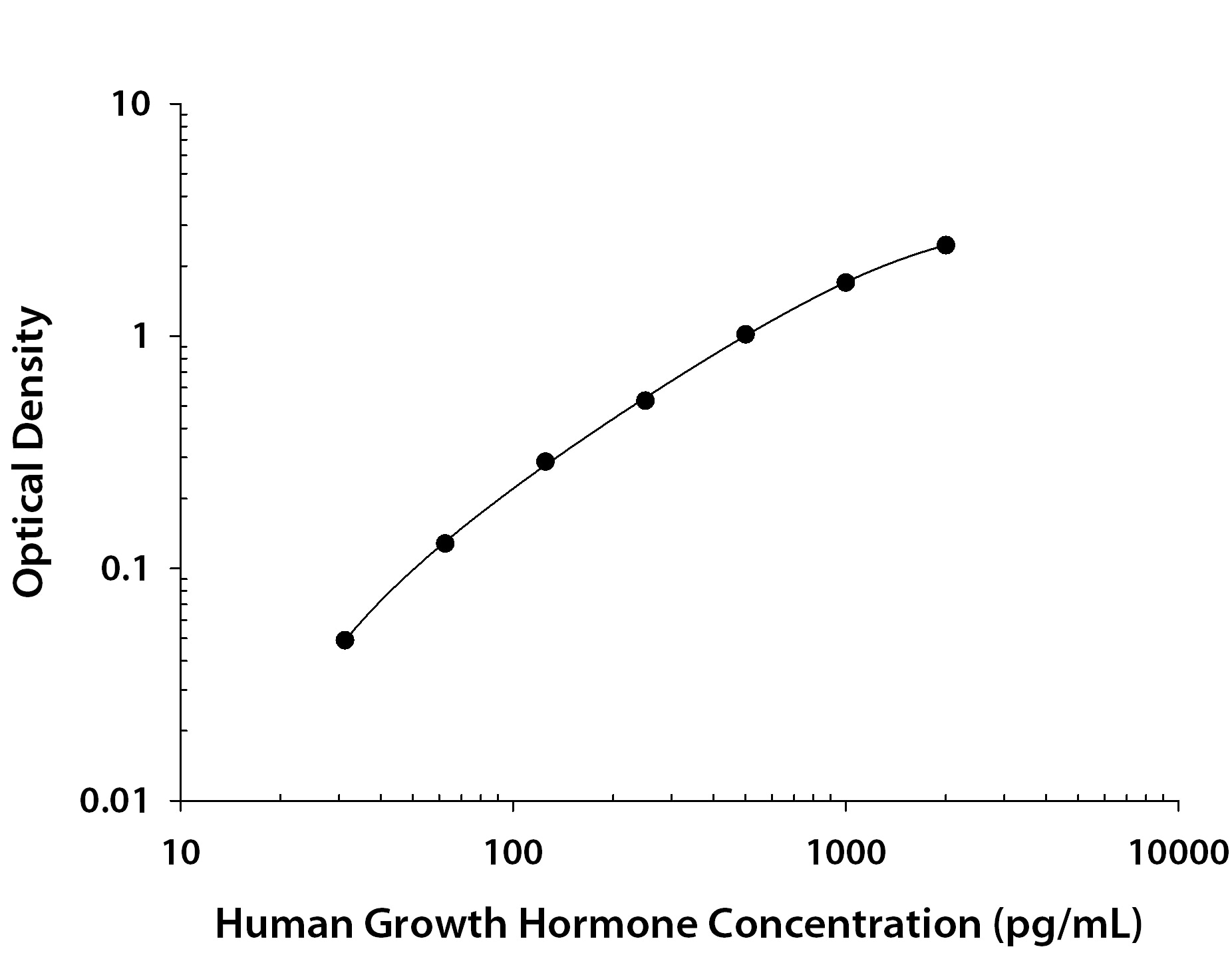
Human Growth Hormone Antibody in ELISA Standard Curve.

Human Growth Hormone ELISA Standard Curve.

Recombinant Human Growth Hormone protein was serially diluted 2-fold and captured by Mouse Anti-Human Growth Hormone Monoclonal Antibody (Catalog # MAB10671) coated on a Clear Polystyrene Microplate (Catalog # DY990). Goat Anti-Human/Mouse/Rat Growth Hormone Antigen Affinity-purified Polyclonal Antibody (Catalog # AF1067) was biotinylated and incubated with the protein captured on the plate. Detection of the standard curve was achieved by incubating Streptavidin-HRP (Catalog # DY998) followed by Substrate Solution (Catalog # DY999) and stopping the enzymatic reaction with Stop Solution (Catalog # DY994).
Detection of Growth Hormone by Western Blot

Detection of Growth Hormone by Western Blot

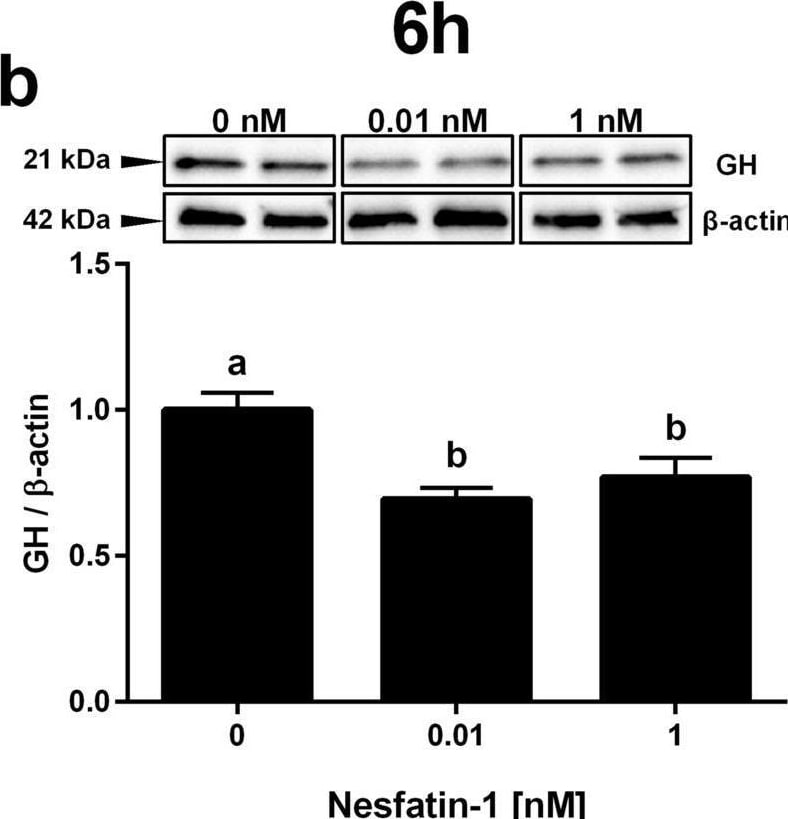
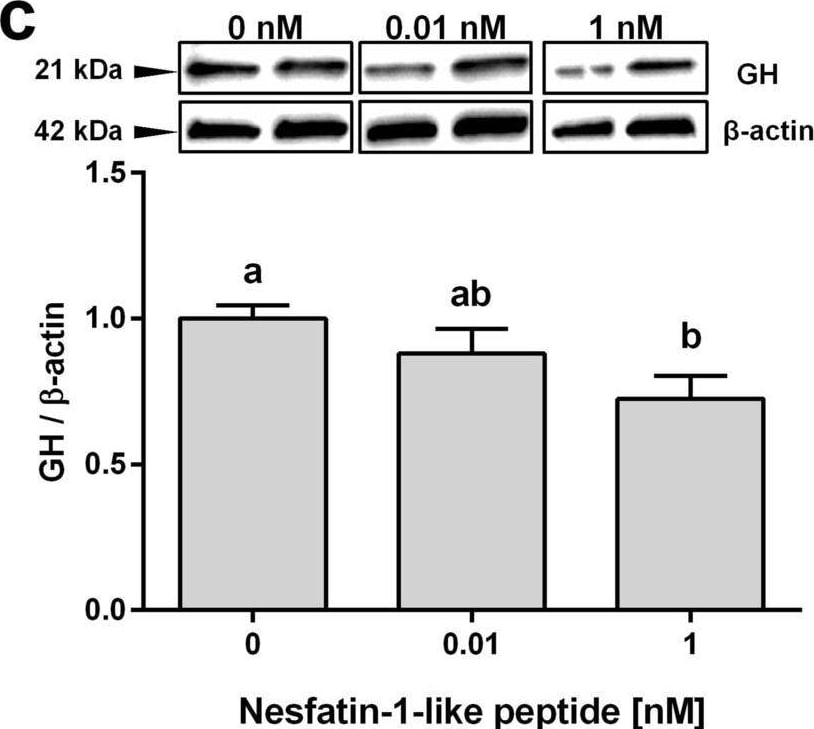
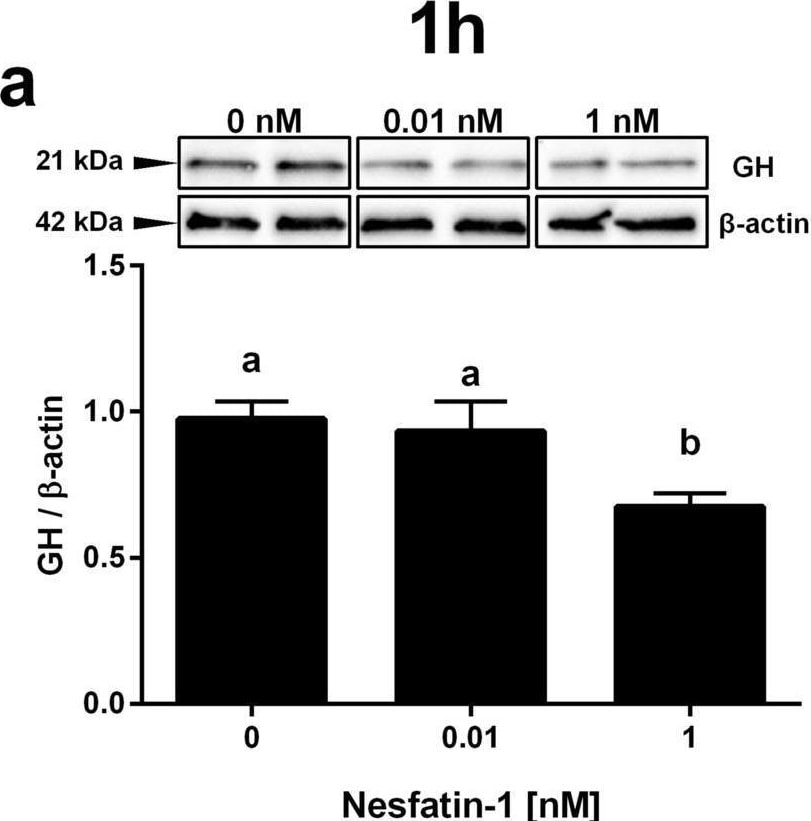
NESF or NLP treatment decreases GH protein in mammalian somatotroph cells. Effects of 1 h incubation with NESF (a) or NLP (c), or of 6 h incubation (b and d, respectively), on the GH protein levels in GH3 cells detected by Western blot. Representative immunoreactive bands and quantification of GH band intensity. Four independent experiments with triplicates (n = 3 wells/treatment/experiment) were performed for each study. Data from all four experiments were pooled to conduct statistical analyses and are shown as mean ± SEM (n = 12 wells) normalized to the levels of beta -actin and presented as a fold change over Control. Different letters indicate significant differences (p < 0.05) between the different concentrations detected by one-way ANOVA test followed by Tukey’s multiple comparison test. Image collected and cropped by CiteAb from the following open publication (https://pubmed.ncbi.nlm.nih.gov/33028951), licensed under a CC-BY license. Not internally tested by R&D Systems.
Detection of Growth Hormone by Western Blot

Detection of Growth Hormone by Western Blot

NESF or NLP treatment decreases GH protein in mammalian somatotroph cells. Effects of 1 h incubation with NESF (a) or NLP (c), or of 6 h incubation (b and d, respectively), on the GH protein levels in GH3 cells detected by Western blot. Representative immunoreactive bands and quantification of GH band intensity. Four independent experiments with triplicates (n = 3 wells/treatment/experiment) were performed for each study. Data from all four experiments were pooled to conduct statistical analyses and are shown as mean ± SEM (n = 12 wells) normalized to the levels of beta -actin and presented as a fold change over Control. Different letters indicate significant differences (p < 0.05) between the different concentrations detected by one-way ANOVA test followed by Tukey’s multiple comparison test. Image collected and cropped by CiteAb from the following open publication (https://pubmed.ncbi.nlm.nih.gov/33028951), licensed under a CC-BY license. Not internally tested by R&D Systems.
Detection of Growth Hormone by Western Blot

Detection of Growth Hormone by Western Blot

NESF or NLP treatment decreases GH protein in mammalian somatotroph cells. Effects of 1 h incubation with NESF (a) or NLP (c), or of 6 h incubation (b and d, respectively), on the GH protein levels in GH3 cells detected by Western blot. Representative immunoreactive bands and quantification of GH band intensity. Four independent experiments with triplicates (n = 3 wells/treatment/experiment) were performed for each study. Data from all four experiments were pooled to conduct statistical analyses and are shown as mean ± SEM (n = 12 wells) normalized to the levels of beta -actin and presented as a fold change over Control. Different letters indicate significant differences (p < 0.05) between the different concentrations detected by one-way ANOVA test followed by Tukey’s multiple comparison test. Image collected and cropped by CiteAb from the following open publication (https://pubmed.ncbi.nlm.nih.gov/33028951), licensed under a CC-BY license. Not internally tested by R&D Systems.

Applications for Human/Mouse/Rat Growth Hormone Antibody

Application
Recommended Usage

ELISA

This antibody functions as an ELISA detection antibody when paired with Mouse Anti-Human Growth Hormone Monoclonal Antibody (Catalog # MAB10671).

This product is intended for assay development on various assay platforms requiring antibody pairs. We recommend the Human Growth Hormone (GH) DuoSet ELISA Kit (Catalog # DY1067) for convenient development of a sandwich ELISA or the Human Growth Hormone Quantikine ELISA Kit (Catalog # DGH00) for a complete optimized ELISA.

Immunohistochemistry

5-15 µg/mL
Sample: Immersion fixed paraffin-embedded sections of human pituitary

Western Blot

0.5 µg/mL
Sample: Human, mouse, and rat pituitary gland tissue

Neutralization

Measured by its ability to neutralize Growth Hormone-induced proliferation in the Nb2‑11 rat lymphoma cell line. Gout, P.W. et al. (1980) Cancer Res. 40:2433. The Neutralization Dose (ND50) is typically 1.5-7.5 ng/mL in the presence of 0.2 ng/mL Recombinant Human Growth Hormone.

Reviewed Applications

Read 3 reviews rated 4.7 using AF1067 in the following applications:

Formulation, Preparation, and Storage

Purification

Antigen Affinity-purified

Reconstitution

Reconstitute at 0.2 mg/mL in sterile PBS. For liquid material, refer to CoA for concentration.


Loading...

Formulation

Lyophilized from a 0.2 μm filtered solution in PBS with Trehalose. *Small pack size (SP) is supplied either lyophilized or as a 0.2 µm filtered solution in PBS.

Shipping

Lyophilized product is shipped at ambient temperature. Liquid small pack size (-SP) is shipped with polar packs. Upon receipt, store immediately at the temperature recommended below.

Stability & Storage

Use a manual defrost freezer and avoid repeated freeze-thaw cycles.
  • 12 months from date of receipt, -20 to -70 °C as supplied.
  • 1 month, 2 to 8 °C under sterile conditions after reconstitution.
  • 6 months, -20 to -70 °C under sterile conditions after reconstitution.

Calculators

The reconstitution calculator allows you to quickly calculate the volume of a reagent to reconstitute your vial. Simply enter the mass of reagent and the target concentration and the calculator will determine the rest.

=
÷

Background: Growth Hormone

Growth Hormone (GH), also known as somatotropin, is a member of a family of growth factors that includes prolactin, placental lactogens, proliferins, and somatolactin (1, 2). It is synthesized primarily by somatotropes in the anterior pituitary and is stored in secretary granules. The pulsatile release of GH into circulation is regulated by the concerted actions of the hypothalamic hormones - GH-releasing hormone (GHRH) and somatostatin (SST) - as well as by signals from the periphery - ghrelin (3) and leptin (4). The human GH cDNA encodes a 217 amino acid (aa) residue precursor protein with a 26 aa putative signal peptide. By alternative splicing, at least four isoforms of GH have been identified (5).

Human GH is a pleiotropic cytokine that exerts its biological actions by binding to the transmembrane GH receptor, which is present in many cell types (1, 2). GH stimulates the liver and other tissues to produce IGF-I, which regulates growth and metabolism. GH has also been shown to have direct effects on growth that is independent of IGF-I. GH, directly or indirectly via IGF-I, can act on B cells, T cells, NK cells, macrophages, and neutrophils to exert immunomodulatory activities (6). In addition, GH can act directly on various cell types to induce lipolysis, lactation, amino acid uptake, and protein synthesis (1, 2, 6).

References

  1. Goffin, V. et al. (1996) Endocrine Rev. 17:385.
  2. Le Roith, D. et al. (2001) Endocrine Rev. 22:53.
  3. Kojima, K. et al. (1999) Nature, 402:656.
  4. Tannenbaum, G. et al. (1998) Endocrinol. 139:3871.
  5. Welniak, L.A. et al. (2002) J. Leukoc. Biol. 71:381.

Alternate Names

GH-N, GH1, GHB5, GHN, IGHD1A, IGHD2, Somatotropin

Entrez Gene IDs

2688 (Human)

Gene Symbol

GH1

UniProt

Additional Growth Hormone Products

Product Documents for Human/Mouse/Rat Growth Hormone Antibody

Certificate of Analysis

To download a Certificate of Analysis, please enter a lot or batch number in the search box below.

Note: Certificate of Analysis not available for kit components.

Product Specific Notices for Human/Mouse/Rat Growth Hormone Antibody

For research use only

Citations for Human/Mouse/Rat Growth Hormone Antibody

Customer Reviews for Human/Mouse/Rat Growth Hormone Antibody (3)

4.7 out of 5
3 Customer Ratings
5 Stars
67%
4 Stars
33%
3 Stars
0%
2 Stars
0%
1 Stars
0%

Have you used Human/Mouse/Rat Growth Hormone Antibody?

Submit a review and receive an Amazon gift card!

$25/€18/£15/$25CAN/¥2500 Yen for a review with an image

$10/€7/£6/$10CAN/¥1110 Yen for a review without an image

Submit a review
Amazon Gift Card

Customer Images


Showing  1 - 3 of 3 reviews Showing All
Filter By:
  • Human/Mouse/Rat Growth Hormone Antibody
    Name: Anonymous
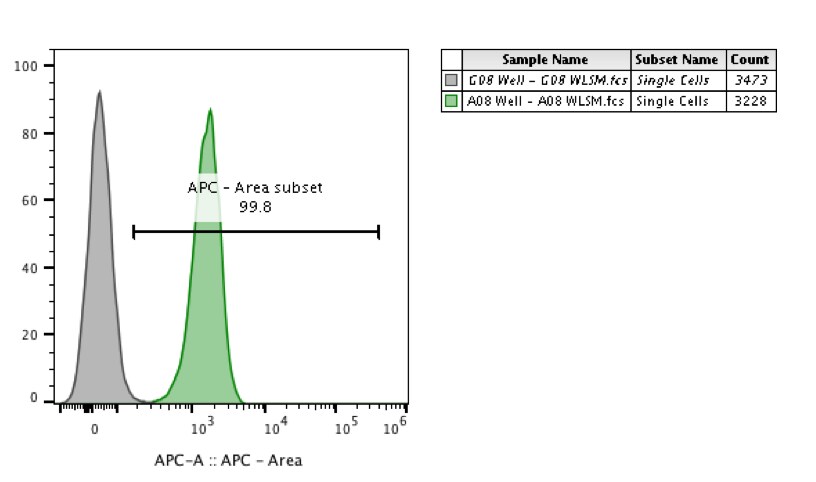
    Application: Flow Cytometry
    Sample Tested: human antibody IgG
    Species: Human
    Verified Customer | Posted 04/17/2018
    Human/Mouse/Rat Growth Hormone Antibody AF1067
  • Human/Mouse/Rat Growth Hormone Antibody
    Name: Anonymous
    Application: ELISA
    Sample Tested: igg
    Species: Goat
    Verified Customer | Posted 12/08/2017
  • Human Growth Hormone Antibody
    Name: Anonymous
    Application: Functional Assay
    Sample Tested: Human recombinant antibody
    Species: Goat
    Verified Customer | Posted 04/26/2016

There are no reviews that match your criteria.

Showing  1 - 3 of 3 reviews Showing All

Protocols

Find general support by application which include: protocols, troubleshooting, illustrated assays, videos and webinars.

FAQs

No product specific FAQs exist for this product.

View all FAQs for Antibodies
Loading...