
What Are Cerebral Organoids?
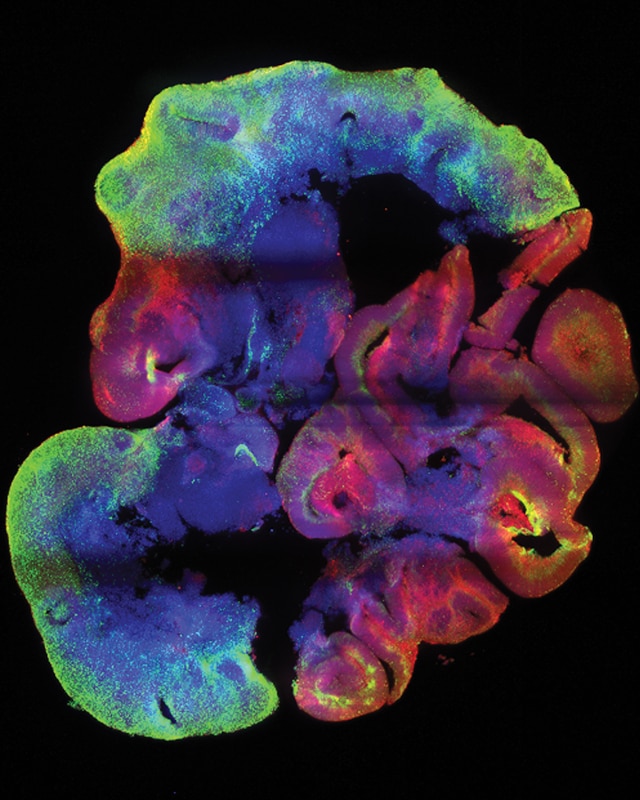
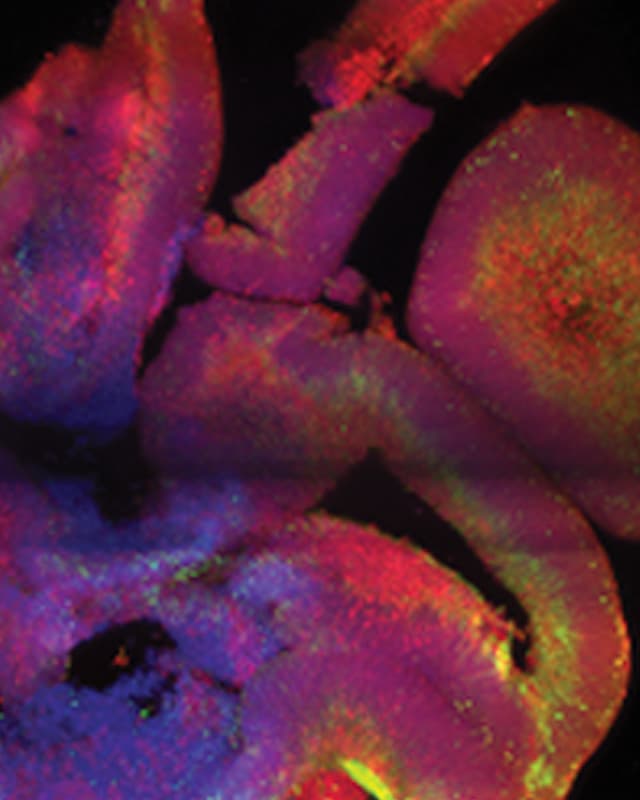
Cerebral, or brain organoids, are innovative three-dimensional culture systems often derived from human pluripotent stem cells (hPSCs) that recapitulate complex aspects of human brain development. By mirroring in vivo neurogenesis, cerebral organoid "mini-brains" provide unprecedented experimental access to physiologically relevant brain tissue microenvironments, making them a critical model system for neurodevelopment, neuroscience, and brain disease research.
Why Researchers Are Adopting Cerebral Organoids
Human brain organoid models mimic the unique physiology of human brains in a physiologically relevant 3D environment, overcoming key limitations of traditional 2D culture and animal models. These self-organizing brain-like structures enable:
- Modeling human neurodevelopmental processes (corticogenesis, neuronal differentiation) and disorders (lissencephaly, Zika virus-linked microcephaly, autism spectrum disorder/ASD)[DS1.1]
- Modeling genetic disorders (Fragile X, Rett syndrome), mental illnesses (schizophrenia, bipolar disorder) and neurodegenerative disease modeling (Alzheimer’s disease, Parkinson’s, Creutzfeldt Jakob).
- Neurotoxicity screening and drug discovery using patient-derived brain organoids for personalized medicine
- Studying brain-region specific functions by generating cerebral, forebrain, midbrain, or hindbrain organoids.
Common Challenges of Cerebral Organoids
Despite their advantages, researchers face several significant challenges when culturing and analyzing cerebral organoids, including:
- Reproducibility and Standardization: Batch-to-batch variability in organoid generation can impact phenotypic consistency and experimental reproducibility. Minimize culture variability with proven, high-quality reagents.
- Functional Analysis: Assessing synaptic activity, neuronal maturation, and functional connectivity requires robust, specialized analytical tools and validated markers.
- Scalability for High-Throughput Applications: Consistent, high-quality cerebral organoid culture is needed for phenotypic screening and drug discovery workflows.
Overcoming Challenges with R&D Systems
R&D Systems offers a comprehensive suite of high-quality reagents and protein analysis products to help you streamline and standardize your neural organoid workflows. Partner with R&D Systems to advance your brain organoid research with reliable reagents, scalable solutions, and unmatched technical support.
Trusted Growth Factors & Small Molecules
Our GMP-grade and research-grade cytokines, growth factors, and neural differentiation supplements support reliable and efficient cerebral organoid formation and maturation.

Stem Cell Culture & Differentiation Reagents
Optimize your PSC maintenance and neural induction with our extensively validated media, supplements and extracellular matrix reagents.

Antibodies & Detection Tools
Gain confidence in cell identity and brain region-specific differentiation with our rigorously tested antibodies against neural stem cell, progenitor, neuronal, glial, and cortical layer markers.

Multiplex Protein Analysis Platforms
Quantitatively assess secreted factors, signaling pathways, and disease-relevant biomarkers using our Luminex® assays, ELISAs, and Simple Plex™ platforms adapted for cerebral organoid-conditioned media or lysates.
Expert Protocols & Application Support
Access detailed protocols, application notes, and troubleshooting guidance tailored for standardized cerebral organoid culture, imaging, and downstream analysis.
End-to-End Solutions for the Cerebral Organoid Workflow
R&D Systems reagents offer comprehensive solutions for culturing and analyzing highly reproducible brain organoids.
Cell CultureExCellerate™ iPSC Expansion Medium Proteins | Small MoleculesCHIR99021 (In Solution Version) ROCK Inhibitor Y-27632 (In Solution Version)
|
Webinar: Neural Cells & Organoids
Learn advanced techniques and troubleshooting strategies for neural lineages.
Cerebral Organoids Protocol

Cultivate cerebral organoids with a proven process and quality reagents.
Neural Progenitors Poster
See this scientific poster for data on efficient differentiation from iPSCs to neural progenitor cells.
Neural Stem Cell Workflow Solutions
Isolate, culture, characterize, and differentiate neural stem cells with confidence.
What is the difference between cerebral organoids and cortical organoids?
Cerebral organoids are three-dimensional models that recapitulate aspects of human brain development and can exhibit characteristics of multiple brain regions. Cortical organoids are more specialized brain organoid models designed to investigate the development and organization of the cerebral cortex. Depending on the differentiation protocol, cortical organoids can develop distinct neuronal populations and express markers associated with cortical identity, including TBR1 and SATB2.
What cell types are found in cerebral organoids?
Cerebral organoids can contain a variety of neural cell types that emerge during differentiation and maturation. These may include neural progenitor cells, radial glia, neurons, astrocytes, and oligodendrocytes. More specialized organoid models may also incorporate microglia to investigate neuroimmune interactions and brain inflammation.
How are cerebral organoids generated from stem cells?
Cerebral organoids are commonly generated from human pluripotent stem cells, including human embryonic stem cells (hESCs) and human induced pluripotent stem cells (hiPSCs). Differentiation protocols typically guide stem cells toward a neuroectodermal fate, followed by neural progenitor expansion and three-dimensional tissue organization. Some protocols use embryoid body formation as an initial step, while others employ alternative neural induction approaches.
What brain regions can cerebral organoids model?
Depending on differentiation conditions and patterning signals, cerebral organoids can model features of different brain regions, including the cerebral cortex, dorsal and ventral forebrain, and hippocampus. Region-specific differentiation protocols allow researchers to investigate distinct aspects of human brain development and regional neuronal identity. FOXG1, for example, is an important transcription factor associated with forebrain development.
Can cerebral organoids be used to study Alzheimer's disease?
Yes. Cerebral organoids provide a human-relevant model for investigating aspects of Alzheimer's disease pathology, including amyloid-beta accumulation, neuronal dysfunction, and disease-associated cellular changes. These models can help researchers investigate disease mechanisms and evaluate potential therapeutic approaches.
Can cerebral organoids be used to study brain cancer?
Cerebral organoids can support brain cancer research, including studies of glioblastomas. Researchers can use organoid-based systems to investigate tumor growth, interactions between tumor cells and neural tissue, and potential therapeutic responses in a human tissue environment.
Do cerebral organoids contain a blood-brain barrier or choroid plexus?
Conventional cerebral organoids do not typically develop a fully functional blood-brain barrier. However, specialized organoid approaches can incorporate or model components of the neurovascular system and blood-brain barrier. Some cerebral organoid protocols can also generate choroid plexus-like structures, which are involved in cerebrospinal fluid production and brain development.
What genes and markers are used to characterize cerebral organoids?
Researchers use a variety of molecular markers to assess cerebral organoid identity, differentiation, and regional specification. FOXG1 is associated with forebrain identity, while TBR1 and SATB2 are commonly used to characterize distinct cortical neuronal populations. AUTS2 is another gene of interest in neurodevelopmental research. Marker expression can help researchers evaluate organoid differentiation and assess batch-to-batch consistency.
How can researchers improve cerebral organoid culture and scalability?
Cerebral organoid culture can be optimized through carefully controlled differentiation protocols, high-quality stem cell culture reagents, and appropriate growth factors and small molecules. Approaches such as spinning bioreactors can help support nutrient and oxygen delivery during three-dimensional culture. Standardized protocols and validated reagents are also important for improving reproducibility and supporting higher-throughput applications.