
Immunology and Inflammation Research Using Automated Simple Plex Immunoassays
Immunology & Inflammation
Immunology and inflammation research requires precise quantification of complex, low-abundance biomarkers spanning diverse biological pathways — from cytokine signaling and innate immune activation to adaptive immune responses and tissue remodeling. The breadth of these pathways, combined with the dynamic range of biomarker concentrations across disease states, presents significant a
nalytical challenges for researchers working across autoimmunity, infectious disease, oncology, and beyond. Understanding how these mediators interact and change in response to disease or therapeutic intervention is fundamental to both basic research and clinical translation.

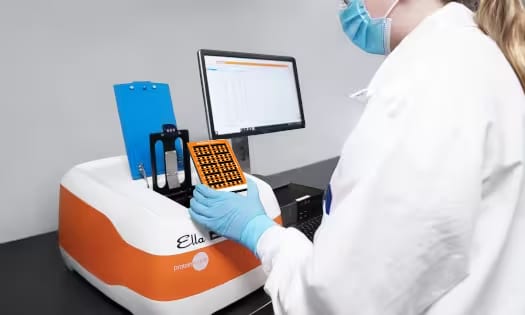
The Ella automated immunoassay platform, powered by Simple Plex microfluidic technology, is purpose-built to meet these demands — delivering single-analyte precision at multiplex scale with sample volumes as low as 25 µL and results in under 90 minutes. With more than 300 validated analytes across human, mouse, rat, and non-human primate species, the Simple Plex assay menu is organized across the key biological categories that define immunological health and disease — from cytokines and chemokines to immune checkpoints, inflammasome biology, and tissue remodeling. Explore the categories below to find the analytes most relevant to your research.
Categories
Cytokines and Interleukins
Cytokines are soluble signaling proteins that coordinate immune cell activation, differentiation, and effector function. Interleukins regulate communication between leukocytes across both innate and adaptive immunity, while interferons mediate antiviral defense and immune modulation, and colony-stimulating factors drive immune cell production and maturation. Dysregulation of these mediators underlies conditions ranging from autoimmunity and cytokine storm to chronic inflammatory diseases, making them central biomarkers for understanding immune responses and monitoring therapeutic interventions.
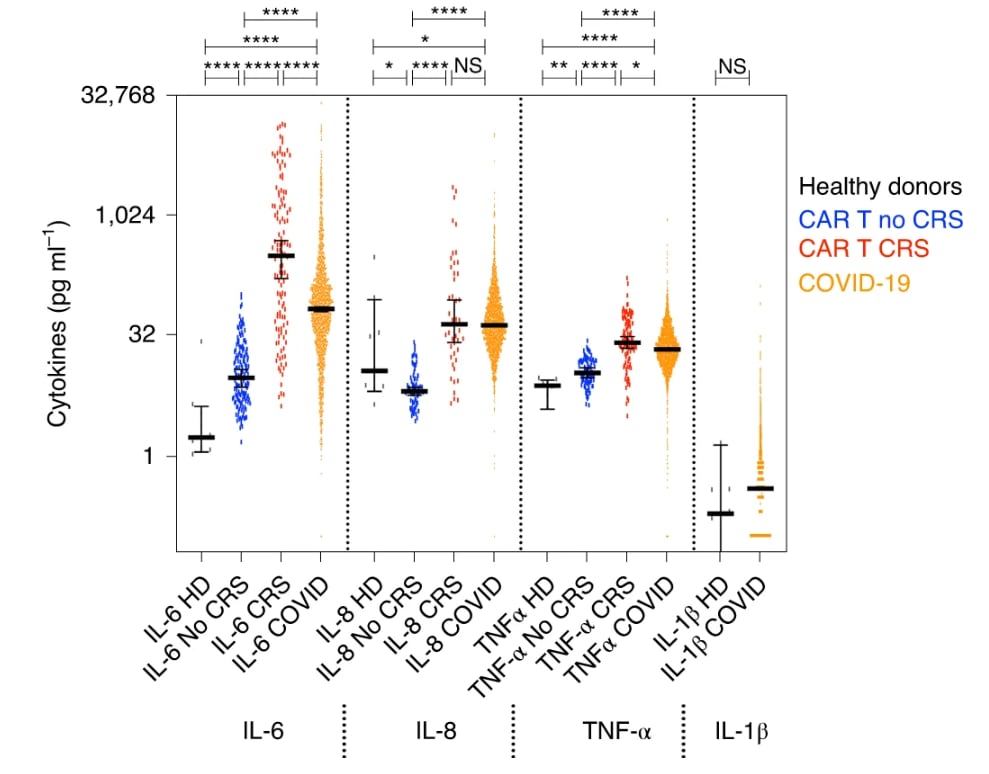
Detection range of cytokines in all tested serum samples from patients with Simple Plex Assays. Published results from Del Valle et al. 2020.
Researchers at the Ichan School of Medicine at Mount Sinai published in Nature Medicine using The Cytokine Storm Panel on Ella. Read their work, entitled, “An Inflammatory cytokine signature predicts COVID-19 severity and survival”.
Chemokines
Chemokines are a specialized subfamily of cytokines that direct the migration of immune cells to sites of infection, injury, or inflammation through concentration gradients. The CC and CXC subfamilies recruit distinct immune populations — including neutrophils, monocytes, T cells, and dendritic cells — into inflamed tissues and lymphoid organs. Dysregulated chemokine signaling drives pathological immune infiltration in conditions such as rheumatoid arthritis, inflammatory bowel disease, and the tumor microenvironment.
Rat Chemokine Assays
| CCL2/JE/MCP-1 | CCL5/RANTES |
Non-human Primate Assays
| CCL19/MIP-3 β | CCL2/MCP-1 | CCL3/MIP-1 α | CCL4/MIP-1 β | CCL5/RANTES | CXCL10/IP-10 |
| CXCL13/BLC/BCA-1 |
Immune Checkpoint and Co-Stimulatory Molecules
Immune checkpoints are regulatory receptors and ligands that balance T cell activation and suppression to maintain immune homeostasis and prevent autoimmunity. Inhibitory receptors such as PD-1, CTLA-4, LAG-3, and TIM-3 dampen T cell responses when engaged, while co-stimulatory molecules like CD28 and OX40 amplify activation. Tumors exploit these pathways to evade immune destruction, making soluble checkpoint proteins critical biomarkers for immuno-oncology research and for monitoring responses to checkpoint inhibitor therapies.
TNF Superfamily and Death Receptors
The TNF superfamily governs immune cell activation, survival, and programmed cell death across both innate and adaptive immunity. TNF-α is a central mediator of systemic inflammation and a validated therapeutic target in autoimmune diseases, while members such as TRAIL and Fas Ligand regulate cytotoxic killing and lymphocyte homeostasis. BAFF, TACI, and BCMA control B cell survival and antibody production. Dysregulation across this family is implicated in autoimmunity, lymphoma, and inflammatory diseases.
Human TNF Superfamily Simple Plex Assays
| TNF α | TNF R1 | TNF RII | TRAIL/TNFSF10 | Fas/TNFRSF6/CD95 | Fas Ligand |
| LIGHT | BAFF | TRANCE/RANK L/TNFSF11 | TACI/TNFRSF13B | BCMA/TNFRSF17 | DcR3/TNFSF6B |
| NGFR/TNFRSF16 | Osteopontin (OPN) | Osteoprotegrin/TNFRSF11B (OPG) | OX40/TNFSF4 |
Non-Human Primate TNF Superfamily Simple Plex Assays
| TNF α | TNF R1 | TNF RII | FAS Ligand |
Inflammasome and Innate Immunity
The inflammasome is an intracellular multiprotein complex in innate immune cells that senses danger signals and drives the cleavage and secretion of the potent pro-inflammatory cytokines IL-1β and IL-18. Key markers reflect the activation state of macrophages, neutrophils, and other innate immune cells. This pathway is central to autoinflammatory diseases, neuroinflammation, metabolic syndrome, and acute tissue injury.
Sepsis and Acute Phase Response
Sepsis represents a dysregulated systemic immune response to infection characterized by widespread inflammation and organ dysfunction. The acute phase response reflects early innate immune activation, captured through biomarkers for infection detection, bacterial pattern recognition, and neutrophil-mediated tissue damage. This analyte cluster supports early sepsis detection, disease stratification, and therapeutic monitoring in critical care.
Cell Adhesion and Leukocyte Trafficking
Cell adhesion molecules on the vascular endothelium control the recruitment of circulating immune cells to sites of inflammation — a prerequisite for effective immune responses. Selectins mediate initial leukocyte rolling, while immunoglobulin-like adhesion molecules facilitate firm adhesion and transmigration into tissue. Soluble forms shed into circulation serve as biomarkers of endothelial activation and vascular inflammation in cardiovascular disease, inflammatory bowel disease, and infection.
Human
| ICAM-1/CD54 | VCAM-1/CD106 | E-Selectin/CD62E | P-Selectin/CD62P | MAdCAM-1 | Siglec-9 |
Cytotoxicity and Effector Immune Function
Cytotoxic T lymphocytes and NK cells eliminate infected and malignant cells through the directed release of cytotoxic granules. Granzymes A and B are serine proteases that initiate apoptosis in target cells, while Perforin forms membrane pores to facilitate their delivery. These markers are essential readouts of cellular immune activation in infectious disease, cancer immunosurveillance, and cell-based therapies such as CAR-T, where monitoring cytotoxic potency is critical for both efficacy and safety assessment.
B Cell Biology and Immunoglobulins
B cells are the antibody-producing arm of the adaptive immune system, with their survival and function regulated by a network of soluble mediators. BAFF and its receptors TACI and BCMA provide critical B cell survival signals and are therapeutic targets in autoimmunity and multiple myeloma. CD21, CD23, and CXCL13 regulate B cell activation thresholds, IgE responses, and germinal center formation, respectively. IgG Pan quantification supports immune deficiency assessment, vaccine response monitoring, and biologics development.
Human
| BAFF | TACI/TNFRSF13B | BCMA/TNFRSF17 | CD21 |
| CD23/Fc epsilon RII | CXCL13/BLC/BCA-1 | IgG Pan |
Mouse
Non-Human Primate
Complement System
The complement system is a proteolytic cascade of innate immunity that detects and eliminates pathogens through opsonization, inflammatory cell recruitment, and direct microbial lysis. Complement Factor D is rate-limiting in the alternative activation pathway and a therapeutic target in complement-mediated diseases, while Mannose-Binding Lectin (MBL) initiates the lectin pathway upon recognition of microbial surface patterns. Dysregulated complement activation drives tissue damage in autoimmune and inflammatory conditions.
Human Simple Plex Assays for Complement System
Regulatory T Cell and Immune Suppression Markers
Regulatory T cells (Tregs) maintain immune homeostasis by suppressing excessive or self-directed immune responses through inhibitory cytokines and surface molecules. TGF-β1 and IL-10 are the primary suppressive cytokines, while CD25 serves as a hallmark Treg marker and IL-2 drives Treg survival and proliferation. This analyte cluster is directly relevant to autoimmunity, transplant tolerance, cancer immune evasion, and Treg-based cell therapy development.
| Human | TGF-β 1, IL-10, IL-2, CD25/IL-2 Rα, CTLA-4 |
| Mouse | TGF-β1, IL-2, CD25/IL-2 Rα |
| Rat | TGF-β1, CD25/IL-2 Rα |
| Non-Human Primate | IL-10, IL-2, CTLA-4 |
Allergy and Type 2 Immunity
Type 2 immunity drives allergic diseases including asthma, atopic dermatitis, and eosinophilic disorders, initiated by epithelial alarmins that activate ILC2s and Th2 cells. The resulting cytokine signature promotes IgE class switching, eosinophil recruitment, and tissue remodeling. This panel is highly relevant to the growing landscape of biologics targeting the type 2 immune axis.
Human
| IL-4 | IL-5 | IL-13 | IL-33 | TSLP | CCL11/Eotaxin |
| CCL26/Eotaxin-3 | CCL17/TARC | CCL22/MDC | CD23/Fc epsilon RII | Periostin | ST2/IL-33R |
| Mouse | IL-4, IL-5, ST2/IL-33R |
| Non-Human Primate | IL-4, IL-5, IL-13 |
Angiogenesis and Vascular Inflammation
Angiogenesis and inflammation are tightly coupled, as vascular remodeling is both a driver and consequence of inflammatory responses. VEGF family members and their receptors regulate endothelial cell proliferation and vessel permeability, while Angiopoietins control vascular stabilization and destabilization — with Angiopoietin-2 elevated in sepsis and tumor vasculature. These analytes are relevant biomarkers in oncology, cardiovascular disease, and conditions where vascular permeability and immune cell infiltration are central to pathology.
Human
| VEGF-A | VEGF-B | VEGF-C | VEGF-D | VEGFR1/Flt-1 | VEGFR2/KDR |
| Angiopoietin-1 | Angiopoietin-2 | Angiopoietin-like 3 | Angiopoietin-like 4 | Endoglin/CD105 | Endothelin-1 |
| Placenta Growth Factor (PlGF) | Tie-2 |
| Mouse | VEGF-A, Angiopoietin-2, Angiopoietin-like 3 |
| Rat | VEGF-A, Angiopoietin-2 |
| Non-Human Primate | VEGF-A, Angiopoietin-1, Angiopoietin-like 3 |
Matrix Remodeling and Tissue Inflammation
Chronic inflammation drives progressive remodeling of the extracellular matrix through matrix metalloproteinases (MMPs), which degrade structural components to facilitate immune cell infiltration and tissue turnover. TIMPs regulate MMP activity to prevent excessive destruction. Osteopontin bridges immune signaling and matrix remodeling in fibrosis, cancer, and autoimmunity, while Chitinase 3-like 1/YKL-40 is an established macrophage-derived marker of chronic tissue inflammation. These analytes reflect the structural consequences of sustained inflammation across fibrotic, oncologic, and musculoskeletal diseases.
Hear from Ella Users Exploring the Role of Inflammation
Ella Promises Better Clinical Care For Acute Respiratory Failure and Sepsis

"Timely results from Ella have the potential to direct treatment for acute diseases where administration needs to take place in a matter of hours."
- Michael Matthay, M.D., Ph.D., Professor of Medicine, University of California San Francisco
Simplifying and Expediting Inflammatory Biomarker Research With Ella

"Ella is the closest I’ve seen to my goal of one day having a Star Trek-like tricorder. I can take just 25 μL of serum, add it to a cartridge, and in 90 minutes have immune profiling data."
- E. Scott Halstead, M.D., Ph.D., Associate Professor, Department of Pediatrics, Penn State University College of Medicine
Profiling Host Responses In COVID-19 Infections: Accelerating Biomarker Research With Ella

"A major advantage of Ella is that it’s very easy to use with virtually no maintenance, and it’s really fast. Simply dilute your sample and you’re ready to go—without the need for manual preparations that can take time and add user variability."
- Dr. Jesús F Bermejo-Martín, Principal Investigator, Institute of Biomedical Research of Salamanca (IBSAL)/Hospital Universitario Río Hortega de Valladolid
Related Assays
Measure key inflammation markers that are indicative of pathologic inflammatory response with a high-quality multianalyte assay. The 16x4 Cytokine Storm Panel is perfect for batching small numbers of samples and getting results fast.
| Cytokine Storm Panel Markers
|
| The 32x8 Multiplex Cytokine Screening Panel gives you deep insight into an immunological response across a spectrum of critical markers. Get up to 256 results in just 90 minutes. Learn more about the multiplex cartridge. | Cytokine Screening Panel Markers |
Documents and Resources
Simple Plex Panel Builder

Design your own custom immune panel tailored to your specific research needs.
Immunology Solutions
Discover solutions for advancing immunology research, from world class reagents, assays, and instruments.
Publication Review
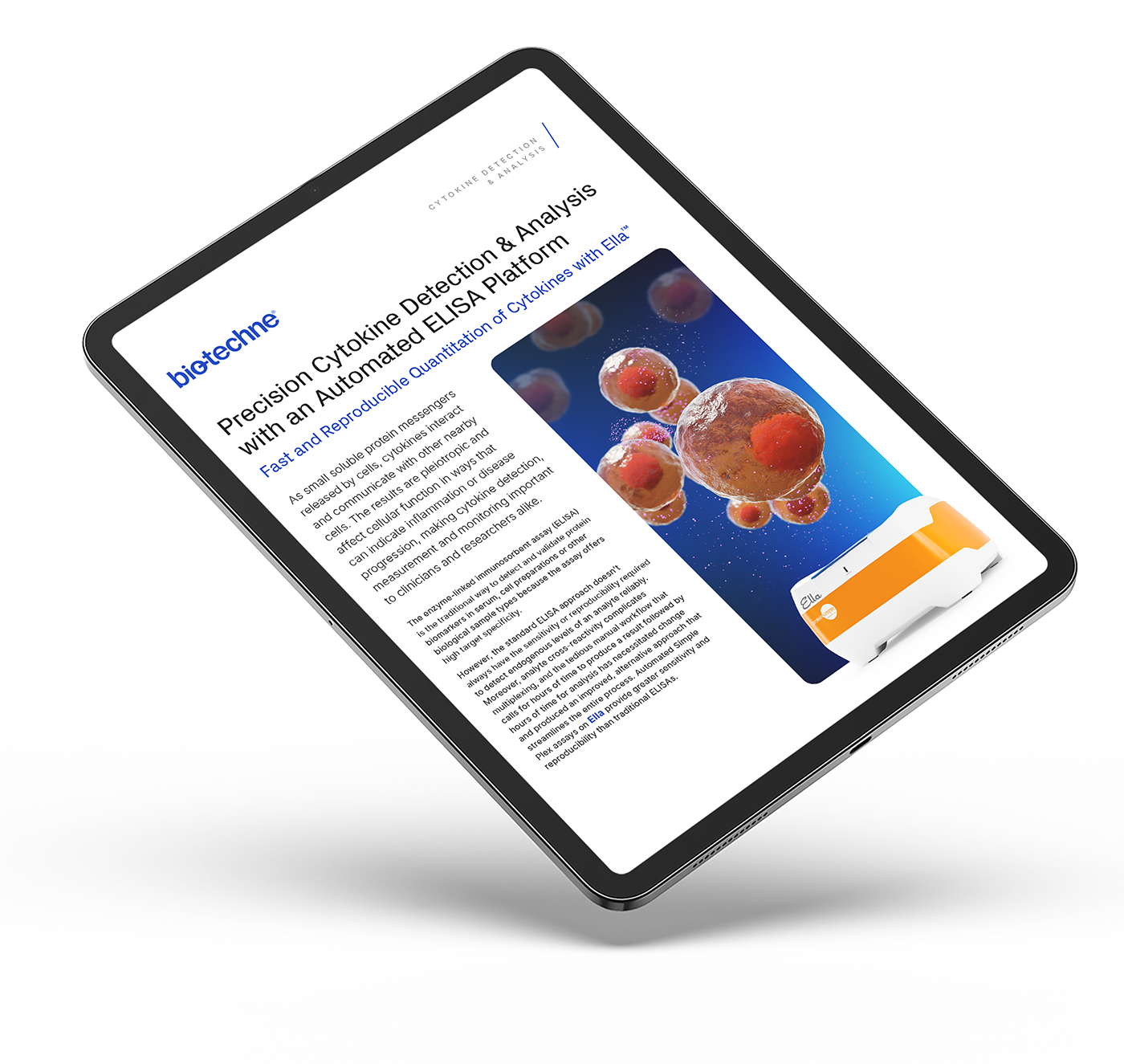
Simple Plex Assays will transform the way you measure cytokines providing a fast, robust method for single- or multianalyte quantitation.